


Approximately 21 minutes into Makoto Shinkai’s global blockbuster Your Name (Kimi no Na wa), a pivotal moment occurs that transcends mere plot exposition. As the protagonist Mitsuha wakes up in the body of a teenage boy named Taki, she is thrust into the complex social arena of an all-male friend group on a rooftop. In an attempt to blend in, she tentatively tests out first-person pronouns. She starts with the standard "watashi," only to be met with confusion from Taki’s peers. She tries the more formal "watakushi," then cycles through the masculine "boku" and "ore." When she finally hits on "ore," the boys nod in satisfaction. The scene is a masterclass in linguistic subtext—a humorous, relatable nod to the fact that in Japan, how you refer to yourself is as much about your gender identity and social standing as it is about grammar.
While "watashi" (and its more colloquial form "atashi") is currently codified as the standard, polite, and feminine way for a woman to refer to herself, this linguistic convention is neither as ancient nor as immutable as many believe. Across Japan, a growing number of young girls are increasingly opting for "boku"—a traditionally masculine pronoun—challenging the rigid structures of the Meiji era and sparking a national conversation about gender expression.
The Historical Construction of "Feminine" Speech
To understand why the shift toward "boku shōjo" (literally "boku-using girls") is so significant, one must first dismantle the myth that these pronouns are rooted in "ancient Japanese tradition." In reality, the standardization of "watashi" as a feminine pronoun is a relatively modern invention, largely solidified during the Meiji Era (1868–1912).
During the Meiji period, the Japanese government sought to modernize the nation’s language to support a unified, imperial identity. Language was standardized using the speech patterns of educated, middle-class men as the baseline. Prior to this, historical documents from the Edo period reveal a much more fluid landscape. Women frequently used a variety of pronouns, including "washi," "boku," and "ore." Furthermore, women’s speech often featured assertive, masculine-coded markers, such as the imperative "shitamae" and phrases like "yaa, kimi" (a casual "Hey, you!").
The modern "feminine" speech style was essentially a deliberate linguistic engineering project, designed to cast women into a specific, domestic, and submissive role within the new social order. The fact that young girls today are reclaiming pronouns like "boku" is, in many ways, a subconscious pushback against this century-old social construct.

A Cultural History of "Boku Shōjo"
The "boku shōjo" phenomenon is not a spontaneous eruption; it has been brewing in the cultural consciousness for decades, fueled by media and pop culture.
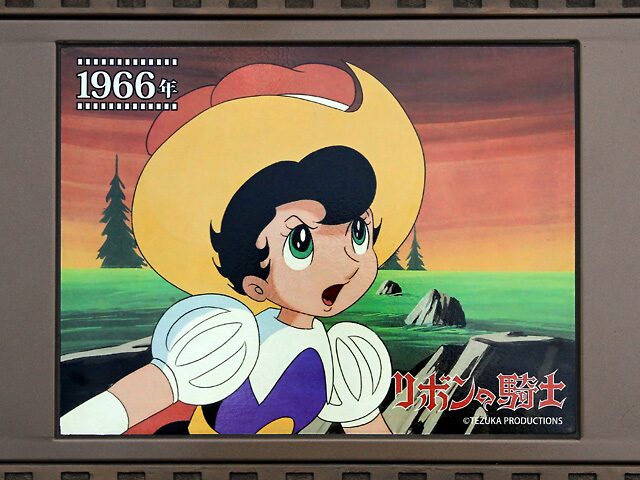
In the realm of manga and anime, female characters who adopt male-coded pronouns have long been a staple, often representing characters who defy traditional gender boundaries. Perhaps the most iconic figure in this lineage is Sapphire from Osamu Tezuka’s seminal 1966 work Princess Knight (Ribon no Kishi). Sapphire, a princess born with both a male and female heart, served as a beacon for gender fluidity. Similarly, the Takarazuka Revue—the legendary all-female theater troupe—has historically normalized the performance of masculinity by women, influencing generations of fans who see the fluidity of gendered speech as both artistic and empowering.
The normalization of "boku" has also been accelerated by the music industry. Renowned artists from the late Morita Doji to modern pop stars like Aimyon frequently employ "boku" in their lyrics. From a purely practical standpoint, the two-morae length of "boku" fits more seamlessly into the rhythmic structures of Japanese songwriting than the three-morae "watashi." Furthermore, producers like AKB48’s Akimoto Yasushi have suggested that female artists using "boku" creates a more inclusive experience, allowing male listeners to sing along to romantic lyrics without the dissonance of singing from a specifically female perspective.
The Psychological Drivers of the Shift
Why are young girls increasingly choosing "boku" in their daily lives? When parenting magazine VERY interviewed young girls about their pronoun usage, the answers were surprisingly mundane. Elementary schoolers described it as "normal," "shorter," or simply "cute."
However, linguists like Nakamura Momoko, a professor emeritus at Kanto Gakuin University and a leading expert on language and gender, argue that these superficial reasons mask a deeper, structural dynamic. Nakamura posits that while boys adopt "boku" and later transition to "ore" to navigate and armor themselves against patriarchal hierarchies, girls are adopting "boku" to escape the vulnerabilities inherent in being labeled "feminine." By using "boku," girls can sidestep the expectations of performative softness and, crucially, avoid the unwanted sexualization that often accompanies the "feminine" label in Japanese society.

This theory is supported by anecdotes from prominent female artists. The singer-songwriter aiko has noted that she occasionally switches to "boku" when she needs to express emotions or thoughts that would feel "too embarrassing" or too vulnerable if framed within the confines of a traditional feminine "watashi."
Data and Demographics: Is the Trend Growing?
Despite the cultural visibility of the "boku shōjo" trend, empirical evidence remains elusive. The last comprehensive study on this subject was conducted by sociologist Honda Yuki between 2009 and 2010. Honda found that approximately 5% of middle school girls used masculine pronouns, with 1.2% opting for "boku" and 3.8% for "ore."
More recent field studies, such as the 2016 research by Miyazaki Ayumi of Ochanomizu University, suggest that while the practice is becoming more common among peers, it is still highly context-dependent. Girls in these studies indicated they felt "justified" in using masculine pronouns with friends, but often defaulted back to "atashi" or the more neutral "uchi" when in more formal or mixed-gender settings.
The most significant barrier remains the transition into adulthood. A 2024 discussion in the Kōkōsei Shimbun (a high school newspaper) highlighted the anxiety of a 16-year-old girl contemplating whether she must abandon "boku" upon entering the professional world. The consensus from her peers was pragmatic: use "watashi" in professional settings to avoid social friction, but retain "boku" for intimate friendships. While some public figures, such as voice actress Haruna Fūka, have famously maintained their use of "boku" into adulthood, they remain the exception in a society that still prizes linguistic conformity.
Linguistic Evolution in the Reiwa Era
The shift toward "boku" is part of a broader, ongoing evolution of the Japanese language. Just as "shujin" (meaning "master") has largely been replaced by the more neutral "otto" (husband) to reflect changing views on marriage, pronouns are being repurposed to reflect modern identity.
History shows that language change is often unstoppable, even when faced with government opposition. During World War II, the state attempted to purge the Japanese language of foreign loanwords. While they succeeded in creating unique terms for baseball (such as "yakyū"), they failed to suppress the influence of other global terms like "mama" and "papa," which remain ubiquitous today.
From the ubiquitous slang "yabai" to the shifting nuances of "egui," Japanese continues to prove that it is a living, breathing entity. The rise of "boku shōjo" serves as a reminder that language is not a static set of rules handed down from the Meiji era, but a tool that speakers actively adapt to suit their needs, protect their identities, and reflect the world as they see it today. Whether "boku" will eventually lose its masculine coding entirely remains to be seen, but the trend is a clear signal that the next generation of Japanese speakers is ready to reshape the language to better fit the complexities of their reality.












No comments yet. Be the first to join the conversation!