

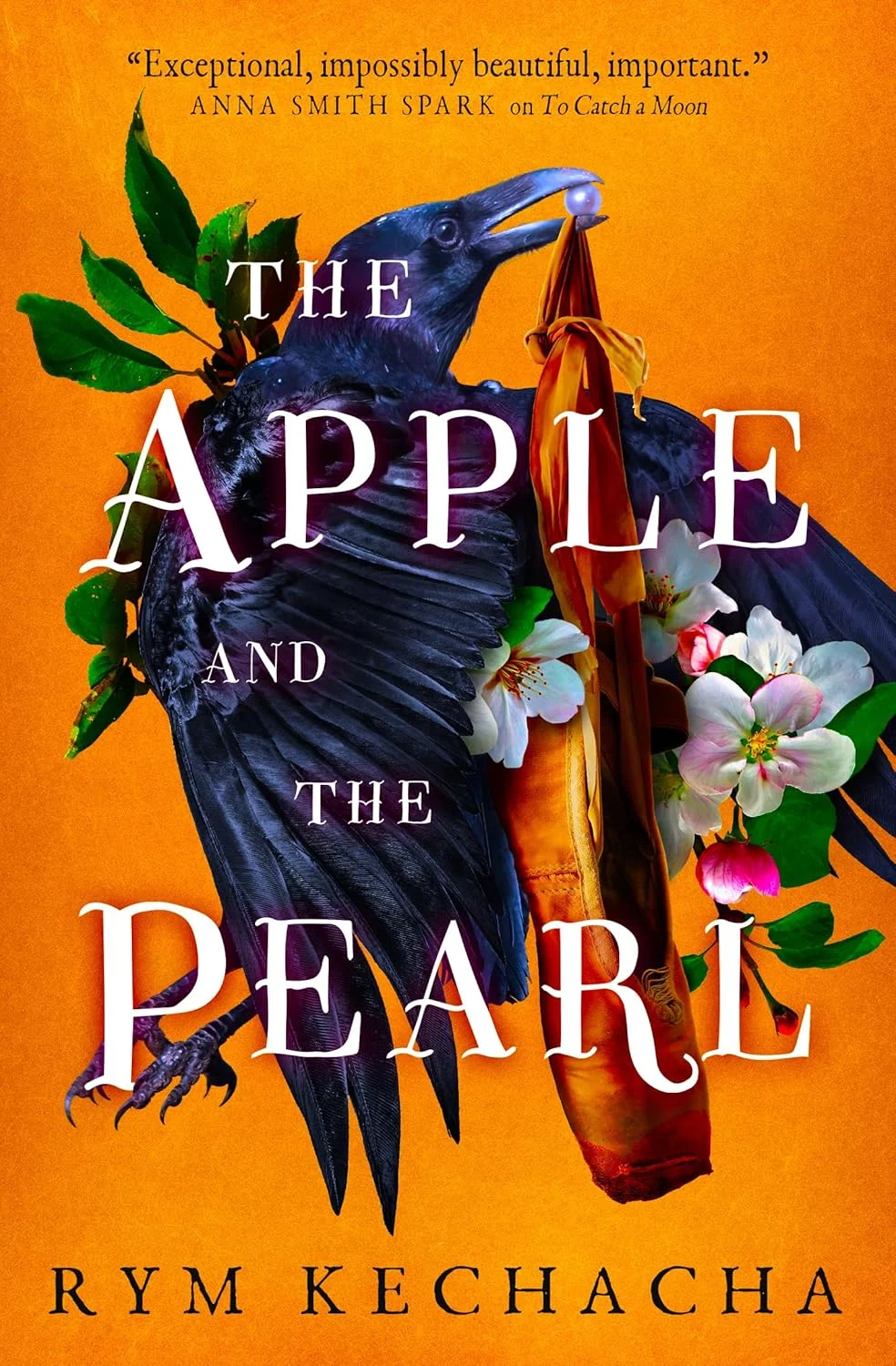
At the stroke of midnight, when the world is held in the silent suspension of the witching hour, a bell tolls thirteen times. It is not the sound of a clock tower, nor a church chime, but the herald of the "Grub"—a shifting, chimerical train that traverses the British landscape, carrying a troupe of performers whose existence is as fragile and transient as the art they produce.
In her latest novel, The Apple and the Pearl, author Rym Kechacha constructs a haunting, ethereal narrative that explores the cost of perfection. The troupe, a collective of "misfits and mavericks," is bound to an enigmatic entity known as the Crow, performing a singular, recurring ballet for an audience that remains largely unseen: the fae.
The Architecture of the Impossible: The Grub and the Grit
The setting of Kechacha’s novel is a masterclass in atmospheric world-building. The "Grub"—the maggot in the fruit—serves as both transport and home, an organic, evolving machine that delivers its inhabitants to new, undisclosed locations across Britain each morning. Once they arrive, the troupe sets up "the Grit," a theater that manifests as a "speck of dirt trapped in an oyster shell."
On the day the narrative unfolds—a chilly, fog-drenched All Souls’ Day—the Grit looms over a graveyard, appearing as a "spiky and threatening" structure reminiscent of a gothic horror film. It is here that the troupe prepares for the night’s performance, a production that is less a show and more a ritualistic exchange between the mortal and the otherworldly.
The Contract of the Crow
The troupe members are not mere performers; they are volunteers who have pledged their service to the Crow for a period of a year and a day. The Crow, a figure of absolute, unsettling authority, serves as the conduit between the human world and the realm of the fae.
The recruitment process, if it can be called that, draws individuals who are already tethered to the fringes of reality—those who have experienced "other worlds" or who possess a predisposition for the liminal. The pledge, while providing a structure for their lives, also functions as a protective ward. By adhering to the rules of the curfew and the strictures of the troupe, they avoid the ultimate price: being "snatched" by the very audience they are performing for.
A Chronology of Artistic Sacrifice
The novel unfolds over a meticulously paced twenty-four-hour period. Rather than a traditional plot-driven trajectory, Kechacha utilizes a fluid, present-tense narrative style that glides between the members of the troupe.
- Morning: The arrival at the graveyard. The atmosphere is thick with the mundane—the logistics of stage management, the setting of the stage, and the quiet anxieties of the newcomers.
- Afternoon: The rehearsal. We are introduced to the internal lives of the dancers and crew. The narrative lens zooms in on Mara, a senior dancer whose struggle with the "diamantine" nature of ballet provides the emotional backbone of the story.
- Evening: The mounting tension. As the hour of the performance nears, the "all-suffusing unease" of the fae presence becomes palpable, despite their physical absence.
- Midnight: The performance and the climax. The convergence of the ballet’s narrative and the troupe’s own reality, culminating in a revelation regarding the Crow’s true purpose.
The Anatomy of the Ensemble: Perspectives on the Stage
Kechacha, herself a classically trained dancer, brings an unflinching level of authenticity to the descriptions of the ballet industry. The dancers are portrayed as individuals who have sacrificed their selfhood at the altar of an unattainable ideal.
The Dancer’s Dilemma
Mara’s perspective is perhaps the most poignant. She is a woman caught between the "life-raft" of daily routine and the crushing, toxic reality of a profession that demands blood, sweat, and tears for a performance that is "over in the blink of an eye."
Kechacha poses the central question of the novel through Mara: Why pour everything into something so transient? The answer, as explored through the supporting cast—from the lighting director to the wardrobe mistress—is multifaceted. For some, it is the community of the "mad"; for others, it is the only place where they can push their talents to the absolute limit. For many, it is the realization that in this troupe, they are finally surrounded by people who understand the necessity of the impossible.
Implications: The Beauty and Brutality of Creation
The deeper implications of The Apple and the Pearl touch upon the nature of art itself. The novel suggests that the "fae"—the supernatural observers—are not so different from any other audience. They are moths drawn to the flame of human striving. They seek the "space between pain and beauty," the raw, vulnerable threshold where a human body attempts to manifest perfection.
The Border Spaces
Kechacha excels at defining the "border spaces":
- The physical border: The veil between the human world and the realm of the fae.
- The artistic border: The space between the dancer and the dance, where the individual ceases to exist and the art takes over.
- The existential border: The gap between the perfection one strives for and the "unforgivably imperfect" reality of being human.
The lighting director’s advice to a new recruit—"There’s a point where you have to accept it or go home"—serves as a meta-commentary for the reader. The novel asks us to suspend our desire for rigid explanation and instead inhabit the ambiguity of the experience.
The Climax: A Macabre Spectacle
As the story reaches its conclusion, the ballet’s climax dovetails with the narrative’s own resolution. The scene is described as both "mystical and magical" and "overtly macabre." It is here that the true role of the Crow is made clear: it is not merely a master of ceremonies, but the glue holding the troupe’s existence together.
The spectacle provides a chilling clarity: the troupe is not just performing; they are participating in a cycle of sustenance. When the curtain falls and the stage is empty, the illusion vanishes, but the cycle remains. The characters return to their routines, preparing for the next destination, the next performance, and the next cycle of the thirteen bells.
Conclusion: A Masterpiece of Liminality
The Apple and the Pearl is a rare achievement in contemporary fiction. It manages to be a character-centric ensemble piece while maintaining the tension of a dark, supernatural thriller. By stripping away the need for traditional plot resolutions, Kechacha allows the themes of artistic sacrifice and the allure of the unknown to take center stage.
For the reader, the experience of the book mirrors the experience of the troupe: it is a journey into a strange, beautiful, and slightly dangerous space. As the final pages turn, one is left with the haunting realization that while the characters may move on to their next destination, the questions they pose—about why we create, why we suffer for our art, and what we leave behind—linger long after the curtain has closed.
This is a novel that demands to be felt rather than merely read, inviting us to look into the "space between pain and beauty" and wonder if, like the fae, we too are captivated by the struggle of the human spirit to reach for the impossible.









No comments yet. Be the first to join the conversation!