

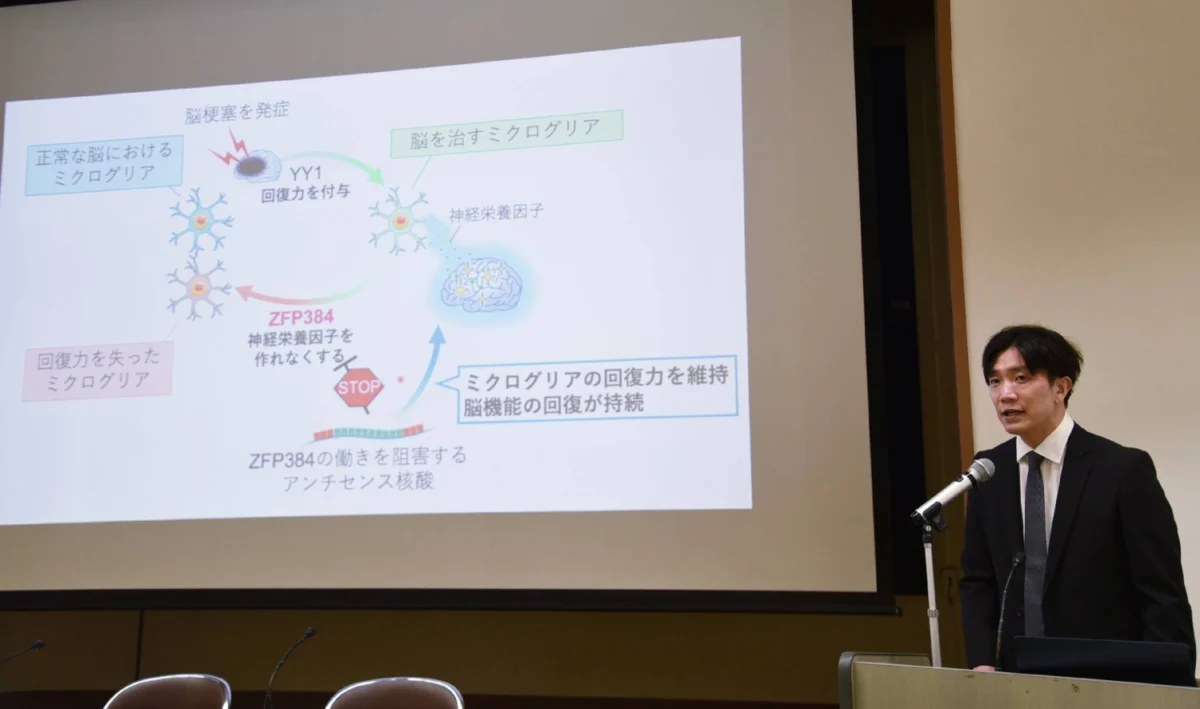
In a landmark study that could redefine the prognosis for stroke survivors worldwide, a research team at the Institute of Science Tokyo has unveiled a promising drug candidate capable of extending the critical window for motor function recovery. The discovery, published Wednesday in the online edition of the prestigious journal Nature, addresses one of the most stubborn limitations in neurology: the "plateau" of recovery that typically occurs roughly two months after a cerebral infarction.
For millions of patients who suffer the debilitating effects of strokes—ranging from loss of speech to paralysis of limbs—this development offers a glimmer of hope that the brain’s capacity for repair can be artificially sustained far beyond current biological limits.
The Biological Mechanism: How the Brain Repairs Itself
To understand the significance of this breakthrough, one must first look at the natural, albeit fragile, repair process that occurs following a stroke. When a cerebral infarction causes the death of nerve cells, the brain does not simply abandon the affected areas. Instead, the surviving neurons attempt to reorganize and forge new pathways, a process facilitated by the brain’s "immune guards": microglia.
Microglia are not merely passive defenders; they act as architects of recovery. Following a brain injury, these cells secrete a vital protein known as insulin-like growth factor 1 (IGF1). This growth factor acts as a chemical signal that promotes neuroplasticity, allowing the brain to rewire damaged networks and restore lost motor functions.
However, this process is notoriously short-lived. In the natural progression of recovery, the production of IGF1 tapers off, effectively closing the "rehabilitation window" and leaving many patients with permanent deficits.
The Discovery: Identifying the "Off Switch"
The research team, led by Professor Takashi Shichita of the Institute of Science Tokyo’s Medical Research Laboratory, set out to determine why the brain’s internal repair mechanism abruptly halts. Through meticulous genetic manipulation in mouse models, the team discovered that the cessation of IGF1 secretion was not a random occurrence, but a regulated biological "off switch."
The culprit was identified as a protein called ZFP384. As time passes following a stroke, the accumulation and activity of ZFP384 within the microglia actively inhibit the production of IGF1. To validate their findings, the researchers examined the brains of deceased stroke patients, confirming that the same molecular mechanism—the interplay between ZFP384 and the suppression of IGF1—was present in human pathology.
"We identified a specific molecular brake," Professor Shichita explained. "By understanding that ZFP384 is the protein responsible for silencing the recovery process, we were able to conceptualize a way to override it."
The Solution: Antisense Oligonucleotide (ASO) Therapy
The drug candidate developed by the team represents the cutting edge of molecular medicine. It belongs to a class of therapeutics known as antisense oligonucleotides (ASOs). These are short, synthetic strands of nucleic acids designed to bind precisely to specific messenger RNA (mRNA) sequences.
In this instance, the ASO is engineered to target the mRNA of the ZFP384 gene. By binding to this mRNA, the drug prevents the ZFP384 protein from ever being synthesized. Without the "off switch" present to suppress the microglia, the cells continue to churn out IGF1, thereby maintaining the neuroplasticity required for ongoing physical and speech rehabilitation.
In preclinical trials, the results were striking. Mice treated with the ASO showed sustained motor function recovery compared to the control group. The microglia in the treated mice remained in a "pro-repair" state, effectively extending the window during which the brain could physically reorganize its damaged networks.
Chronology of the Research
- Initial Hypothesis: The team hypothesized that the two-month limit on stroke recovery was governed by an internal molecular trigger rather than a permanent loss of biological capacity.
- Identification of ZFP384: Through high-throughput screening and genetic analysis of microglia in stroke-affected mice, researchers isolated ZFP384 as the primary suppressor of IGF1.
- Clinical Correlation: The team conducted a comparative analysis of post-mortem human brain tissue, confirming that the ZFP384-IGF1 pathway functions identically in humans as it does in mice.
- ASO Development: Using the identified genetic sequence of ZFP384, the team synthesized an ASO drug candidate to block protein production.
- Verification: Injection of the ASO into stroke-model mice demonstrated a significant, measurable extension of motor function recovery.
- Publication: The findings were formally vetted and published in Nature in October 2024.
Implications for Modern Neurology
The implications of this discovery are profound. Currently, medical guidelines emphasize "early intervention," suggesting that the most significant gains in stroke recovery occur within the first few weeks to months. After this period, clinical progress often stalls, and rehabilitation enters a maintenance phase.
If human trials prove successful, this therapy could shift the paradigm from "damage management" to "active repair." Patients who would previously have been considered past the point of further improvement might now be candidates for continued neurological restoration. This could significantly reduce the long-term disability burden for millions, potentially lowering the need for long-term care and improving the quality of life for stroke survivors globally.
Furthermore, the use of ASO therapy underscores the growing trend of treating neurological disorders at the genetic level. ASOs have already begun to show efficacy in treating other intractable conditions, such as spinal muscular atrophy, signaling that the era of "molecular surgery" has arrived.
Official Responses and Future Outlook
Despite the enthusiasm surrounding the discovery, Professor Shichita and his team remain grounded in the reality of drug development.
"While the data from our mouse models is compelling, the jump from laboratory success to clinical application is significant," Shichita stated. "The current drug candidate requires further optimization. We need to ensure that the delivery mechanism is precise, that the dosage is safe for human physiology, and that there are no off-target effects when blocking ZFP384."
The road ahead is long. Developing a drug for human use requires navigating rigorous safety trials, regulatory approvals, and large-scale efficacy studies. Shichita has been transparent about the timeline, projecting a 10 to 20-year trajectory before the treatment reaches the bedside.
"We are committed to this long-term vision," said Shichita. "Our goal is not just to publish research, but to fundamentally alter the prognosis for stroke patients. We will work hard toward delivering this drug to those who need it."
Supporting Data and Technical Context
The success of this therapeutic approach rests on the unique properties of ASO technology. Unlike traditional small-molecule drugs that interact with the surface of proteins, ASOs work at the genetic level, providing high specificity.
| Table 1: The Molecular Pathway of Stroke Recovery | Phase | State of Microglia | Primary Driver | Outcome |
|---|---|---|---|---|
| Acute | Pro-inflammatory | Immune Response | Initial Damage Control | |
| Sub-acute | Pro-repair | IGF1 Secretion | Neural Network Rewiring | |
| Plateau | Inhibited | ZFP384 Accumulation | Repair Mechanisms Cease | |
| ASO-Treated | Sustained Repair | ZFP384 Blocked | Extended Plasticity |
The research team noted that while IGF1 is the primary focus, the interplay between ZFP384 and other regulatory proteins remains a subject of ongoing investigation. Future studies will likely focus on whether blocking ZFP384 has any secondary effects on the inflammatory response, ensuring that the immune system remains capable of its other vital functions.
A Call for Continued Investment
As the Institute of Science Tokyo team transitions from basic research to translational development, the global scientific community is watching closely. The study highlights the critical need for continued investment in neurobiology.
Stroke remains a leading cause of disability and death worldwide. While prevention strategies—such as blood pressure management and diet—remain the gold standard, the reality of aging populations means that millions more will suffer from stroke in the coming decades. Innovations like the one pioneered by Professor Shichita offer a necessary evolution in medical care: the ability to intervene in the brain’s post-injury trajectory and turn the tide against permanent impairment.
For now, the medical community celebrates this as a monumental step forward—a blueprint for future therapies that may one day render the "two-month recovery limit" a relic of medical history. The focus now shifts to refining this molecular key, ensuring it can safely unlock the brain’s dormant capacity for healing when patients need it most.












No comments yet. Be the first to join the conversation!