

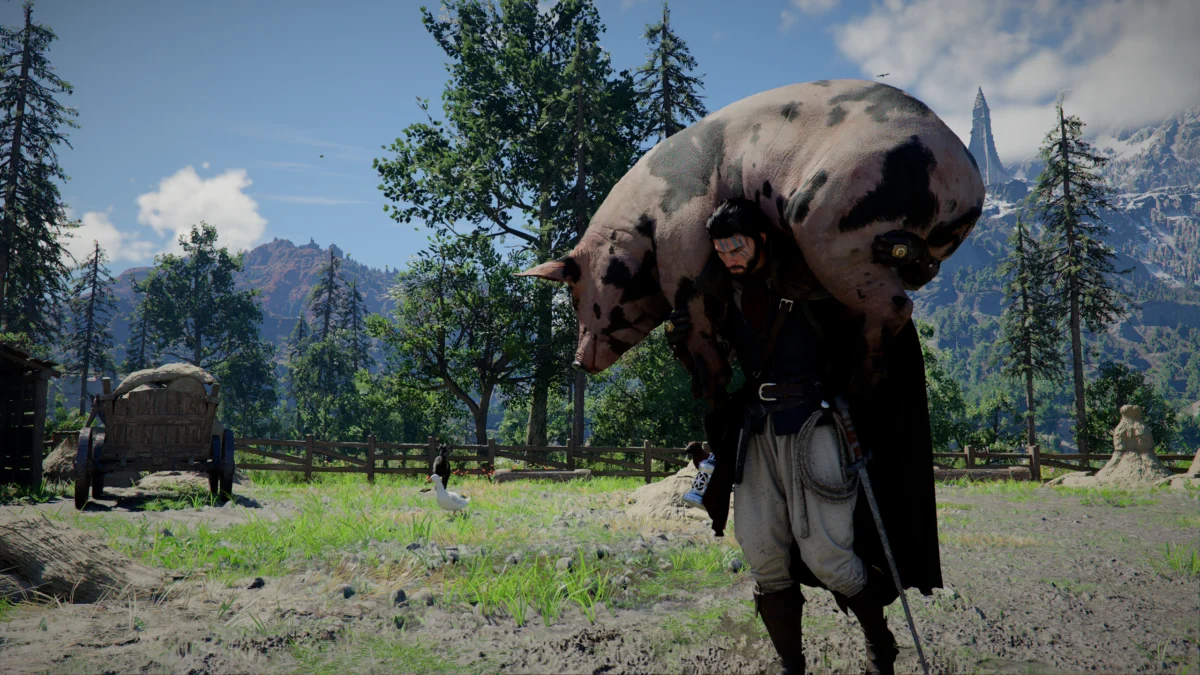
Pearl Abyss, the studio renowned for the visual splendor and mechanical depth of Black Desert Online, has finally unleashed its long-gestating project, Crimson Desert. As a title that has dominated industry discourse for years, it arrives with the weight of immense expectation. The result is a game that feels like a champion bodybuilder: muscular, visually imposing, and technically impressive, yet lacking the internal coordination required to function as a cohesive whole.
Crimson Desert is a title of startling contradictions. It offers a sandbox of breathtaking scale and combat that sits among the best in the action-RPG genre, yet it is simultaneously hampered by a narrative that feels disjointed and a user interface (UI) that borders on the masochistic.
The Core Conflict: A World of Grandeur and Narrative Void
The game places players in the boots of Kliff, a battle-hardened warrior of the Greymanes, a mercenary sect ousted from their ancestral home of Pailune by the expansionist Black Bears. The narrative setup is standard fantasy fare: a fallen king, a brutal betrayal, and a protagonist left for dead, only to be resurrected by mysterious, otherworldly forces tied to "The Void."
The Chronology of Disconnect
The opening hours of Crimson Desert promise an epic journey. Players are thrust into a high-stakes struggle for territory and vengeance, navigating a web of political intrigue involving counts, courtesans, and blackguards. However, the pacing of this journey is fundamentally flawed.
What should be a methodical, earned reunion of the scattered Greymane warriors—a core plot thread that sustains the first 20 hours—is undermined by lazy narrative design. After a long buildup, key members of your faction simply materialize in your camp, effectively trivializing the effort invested by the player. This "stop-and-start" storytelling leaves the player feeling like a spectator to events rather than an architect of them.
Character Inconsistency
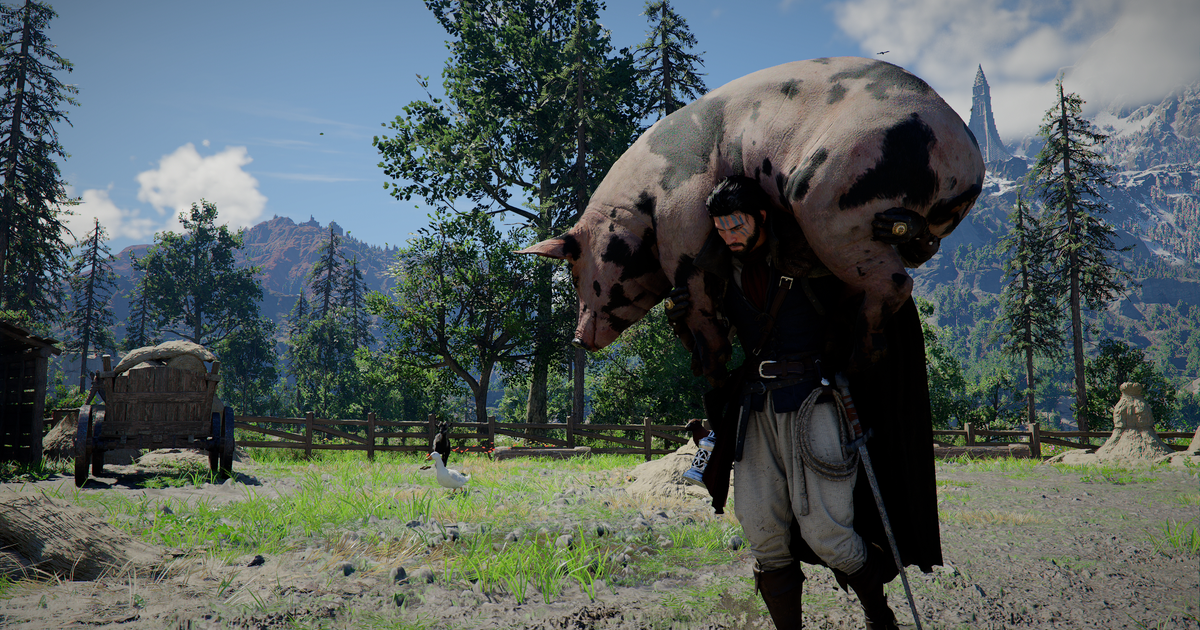
Perhaps the most jarring element is the characterization of Kliff himself. Pearl Abyss, a studio famous for the Black Desert Online character creator—which offers arguably the most granular control over player avatars in the industry—has made the curious decision to force players into a pre-set character. Yet, Kliff lacks the singular vision required to make this tradeoff worth it.
In one scene, he is a stoic, Terminator-esque powerhouse, snapping bones and shrugging off wounds with grim determination. In the next, he is relegated to mundane chores, acting with a subservient, "housecat-like" demeanor that feels entirely incongruous with his established persona. This tonal whiplash prevents the player from ever truly connecting with him as a protagonist.
Technical Grandeur: The Sandbox Experience
Despite its narrative shortcomings, Crimson Desert remains a technical triumph. The sheer scale of the environment is nothing short of breathtaking. From the twilight-dappled ridges at sunset to the sweeping, yawning valleys that beg to be explored, the world design is a masterclass in atmospheric immersion.
Visual Fidelity and Exploration
The game’s engine handles lighting and geography with a finesse rarely seen in open-world titles. Whether gliding across ravines on magical wings or galloping on horseback through a thunderstorm, the sense of place is palpable. Crimson Desert succeeds in making travel feel like an adventure, rather than a loading-screen-to-loading-screen transition.
Combat: A Muscular Achievement
If the world is the canvas, the combat is the brush. Crimson Desert features a combat system of surprising depth. It blends grounded, weight-heavy swordplay with explosive, over-the-top grappling combos. The ability to transition from a measured "sword-and-board" engagement to a chaotic, Musou-like brawl against dozens of enemies provides a satisfying loop that never truly wears thin. It is in these moments—where the mechanical complexity meets the high-fidelity spectacle—that Crimson Desert truly shines as a "next-gen" experience.

The UI and Systems: A Masterclass in Frustration
While the combat and world-building reach for the stars, the UI and inventory management systems seem determined to drag the player back to earth. Pearl Abyss has implemented design choices that can only be described as baffling.
The Inventory Nightmare
The looting system serves as the primary offender. In most modern RPGs, inventory management is streamlined; in Crimson Desert, it is a manual labor simulator. Enemies do not possess a previewable inventory; players must collect everything they drop, often without knowing what they are picking up, only to immediately discard the "junk" to make room for essential items.
The most egregious example is the "pouch" system. When enemies drop currency, it is contained within physical pouches that must be manually opened in the menu before the gold is added to your total. It is a tedious, immersion-breaking exercise that adds no value to the gameplay loop, resembling the bureaucratic hurdles of a spreadsheet rather than the rewarding progression of an RPG.
Implications: The "If Only" Factor
The central tragedy of Crimson Desert is that it sits on the precipice of being a generational defining title. It possesses the "connective sinew"—the high-level mechanics and world design—but lacks the narrative cohesion to hold it together.
Comparisons and Context
When viewed alongside contemporaries like The Witcher 3: Wild Hunt or Dragon’s Dogma, the disparity becomes clear. The Witcher 3 thrived on the strength of its central protagonist and the emotional weight of its writing. Dragon’s Dogma, while often criticized for its own narrative eccentricities, succeeded by empowering its reactive systems to create organic, memorable moments.

Crimson Desert attempts to borrow from both but fails to capture the essential spirit of either. It forces a rigid narrative that doesn’t hold up under scrutiny, while simultaneously failing to empower the player to create their own stories through consistent, reactive gameplay.
Cultural Sensitivity and Writing
Beyond the structural flaws, the game occasionally leans into regrettable tropes. The inclusion of the "Goldleaf" guild—a group of predatory, money-lending goblin merchants—is an unfortunate inclusion that feels antiquated and tone-deaf. Such moments serve to distract from the otherwise high-quality production, reminding the player that even in a world of magic and monsters, the writing can still fall into tired, harmful stereotypes.
Conclusion: A Diamond in the Rough
Crimson Desert is a title that will likely polarize the gaming community. For those who prioritize gameplay, combat fluidity, and visual exploration, it is a playground of near-limitless potential. For those seeking a compelling, character-driven story with intuitive systems, it may prove to be an exercise in patience.
Pearl Abyss has built a game that is physically massive and visually stunning, but the "enlarged heart" of the project seems at risk of popping under the pressure of its own ambition. With a comprehensive overhaul of its narrative content and a significant streamlining of its interface, Crimson Desert could still become the masterpiece it clearly aspires to be. As it stands today, it is a fascinating, frustrating, and ultimately beautiful paradox—a champion that has forgotten how to move in rhythm.
Crimson Desert is currently available on PC. This review was conducted using a code provided by the publisher.











No comments yet. Be the first to join the conversation!