

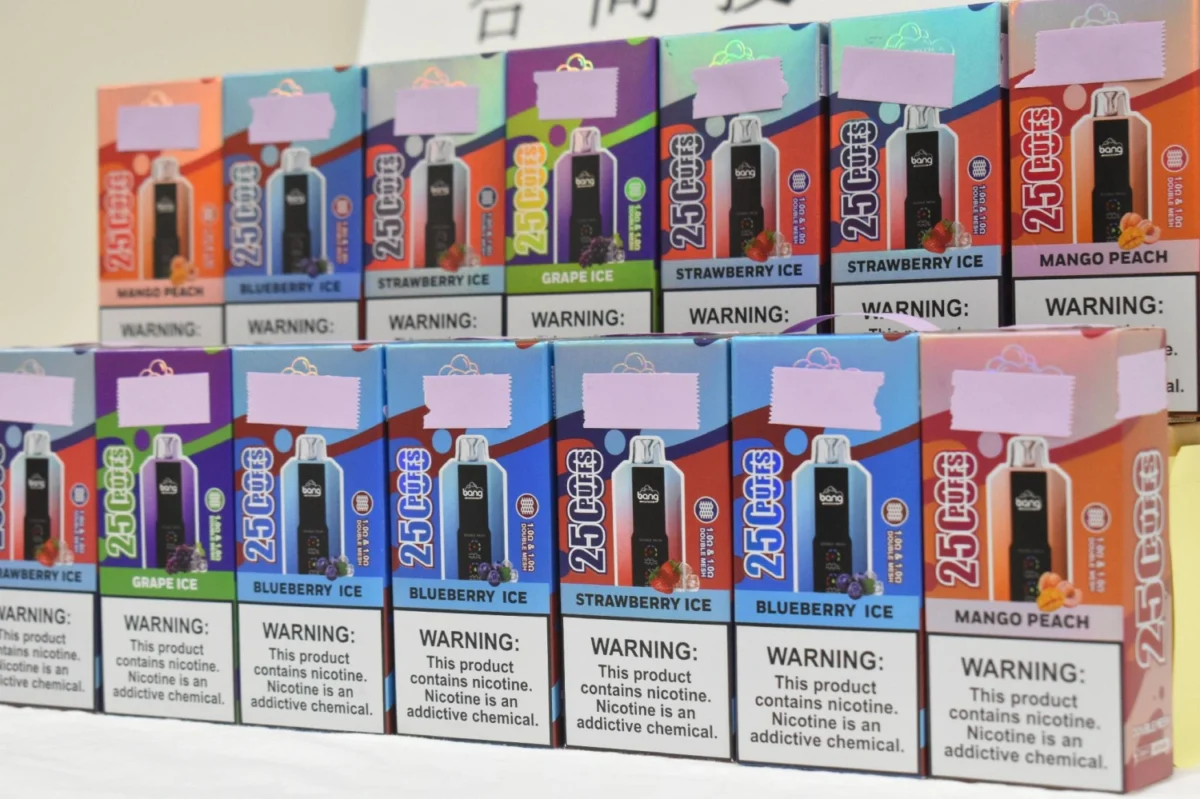
OSAKA — Across the vibrant, neon-lit streets of Osaka and the bustling districts of Tokyo, a silent trend is taking hold among Japan’s youth. Despite stringent national regulations governing nicotine products, a new generation of e-cigarettes—colloquially and commercially referred to as "nicopuff"—is infiltrating the domestic market.
Authorities have recently ramped up enforcement, culminating in the public display of confiscated devices this past Saturday. However, as law enforcement agencies seize shipments and shutter clandestine retailers, health experts and policymakers are raising a broader, more urgent alarm: these devices may not just be a health risk in their own right, but a "gateway" to the world of illicit narcotics.
The Main Facts: A Regulatory Loophole Under Siege
At the core of the controversy are the "nicopuff" devices—sleek, disposable, and often brightly colored vaping units that heat a nicotine-infused, scented liquid to produce a dense aerosol. While Japan has long maintained a robust legal framework regarding tobacco products, the rapid evolution of vaping technology has left regulators scrambling to keep pace.
Under the current Japanese Pharmaceutical and Medical Device Act, the sale of nicotine-containing liquids is heavily restricted. Unlike many Western nations where vaping is a common alternative to combustible cigarettes, Japan’s Tobacco Business Act and related ordinances create a unique environment. Manufacturers of "nicopuff" often exploit legal gray areas, marketing their products as "aromatherapy" or "lifestyle accessories" to bypass health inspections and age-verification protocols.
The recent seizures in Osaka underscore the scale of the distribution network. Law enforcement officials have characterized these operations as sophisticated, utilizing social media platforms and encrypted messaging apps to reach high school and university students directly, bypassing traditional retail storefronts entirely.
Chronology: How the Trend Escalated
The emergence of "nicopuff" was not an overnight phenomenon, but rather a gradual infiltration of the youth market that has reached a tipping point in the last 18 months.
- Early 2024: Initial reports emerge from school counselors in the Kansai region regarding a "sweet-smelling vapor" observed in bathrooms and near transit hubs.
- Late 2024: Online marketplaces begin featuring high-frequency advertisements for flavored nicotine pods, often using imagery that mimics snack food packaging.
- Q1 2025: Law enforcement agencies note a surge in customs interceptions at major ports, identifying thousands of units labeled as "electronic diffuser components."
- May 2026: A coordinated crackdown by Osaka Prefectural Police leads to the confiscation of thousands of units, resulting in several arrests. The display of these items on Saturday serves as a public warning to both distributors and parents.
Supporting Data: Why Youth Are Turning to Vaping
Understanding why young people are gravitating toward "nicopuff" requires a look at the intersection of consumer psychology, peer pressure, and digital influence. Surveys conducted by local health departments suggest that the motivations are multifaceted.
The Aesthetics of Addiction
Unlike traditional cigarettes, which carry a strong, recognizable odor and a social stigma, "nicopuff" devices are designed to be discreet. Their aesthetic—resembling high-end tech gadgets or novelty stationery—appeals to a demographic that values style and anonymity. The flavors—ranging from "strawberry-mango" to "iced-mint"—mask the harshness of the nicotine, making the initial experience far more palatable for first-time users.
The Digital Echo Chamber
The rise of "nicopuff" is inextricably linked to the influence of social media influencers. On platforms popular with Japanese teens, videos demonstrating "vape tricks" or reviewing the "best flavors" create an illusion of safety and social desirability. For many young users, the device is seen as a badge of membership in a modern, globalized youth culture, effectively distancing them from the "old-fashioned" image of traditional smoking.
Official Responses and the "Gateway" Warning
The official response has been one of mounting concern. During the Saturday press briefing, health experts were clear: the dangers extend far beyond nicotine dependency.

The Gateway Hypothesis
"The danger of these devices is not merely the nicotine content," stated one senior medical consultant during the Osaka briefing. "By normalizing the act of inhaling concentrated chemicals from a device that fits in the palm of one’s hand, we are lowering the psychological barrier to the consumption of illicit substances."
Experts argue that once a young person becomes accustomed to the sensation of vaping, the transition to unregulated or "spiked" liquids—potentially containing synthetic cannabinoids or other illegal stimulants—becomes significantly easier. The lack of standardized testing on "nicopuff" liquids means that users are effectively acting as test subjects for unregulated chemical compounds, the long-term effects of which remain entirely unknown.
Law Enforcement Strategy
The Japanese police are now shifting their strategy from reactive seizures to proactive surveillance. By targeting the digital supply chains that feed the "nicopuff" market, authorities hope to choke the distribution channels at their source. "We are monitoring not just the product, but the influencers and the platforms that facilitate these transactions," said a spokesperson for the Osaka police.
Implications: A Looming Public Health Crisis
The proliferation of "nicopuff" presents a significant challenge to Japan’s public health infrastructure. As the nation grapples with a declining birth rate and a shrinking workforce, the long-term health of the younger generation is a matter of national economic importance.
Impact on Physical Health
Nicotine is a potent neurotoxin, particularly for the developing adolescent brain. The potential for long-term cognitive impairment, combined with the physical risks of inhaling aerosolized heating agents, creates a dual-threat profile. If a significant percentage of the youth population becomes reliant on these devices, the healthcare system may face a surge in respiratory and cardiovascular issues within the next decade.
The Educational Challenge
Schools are finding themselves on the front lines. Teachers are being trained to identify the subtle signs of "nicopuff" use, which differs significantly from the traditional signs of tobacco smoking. Educational campaigns are being overhauled to move away from the "don’t smoke" messaging of the past, focusing instead on the dangers of chemical inhalation and the deceptive marketing practices of vaping companies.
A Call for Legislative Reform
Many legal scholars are now calling for a comprehensive overhaul of the Tobacco Business Act to explicitly encompass electronic nicotine delivery systems. The current "cat and mouse" game between authorities and manufacturers is proving insufficient. A uniform national policy that enforces strict age verification, bans flavored nicotine products, and mandates ingredient transparency is widely seen as the only viable path forward.
Conclusion: The Path Ahead
The "nicopuff" crisis in Japan is a stark reminder of how quickly modern consumer products can outpace the legislative machinery of a nation. While the confiscated devices displayed in Osaka represent a victory for law enforcement, they are likely only a fraction of the total volume circulating in the shadows of the digital economy.
The solution will require more than just police seizures. It will necessitate a coordinated effort between parents, educators, medical professionals, and policymakers. In an era where information—and misinformation—is just a click away, the protection of the youth from predatory marketing and addictive technology must remain a top national priority.
As the investigation continues, one thing remains certain: the "nicopuff" phenomenon is a wakeup call for Japan. Addressing it will require a rigorous commitment to public health, a modernization of regulatory frameworks, and an honest conversation with the younger generation about the true cost of their digital habits. The stakes—the long-term well-being of the nation’s youth—are simply too high to ignore.












No comments yet. Be the first to join the conversation!