
 Nana
Nana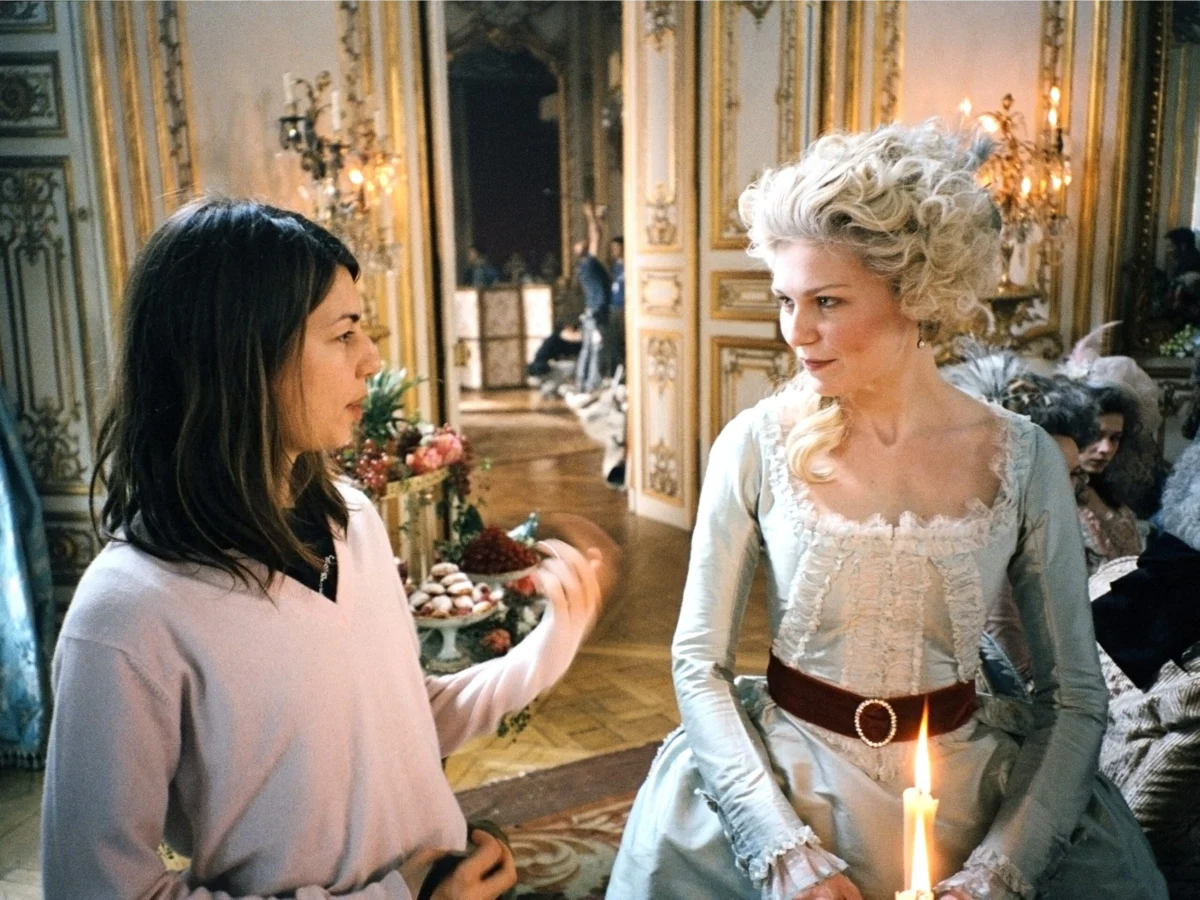
“I enjoyed it, but I am never doing this again.”
These words, uttered by director Sofia Coppola toward the final act of the new feature documentary Making Marie Antoinette, serve as a poignant, self-deprecating bookend to a project two decades in the making. The film, a fly-on-the-wall chronicle of the tumultuous production of her 2006 historical drama, is more than just a “making-of” featurette. It is an intimate, posthumous collaboration between Sofia and her late mother, the esteemed documentarian and artist Eleanor Coppola, who passed away in 2024 at the age of 87.
Premiering in the prestigious Spotlight section of the New York Film Festival (NYFF), the documentary offers a rare, unvarnished look at a young auteur finding her voice within the gilded, often suffocating walls of the Palace of Versailles. Constructed from 80 hours of raw, candid footage shot by Eleanor during the 2005 production, the film captures the chaos, the creative friction, and the quiet triumphs of a filmmaker who would eventually see her polarizing historical portrait evolve into a beloved cult classic.
A Legacy Unearthed: The Chronology of the Project
The journey to Making Marie Antoinette began in the quiet of the Coppola family home in Napa Valley. Following Eleanor’s passing, the family gathered to revisit the vast archives of footage she had meticulously captured years prior. For Sofia, viewing the tapes was a visceral experience—a time-traveling exercise that brought back the intensity, the exhaustion, and the occasional interpersonal friction of the 2005 shoot.
“It’s embarrassing for me,” Sofia admitted during the post-premiere Q&A at the New York Film Festival. “When I’m in the trailer complaining that I don’t want to talk to my mom and being not nice… but it’s important to show all the sides, and I’m crabby sometimes!”
Eleanor Coppola, who famously documented the catastrophic production of her husband Francis Ford Coppola’s Apocalypse Now in the legendary Hearts of Darkness, had long intended for this footage to see the light of day. She had frequently expressed frustration that the material remained unedited. In the final months of her life, and with the support of editor Aaron Matthews, Sofia finally undertook the task of shaping her mother’s vision. Eleanor had envisioned a project in the observational style of Frederick Wiseman—a "direct cinema" approach that eschewed traditional talking-head interviews in favor of capturing the rhythm of the work itself. To ground the narrative, the film utilizes voiceover narration by actress Diane Lane, a long-standing Coppola family collaborator, who reads from Eleanor’s contemporaneous diary entries.
Behind the Velvet Curtain: The Production Dynamics
Making Marie Antoinette provides a masterclass in the logistics of high-stakes period filmmaking. The documentary does not shy away from the immense technical challenges that defined the 2006 production. Viewers are granted an all-access pass to the grueling reality of 18th-century costuming: the hours spent on wigs, the intricate layers of fabric, and the sheer stamina required by leads Kirsten Dunst and Jason Schwartzman.
The film serves as a secondary tribute to the legendary costume designer Milena Canonero. Canonero’s work on the film—which included the creation of over 70 original dresses for Dunst’s title character—was a monumental undertaking that ultimately secured her an Academy Award. The documentary highlights how these elaborate costumes were not merely aesthetic choices but physical burdens that influenced the performance and energy of the set.
However, the most compelling narrative thread involves the creative tension between Sofia and her cinematographer, Lance Acord. The footage captures a 34-year-old Sofia standing her ground against suggestions to shift the film’s perspective. Acord, at the time, advocated for more shots centered on the viewpoint of King Louis XVI (Schwartzman). The documentary offers a stirring look at a young director pushing back, ensuring that the film remained firmly rooted in the female experience.
“It’s hard to believe twenty years ago that the female point-of-view was so unusual,” Coppola reflected at the NYFF. “Now I’m more comfortable at being assertive at what I want. Back then, I was still trying to find my way of being assertive on set about what I wanted.”
Supporting Data: The Evolution of a Cult Classic
When Marie Antoinette was released in 2006, the reception was decidedly mixed. Critics were divided on the film’s anachronistic soundtrack, its pop-art sensibility, and its refusal to engage with the political complexities of the French Revolution. The box office returns were modest, failing to capture the mainstream zeitgeist of the mid-2000s.
However, the passage of time has been kind to the film. It has since been re-evaluated as a seminal work of the 21st century, cited for its pioneering visual language and its empathetic, interior-focused storytelling. The documentary underscores this shift by juxtaposing the uncertainty of the 2005 set with the retrospective realization that the team was creating something enduring.
The documentary also provides a fascinating human element to the production. We see a young Thomas Mars, lead singer of the band Phoenix, being introduced to Eleanor for the first time—a moment that carries heavy emotional weight given that he and Sofia would later marry and start a family. We see the playful, behind-the-scenes chemistry between Dunst and her co-stars, as well as the more intense, professional challenges, such as a stunt gone wrong where Asia Argento’s character collides too forcefully with Dunst.
Official Responses and Creative Implications
The documentary, scheduled for release on Mubi on October 23, is essentially a dialogue between mother and daughter across time. For Sofia, the process of finalizing the film was a means of grieving and celebrating her mother’s artistic eye.
“I get stressed watching it and just seeing how none of us were prepared for a period film and how long the costume changes would take,” Sofia noted. Yet, the overwhelming sentiment remains one of gratitude. “I felt so lucky that [my mother] gave this to me, and to have this tribute to her and being with her again.”
The implications of Making Marie Antoinette are significant for film scholars and fans alike. By documenting the "how" of the film, it illuminates the "why" of Sofia Coppola’s career. It exposes the vulnerability of a director who was, at the time, still being defined by her surname and her previous success with Lost in Translation. The documentary captures the precise moment she ceased to be a "filmmaker’s daughter" and became a singular, uncompromising force in cinema.
Furthermore, the documentary serves as a poignant reminder of the importance of archival footage in preserving the history of filmmaking. In an industry that often prioritizes the finished product, the process—the "making of"—is often lost. Eleanor Coppola’s commitment to capturing the mundane, the frustrating, and the triumphant moments of the shoot ensures that the legacy of Marie Antoinette is not just limited to the final frame of the 2006 movie, but encompasses the entire human ecosystem that brought it to life.
Conclusion: A Love Letter to the Craft
Ultimately, Making Marie Antoinette is not a defensive text or a revisionist history. It is a raw, honest assessment of a creative endeavor. It depicts a team overwhelmed by the scale of their ambition, a director learning to wield her authority, and a mother observing her child with a mixture of professional curiosity and maternal pride.
As the film moves toward its conclusion, it leaves the audience with a profound sense of connection. The "crabbiness" of a young director, the playful jokes of a cousin on set, and the quiet, observant eye of a mother recording it all—these are the elements that comprise the true nature of filmmaking. For Sofia Coppola, the film is a final conversation with her mother, a bridge between the past and the present, and a testament to the fact that while the production may have been a singular, exhausting event, the art it produced continues to resonate with audiences long after the cameras stopped rolling.


 Pevita Pearce
 Asep Darmawan




