

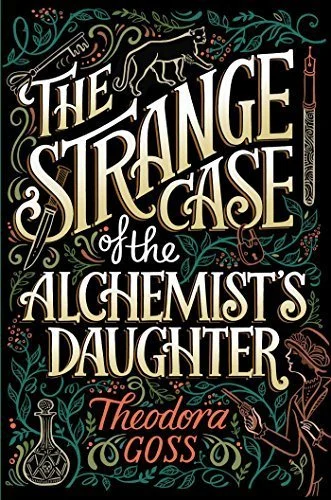
Introduction: A Fusion of Classic Horror and Modern Wit
In the vast landscape of Victorian-inspired fiction, few novels manage to weave the disparate threads of classic gothic horror, detective noir, and modern meta-fictional humor as seamlessly as Theodora Goss’s The Strange Case of the Alchemist’s Daughter. Far from being a mere pastiche, the novel serves as a transformative lens through which we view the iconic "monsters" of 19th-century literature. By centering the daughters of these legendary figures, Goss does not merely retell familiar stories; she breathes new, defiant life into them, creating a narrative that is as intellectually rigorous as it is emotionally resonant.
What begins as a seemingly standard mystery—the quest of Mary Jekyll to solve the enigma of her father’s past—rapidly evolves into a sprawling, multi-layered investigation of identity, autonomy, and the ethics of scientific discovery. With a narrative voice that balances the poise of Jane Austen with the investigative rigor of Arthur Conan Doyle, the novel stands as a triumph of contemporary speculative fiction.
Main Facts: The Premise of the Investigation
The story opens on a bleak, precarious note. Mary Jekyll, left penniless and alone following the untimely death of her parents, finds herself adrift in a society that offers little support to unattached women of her standing. Her curiosity, however, proves more potent than her poverty. A series of cryptic clues leads her to believe that Edward Hyde, the infamous associate and murderer linked to her father, Dr. Henry Jekyll, may still be active.
For Mary, the prospect of capturing Hyde is not merely a matter of justice; it is a financial necessity. A significant reward is attached to his apprehension, offering a potential path to security. However, the path to Hyde is far from linear. Her pursuit leads her to a startling discovery: Diana, the feral, neglected daughter of Edward Hyde, who has been raised in the stark confinement of a convent.
As Mary enlists the legendary Sherlock Holmes and Dr. Watson to navigate the dangerous underworld of London, she begins to assemble a remarkable circle of peers. She discovers other women—Beatrice Rappaccini, Catherine Moreau, and Justine Frankenstein—all of whom are the products of the same brand of reckless, "mad" science that defined their fathers’ legacies.
Chronology of the Narrative Arc
The progression of The Strange Case of the Alchemist’s Daughter follows a traditional mystery structure, yet it constantly subverts the reader’s expectations through its unique narrative framing.
- The Catalyst: Mary Jekyll’s financial desperation drives her to investigate her father’s secret laboratory notes, setting her on a collision course with the remnants of Edward Hyde’s life.
- The Gathering: Mary secures the aid of Holmes and Watson, acting as a bridge between the respectable world and the hidden, monstrous subculture of Victorian London. Through this, the "Athena Club" begins to form as she locates other "daughters" created through scientific experimentation.
- The Investigation: As the group grows, their investigation shifts from a simple hunt for a murderer to the uncovering of a clandestine, global organization of scientists—the Société des Alchimistes—who operate without moral oversight.
- The Confrontation: The culmination of the novel sees the daughters moving from victims of their fathers’ legacies to active agents. They must confront the very institutions that created them, forcing a reckoning between the "monstrous" labels society has applied to them and their own inherent humanity.
Supporting Data: The Anatomy of a Genre-Bending Novel
The critical reception of the book highlights its success in balancing disparate tonal elements. Unlike many "reimagining" novels that rely heavily on the reader’s prior knowledge of original source material, Goss’s work is remarkably accessible.
A Meta-Fictional Masterclass
One of the most daring elements of the novel is its use of the "fourth wall." The characters themselves are, within the context of the story, writing the book. This creates a playful, recursive narrative where the characters frequently bicker, interrupt, and debate the accuracy of the story they are telling. This choice does more than provide comic relief; it allows for a meta-commentary on the nature of storytelling and the male-dominated literary canon that originally birthed these characters.
The Power of "Found Family"
At its heart, the novel is a story of found family. In an era where women were largely defined by their relationships to men—as wives, sisters, or daughters—the alliance between Mary, Beatrice, Catherine, and Justine represents a radical form of solidarity. Their loyalty to one another, developed through shared trauma and a collective sense of purpose, acts as the emotional anchor for the mystery plot.

Official Perspectives and Critical Analysis
Julia Kitvaria Sarene, a long-time literary critic and veteran bookseller, notes that the strength of the novel lies in its character-driven focus. According to Sarene, the book succeeds because it refuses to treat its protagonists as mere props for a mystery. "The voice of the book is what really carries it," she remarks. "The way the characters interact, argue, and support each other is endlessly entertaining."
Sarene emphasizes that the book’s appeal is universal. "I have read some, but not all, of the original books being referenced, and that was never a problem," she explains. "The story is easy to slip into even if you do not know every source." This accessibility is a testament to the clarity of Goss’s prose and her ability to build a world that is internally consistent and deeply engaging.
The book’s structure, which functions as a "Victorian mystery reimagined through a modern lens," is widely praised for its ability to avoid the pitfalls of heavy-handed moralizing. Instead, the novel offers a "cozy, feel-good feeling" that persists long after the final chapter, despite the dark subject matter of the experimentation and the looming threat of the Société.
Implications: The Legacy of the Athena Club
The impact of The Strange Case of the Alchemist’s Daughter extends beyond its status as a piece of entertaining fiction. It represents a broader movement in contemporary literature: the reclamation of the female narrative in gothic and classic horror.
Redefining the Monster
By focusing on the "daughters" of Frankenstein, Moreau, and Jekyll, Goss challenges the reader to reconsider the definition of "monstrous." The scientists—the men of status, education, and institutional power—are revealed to be the true villains, driven by ego and a complete lack of ethical constraint. Conversely, the women they created, once labeled as freaks or experiments, are portrayed as the true protagonists who possess the agency to right the wrongs of their creators.
Impact on Modern Fantasy
The novel serves as a blueprint for how to handle well-trodden literary territory without falling into cliché. By injecting humor and a "found family" dynamic, Goss revitalizes characters that have been studied and deconstructed for over a century. For the reader, the implication is clear: the classic stories we think we know are only the beginning. There is always a hidden perspective, a forgotten voice, or a new story waiting to be told between the lines of the past.
Conclusion
The Strange Case of the Alchemist’s Daughter is a remarkable achievement. It stands as a testament to the power of character-driven fiction, proving that even the most well-known horror tropes can be transformed into something vibrant, witty, and profoundly moving. Whether one is a devotee of classic Victorian literature or a fan of modern, dialogue-heavy fantasy, the journey of Mary Jekyll and the Athena Club offers a rich, immersive experience.
As the literary world continues to evolve, works like this provide a vital reminder that the best stories are not just those that offer mystery and suspense, but those that offer a sense of belonging. The "monsters" of the past have been given a voice, and in doing so, Theodora Goss has created a modern classic that celebrates the triumph of the human spirit—even when that spirit is forged in a laboratory.









No comments yet. Be the first to join the conversation!