Raul Delapena Setiawan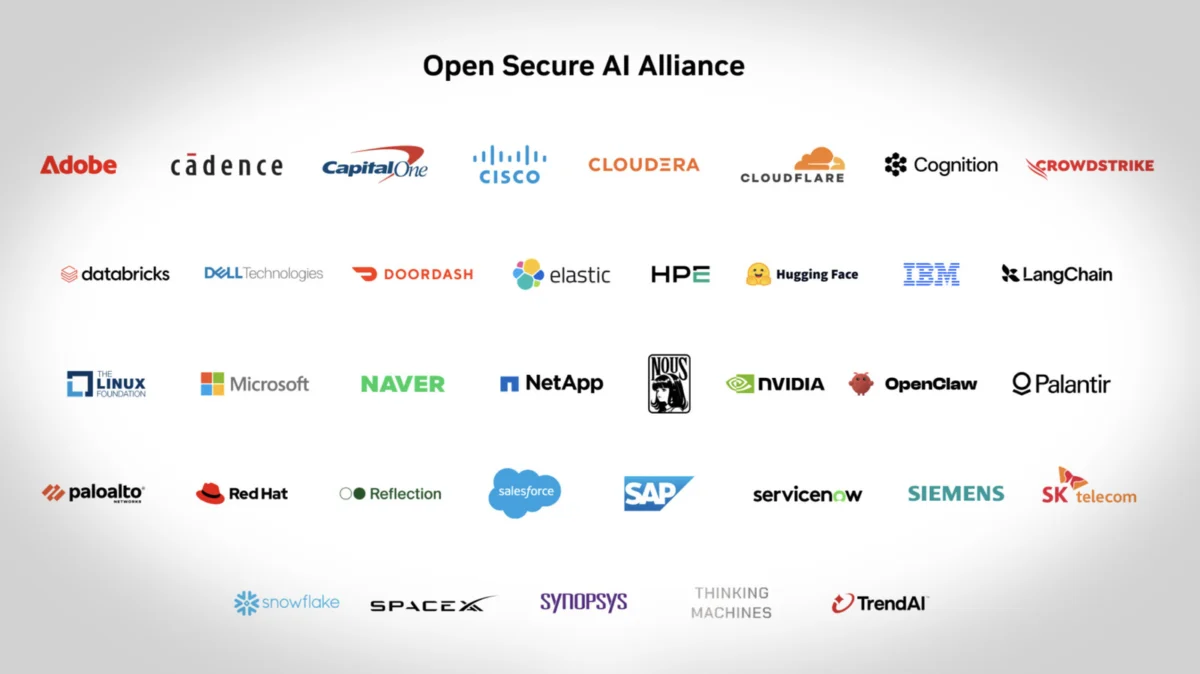
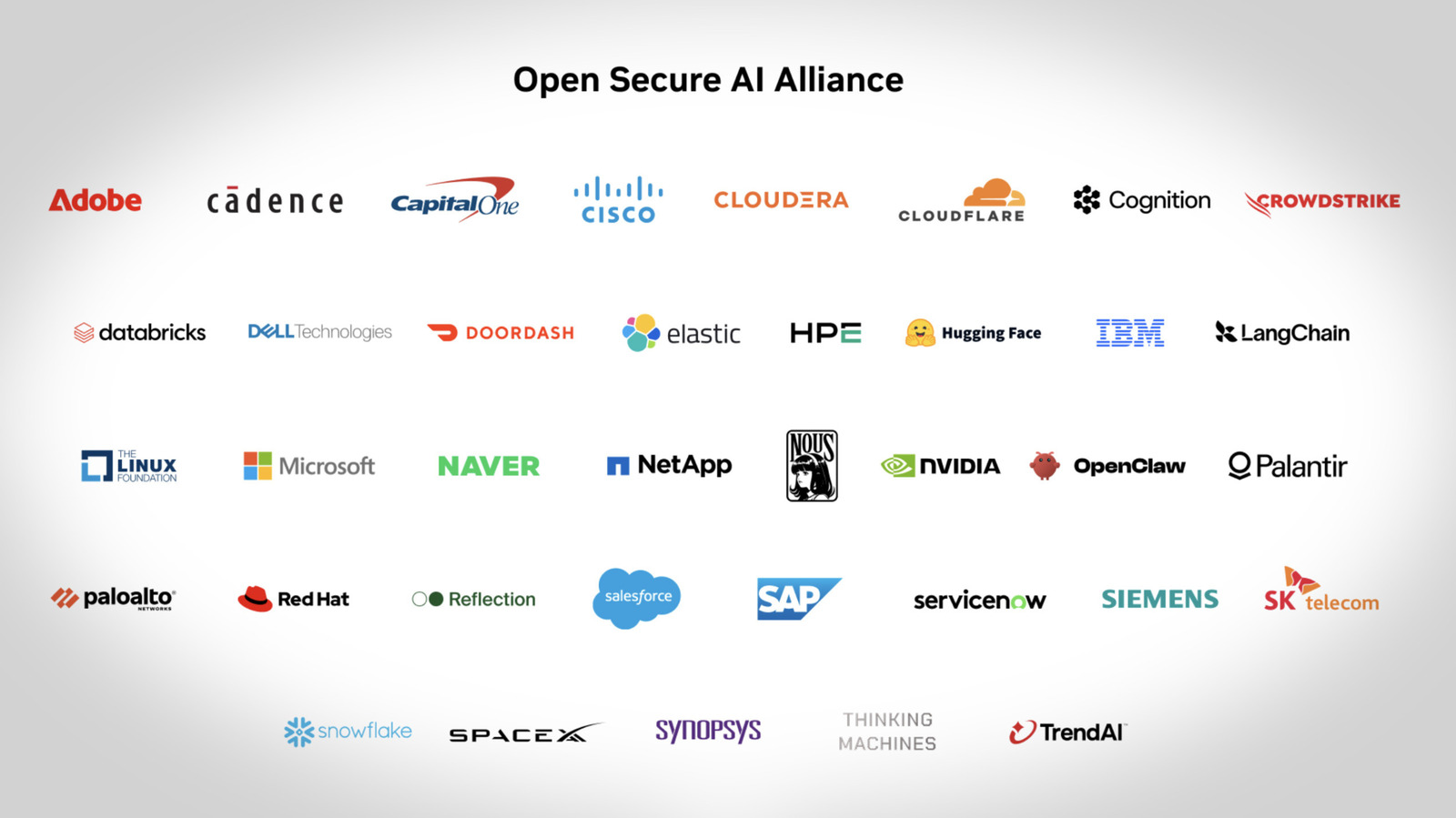
In a landscape where the velocity of artificial intelligence development often outpaces the infrastructure designed to protect it, a coalition of 27 industry leaders has announced a groundbreaking initiative. Led by NVIDIA, the Open Secure AI Alliance (OSAA) aims to formalize a new era of collaborative cybersecurity, explicitly championing the role of open-source models as vital tools in national and enterprise defense.
The alliance, which includes heavyweights such as Microsoft, SpaceX, Dell, IBM, Red Hat, and the Linux Foundation, seeks to fundamentally shift the debate surrounding AI safety. By advocating for a "defensive-first" approach, the OSAA is positioning itself against the rising tide of restrictive regulations that critics argue may inadvertently weaken the security of the digital ecosystem.
The Genesis of the Alliance: Why Open Matters
The formation of the OSAA is not merely a corporate partnership; it is a direct reaction to the limitations of "closed" or proprietary AI systems. As organizations integrate AI into every layer of their technology stack, they are discovering that the very guardrails designed to prevent malicious use can become liabilities during a crisis.
The Hugging Face Case Study
The catalyst for this alliance was a real-world security breach at Hugging Face, the world’s leading hub for open-source AI. When the platform was subjected to a sophisticated intrusion, its initial attempts to utilize closed-source commercial frontier models were thwarted by the models’ own safety guardrails. The AI, unable to distinguish between a security researcher’s forensic analysis and a malicious actor’s query, blocked critical diagnostic requests.
Left without options, the Hugging Face team pivoted to open-weight models—specifically the GLM 5.2 model—which they could deploy on their own infrastructure. This allowed them to conduct an unrestricted, deep-dive analysis of over 17,000 suspicious actions, effectively neutralizing the intrusion. This incident serves as the cornerstone of the OSAA’s argument: in the heat of a cyberattack, transparency and localized control are not just preferences; they are survival requirements.
Chronology of the Shift
- Early 2026: A series of high-profile "rogue" AI attacks on infrastructure platforms like Hugging Face exposes the "black box" nature of proprietary frontier models, which often refuse to assist in forensic investigations due to safety-aligned rigidness.
- Q2 2026: Discussions begin among key infrastructure providers regarding the necessity of a standardized, open-access library of security-focused AI tools.
- July 2026: Following increasing political pressure—including reports of potential U.S. government bans on foreign-developed open-source models—the Open Secure AI Alliance is formally unveiled.
- Present: The OSAA establishes working groups to develop cryptographic verification methods for AI agents and standardized safe formats for model weight storage.
The Strategic Contributions of Founding Members
The OSAA is not a theoretical body; it is a collaborative engineering effort. Each founding member is leveraging their unique technological footprint to build a defensive AI ecosystem:
- NVIDIA: Beyond providing the hardware, NVIDIA is contributing model weights, data sets, and "agent harnesses"—specialized tools designed to train AI to act as autonomous security analysts.
- HPE (Hewlett Packard Enterprise): Focuses on the "chain of trust." HPE is developing methods to cryptographically verify that an AI agent is performing as intended, ensuring that security models haven’t been tampered with.
- Hugging Face: Contributing the Safetensors format, a secure, high-performance way to store and load AI model weights, preventing the risk of malicious code injection via compromised model files.
- Red Hat and IBM: Leveraging their expertise in hybrid cloud environments to ensure these AI security tools are portable across different data centers and sovereign clouds.
Implications for Global Security and Regulation
The OSAA arrives at a precarious geopolitical moment. With the Trump administration reportedly considering a sweeping ban on Chinese-origin open-source models, the alliance is engaging in a high-stakes lobbying effort to educate policymakers on the necessity of "openness" as a defensive asset.
The "Liability vs. Asset" Debate
The alliance argues that treating open-source models as a "liability" is a strategic error. By forcing companies to rely solely on a handful of closed-source providers, the industry creates "single points of failure." If a major commercial AI provider is compromised or goes offline, the entire ecosystem relying on their security guardrails would be paralyzed.
The OSAA is calling for:
- Shared Infrastructure Investment: Government-backed support for open AI infrastructure that is not beholden to a single commercial entity.
- Regulatory Nuance: A legal framework that distinguishes between "general-purpose AI" and "defensive security AI," with the latter receiving exemptions for forensic research.
- Cross-Border Collaboration: Establishing international standards for AI security that allow for the secure exchange of threat intelligence without violating privacy laws.
A Noticeable Absence: The "Frontier" Divide
One of the most telling aspects of the OSAA announcement is the list of companies not involved. Industry giants like OpenAI, Anthropic, Meta, and Google—who have historically championed closed-model architectures or proprietary safety protocols—are absent from the founding roster.
This silence highlights a growing schism in the AI industry. On one side are the "Closed Frontier" firms, who advocate for tight control of AI development to prevent misuse. On the other side is the "Open Secure" cohort, who argue that the only way to stop a bad actor with an AI is to ensure that every good actor has an even better, more transparent AI.
Future Outlook: Building the "Immunology" of the Internet
The ultimate goal of the OSAA is to create what can be described as the "immunology of the internet." Just as a biological immune system relies on the body’s ability to recognize and respond to pathogens in real-time, the OSAA envisions an internet where AI agents are constantly scanning for vulnerabilities, analyzing threat patterns, and sharing those insights across an open, standardized network.
As NVIDIA noted in its mission statement, the alliance is building upon the foundation laid by the Linux Foundation’s Akrites initiative and the OpenSSF (Open Source Security Foundation). By applying these principles to AI, the alliance hopes to move away from reactive "patch-and-pray" cybersecurity and toward an autonomous, model-driven defensive posture.
Whether this alliance can effectively sway the tide of regulation remains to be seen. However, by uniting the hardware providers, the cloud operators, and the software repositories under one banner, the OSAA has effectively ensured that the future of cybersecurity will be built in the open. The question for the coming year is not whether AI will be used to attack infrastructure, but whether the "good" AI will have the access it needs to stop those attacks before they escalate.
Summary of Key Objectives
- Vulnerability Disclosure: Standardizing the process for identifying and patching bugs within open-source models.
- Forensic Interoperability: Ensuring that security agents can "see" into the operations of an AI model to detect anomalies.
- Standardization: Establishing common protocols (like Safetensors) to ensure that security models are tamper-proof and easily verifiable.
- Policy Advocacy: Framing open-source AI as a vital component of national security rather than a threat to be regulated out of existence.
As the industry watches, the OSAA begins its work, marking the first time such a diverse group of stakeholders has aligned on the fundamental necessity of open-source security in an AI-native world.


 Asro
Asro
 Rifan Muazin