

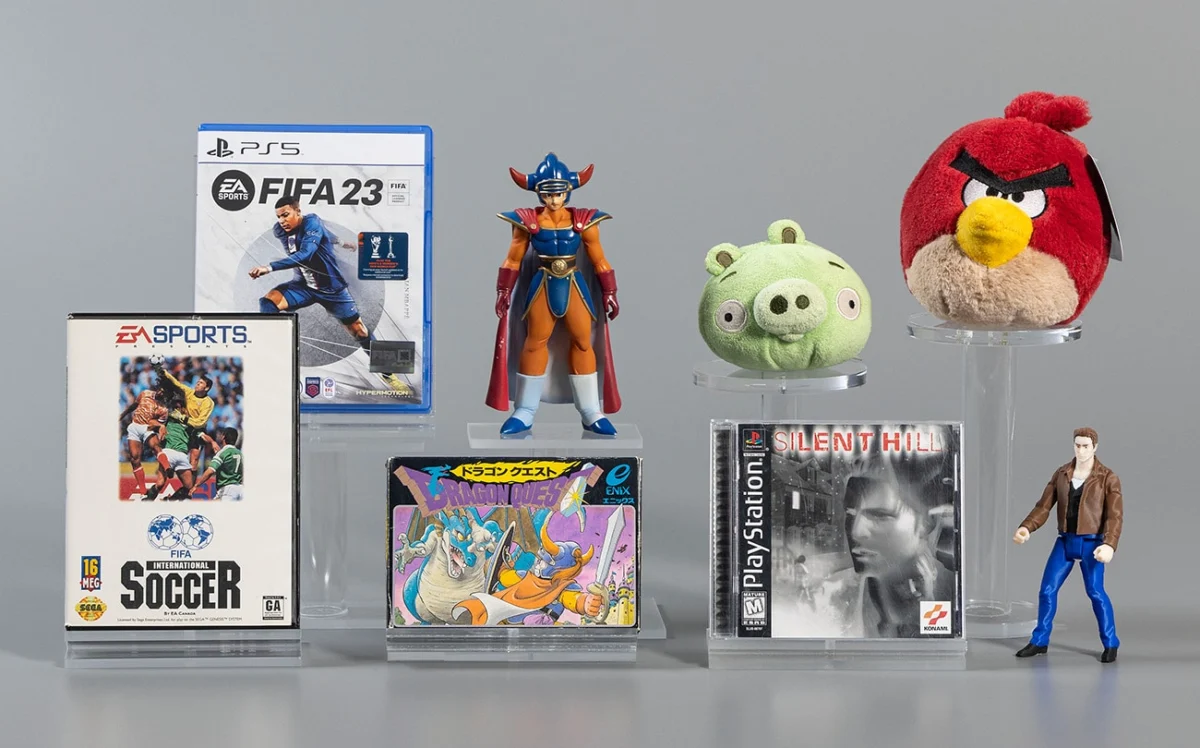
On May 7, 2026, the global gaming community turned its collective gaze toward Rochester, New York, as The Strong National Museum of Play unveiled the latest cohort of legends to be enshrined in the World Video Game Hall of Fame. Following an exhaustive selection process that balanced historical impact, reach, and longevity, four titles emerged from a highly competitive field of twelve finalists to claim their permanent place in the museum’s ESL Digital Worlds exhibit.
The 2026 inductees—Angry Birds, Dragon Quest, EA Sports FIFA International Soccer, and Silent Hill—represent a cross-section of gaming history that spans mobile revolutions, the birth of JRPG tropes, the dominance of sports simulation, and the pinnacle of psychological horror. These titles join an elite group of previously inducted classics, solidifying their legacy as cornerstones of contemporary culture.
The Selection Process and the 2026 Finalists
The journey to the Hall of Fame is never easy. The Strong National Museum of Play employs a rigorous vetting process that includes input from an international advisory committee of journalists, scholars, and industry experts. The criteria for induction are stringent: a game must have achieved "icon status," possess long-term influence, and exhibit a significant reach across international borders.

This year’s field of finalists was perhaps the most diverse in the Hall’s history. Among the nominees that did not make the final cut this year were beloved classics and modern phenomena: Frogger, Galaga, League of Legends, Mega Man, PaRappa the Rapper, RuneScape, The Elder Scrolls V: Skyrim, and Tokimeki Memorial. The exclusion of such high-profile titles underscores the immense difficulty of narrowing down a field that essentially defines the evolution of interactive entertainment.
Chronology of Innovation: A Look at the Inductees
To understand why these four games were chosen, one must view them through the lens of their respective eras and the technological ceilings they shattered.
1986: Dragon Quest – The Architect of the JRPG
Released in 1986, Dragon Quest (known as Dragon Warrior in North America) did more than just tell a story; it codified a genre. Before its release, computer roleplaying games (CRPGs) were largely the domain of complex, keyboard-heavy Western PC titles. Dragon Quest successfully distilled these intricate mechanics into a console-friendly experience. By combining compelling narrative structures, memorable character designs by Akira Toriyama, and user-friendly controls, it laid the groundwork for every Japanese-style roleplaying game that followed. It served as the direct inspiration for industry titans like Final Fantasy and the Pokémon franchise, proving that deep, world-spanning adventures could thrive in the living room.

1993: EA Sports FIFA International Soccer – The Global Pitch
When Electronic Arts released FIFA International Soccer in December 1993, the world of sports simulation was already crowded. Yet, FIFA managed to do what others could not: it captured the "beautiful game" with a global sensibility that resonated from London to Tokyo. It became an instant commercial juggernaut, famously ending the year as the best-selling game in Europe. Over the subsequent three decades, the franchise evolved into a cultural behemoth, selling over 325 million units by the early 2020s. It represents the pinnacle of the "annual release" model, turning a video game into a yearly sporting tradition as vital to fans as the FIFA World Cup itself.
1999: Silent Hill – Defining Psychological Dread
As the 90s drew to a close, Konami’s Silent Hill redefined what a video game could evoke. While the horror genre had previously relied on jump scares and action-heavy "survival" mechanics, Silent Hill prioritized atmosphere, isolation, and psychological torment. Utilizing innovative 3D graphics and a dynamic, often claustrophobic camera system, the game turned the player’s own mind against them. Its success was not limited to the digital realm; with over 14 million copies sold across the franchise and a film adaptation that grossed over $100 million in 2006, Silent Hill proved that horror in gaming could be high art.
2009: Angry Birds – The Mobile Catalyst
In the late 2000s, gaming was undergoing a seismic shift from consoles and PCs to the pockets of the masses. Rovio’s Angry Birds (2009) was the catalyst for this revolution. By perfecting the "pick-up-and-play" model, the game turned the simple act of hurling birds at pigs into a global phenomenon. It was arguably the first true "smartphone killer app," boasting billions of downloads and successfully transitioning into a multi-media brand that included feature films, theme park attractions, and endless merchandise. It changed the fundamental relationship between humans and their mobile devices, turning a communication tool into a permanent gaming platform.

Supporting Data and Industry Impact
The inclusion of these games is backed by staggering metrics. EA Sports FIFA International Soccer stands as the highest-grossing sports franchise in history, acting as a bridge between the physical and digital sporting worlds. Angry Birds remains one of the most downloaded mobile games in history, a testament to its accessibility. Dragon Quest boasts a multi-generational legacy in Japan, where it is often considered a national treasure. Meanwhile, Silent Hill serves as the benchmark for atmospheric storytelling, a title frequently cited by developers in the indie horror space as their primary influence.
The economic footprint of these four inductees is estimated in the tens of billions of dollars, but their cultural footprint is immeasurable. They have influenced how we design user interfaces, how we tell interactive stories, and how we consume sports.
Official Responses from The Strong
The selection committee at The Strong National Museum of Play emphasized the "transformative" nature of these inductees.

Kristy Hisert, director of collections management, noted the specific gravity of the mobile gaming pioneer: "Angry Birds helped launch not only billions of birds but the entire mobile gaming revolution. It shattered records and helped transform people’s relationships with the palm-sized communication and gaming devices they carry in pockets and purses."
Jeremy Saucier, vice president for interpretation and electronic games, highlighted the unprecedented reach of the FIFA franchise: "EA Sports FIFA International Soccer was an instant success. Despite launching in December of 1993, it was the best-selling game in Europe for that year. Given soccer’s worldwide popularity, it had a larger global imprint than other popular sports titles."
Implications for the Future of Gaming History
The induction of these four games signifies a maturation in how we curate the history of interactive media. By including a mobile game like Angry Birds alongside a 1986 JRPG, The Strong is acknowledging that "impact" is not measured solely by graphical fidelity or budget. Instead, impact is measured by how a piece of software alters the way human beings interact with their world.

For the industry, these inductions serve as a reminder that the games of today are the heritage of tomorrow. As developers continue to push the boundaries of AI, virtual reality, and cloud gaming, they do so on the shoulders of the mechanics and storytelling techniques pioneered by these four inductees.
The World Video Game Hall of Fame now stands as a testament to the fact that video games are not merely "playthings," but are instead the defining cultural artifacts of the 21st century. Visitors to The Strong National Museum of Play in Rochester can now experience these titles in the ESL Digital Worlds exhibit, where they are preserved not just as code, but as the living, breathing memories of a global community.
As we look toward the 2027 cycle, the question remains: which current titles will possess the staying power to eventually join this distinguished group? If history is any guide, the answer lies in those games that do more than just entertain—they change the way we see ourselves.











No comments yet. Be the first to join the conversation!