

By Rachel Teo, Contributing Writer
For decades, the visual vocabulary of Japan’s major metropolises has been dictated by the relentless hum of neon signage, high-definition digital billboards, and the meticulous, clean-cut architecture of corporate Japan. To the casual observer walking through the dense corridors of Shinjuku or the labyrinthine alleys of Osaka’s Dotonbori, the streets are vibrant, yet they are famously sterile when compared to the gritty, spray-painted urban canvases of New York, Berlin, or London.
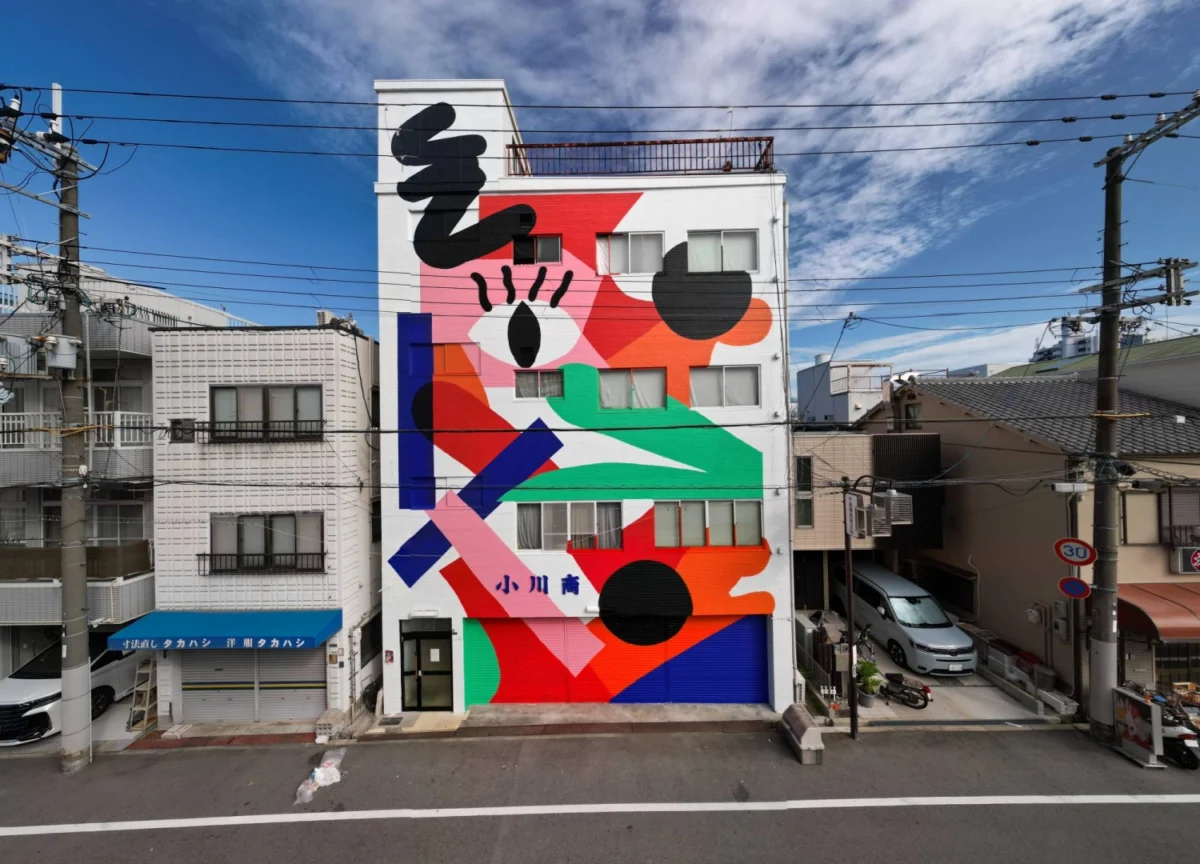
In Japan, the perception of graffiti has historically been binary: it is either state-sanctioned advertising or it is vandalism. However, a seismic shift is occurring in the cultural fabric of the nation. Organizations like Wall Share are bridging the gap between underground creativity and the rigid social order of Japan, turning the concrete walls of Osaka’s Konohana neighborhood into a global gallery.
The Main Facts: A Canvas for Global Voices
The Konohana neighborhood in Osaka serves as the epicenter of this burgeoning movement. Wall Share, a pioneering organization, has successfully facilitated the creation of 37 murals in the district. What is perhaps most striking about this initiative is the sheer breadth of its international collaboration. These murals are not merely local expressions; they are the work of artists hailing from 22 different countries.
By securing permissions from property owners and engaging with local stakeholders, Wall Share has navigated the complex, often daunting Japanese bureaucracy to create "sanctioned spaces." These are not the illicit tags found in hidden alleyways; these are high-concept, curated murals on parking garages, industrial warehouses, sports stadiums, and boutique hotels. This shift represents a transition from viewing street art as an act of defiance to recognizing it as a legitimate form of urban revitalization and cultural diplomacy.
A Chronology of Change: From Vandalism to Urban Art
The history of graffiti in Japan is relatively short and fraught with legal tension. To understand the current renaissance, one must look at the historical trajectory of Japanese public art.
The Era of Zero Tolerance (1980s–2000s)
During the late 20th century, as Western hip-hop culture began to permeate Japanese youth demographics, "bombing" (illegal graffiti) saw a minor spike in major urban centers. The response from the Japanese government was swift and uncompromising. Public spaces were scrubbed clean with a fervor that bordered on the obsessive. Under the Japanese Penal Code, graffiti is treated as property damage, punishable by heavy fines and, in some cases, incarceration. This period solidified the societal view that street art was synonymous with social decay.
The Turning Point (2010s)
The late 2010s marked a subtle softening. As Japan began to gear up for international events, such as the (eventually delayed) 2020 Tokyo Olympics, urban planners began to look at street art as a tool for "placemaking." Projects began appearing in remote industrial areas, away from the pristine facades of central business districts, testing the waters of public acceptance.
The Institutionalization (2020–Present)
The current era is defined by the professionalization of the craft. Organizations like Wall Share have moved the conversation into the boardrooms of developers and the offices of local government. By positioning themselves as mediators, these organizations have successfully argued that murals can increase property value, foster community pride, and draw tourism to aging, post-industrial districts like Konohana.
Supporting Data: Why Murals Matter
The economic and social arguments for street art in Japan are beginning to outweigh the historical stigma. Data regarding urban development suggests that public art interventions correlate with several positive externalities:

- Tourism and Foot Traffic: In Osaka’s Konohana, the presence of the 37 murals has turned a previously overlooked neighborhood into a destination for "art-tourism." Social media engagement—driven by the highly "Instagrammable" nature of these murals—has resulted in a measurable increase in foot traffic for local businesses.
- Community Cohesion: Surveys conducted by mural projects in Japan suggest that residents who participate in the mural selection process feel a higher sense of "neighborhood ownership."
- Global Connectivity: By hosting artists from 22 countries, Konohana has transformed into a cultural hub. This international exchange program effectively bypasses traditional gallery systems, allowing artists to interact directly with the Japanese public.
Official Responses and The Legal Landscape
Despite the success of these projects, the legal environment remains complex. Street artists still operate in a "gray zone." When asked about the legal status of murals, local government officials often reiterate that any art produced without a permit remains illegal. However, there is a growing trend of "discretionary enforcement."
"The law has not changed, but the appetite for regulation has," notes one urban planning consultant familiar with the Osaka projects. "When a mural is commissioned by a property owner, it is no longer vandalism. It is an aesthetic improvement to private property. The police do not intervene because the legal framework for ‘vandalism’ requires a victim, and here, the property owner is the beneficiary."
Public sentiment is also shifting. While the older generation may still associate spray paint with the 1990s-era subculture, the younger generation—raised on the visual saturation of the internet—tends to view these murals as an essential part of a modern, cosmopolitan city.
Implications: The Future of the Japanese Streetscape
The work being done in Konohana serves as a pilot for a larger, national conversation. If Japan can successfully integrate street art into its urban planning, it could solve two pressing problems: the aesthetic stagnation of aging urban environments and the lack of cultural expression in public spaces.
The Role of Technology
The role of digital platforms cannot be understated. Wall Share and similar groups utilize apps and social media to document, map, and promote these murals. This digital footprint ensures that even if a mural is eventually painted over—as is the nature of street art—it lives on in the digital archives of the city.
Challenges Ahead
However, the movement faces significant hurdles. Japan’s emphasis on harmony (wa) and order means that any art deemed "too aggressive" or "politically sensitive" is likely to be censored. Unlike the politically charged murals of Berlin, Japanese street art tends to lean toward the decorative, the whimsical, or the abstract. Critics argue that this sanitization robs the art form of its soul. For street art to truly thrive in Japan, it must eventually be allowed to express more than just beauty; it must be allowed to express the complexities of life in modern Japan.
Conclusion: A New Aesthetic for Japan
The transformation of Konohana is a testament to the power of organized creativity. By facilitating the work of international artists, Wall Share has done more than just decorate walls; they have challenged the rigid definition of what a Japanese city can look like.
As the lines between vandalism and art continue to blur, Japan stands at a threshold. It can choose to remain a nation of sanitized, neon-lit corridors, or it can embrace the messy, beautiful, and vibrant reality of street art. If the 37 murals of Konohana are any indication, the future of the Japanese streetscape is not just bright—it is becoming increasingly, and refreshingly, human.
As we look toward the future, the integration of public art into the urban fabric will likely become a benchmark for cities that wish to remain relevant in a globalized world. Through careful negotiation, community engagement, and a respect for the cultural nuance of the country, Japan is proving that even the most rigid structures can be softened by a splash of paint and the vision of global artists.











No comments yet. Be the first to join the conversation!