

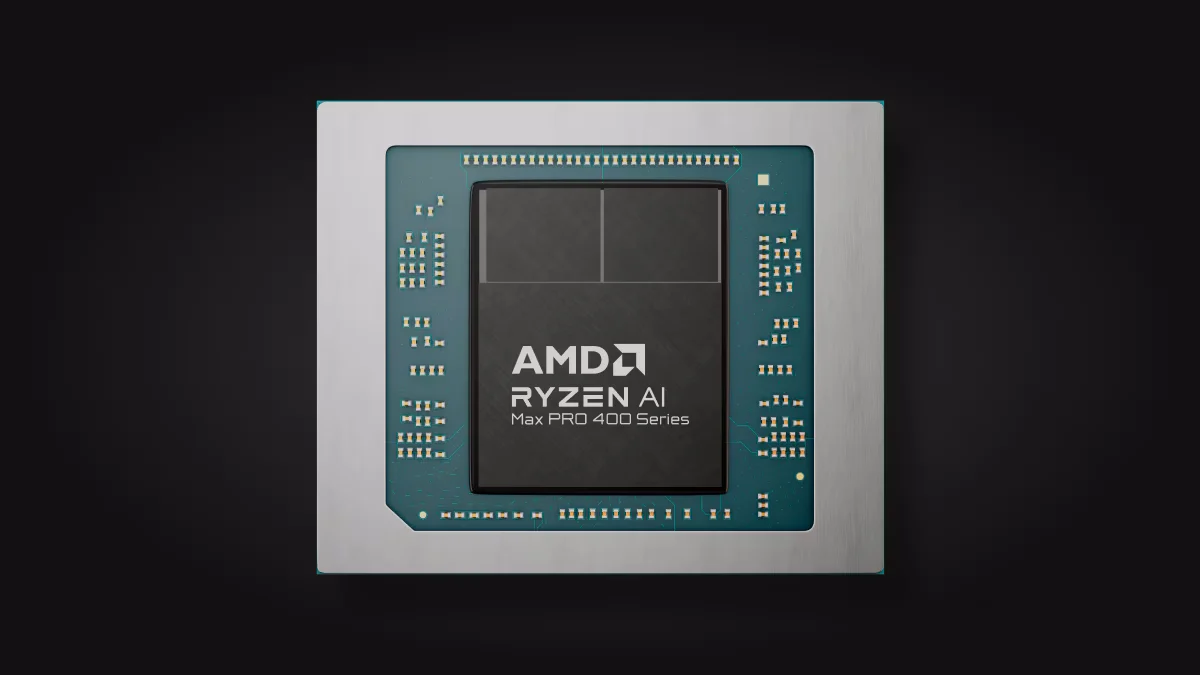
In a significant leap for high-performance mobile and enterprise computing, AMD has officially unveiled its Ryzen AI Max PRO 400 series. Representing a sophisticated architectural refresh of the "Strix Halo" silicon, this new lineup is engineered specifically to meet the burgeoning demands of local AI development. By integrating Zen 5 CPU architecture, upgraded RDNA 3.5 graphics, and a highly capable Neural Processing Unit (NPU), AMD is positioning these chips as the backbone for next-generation enterprise AI workstations.
While the current launch focuses on the PRO-tier enterprise segment, the move underscores a broader strategy to dominate the "AI PC" market, with consumer-facing variants expected to follow later this year.
The Core Evolution: Architecture and Performance
The Ryzen AI Max PRO 400 series serves as a direct evolution of the previous "Strix Halo" designs. At its heart, the series leverages the Zen 5 microarchitecture, which offers substantial improvements in instructions-per-clock (IPC) efficiency compared to its predecessors. However, the true innovation lies in how AMD has restructured the silicon to accommodate the massive memory requirements of Large Language Models (LLMs).
Memory Subsystem Overhaul
The most critical change in this generation is the implementation of a redesigned integrated memory controller. The platform now supports up to 192GB of LPDDR5X unified memory, utilizing a 4-channel, 256-bit interface. This massive memory bandwidth is a game-changer for local AI inference. Perhaps most impressively, AMD has introduced a user-defined memory partitioning system. This allows developers and enterprise IT managers to allocate up to 160GB of the system RAM directly to the integrated graphics subsystem.
For the average workstation user, this might seem excessive; however, for AI developers, this capacity is transformative. It allows for the local execution of LLMs featuring upwards of 300 billion parameters—a task previously reserved for dedicated, high-end server-grade GPUs.
Clock Speeds and NPU Efficiency
Beyond memory, AMD has pushed the silicon’s physical limits. The integrated Radeon graphics have received a boost, with top-tier configurations now hitting a maximum GPU frequency of 3.00GHz. The CPU boost clocks have similarly been optimized, reaching a peak of 5.20GHz. Furthermore, the NPU has been refined to deliver 55 TOPS (Trillions of Operations Per Second), representing a 10% performance increase over the previous generation, ensuring that low-power background AI tasks remain snappy and efficient.
Chronology: The Path to Strix Halo
The journey to the Ryzen AI Max PRO 400 series began long before this week’s announcement. To understand the significance of this release, one must look at the trajectory of AMD’s mobile and embedded strategies.
- Early 2024: Industry rumors begin to circulate regarding "Strix Halo," a high-end mobile chip designed to challenge Apple’s M-series silicon in terms of unified memory and integrated graphics performance.
- Mid-2024: AMD announces the Ryzen AI Max 300 series, setting the stage for a new paradigm in mobile AI.
- Late 2024: Developers begin requesting higher memory overhead for local inferencing of LLMs, signaling a shift in what enterprise clients require from mobile workstations.
- May 2026 (Present): AMD officially introduces the Ryzen AI Max PRO 400 series, formalizing the hardware shift towards high-memory, high-TOPS enterprise solutions.
Technical Specifications: The Product Stack
AMD has unveiled three distinct SKUs, each tailored for specific enterprise needs, ranging from entry-level AI development to high-performance computational workloads.
Ryzen AI Max+ PRO 495
The flagship model is a powerhouse, featuring 16 cores and 32 threads. It boasts a maximum boost clock of 5.20GHz and is equipped with the top-tier Radeon 8065S iGPU, which utilizes 40 compute units. With 80MB of total cache and a 55 TOPS NPU, this chip is designed for users who require zero-compromise performance on the go.
Ryzen AI Max PRO 490
Sitting in the "sweet spot" of the lineup, the 490 model offers 12 cores and 24 threads. It reaches a respectable 5.00GHz boost clock and utilizes the Radeon 8050S iGPU with 32 compute units. With 76MB of cache and a 50 TOPS NPU, it provides an excellent balance for enterprise deployments where raw performance is necessary but core count can be optimized for efficiency.
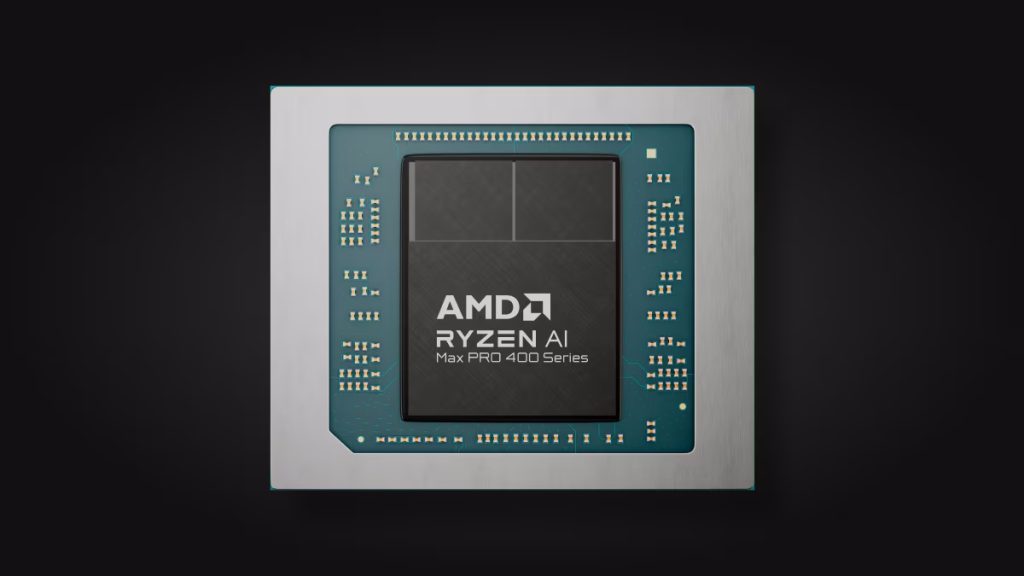
Ryzen AI Max PRO 485
The entry-level offering provides 8 cores and 16 threads, reaching 5.00GHz. It retains the same 32-compute-unit Radeon 8050S iGPU and 50 TOPS NPU as the 490 model, making it a highly efficient option for standardized enterprise hardware where AI-assisted productivity is the primary goal, rather than heavy development.
Supporting Data: Why Memory Matters
In the landscape of modern artificial intelligence, the bottleneck is rarely the compute power alone—it is the memory bandwidth and capacity. By allowing the iGPU to access up to 160GB of unified memory, AMD is effectively turning a mobile processor into a specialized AI inference machine.
To put this in perspective, running a 70B parameter model at 4-bit quantization typically requires at least 40GB of VRAM. Previous-generation mobile chips struggled to provide even half of that in a unified pool. By jumping to 192GB total support, AMD ensures that these chips are not just relevant for today’s AI models, but are "future-proofed" for the next two to three years of architectural scaling in the LLM space.
Official Responses and Strategic Positioning
While AMD has remained tight-lipped regarding specific partnerships, their documentation highlights that these processors are being rolled out with full support for "AMD PRO" enterprise management features. This includes advanced security layers, remote management capabilities, and extended stability support, which are non-negotiable for enterprise clients.
The decision to lead with the "PRO" series rather than the consumer series indicates a calculated market entry. By first establishing these chips in the hands of corporate developers and enterprise data scientists, AMD is fostering an ecosystem where their hardware is the "gold standard" for professional AI work. Once the software stack is fully optimized and the hardware is validated in enterprise environments, the transition to the consumer market will be seamless.
Implications: The Future of the AI PC
The introduction of the Ryzen AI Max PRO 400 series has profound implications for the industry.
The Death of the Discrete GPU?
For many mobile use cases, the line between an integrated GPU and a discrete mobile GPU is blurring. If the Ryzen AI Max+ PRO 495 can handle tasks that previously required a dedicated mobile RTX-class GPU, we may see a shift in laptop design. This would allow for thinner, lighter, and more power-efficient laptops that don’t sacrifice AI performance.
Decentralizing AI
By enabling massive LLMs to run locally, AMD is contributing to the decentralization of AI. Enterprise clients no longer need to rely exclusively on cloud-based APIs to perform sensitive data analysis. They can now process proprietary data on-premises, behind enterprise-grade security, without sacrificing the capabilities of the most advanced models available today.
Competitive Pressure
This move places significant pressure on both Intel and Apple. Intel must now prove that its Lunar Lake and subsequent architectures can keep pace with the sheer memory throughput offered by the Strix Halo refresh. Meanwhile, Apple, which has long relied on its unified memory architecture as a primary differentiator for the Mac, finally faces a direct, high-performance competitor in the x86 space that matches its integrated approach.
Conclusion
The Ryzen AI Max PRO 400 series is not merely a processor update; it is a declaration of intent. AMD has recognized that the future of computing is tethered to AI, and that the "AI PC" requires more than just a fast NPU—it requires the memory architecture to support heavy workloads. As these chips begin to find their way into professional workstations, they will likely redefine the expectations for mobile performance in the enterprise sector. While consumers must wait a bit longer to get their hands on this hardware, the foundation being laid today suggests a future where high-end AI performance is a standard feature of the modern laptop, not a luxury.









No comments yet. Be the first to join the conversation!