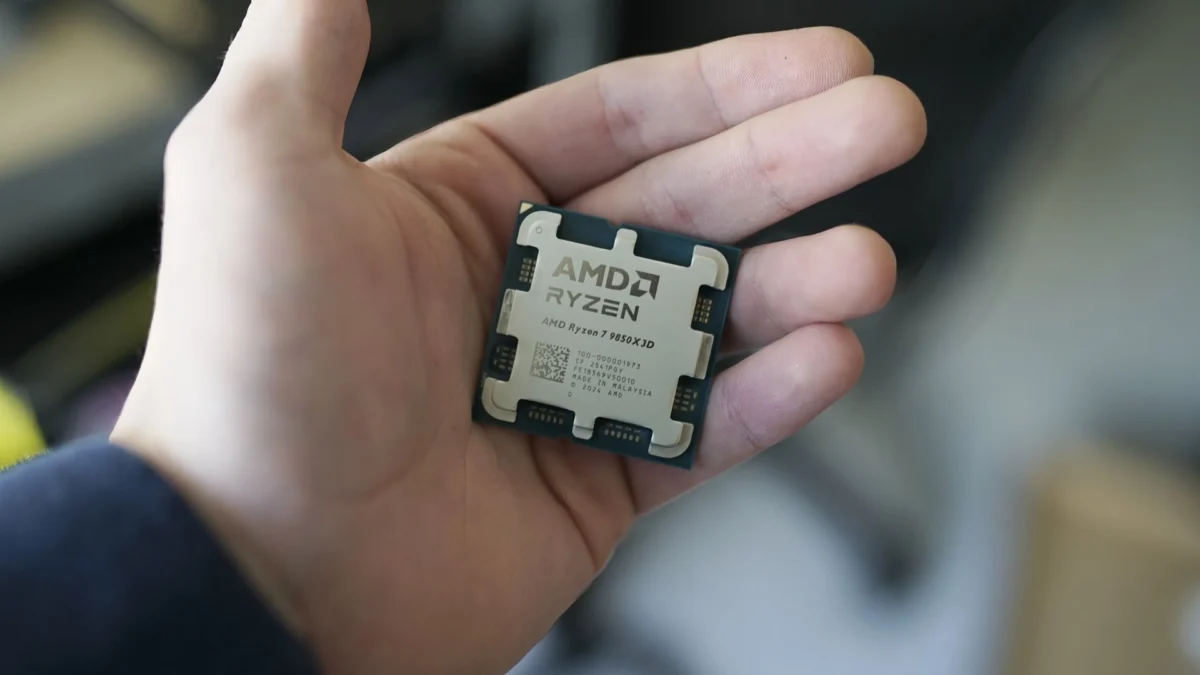
In an industry currently grappling with a protracted slump in consumer hardware demand, manufacturers are frequently forced to navigate a delicate balance between maintaining profit margins and keeping their product stacks relevant. AMD, a company that has enjoyed significant momentum with its AM5 platform and the highly successful Ryzen 7000 series, appears to be the latest firm to experiment with product segmentation. Recent reports, however, suggest that this strategy may be taking a puzzling turn, with rumors of an incoming Ryzen 5 7500 non-F model that defies conventional market logic.
The Core Facts: What We Know About the Ryzen 5 7500
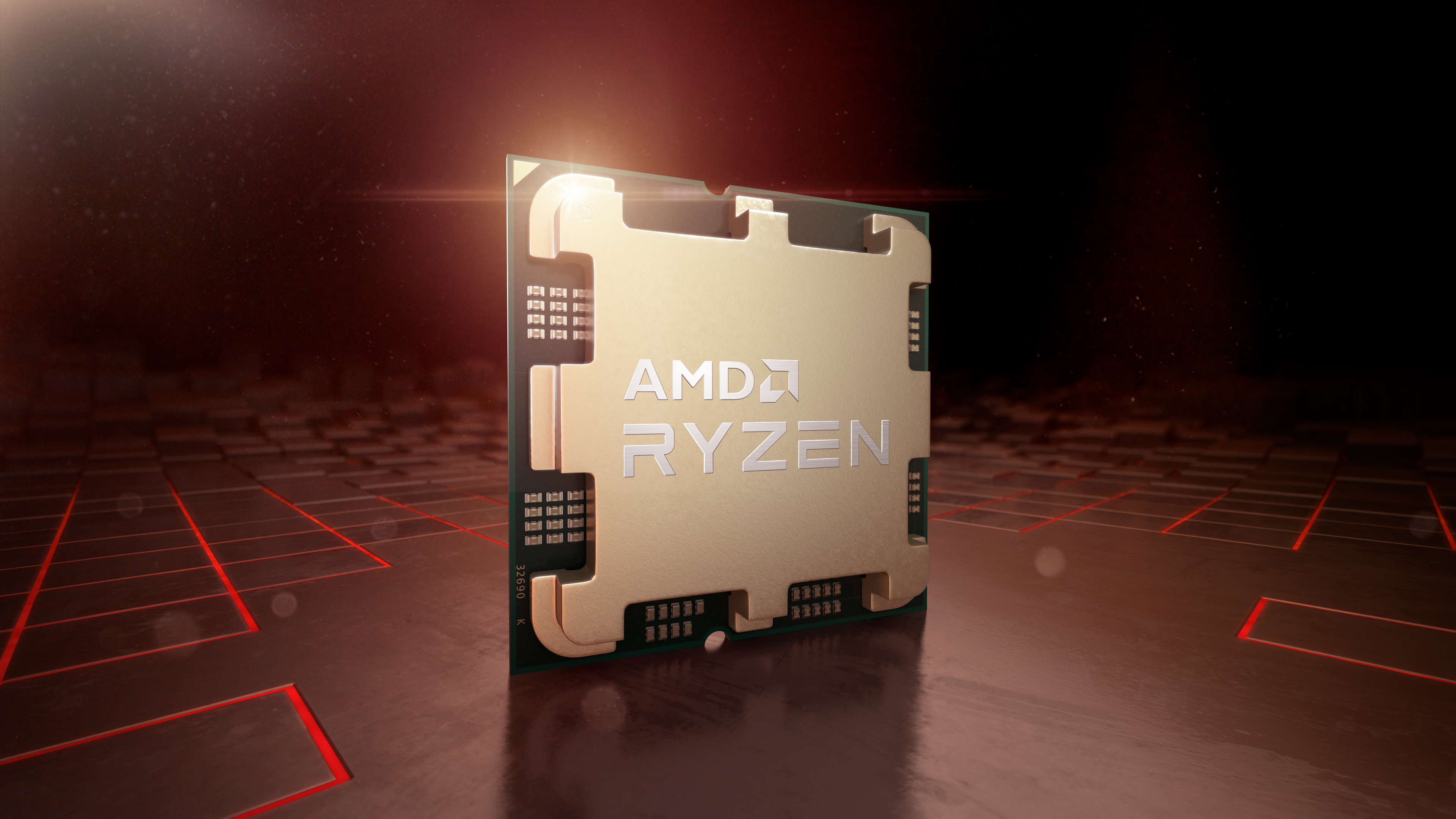
The primary source of this information is industry insider and reputable leaker Roland Quandt, who recently disclosed specifications for an unannounced processor via social media channels. According to these reports, AMD is preparing to release the Ryzen 5 7500—a standard, non-3D V-Cache, non-X variant that aims to fill a niche in the budget-to-mid-range market.
The technical specifications provided by the leak indicate that the chip is nearly identical to its predecessor, the Ryzen 5 7500F. The hardware architecture features:
- Core Configuration: 6 cores and 12 threads (6C/12T).
- Clock Speeds: A base frequency of 3.7 GHz with a maximum boost clock of 5.0 GHz.
- Cache: A total of 38MB of cache (likely configured as a 32MB L3 and 6MB L2 split).
- TDP: A standard 65W thermal design power.
- Platform: AM5 socket compatibility.
The critical distinction between the 7500 and the 7500F is the inclusion of integrated graphics. The "F" suffix in AMD’s nomenclature historically denotes a version where the integrated graphics processing unit (iGPU) has been disabled or removed. By removing the "F," the new Ryzen 5 7500 presumably re-enables the iGPU. However, based on the architecture seen in the Ryzen 5 7600, this iGPU is expected to be limited to just two small RDNA 2 compute units (CUs). While this is more than sufficient for standard desktop display output, troubleshooting, or office productivity, it is effectively non-functional for any meaningful gaming performance.
A Chronological Perspective on the Ryzen 7000 Series
To understand why this potential release is being met with skepticism, one must look at the timeline of the AM5 platform’s evolution.
2022: AMD launched the Ryzen 7000 series with a focus on high-performance gaming and workstation tasks. The rollout was characterized by a premium price point, as the platform required the adoption of DDR5 memory and new motherboards.
2023: Recognizing the need for a more accessible entry point to the AM5 ecosystem, AMD introduced the Ryzen 5 7500F. This "F" variant was a tactical masterstroke, stripping away the integrated graphics to lower costs, making it one of the most popular value-oriented processors on the market. It provided the performance of the more expensive 7600X while undercutting the price, cementing itself as a go-to choice for budget-conscious builders.
2024-2025: As the market shifted and the Ryzen 9000 series arrived, the Ryzen 7000 series transitioned into a "legacy-plus" status. Prices for these older chips fell significantly, with the 7500F frequently appearing in bargain bins and as a staple in budget gaming PCs.
2026 (Projected): The reported entry of a "non-F" Ryzen 5 7500 into this late-stage life cycle suggests a desperate attempt to maximize inventory utilization or provide a specific option for OEM (Original Equipment Manufacturer) partners who require integrated graphics for office-grade workstations.
Supporting Data: The Price Discrepancy
The most controversial element of the recent leaks is the reported pricing. According to the leak, the Ryzen 5 7500 is expected to retail for approximately 230 Euros (roughly $267 USD).
This pricing strategy creates a massive gap when compared to the current market reality of the 7500F. The 7500F, which offers effectively the same computing performance, can currently be purchased for as low as $116 in some regions, and approximately 105 Euros in Germany.
When one considers the competitive landscape, the proposed price of $267 seems detached from current consumer value. For that same investment, a user could secure:
- The Ryzen 5 9600X: A newer, faster, and more efficient Zen 5-based processor.
- Platform Bundles: At the $250 price point, retailers like Newegg are frequently offering CPU-plus-motherboard combinations that include the 9600X, providing a much higher value proposition than a standalone 7500.
- The Ryzen 5 7600X3D: A specialized, high-performance gaming chip that, at recent retail prices, is often found for less than $250.
The only logical justification for this pricing is the inclusion of a boxed cooler and the convenience of a full retail package, whereas the 7500F is often distributed as a tray-only chip. However, for most enthusiasts, the cost of a basic aftermarket air cooler is significantly lower than the $150 premium suggested by the leak.
Official Responses and Industry Silence
As of this writing, AMD has not released an official statement regarding the existence or the pricing of a non-F Ryzen 5 7500. This is standard procedure for the company, which typically avoids commenting on rumors or unreleased product SKUs.
Industry analysts suggest that if such a product were to launch, it would likely be a "stealth" release—aimed almost exclusively at system integrators and large-scale corporate vendors rather than the DIY (Do-It-Yourself) PC enthusiast market. In the enterprise sector, integrated graphics are a requirement for troubleshooting and display redundancy, whereas in the gaming market, they are viewed as redundant. If this chip is indeed an OEM-only SKU, the high retail "suggested" price might simply be a placeholder or a result of limited, high-margin availability.
Implications for the Consumer and the Market
The rumors surrounding the Ryzen 5 7500 highlight a broader trend in the CPU market: the "inflation of entry." As supply chains have tightened and manufacturing costs have fluctuated, companies like Intel and AMD have increasingly experimented with price hikes on existing technology.
1. The Erosion of Value
If a two-year-old, mid-range chip is priced at a premium that competes with the latest generation, it risks alienating the enthusiast base that has historically supported AMD’s market share gains. Consumers are becoming increasingly savvy, utilizing tools like price-tracking websites and benchmark databases to ensure they are not paying "new" prices for "old" silicon.
2. OEM vs. Retail
The divide between the DIY market and the pre-built market is widening. While the DIY enthusiast will likely ignore this potential 7500 model in favor of better-performing, lower-cost alternatives, the average consumer purchasing a pre-built PC from a large retailer may not have the technical knowledge to realize they are paying for a premium chip that is technically inferior to the newer offerings.
3. The Future of the AM5 Platform
AMD has promised longevity for the AM5 platform, which is a significant selling point. However, that longevity is only valuable if the ecosystem is populated with competitive, well-priced processors. By releasing older silicon at inflated prices, AMD risks tarnishing the perception of the AM5 platform as a budget-friendly home for upgrades.
Final Thoughts
The reported arrival of the Ryzen 5 7500 is a reminder that the hardware market is rarely driven by sentiment or performance-per-dollar alone. It is driven by inventory management, regional supply chain requirements, and the needs of corporate clients.
While the prospect of paying nearly $270 for a processor that competes with a $116 alternative seems illogical on the surface, the context of its release—likely targeted at system integrators—may explain the absurdity. For the average builder, however, the advice remains clear: stick to the current market leaders like the 7500F for budget builds, or step up to the 9000 series if the budget allows. Unless there is a significant correction in the suggested retail price, the Ryzen 5 7500 will likely remain a curious, albeit unnecessary, footnote in the history of the Zen 4 architecture.
As we await further clarification from AMD, the tech community will continue to monitor the market, keeping a close eye on whether this chip manifests as a genuine consumer product or simply as a ghost in the inventory systems of large-scale computer manufacturers. For now, it serves as a stark warning to all consumers: always verify the current generation and competitive performance before hitting the "buy" button.