

Published: May 9, 2026, 8:00 AM EDT
The vast expanse of the science fiction genre has gifted audiences with countless indelible worlds – from the gritty, lived-in desertscapes of Tatooine in Star Wars to the breathtaking, bioluminescent rainforests of Pandora in Avatar. Yet, few narratives have dared to delve into the sheer, untamed brilliance and ecological terror of an alien ecosystem with the profound depth and artistic vision of Scavengers Reign. This overlooked animated masterpiece, hailed by critics for its unparalleled world-building, is poised to depart Netflix at the close of May 2026, marking a critical juncture for those yet to experience its mind-bending grandeur.
Created by the visionary duo Joe Bennett and Charles Huettner, and brought to life by the acclaimed animation studio Titmouse (known for its work on The Venture Bros and The Mighty Nein), Scavengers Reign initially debuted on HBO Max in 2023. Despite a chorus of critical praise, its quiet launch meant it largely flew under the radar of mainstream audiences. Three years later, as it prepares for its Netflix exit, the series and its central alien planet, Vesta, continue to haunt and inspire, cementing its legacy as perhaps the most inventive sci-fi show of the century. Its impending removal serves as an urgent call to witness a narrative that redefines humanity’s place in the cosmos, not as conquerors, but as mere anomalies in an ancient, indifferent, and exquisitely complex world.
Main Facts: A Symphony of Survival and Alien Wonder
Scavengers Reign unfurls its narrative after the interstellar freighter Demeter 227 suffers a catastrophic solar flare incident, forcing its surviving crew members to crash-land on the uncharted planet Vesta. Separated and stranded across a vast, unpredictable landscape, the crew is thrust into a desperate struggle for survival, compelled to adapt to an environment governed by rules entirely alien to their understanding.
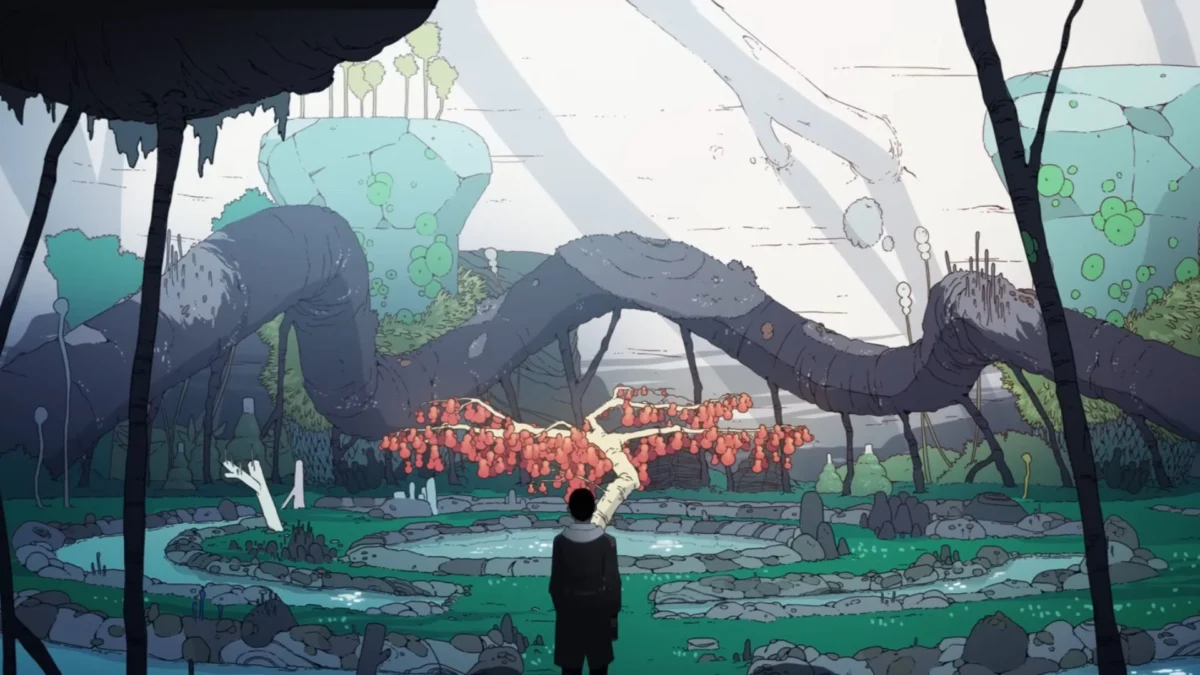
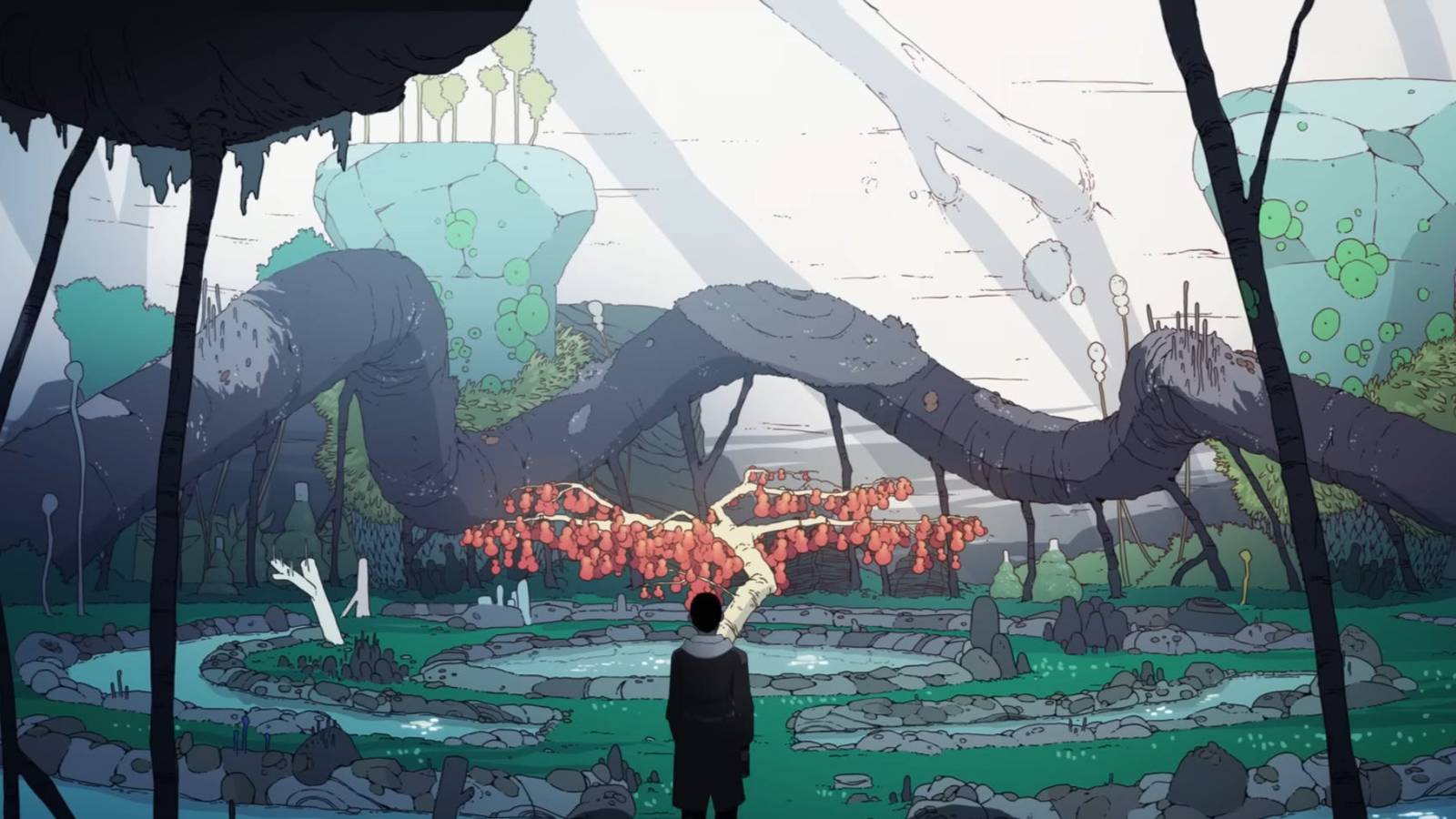
At its core, the series transcends typical survival narratives by transforming its setting into its most compelling character. Vesta is not merely a backdrop for human drama; it is a dynamic, evolving organism, a symphony of interconnected life forms operating on surreal, often horrifying, logic. The show’s brilliance lies in its unflinching portrayal of this alien world, where every plant, creature, and geological formation feels impossibly strange yet utterly cohesive within its own evolutionary framework. The human characters, in contrast, become the invasive species, their struggles highlighting a profound sense of cosmic alienation and the humbling reality of an ecosystem that neither recognizes nor needs them.
This unique perspective, combined with a distinctive art style heavily influenced by the legendary Jean Giraud (Moebius), elevates Scavengers Reign beyond mere entertainment. It is an immersive experience, a philosophical meditation on adaptation, biodiversity, and the true meaning of "life" in its most unbounded forms. Its departure from Netflix represents not just the removal of a show, but the temporary unavailability of a singular artistic achievement that challenges viewers to rethink their relationship with the unknown.
Chronology: From Shorts to Sci-Fi Zenith
The journey of Scavengers Reign began long before its 2023 debut, rooted in the creative minds of Joe Bennett and Charles Huettner. The duo first explored the foundational concepts of stranded explorers on a hostile alien world through a series of animated shorts simply titled Scavengers. These early experiments, characterized by their minimalist dialogue, abstract creature designs, and emphasis on environmental storytelling, laid the groundwork for the expansive universe that would eventually become Vesta.
Genesis of a Vision:
The initial shorts garnered significant attention within animation circles, hinting at a larger narrative potential. This caught the eye of Titmouse, a studio celebrated for its distinctive animation style and willingness to push creative boundaries. Under Titmouse’s production umbrella, Bennett and Huettner were given the resources and creative freedom to expand their vision. Their collaboration transformed the raw ideas of the shorts into a fully realized, 12-episode series, allowing for deeper character development and a more intricate exploration of Vesta’s ecosystem. The project found a home at HBO Max, which, at the time, was actively seeking unique and high-quality animated content to bolster its catalog.
Critical Reception and Cult Following:
When Scavengers Reign premiered in October 2023, it was met with near-universal critical acclaim. Reviewers lauded its breathtaking animation, intricate world-building, and mature thematic depth. It was praised for its originality, its bold refusal to cater to conventional sci-fi tropes, and its ability to evoke both wonder and dread. Many critics highlighted its philosophical undertones and its refreshing take on first contact. Despite this enthusiastic reception, the series struggled to break through the crowded streaming landscape, a common fate for niche, artistically ambitious projects that lack extensive marketing campaigns. It slowly began to cultivate a passionate cult following, with dedicated fans championing its brilliance across social media and specialized forums, often describing it as a "hidden gem" or "underrated masterpiece." Its unique visual language and contemplative pacing resonated deeply with those seeking something truly different.
Journey to Netflix and Impending Departure:
In a move that surprised many, Scavengers Reign eventually found its way to Netflix, a platform known for its massive global reach. This migration, a testament to the show’s quality and its potential to find a wider audience, offered a second chance for the series to gain the recognition it deserved. For many, Netflix became the gateway to Vesta, introducing the show to millions who might have otherwise missed its HBO Max run. However, the transient nature of streaming licenses means even popular titles are subject to removal. The announcement of its departure from Netflix at the end of May 2026, though a year away from the article’s publication date, has reignited discussions among its fanbase and critics, urging new viewers to experience its profound narrative before it once again becomes less accessible. This looming deadline creates a palpable urgency, underscoring the ephemeral nature of content in the digital age and the critical window for appreciation.
Supporting Data: The Ecological Tapestry of Vesta
The true genius of Scavengers Reign lies in its meticulously crafted world, Vesta. It is a planet that operates on an alien logic, a vibrant, terrifying, and endlessly fascinating ecosystem that constantly challenges the boundaries of biological possibility.
The Ecological Horror of Vesta:
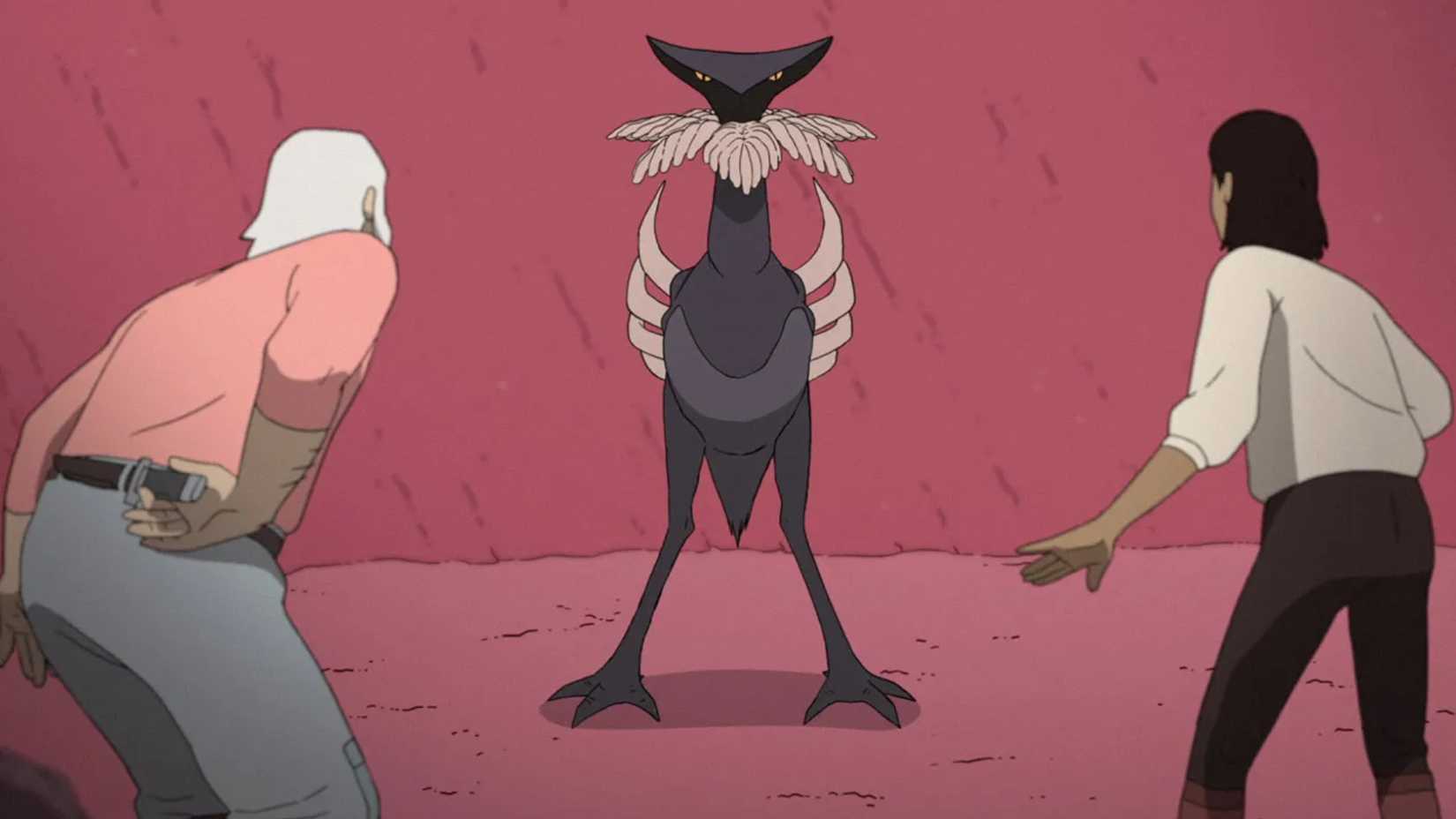
Vesta is a planet where every organism, no matter how small or seemingly benign, plays a vital role in an intricate, often brutal, cycle of life, death, and transformation. The show excels at depicting these interdependencies with a naturalistic, almost documentary-like approach. Viewers encounter sharp-beaked, ostrich-like birds that hunt overgrown white slugs feeding on exotic orange flora, illustrating a food chain that is both alien and eerily familiar. Other segments showcase smaller critters, and even some human survivors, hitching rides on colossal, ambulatory fungi – giant mushrooms with legs – highlighting opportunistic symbiosis.
Perhaps one of the most poignant sequences involves a small, humanoid creature nestled within a massive, luminous flower. In a stunning, wordless three-minute segment, the viewer witnesses the creature’s entire beautiful, tragic lifecycle, from birth to death, entirely dependent on and intertwined with its floral host. This scene, among many others, epitomizes Vesta’s profound indifference to individual life while celebrating the relentless force of evolution.
However, Vesta’s beauty is inextricably linked with its horror. The planet presents myriad threats to its human visitors: monstrously oversized insects, deadly parasites that can subtly alter a host’s physiology, and a particularly malevolent creature with potent telekinetic abilities, capable of pacifying its victims with seductive, dreamlike hallucinations before striking. This "ecological horror" isn’t merely about jump scares; it’s the unsettling realization that the planet itself is a living, breathing entity, completely unconcerned with human suffering, its natural processes often leading to grotesque and terrifying outcomes for the interlopers. The survival challenge isn’t against a single monster, but against the very fabric of Vesta itself.

Artistic Pedigree and Influences:
The visual identity of Scavengers Reign is as unique as its narrative. It draws heavily from the abstract, dreamlike work of French comic artist Jean Giraud, universally known as Moebius. Moebius was a master of the "Ligne claire" (Clear Line) style, characterized by clean, precise lines, flat blocks of vibrant color, and an uncanny ability to render impossibly strange worlds with tangible clarity. Scavengers Reign successfully translates this static art style into dynamic animation, creating landscapes and creatures that feel both intricately detailed and wonderfully ethereal. Every frame is a testament to this influence, with alien flora and fauna rendered with a level of specificity that makes them feel real, despite their surreal forms.
Supervising director Benjy Brooke revealed that a significant inspiration for the series came from nature documentaries. "We came into this inspired by nature documentaries, strange phenomena in the world that you can extrapolate on," Brooke told ComicBook.com. This influence is palpable in the show’s observational pacing, its patient lingering on ecological processes, and its emphasis on discovery. The creators spent considerable time designing Vesta’s interconnected ecosystems, ensuring that each creature and plant felt like a plausible, albeit alien, part of a larger, functional whole. Titmouse’s expertise in animation, honed over decades of producing critically acclaimed series, provided the perfect platform for this ambitious visual style, ensuring the meticulous detail and fluid motion necessary to bring Vesta to life.
The Human Element: Adaptation and Alienation:
A central philosophical tenet of Scavengers Reign is the concept of humanity as the invasive species. Unlike many sci-fi narratives where humans explore and often seek to conquer new worlds, Vesta is indifferent to their presence. The planet doesn’t actively fight them; it simply exists, its natural processes often incidentally fatal or transformative for the stranded crew. This paradigm creates a constant sense of unease, as characters struggle to comprehend and adapt to an ecosystem that operates entirely outside their terrestrial understanding.
The series masterfully explores different facets of human adaptation and alienation through its diverse cast. Some characters, like Sam and Ursula, desperately cling to their humanity and technology, attempting to impose order on chaos. Others, like Azi, forge a unique, almost symbiotic relationship with Vesta’s creatures, learning to communicate and coexist. Perhaps the most profound example of Vesta’s transformative power is Levi, the robot assistant. Initially a purely mechanical entity, Levi gradually evolves into something conscious and organic after sustained exposure to one of Vesta’s strange white flowers. This transformation, both beautiful and terrifying, epitomizes the planet’s ability to reshape and mutate, blurring the lines between artificial and organic, consciousness and instinct.
The planet’s very name, Vesta, holds symbolic weight. In Roman mythology, Vesta is the goddess of hearth, home, and the sacred flame, embodying warmth, life, and domesticity. While seemingly ironic for such a hostile world, the name subtly reflects the show’s fascination with transformation and emergence. Vesta doesn’t merely take life; it reshapes it, mutates it, and gives rise to entirely new forms, echoing the ancient goddess’s association with the perpetual flame of life and rebirth. The humans aren’t just surviving; they are being fundamentally altered, becoming anomalies trapped within a world that forces them to evolve or perish.
Official Responses: A Quiet Affirmation of Excellence
While Scavengers Reign may not have dominated mainstream headlines, its creators and the industry at large have consistently lauded its groundbreaking approach. Joe Bennett and Charles Huettner have often spoken about their desire to create a sci-fi narrative that prioritized environmental storytelling and genuine discovery over conventional plot mechanics. They aimed to evoke a sense of profound wonder and terror through biological realism, albeit alien biological realism, rather than relying on futuristic technology or interspecies conflict as the primary drivers. Their vision was to craft a world that felt ancient and self-sufficient, where humanity’s arrival was merely a ripple in a much larger, ongoing geological and ecological saga.
The critical consensus has overwhelmingly supported this vision. Publications across the board praised the series for its audacity and artistic integrity. It was frequently cited as a show that "pushes the boundaries of animation," "redefines hard sci-fi," and offers a "mesmerizing, unforgettable experience." While not a ratings juggernaut, its critical success earned it nominations and wins at various animation awards, including Annie Awards, recognizing its outstanding achievement in character design, production design, and overall animated production. This quiet but consistent affirmation from critics and peers underscores the show’s undeniable quality, even if its unique nature meant it didn’t immediately capture the broad public imagination. The show resonated deeply with those who appreciate nuanced storytelling and visual artistry, solidifying its status as a critical darling.
Implications: A Legacy Beyond the Stream
The impending departure of Scavengers Reign from Netflix at the end of May 2026 carries significant implications, both for the show’s legacy and for the broader landscape of animated science fiction.
Legacy and Influence:
Scavengers Reign stands as a monumental contribution to the sci-fi genre, particularly within animation. It pushes boundaries by prioritizing ecological immersion and philosophical inquiry over traditional action-adventure tropes. Its influence can be seen in its masterful blend of hard sci-fi principles with a deeply surreal, almost psychedelic aesthetic, creating a subgenre all its own. The show sets a new benchmark for how alien worlds can be depicted, moving beyond mere exotic backdrops to fully realized, dynamic characters. Future animated sci-fi endeavors will undoubtedly look to Scavengers Reign as a touchstone for its innovative approach to world-building, character adaptation, and its courageous embrace of the unknown. It stands alongside works like Fantastic Planet and Alien in its ability to present truly alien life, but with a unique, observational lens that few have achieved. Its legacy will be one of profound originality and a testament to animation’s capacity for sophisticated, adult storytelling.
The Streaming Era’s Challenges:
The irony of Scavengers Reign‘s journey – from HBO Max to Netflix and now to an uncertain future – highlights the inherent challenges faced by even critically acclaimed shows in the volatile streaming era. Despite its exceptional quality and widespread critical praise, the show has struggled to maintain consistent visibility and widespread mainstream recognition, a common fate for niche, artistically ambitious projects. This phenomenon underscores how even masterpieces can become victims of platform changes, algorithmic obscurity, and the sheer volume of content vying for audience attention. Its removal from Netflix, a platform with unparalleled reach, means that a show of its caliber might once again become harder to access, reinforcing the need for viewers to actively seek out and support unique narratives before they disappear into the vast digital ether. It serves as a stark reminder that even in an age of abundant content, truly special works can still be overlooked or become temporarily inaccessible.
A Timeless Message:
Ultimately, Scavengers Reign leaves behind a timeless message that resonates deeply with contemporary concerns about humanity’s place in the natural world. It isn’t a story about conquering a new frontier, but about understanding and adapting to a living ecosystem that operates on its own terms, indifferent to human desires or perceived superiority. Every organism, every landscape, every grotesque miracle on Vesta operates according to its own immutable logic, evolving and adapting regardless of whether humanity can understand or control it. This profound narrative suggests that true wisdom lies not in domination, but in humility and observation, in recognizing that humanity is but one small part of an infinitely complex and often terrifying cosmos.
The series lingers long after its surreal imagery fades, not just for its visual splendor, but for its profound philosophical questions. Vesta is not a puzzle to solve or a resource to exploit, but a living, breathing entity, constantly reshaping itself and everything trapped within its embrace. Few sci-fi stories have created a world this strange, this beautiful, or this convincingly alive. As it prepares to leave Netflix, Scavengers Reign stands as an enduring testament to the power of imaginative storytelling, an overlooked masterpiece whose warm, terrifying embrace will be sorely missed, but whose impact on the genre will undoubtedly resonate for years to come. It implores us to look closer, to listen to the whispers of alien worlds, and to confront the glorious, terrifying truth of our own insignificance in the face of unbound evolution.












No comments yet. Be the first to join the conversation!