

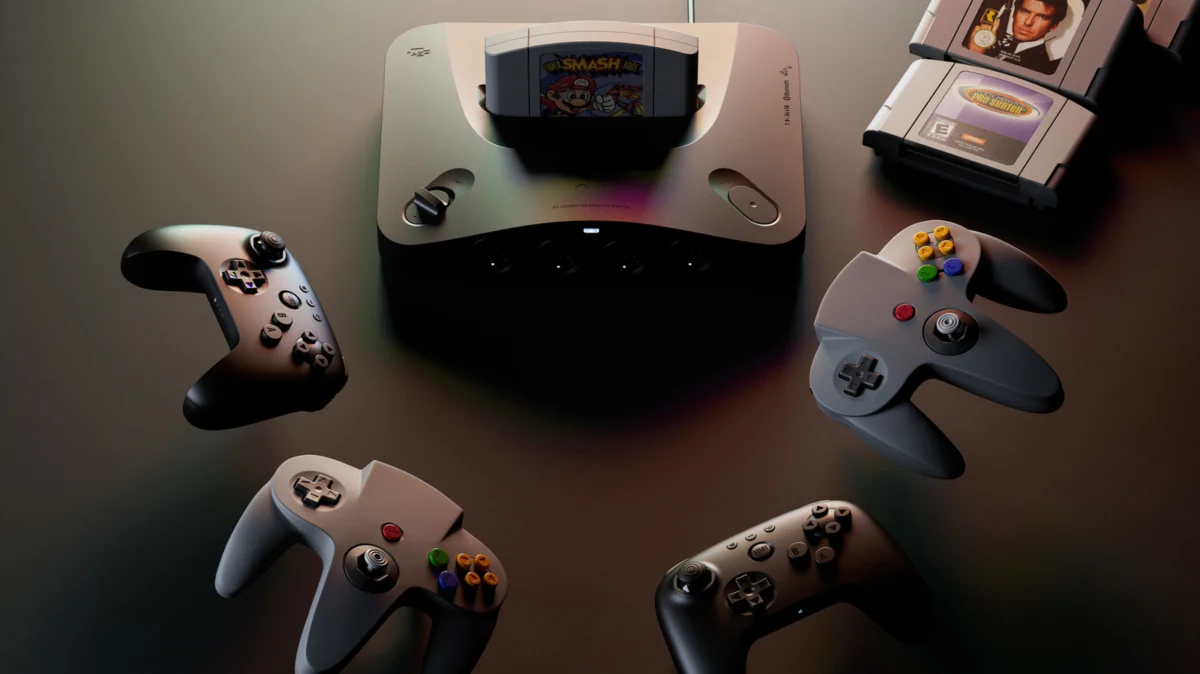
The pursuit of "perfect" retro gaming has long been a tug-of-war between historical accuracy and modern quality-of-life expectations. For years, Analogue—the boutique hardware manufacturer known for its high-fidelity FPGA (Field Programmable Gate Array) consoles—has sat at the center of this debate. With the release of their latest firmware update, version 1.3.0 for the Analogue 3D, the company has finally bridged the gap, introducing its proprietary "Memories" save-state system to their N64-inspired hardware.
This update represents more than just a software patch; it signifies the maturation of the Analogue 3D platform, transforming a hardware-accurate recreation of 1990s technology into a tool that respects the time constraints of the modern player.
Main Facts: What Firmware 1.3.0 Changes
The core of the 1.3.0 update is the integration of "Memories," a feature that allows users to capture a snapshot of their game progress at any given millisecond. In the original Nintendo 64 era, saving was often a chore, restricted by cumbersome memory paks, limited cartridge battery life, or sparse, unforgiving checkpoints.
With this update, Analogue 3D users gain:
- Universal Save States: Players can now bypass traditional in-game save points, allowing for instantaneous restoration of progress.
- Hardware Compatibility: The feature is fully mapped to hotkeys on both the modern 8BitDo 64 controller and, crucially, original first-party N64 controllers.
- Memory Management: The console supports up to 20 active save slots. To prevent the loss of critical progress, Analogue has implemented an auto-delete system for the oldest file, alongside a "pinning" mechanic that ensures specific, cherished saves remain protected against overwriting.
- System Stability: Beyond the headline feature, the firmware includes a suite of background bug fixes aimed at improving general system performance and display output stability.
Chronology: The Road to "Memories"
The journey of the Analogue 3D has been characterized by high anticipation followed by a phased rollout of features.
2022: The Conceptual Genesis
The "Memories" system was not a new invention for the N64 project. It first debuted on the Analogue Pocket in 2022. The feature was widely praised for its stability and ease of use, setting a benchmark for what users expected from future Analogue products.
November 2025: The Launch
When the Analogue 3D finally hit the market in November 2025, it was hailed as a technical marvel. By utilizing FPGA technology rather than software emulation, it provided a 1:1 recreation of N64 hardware logic. However, the launch was met with a minor caveat: the promised "Memories" feature was missing from the launch firmware. While the hardware was technically capable, the software layer required further development to ensure that save states did not interfere with the delicate timing required for N64-era titles.
Early 2026: The Wait
Following the launch, the community expressed both patience and frustration. The N64 is notorious for its difficult-to-save games, such as The Legend of Zelda: Majora’s Mask or Perfect Dark, where manual saves were often spaced too far apart. For the modern enthusiast, the lack of save states felt like a significant omission in a console marketed as the "definitive" way to play.
Present Day: The 1.3.0 Milestone
With the release of firmware 1.3.0, the cycle that began in 2022 has closed. The feature set that was originally advertised at the product’s unveiling is now finally present, fulfilling the promise made to the thousands of consumers who invested in the premium hardware.
Supporting Data: Why Save States Matter
To understand the significance of this update, one must look at the data regarding retro gaming habits. Surveys from platforms like RetroAchievements and various gaming enthusiast forums suggest that "accessibility" is the primary barrier for adults returning to classic titles.
The average N64 player is now in their 30s or 40s. These players often juggle career and family responsibilities, meaning the "session-based" design of the 1990s—which relied on players having hours of uninterrupted time to reach a save point—is no longer feasible.
- The "Frustration Factor": In games like Star Fox 64, a single mistake could force a player to restart an entire campaign. Memories effectively remove the "punishment" aspect of old-school design.
- Hardware Longevity: Because the Analogue 3D uses original, aging physical cartridges, the "Memories" system acts as a digital safeguard. Even if a cartridge’s internal battery dies, the player’s progress is preserved on the console’s flash memory, effectively future-proofing the game itself.
Official Responses and Developer Philosophy
Analogue has long maintained a philosophy of "transcendent hardware." In their official documentation accompanying the 1.3.0 release, they emphasized that their goal is not to change the games, but to change the environment in which they are played.
"We believe in preserving the past, but we also believe in removing the obstacles that prevent modern players from enjoying these masterpieces," an Analogue spokesperson stated. Regarding the delay of the feature, the company noted that "FPGA implementation requires absolute precision. We chose to delay the launch of Memories to ensure that the feature was architecturally sound and would not introduce instability into the hardware’s cycle-accurate performance."
Industry analysts have noted that this "slow and steady" approach is a hallmark of Analogue’s business model. Unlike mass-market console manufacturers who may push out unfinished products, Analogue often treats their firmware updates as a process of "polishing the stone" until it meets their exacting standards.
Implications for the Future of Retro Gaming
The implementation of the Memories system in the Analogue 3D has several far-reaching implications for the wider retro-gaming ecosystem.
The Standard for FPGA Hardware
With the 1.3.0 update, Analogue has effectively set the "gold standard" for what a modern retro console should be. Any competitor attempting to enter the premium FPGA space will now be measured against the functionality of the Analogue 3D. A console that lacks save-state functionality, screen-filter options, or hotkey support will likely struggle to find traction in a market that has grown accustomed to these conveniences.
The Second-Hand Market and Scarcity
The news of the 1.3.0 update has reignited interest in the console, which is currently sold out. Analogue’s practice of limited, high-demand release windows has created a secondary market where units often sell for a significant markup. While the firmware update is a boon for existing owners, it has inadvertently increased the pressure on Analogue to provide a restock.
The company has previously acknowledged that a restock is on the horizon, though no firm date has been set. The delay in restocking, coupled with the "limited-edition" colorways, creates a sense of exclusivity that keeps the Analogue brand in the headlines, even during periods where no new hardware is being manufactured.
Preservation vs. Modernization
There remains a small, vocal faction of "purists" who argue that save states fundamentally alter the intended difficulty of games like GoldenEye 007 or Super Mario 64. However, the overwhelming sentiment from the user base is one of relief. By making the feature optional, Analogue has allowed for a "best of both worlds" scenario: those who want to play the game exactly as it was in 1996 can do so, while those who want to experience the narrative and design without the time-sinks of the 90s have the tools to do so.
Conclusion
The 1.3.0 firmware update for the Analogue 3D is a definitive moment for the platform. It proves that a company can honor the technical legacy of a classic machine while simultaneously acknowledging that the player base has evolved.
By integrating the "Memories" system, Analogue has successfully transformed the 3D from a purely archival piece of hardware into a flexible, modern gaming console. While the hardware remains elusive for those who have yet to secure one, the update ensures that for those who do own the device, the Nintendo 64 experience is now more accessible, more convenient, and more enjoyable than ever before. As the company looks toward future updates and potential hardware revisions, the success of this firmware release will likely serve as the blueprint for all of their future endeavors.












No comments yet. Be the first to join the conversation!