

Power outages are more than a mere inconvenience; they are a stark reminder of the modern home’s total reliance on an invisible, yet fragile, electrical grid. When the lights flicker and die, the primary concern for most households shifts rapidly from entertainment to survival—specifically, the preservation of perishable food, the maintenance of essential medical equipment, and the security of connectivity.
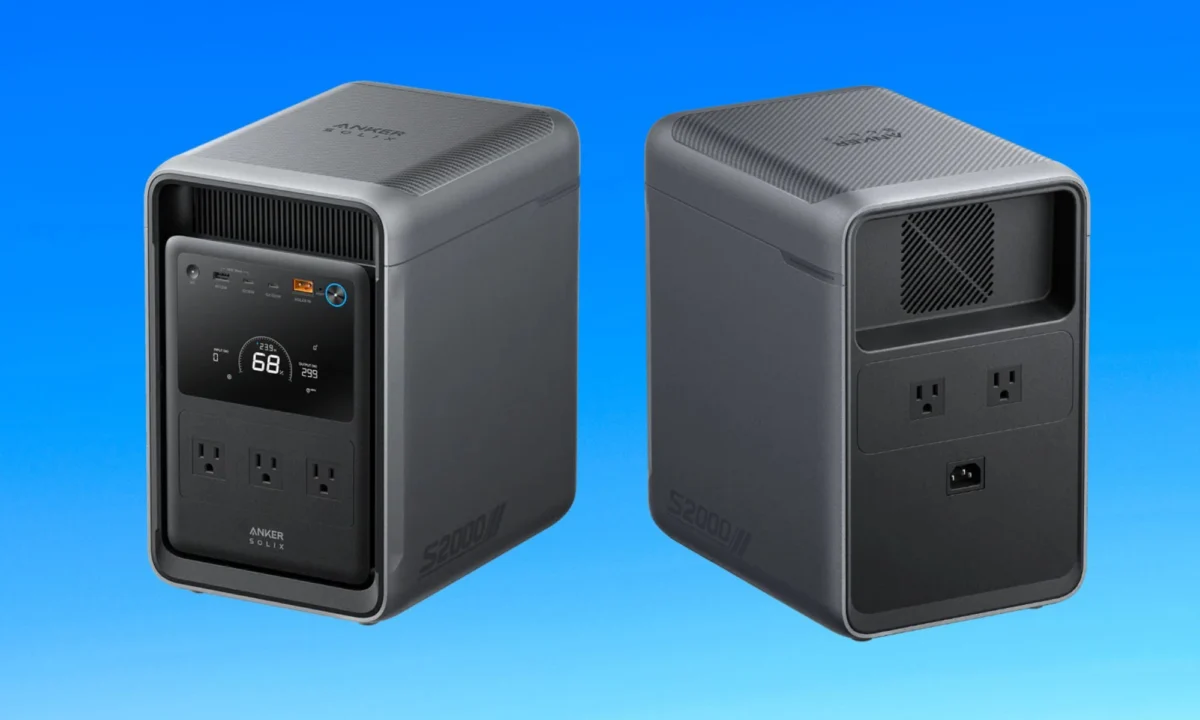
Anker, a brand long synonymous with portable energy, is positioning its latest innovation, the SOLIX S2000, as the definitive solution to these anxieties. Currently available with a significant launch discount, the S2000 is not merely another portable battery; it is a meticulously engineered backup system designed to solve the most common pain points of residential power loss.
The Core Innovation: Efficiency Over Raw Power
While the portable power station market has spent the last several years engaged in an "arms race" of raw capacity—frequently launching massive, heavy units that are difficult to maneuver—Anker has pivoted toward a more pragmatic approach: efficiency.
Rethinking the "Light-Load" Problem
The industry standard has long focused on peak wattage, often ignoring the "idle drain" that plagues most power stations. Anker’s research, based on a survey of 759 North American users, revealed a startling reality: 80% of real-world power needs during a blackout involve loads of under 200 watts. Running a high-capacity system to power a low-wattage device often results in significant energy waste.

To combat this, Anker introduced OptiSave Technology. This proprietary hardware-software integration optimizes the internal power management system, reducing idle consumption by 40% to 70%. Furthermore, it boosts light-load efficiency to over 90%. The practical outcome of this optimization is a 20% increase in real-world runtime compared to standard 2kWh power stations, allowing the S2000 to sustain a standard refrigerator for up to 35 hours on a single charge.
Chronology: From Concept to Consumer Availability
The development of the S2000 follows Anker’s aggressive roadmap to dominate the home energy sector.
- Q3 2025 – The Research Phase: Anker conducts comprehensive surveys across North America to understand the specific "pain points" of homeowners during grid instability.
- Early 2026 – Prototyping: The engineering team focuses on miniaturizing the chassis while integrating LiFePO4 chemistry to ensure long-term durability.
- June 2026 – Official Launch: The SOLIX S2000 is officially unveiled. Anker announces a limited-time launch price of $680, a substantial reduction from the $1,200 MSRP, designed to capture market share from established competitors immediately.
- Post-Launch Strategy: The company integrates the S2000 into its wider "SOLIX" ecosystem, ensuring compatibility with its existing solar and modular power infrastructure.
Supporting Data and Technical Specifications
The S2000 manages to pack a significant amount of potential energy into a surprisingly small footprint. Its design philosophy clearly prioritizes "space-conscious" users, such as apartment dwellers or those with limited storage in utility rooms.
Technical Breakdown
- Energy Capacity: 2,010Wh.
- Dimensions: 8.19 x 11.1 x 12.7 inches (roughly 30% more compact than its peers).
- Weight: 35.7 pounds, balancing portability with internal cooling requirements.
- Battery Chemistry: LiFePO4 (Lithium Iron Phosphate).
- Longevity: Rated for up to 10,000 cycles, projecting a 15-year service life under normal conditions.
- Output: 1,500W continuous AC output, with a 3,000W peak surge capacity.
- Charging Capability: Supports 400W of solar input; capable of reaching 80% charge in just 1.2 hours.
The choice of LiFePO4 chemistry is a crucial selling point. Unlike older lithium-ion chemistries, LiFePO4 is thermally stable and significantly more durable, allowing the S2000 to be treated as a long-term household investment rather than a disposable gadget.

Designing for the Home Environment
One of the most user-friendly features of the S2000 is its aesthetic and functional integration. Recognizing that these units are often tucked behind appliances, Anker has moved the AC outlets to the rear of the device. This allows users to place the S2000 flush against a wall behind a refrigerator, effectively hiding the messy wiring that typically turns a backup system into a household eyesore.
Furthermore, the unit features a UPS (Uninterruptible Power Supply) switchover time of under 10 milliseconds. This makes the S2000 a viable solution for protecting sensitive electronics, such as home servers, baby monitors, and essential medical equipment (like CPAP machines), which would otherwise reset or shut down during the transition from grid power to battery power.
Official Stance and Market Positioning
Anker’s representatives have emphasized that the S2000 is not meant to replace whole-home solar arrays or expensive fossil-fuel generators. Instead, it is intended to be a "first responder" for the modern household. By targeting the $680 price point, Anker is lowering the barrier to entry for disaster preparedness.
In official statements, the company has positioned the S2000 as a complement to their larger products, such as the SOLIX F3800 Plus. While the F3800 is a modular beast designed for heavy-duty whole-home backup, the S2000 serves as the agile, "grab-and-go" solution that can be moved from the kitchen to the home office or even a camping site with minimal effort.

Broader Implications for Home Resilience
The release of the S2000 signals a shift in consumer demand. As climate volatility increases the frequency of extreme weather events, the average consumer is no longer content with simple flashlights and battery-powered radios. There is a growing "resilience movement" where homeowners are seeking modular, scalable, and highly efficient energy storage.
1. The Decentralization of Power
The S2000 contributes to the trend of decentralized energy. When thousands of households keep 2kWh of stored energy ready to go, the strain on the grid during peak disaster periods is marginally, yet significantly, reduced. It allows homeowners to "self-island" during critical hours.
2. Economic Accessibility
By offering the unit at a $520 discount during the launch period, Anker is actively democratizing energy storage. Historically, home backup solutions were either prohibitively expensive or relied on loud, polluting gasoline generators. The S2000 offers a silent, clean, and indoor-safe alternative that fits into the budget of the average middle-class family.
3. Sustainability in Design
The focus on a 15-year lifespan is a direct challenge to the "planned obsolescence" prevalent in the tech industry. By using high-cycle-count cells and optimizing for long-term health, Anker is attempting to frame the S2000 as a sustainable purchase—one that reduces electronic waste by staying in service for over a decade.

Conclusion: Is it Right for You?
The Anker SOLIX S2000 represents a sophisticated middle ground in the power station market. It is not the most powerful unit on the market, nor is it the cheapest. However, by focusing on efficiency (OptiSave), durability (10,000 cycles), and ergonomics (rear-facing ports), Anker has created a product that feels like a genuine tool for home management rather than just a luxury toy.
For those living in regions prone to rolling blackouts or seasonal storms, the S2000 offers a vital safety net. With its ability to keep a refrigerator running for over a day and a half, it bridges the gap between a minor inconvenience and a major crisis, providing the peace of mind that comes from knowing your home’s essential services remain under your control, regardless of what happens on the outside of your walls.
As the energy landscape continues to evolve, devices like the S2000 will likely become standard household fixtures, as fundamental to a home as a first-aid kit or a fire extinguisher. Whether you are a tech enthusiast looking for a reliable UPS for your workstation or a homeowner preparing for the next big storm, the S2000 is a formidable entry in a rapidly maturing category.












No comments yet. Be the first to join the conversation!