

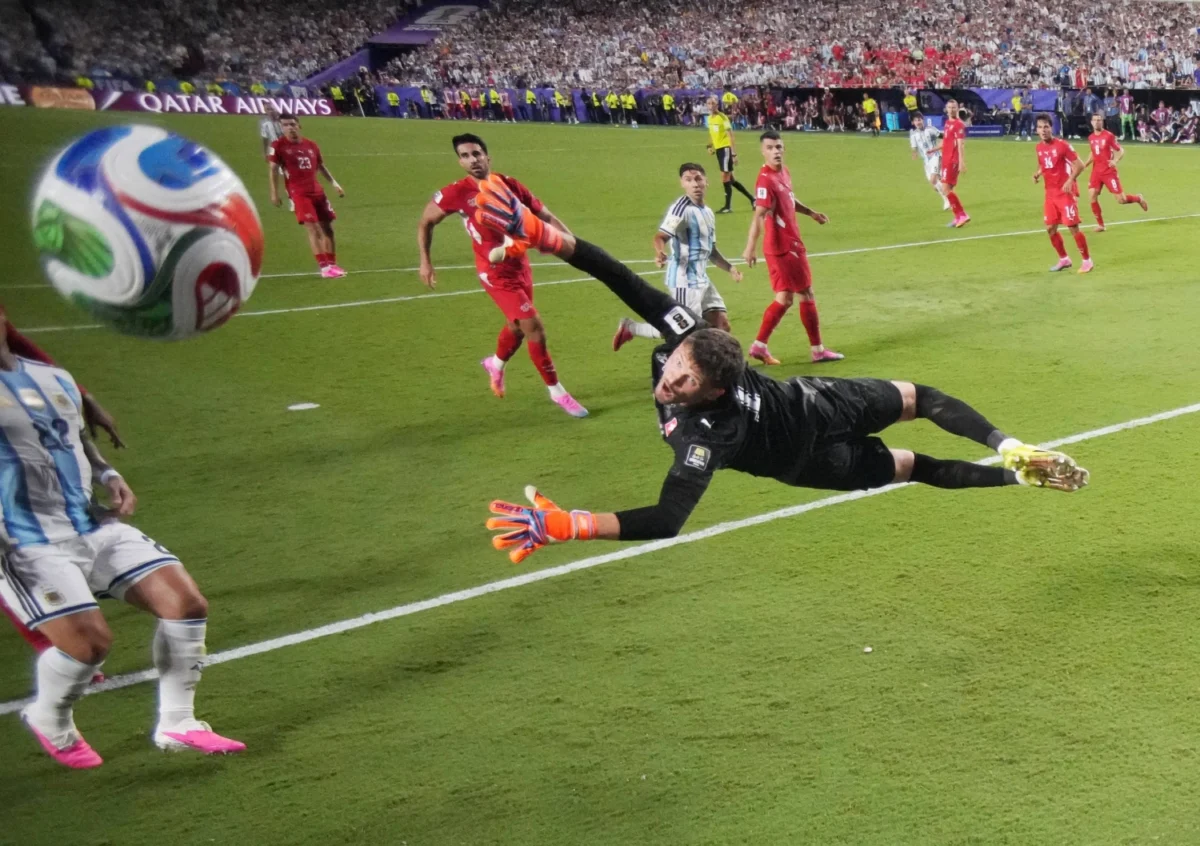
KANSAS CITY, Missouri — The quest for immortality continues for Lionel Messi and Argentina. In a pulsating quarter-final encounter that tested the limits of endurance and nerves at GEHA Field at Arrowhead Stadium, the reigning champions dismantled a resilient Switzerland side 3-1. Two late goals in extra time from Julian Alvarez and Lautaro Martinez broke the hearts of a spirited Swiss contingent, securing a high-stakes semi-final showdown against England in Atlanta this coming Wednesday.
For the capacity crowd in Kansas City, the match was a microcosm of the beautiful game’s capacity for agony and ecstasy. What began as a tactical stalemate evolved into a test of character, ultimately defined by a contentious red card and the relentless efficiency of the Argentine attack.
The Chronology of a Classic
The match commenced under a humid Missouri sky, with both sides displaying a cautious respect. Argentina, looking to become the first nation to successfully defend the World Cup title since Brazil’s 1962 heroics, controlled the tempo through the midfield metronome of Enzo Fernandez.
The First Half: Tactical Tension
Switzerland, appearing in their first quarter-final since 1954, adopted a disciplined 5-4-1 formation designed to frustrate Messi. For the opening 30 minutes, the strategy worked. The Swiss defensive line, marshaled by Manuel Akanji, denied the Argentines clear sight of goal. However, the deadlock was broken in the 38th minute. A pinpoint cross from Angel Di Maria found the head of an Argentine attacker, forcing a chaotic scramble in the box that ultimately resulted in an opening goal, sending the thousands of fans clad in Albiceleste colors into a frenzy.
The Swiss Resurgence
If Argentina expected a rout, they were mistaken. Switzerland emerged from the halftime tunnel with renewed intensity. In the 56th minute, a swift counter-attack saw Remo Freuler thread a needle-like pass to Breel Embolo, who slotted the ball past Emi Martinez to level the score. The equalizer silenced the Argentine supporters and shifted the momentum entirely to the Swiss.
The Turning Point: The Red Card
The match’s trajectory altered irrevocably in the 72nd minute. Breel Embolo, already cautioned earlier in the half, went down inside the penalty area under a challenge from Cristian Romero. Refereeing officials, after a lengthy VAR consultation, determined that Embolo had simulated the contact. The resulting second yellow card meant Switzerland would play the remainder of regulation and the ensuing extra time with ten men.
The Extra-Time Breakthrough
Despite their numerical disadvantage, the Swiss held firm for the remainder of the 90 minutes, forcing the game into extra time. However, the physical toll of defending against the world champions finally took its toll.
In the 108th minute, Julian Alvarez—the Manchester City star—found space at the edge of the box and unleashed a curling strike that beat the outstretched fingers of Gregor Kobel. With the Swiss forced to push forward in desperation, the defense collapsed in the 119th minute, allowing Lautaro Martinez to seal the victory with a clinical finish on the break.
Statistical Breakdown: The Anatomy of the Win
The statistics paint a picture of a game defined by pressure and perseverance.
- Possession: Argentina dominated with 64% of the ball, reflecting their sustained pressure against a depleted Swiss block.
- Shots on Goal: Argentina registered 22 shots compared to Switzerland’s 7. Gregor Kobel was the standout performer for the Europeans, recording 9 crucial saves before his defense eventually succumbed.
- The Disciplinary Gap: Switzerland conceded 18 fouls to Argentina’s 9. The red card for Embolo was the defining statistical anomaly, effectively ending Switzerland’s ability to sustain a counter-attacking threat in the final half-hour.
- Expected Goals (xG): Argentina finished with an xG of 2.84, while Switzerland’s early goal remained their only significant threat, finishing with an xG of 0.61.
Official Responses and Tactical Analysis
Following the final whistle, the atmosphere was a stark contrast of pride and frustration.
"We knew this would be a battle of attrition," said Argentine manager Lionel Scaloni in the post-match press conference. "Switzerland is a tactically disciplined team that understands how to minimize space. It wasn’t pretty, and it wasn’t easy, but this group has the heart of a champion. We are one step closer to our objective."

On the opposing side, Swiss manager Murat Yakin was visibly disappointed, particularly regarding the officiating. "It is difficult to play this level of football with ten men," Yakin remarked. "I believe the decision on Embolo was harsh. We came here to make history, and for 70 minutes, we proved we belong on this stage. The boys are gutted, but they should leave this tournament with their heads held high."
Analysts have pointed to the depth of the Argentine bench as the ultimate differentiator. Bringing on Lautaro Martinez in the closing stages provided a fresh, lethal presence that the exhausted Swiss backline could no longer contain.
Implications: The Path to the Final
The victory sets the stage for what many are calling the "Final Before the Final." Argentina’s clash with England in Atlanta is a match steeped in historical sporting rivalry and current tactical brilliance.
Argentina’s Momentum
For Messi, the pursuit of a second consecutive World Cup is the final chapter of a storybook career. The win in Kansas City serves as a warning to other contenders: this Argentina side may not always win with flair, but they possess an internal fortitude that allows them to thrive in high-pressure moments.
The English Challenge
England, meanwhile, enters the semi-final after a convincing win in their own quarter-final bracket. The tactical battle between Gareth Southgate’s disciplined setup and Scaloni’s fluid, Messi-centric attack will likely dictate who moves on to the final in New York.
Broader Tournament Impact
The elimination of Switzerland ends a "fairytale" run that had captured the imagination of neutral fans. However, the tournament now moves into its most critical phase. The departure of the Swiss leaves the semi-finals dominated by global titans—Argentina, England, and the remaining quarter-final winners.
For the host nation, the success of the Kansas City leg of the tournament has been a resounding victory. The local organizing committee reported record-breaking attendance, with the atmosphere inside Arrowhead Stadium frequently described as "electric." As the tournament heads toward the final, the global focus shifts to the intense physical and mental conditioning required to navigate the final week of play.
Looking Ahead
As Argentina prepares for the journey to Atlanta, the team will need to monitor the fitness of their core players. The 120-minute slog against Switzerland has left several players nursing minor knocks. However, the morale within the camp is at an all-time high.
The path to 1962 is becoming increasingly narrow. Should Argentina overcome England on Wednesday, they will be just 90 minutes away from etching their names into the history books as one of the greatest international squads ever assembled. For now, the nation celebrates, the Swiss pack their bags, and the world waits for what promises to be an epic conclusion to the 2026 World Cup.
Quality journalism requires deep reporting and a commitment to the truth. In an era of rapid-fire social media updates, the nuance of the game—the tactical shifts, the psychological weight of the penalty spot, and the history behind the players—is what defines our coverage. Support our mission by subscribing today.











