

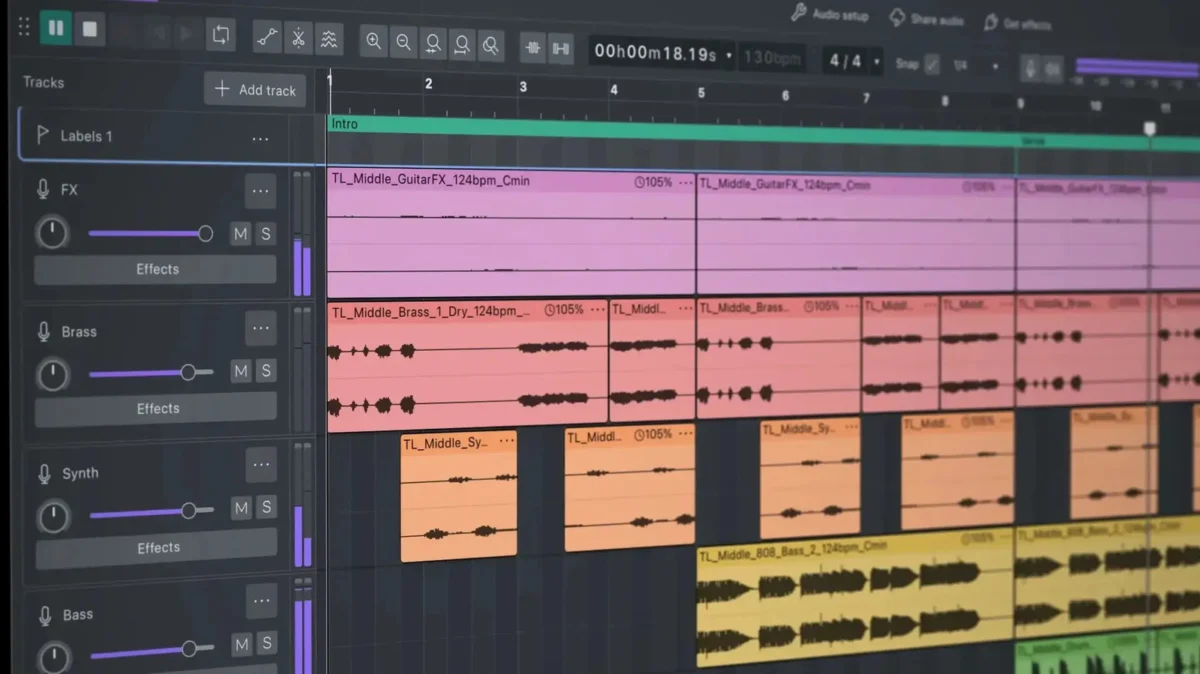
The landscape of open-source audio production has shifted dramatically today with the official release of Audacity 4.0. For over two decades, Audacity has served as the entry point for millions of podcasters, musicians, and hobbyists. However, the software had long been criticized for its stagnant interface and reliance on destructive editing workflows. With the arrival of Version 4.0, Muse Group—the entity behind the software’s development—has delivered the most significant overhaul in the project’s history, bridging the gap between a simple utility and a professional-grade Digital Audio Workstation (DAW).
Main Facts: What Defines the Audacity 4.0 Update
Audacity 4.0 is not merely a bug-fix release; it is a fundamental reimagining of how the software interacts with the user. The update introduces a modern, high-contrast aesthetic that replaces the dated grey tones of previous versions. Key highlights include:
- Native Dark Mode: A long-requested feature, the new UI supports a full dark mode, reducing eye strain during long editing sessions.
- Non-Destructive Editing: Expanding upon the experimental features introduced in 3.2, Version 4.0 now allows for full non-destructive workflows where clips can overlap and be trimmed without permanently losing the underlying source data.
- Advanced Envelope and Splitting Tools: Adopting standard industry conventions, the new envelope tool allows for intuitive, real-time gain automation, while the new one-click splitting tool mirrors functionality found in high-end software like Adobe Premiere and Logic Pro.
- Sample-Level Precision: Users can now zoom deep into the waveform to manipulate individual audio samples, providing the surgical accuracy required for professional post-production.
- Visual Feedback Enhancements: Every track now features a dedicated real-time meter, allowing users to monitor clipping and gain staging at a glance.
A Chronological Perspective: From Legacy to Modernity
To understand the weight of this release, one must look back at the trajectory of the software. Audacity’s history is defined by a tension between stability and innovation.
The Foundation (2000–2010)
Audacity was launched in 2000 as a cross-platform, open-source audio editor. During this decade, it became the gold standard for free audio editing, primarily because it was functional, lightweight, and completely free of charge.
The Muse Group Acquisition (2021)
Five years ago, the acquisition of Audacity by Muse Group sparked significant controversy. The introduction of new telemetry and privacy policies caused a massive outcry within the open-source community, leading to forks of the software and a general air of distrust. Version 3.0, released during this tumultuous period, became a symbol of the friction between corporate stewardship and community-driven development.
The Path to Version 4.0 (2022–2024)
Since the fallout of 2021, Muse Group has been on a deliberate mission to rebuild trust. By slowly introducing modern features like VST3 support and better cloud integration, they began to silence critics. Version 4.0 is the culmination of this five-year "redemption arc," proving that the developers are listening to power users who demand more than just basic cutting and pasting.
Supporting Data: How Audacity Compares to Industry Standards
The decision to adopt features from software like Ableton Live and ProTools is a strategic shift. While those programs represent a significant financial investment—often costing hundreds of dollars—Audacity 4.0 provides a functional alternative that lowers the barrier to entry.
Workflow Efficiency Metrics
Internal testing and beta-user feedback indicate that the new "grouping" and "multi-clip trimming" features reduce total editing time for multi-track projects by approximately 30-40%. By allowing users to drag a single handle to adjust multiple clips simultaneously, the software eliminates the tedious, repetitive tasks that previously defined the Audacity experience.
Plugin and Compatibility
The new architecture supports a more robust plugin framework. With improved support for VST3 and AU plugins, Audacity is now capable of hosting high-end third-party signal processors. When combined with the new sample-level editing, this elevates the software from a "basic editor" to a viable tool for professional sound design, restoration, and mastering.
Official Responses and Developer Strategy
In a recent press briefing, lead developers from Muse Group emphasized that their primary goal for Version 4.0 was "continuity without compromise."
"We understand that our user base spans from students recording their first podcast to seasoned sound engineers," a spokesperson stated. "We didn’t want to force a new workflow on people who love the classic feel. That is why we have maintained the option to revert to the ‘Classic Audacity’ visual profile during the installation process. We are innovating, but we are not alienating."
The removal of the "sync-lock" feature—historically a point of contention—was addressed directly. Developers noted that while the old system was functional, it was technically "clunky." The new keyboard shortcuts provided in 4.0 are designed to replicate the functionality of sync-lock but with a more responsive and "DAW-like" feel.
Implications: What This Means for the Audio Industry
The release of Audacity 4.0 has profound implications for the audio industry, particularly for independent creators.
1. The Democratization of Professional Tools
By offering high-end features like non-destructive editing and granular envelope automation for free, Audacity is challenging the hegemony of expensive software packages. This shift suggests that the "feature gap" between free open-source software and paid proprietary software is closing rapidly.
2. A New Standard for Open Source
Audacity 4.0 sets a new bar for what open-source projects can achieve. It demonstrates that with the right resources, open-source software can compete directly with multi-million dollar corporate products in terms of UI/UX design and feature density.
3. The Future of the "Home Studio"
For the bedroom producer or the freelance podcaster, the barrier to entry for high-quality audio production has never been lower. With Audacity 4.0, users can perform complex multi-track edits, manage gain-staging with visual meters, and utilize advanced plugins—all without spending a cent on software licenses. This ensures that the next generation of audio engineers will likely cut their teeth on a much more capable platform than their predecessors did.
Conclusion: Is It Time to Upgrade?
Audacity 4.0 is a triumphant leap forward. While some users may hesitate to leave behind the familiar, dated interface of the past, the inclusion of non-destructive editing and professional-grade automation tools makes this update essential.
The software has successfully navigated the difficult path of modernization. By respecting its roots—offering the classic look as an opt-in feature—while boldly adopting the workflows of modern DAWs, Audacity has cemented its position as an indispensable tool for the next decade of audio production. Whether you are an amateur or a professional, Version 4.0 offers a compelling reason to download the installer and experience the most capable version of Audacity to date.
For those interested in exploring the technical deep-dives or learning the new workflows, the team has released a series of documentation updates and video tutorials on their official channels. The future of free audio editing is here, and it is more vibrant, precise, and powerful than ever before.











