Nana
Nana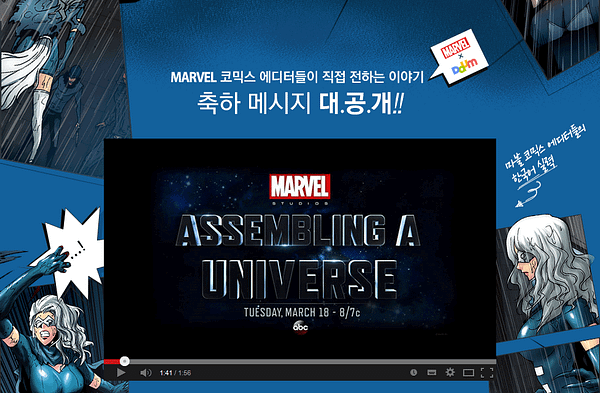
Introduction: The Convergence of East and West
The global landscape of comic book publishing is undergoing a seismic shift, moving away from traditional print-only models toward the hyper-accessible, vertical-scrolling medium of webtoons. A prime example of this evolution is Avengers: Electric Rain, a groundbreaking project that serves as a bridge between the storied legacy of Marvel Comics and the vibrant, rapidly expanding South Korean digital comics industry. Featuring the artistic vision of renowned Korean artist Younghoon Ko, the series marks a significant moment: the introduction of an original Korean Avenger into the Marvel canon, set against the neon-lit urban backdrop of Seoul.
Main Facts: The Project at a Glance
Avengers: Electric Rain is not merely a translation of existing American material; it is an original, bespoke narrative created specifically for the Korean market. The project was facilitated by a strategic partnership between Marvel, Disney Korea, and Daum—one of South Korea’s most prominent digital platforms.

The core of the series centers on the Avengers operating within a Korean context, a narrative choice that allows for a fresh perspective on characters like Iron Man, Captain America, and Thor. However, the most anticipated element of the series is the introduction of a brand-new, original character designed specifically to resonate with the Korean audience. This inclusion reflects a broader strategy by Marvel to localize its intellectual properties, ensuring that the "Earth’s Mightiest Heroes" maintain global relevance in an increasingly interconnected pop-culture landscape.
Chronology: How the Deal Came to Be
The development of Avengers: Electric Rain follows a timeline of increasing interest from major Western entertainment conglomerates in the Korean creative sector.

- Market Analysis (2012–2013): As webtoons (manhwa-style digital comics) began to dominate the Korean mobile internet landscape, major publishers took note of the massive user engagement on platforms like Daum and Naver.
- Partnership Formation (Early 2014): Disney Korea and Marvel Comics entered formal negotiations with Daum to bridge the cultural gap. The goal was to provide high-quality content that adhered to the "Marvel aesthetic" while embracing the "webtoon format"—vertical scrolling, vibrant color palettes, and episodic, mobile-optimized pacing.
- Artist Selection: The selection of Younghoon Ko was a critical juncture. Ko, already a respected figure in the Korean industry, was tasked with interpreting iconic Marvel character designs through the lens of modern Korean manhwa.
- Launch and Serialization: The series launched to significant fanfare in Korea, utilizing the "Electric Rain" title to signal a departure from the gritty, grounded nature of traditional Western superhero comics toward something more atmospheric and kinetic.
Supporting Data: The Rise of the Webtoon Format
To understand why Marvel invested in Electric Rain, one must look at the data surrounding webtoons. Unlike traditional print comics, which have faced logistical and distribution hurdles in East Asian markets, webtoons are native to the smartphone era.
- Mobile-First Design: The "infinite canvas" of the vertical scroll allows for dramatic pacing that print comics cannot replicate. Avengers: Electric Rain utilizes this to full effect, with action sequences that emphasize vertical movement—a perfect match for the cinematic scale of the Avengers.
- Market Penetration: Daum’s infrastructure provides instant access to millions of daily active users. By digitizing the Avengers, Marvel effectively bypassed the "import barrier," placing their characters directly into the pockets of the Korean youth demographic.
- Cultural Crossover: The success of the Marvel Cinematic Universe in South Korea provided the necessary brand awareness to launch Electric Rain. By 2014, the "Avengers" brand was a household name in Seoul, making the transition to a localized comic series a logical step in brand cultivation.
Official Responses and Behind-the-Scenes Friction
The launch of the project was accompanied by a series of promotional interviews and videos featuring key Marvel editorial figures, including C.B. Cebulski, Axel Alonso, Tom Brevoort, Ellie Pye, Jordan White, and Nick Lowe.

The promotional campaign served a dual purpose: to build hype and to demonstrate the collaborative spirit of the project. However, the reception was nuanced. In the released behind-the-scenes footage, the Marvel editorial team can be seen attempting to engage with the Korean language—a move that was simultaneously praised as a sign of respect and critiqued by observers for its awkwardness. The "mutilation" of the Korean language, as noted by contemporary reports, highlighted the steep learning curve inherent in a cross-cultural creative partnership.
In contrast, the footage of Younghoon Ko at work provided a stark, professional counterpoint. Ko’s technical proficiency in blending Western superhero archetypes with the fluid, expressive anatomy typical of Korean manhwa provided the project with its necessary legitimacy. While the Marvel editors provided the structural oversight, it was Ko who translated the "Marvel style" into a format that felt native to the Korean reader.

Implications: The Future of Global Comics
The implications of Avengers: Electric Rain extend far beyond a single comic series. It serves as a blueprint for how legacy publishers can survive the transition to digital-first consumption.
1. Localization vs. Globalization
The project proves that "globalization" in comics is most effective when it is paired with "localization." By creating a character specifically for the Korean market, Marvel avoided the pitfalls of simply "importing" American stories. They created a hybrid product that felt like a natural extension of the Korean digital experience.

2. The Webtoon Format as an Industry Standard
The success of Electric Rain helped validate the webtoon format in the eyes of Western publishers. We have since seen a surge in interest from companies like Webtoon Entertainment and Tapas, as major American publishers look to replicate the engagement models that have worked so successfully in South Korea.
3. Artist Agency and Cultural Exchange
Younghoon Ko’s involvement demonstrates a shift in the power dynamic between Western editors and international creators. Rather than forcing a singular, rigid "Marvel house style," the project allowed for a dialogue between the American editorial vision and the Korean aesthetic. This cultural exchange is likely to become the standard for future international collaborations.

Conclusion: A Lasting Legacy
Avengers: Electric Rain remains a pivotal case study in the evolution of digital comics. It highlighted that the future of the medium is not bound by geography, nor by the traditional constraints of ink and paper. By embracing the mobile-native webtoon format and empowering local creators like Younghoon Ko, Marvel managed to plant a flag in one of the most competitive and dynamic comic markets in the world.
As we look back at the project, its true value lies in its experimental nature. It was an early recognition that the Avengers are not just American icons, but global symbols that can be reinterpreted, redesigned, and retold to fit any cultural context. While the language barriers captured in the promotional videos served as a humorous footnote, the artistic output of the series remains a testament to the power of collaboration across borders. Electric Rain was not just a comic; it was the beginning of a conversation between two distinct comic cultures—a conversation that continues to shape the industry to this day.

 Iffa Jayyana
 Reynand Wu