Dwi Wanna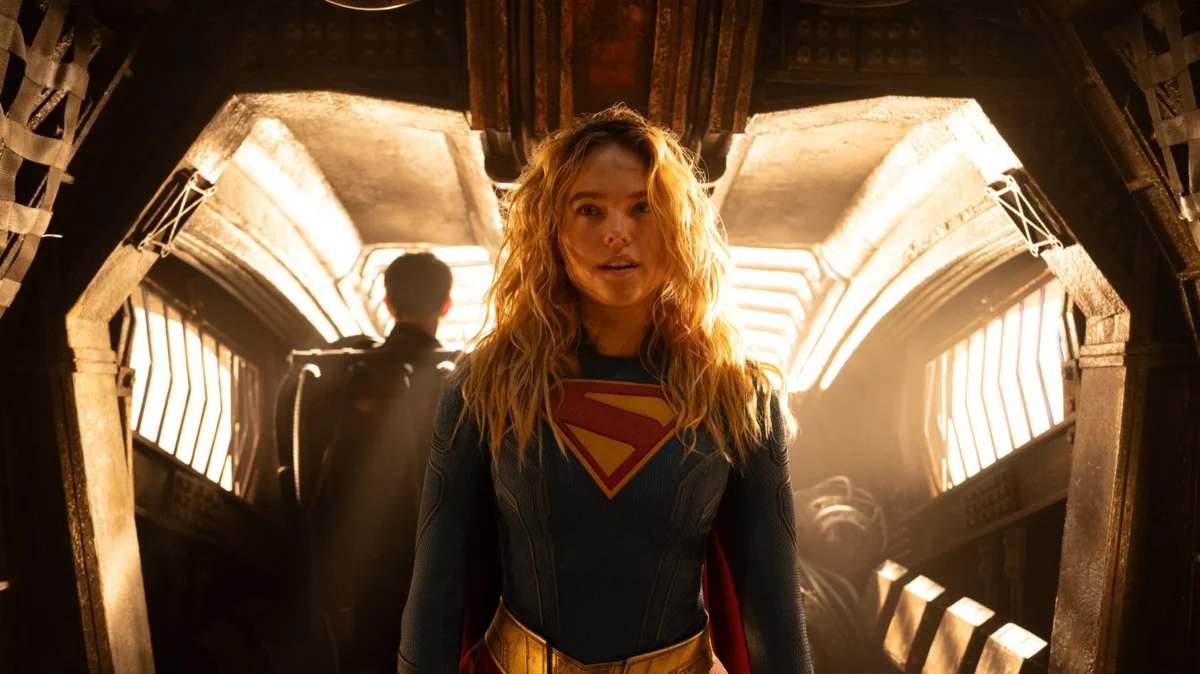
When DC Studios announced Supergirl: Woman of Tomorrow, fans of Tom King and Bilquis Evely’s acclaimed comic book series rejoiced at the prospect of a faithful adaptation. The source material is a haunting, cosmic odyssey—a departure from the traditional "Man of Steel" archetype that favors introspection and grit over colorful spandex. However, as the production gears up for its June 26, 2026, release, one of the most intriguing revelations from the set is that audiences will see very little of the iconic "S" shield. Milly Alcock’s Kara Zor-El, it turns out, spends the vast majority of her cinematic debut in civilian clothes.
This creative decision is not merely a stylistic whim; it is a fundamental pillar of how the film approaches Kara’s character arc. By stripping away the uniform, the filmmakers are forced to confront the person underneath the invulnerability.
The Core Narrative: A Hero Out of Uniform
To understand why Kara Zor-El is rarely seen in her superhero regalia, one must look at the specific narrative constraints of Woman of Tomorrow. The story follows a hardened, cynical version of Kara who is drifting through the galaxy, attempting to escape the shadow of her cousin and the trauma of her home planet’s destruction.
According to DC Studios executive Chantal Nong Vo, the choice to keep Kara out of costume is a reflection of her internal state. "First of all, she’s off the job when you meet her," Nong Vo explained during a recent set visit. "So, she’s always being Supergirl on Earth. When she comes to other planets, it’s how she gets a break. We think that when she’s on break, she wouldn’t necessarily be in costume, and it’s more fun for her to be incognito."
This "off-the-clock" approach humanizes a character who is often treated as a god. By presenting Kara as a traveler rather than a savior, the film emphasizes her agency. She isn’t performing for the public; she is existing in a universe that has already taken everything from her.
Chronology of a Cosmic Crusade
The inciting incident of the film—a "John Wick-style" quest for vengeance—sets the stage for this casual, gritty aesthetic. After her beloved companion, Krypto the Superdog, is poisoned, Kara embarks on a brutal, interstellar journey to track down those responsible and secure an antidote.
This is not a story of city-wide heroics or public acclaim. It is a desperate, personal mission. Throughout this journey, the costume acts as a symbolic threshold. The film’s narrative structure suggests that the suit represents a "final form" that Kara has not yet earned or chosen to accept.
![Why Supergirl Barely Wears Her Superhero Costume In Her Own Movie [Set Visit]](https://www.slashfilm.com/img/gallery/why-supergirl-barely-wears-her-superhero-costume-in-her-own-movie/l-intro-1780422304.jpg)
As the film progresses, the costume serves as a physical manifestation of her coming-of-age journey. Nong Vo elaborated on this symbolism, noting, "This journey is she’s already been a hero, but not in the way where she’s her full self and her full whole self. The movie really is about kind of accepting who you are, accepting your past, processing it, and then that’s who she is in the end—the super suit is symbolic of that."
The Punk Rock Aesthetic: A Conscious Design Choice
While the absence of the costume provides thematic depth, it created a massive practical challenge for the production team: if the lead character isn’t in her iconic suit, what does she wear? The answer lies in a grungier, more "punk rock" aesthetic that mirrors the harshness of the story.
Costume designer Michael Mooney faced the daunting task of defining Kara’s civilian identity. The team wanted her look to feel lived-in and reactive to her nihilistic worldview. This led to the inclusion of band t-shirts, specifically referencing the legendary punk/new wave band, Blondie.
The process of selecting the right shirt was far more exhaustive than one might imagine. "We went through hundreds of different bands," Mooney revealed. "Then [director] Craig [Gillespie] settled on Blondie. We went through every band that you could possibly think of, and they were all a little bit alternative. We occasionally put up some mainstream bands, and he just went, ‘No, no, it’s not that.’"
The Craft Behind the Wardrobe
The attention to detail extended beyond the choice of the band. Mooney and his team had to print approximately 30 different variations of t-shirts to get the texture and color palette correct. The goal was to ensure that the clothing didn’t pop too aggressively on screen; they needed to balance the vibrancy of the print with the muted, travel-worn aesthetic of Kara’s life on the road.
This level of granular detail highlights the "Supergirl" team’s commitment to visual storytelling. By tweaking the amount of pink and the fading of the fabrics, the costume department ensured that Kara looked like a girl who had been sleeping in space ships and fighting through alien bars, rather than a superhero posing for a promotional poster.
Implications for the New DC Universe
The decision to minimize the costume has significant implications for how James Gunn and Peter Safran’s new DC Universe (DCU) will approach its characters. In the past, superhero films have often been criticized for relying too heavily on the "costume as a crutch." By moving the focus away from the suit, Supergirl signals that the new DCU is interested in character-first storytelling.
![Why Supergirl Barely Wears Her Superhero Costume In Her Own Movie [Set Visit]](https://www.slashfilm.com/img/gallery/why-supergirl-barely-wears-her-superhero-costume-in-her-own-movie/intro-1780422304.jpg)
Breaking the Superhero Tropes
- The Burden of the Symbol: By having Kara resist the suit for most of the runtime, the film makes the moment she finally dons the cape feel earned. It becomes a transformative act rather than a default state.
- Audience Relatability: A hero who is constantly in a suit can feel detached from the audience. A hero in a band tee and jeans, struggling with trauma and grief, is infinitely more relatable.
- Genre Fluidity: The "punk rock" aesthetic allows the film to lean into different genres—the road trip movie, the revenge thriller, and the space western—without being tied down by the visual language of traditional superhero cinema.
The Evolution of the Heroine
The "Woman of Tomorrow" arc is a departure from the traditional, optimistic portrayal of Kara Zor-El. In the comics, she is a character who has been defined by her proximity to Superman, but this film aims to decouple that identity. Her "messed up" nature, as described in early reports, requires a visual language that is less polished and more raw.
The choice of clothing is a bold statement. It tells the audience that this is not a traditional origin story. We aren’t watching a girl learn to put on a suit and save the world; we are watching a broken woman find her purpose. The t-shirt, therefore, becomes a form of armor—a way for her to protect her vulnerability while she navigates a hostile galaxy.
Conclusion: Waiting for the Suit
As we look toward the June 26, 2026, premiere, the anticipation for Supergirl is rooted in this unconventional approach. The film is setting a precedent: it is prioritizing the emotional, messy, and complicated reality of being an alien refugee over the clean-cut tropes of the genre.
While fans will undoubtedly be excited to see Milly Alcock in the iconic red and blue, the journey to that moment—the nights spent in thrifted punk tees, the dust of distant planets, and the quiet, introspective moments with Krypto—will likely define the legacy of this film. By choosing to keep her out of costume, the creative team has ensured that when she finally steps into the light as Supergirl, it won’t just be a costume change; it will be a reclamation of her identity.
In a world saturated with superhero content, the decision to hold back the cape might just be the most heroic thing the studio could have done.


 Sagoh
Sagoh
 Nana Wu