
 Dwi Wanna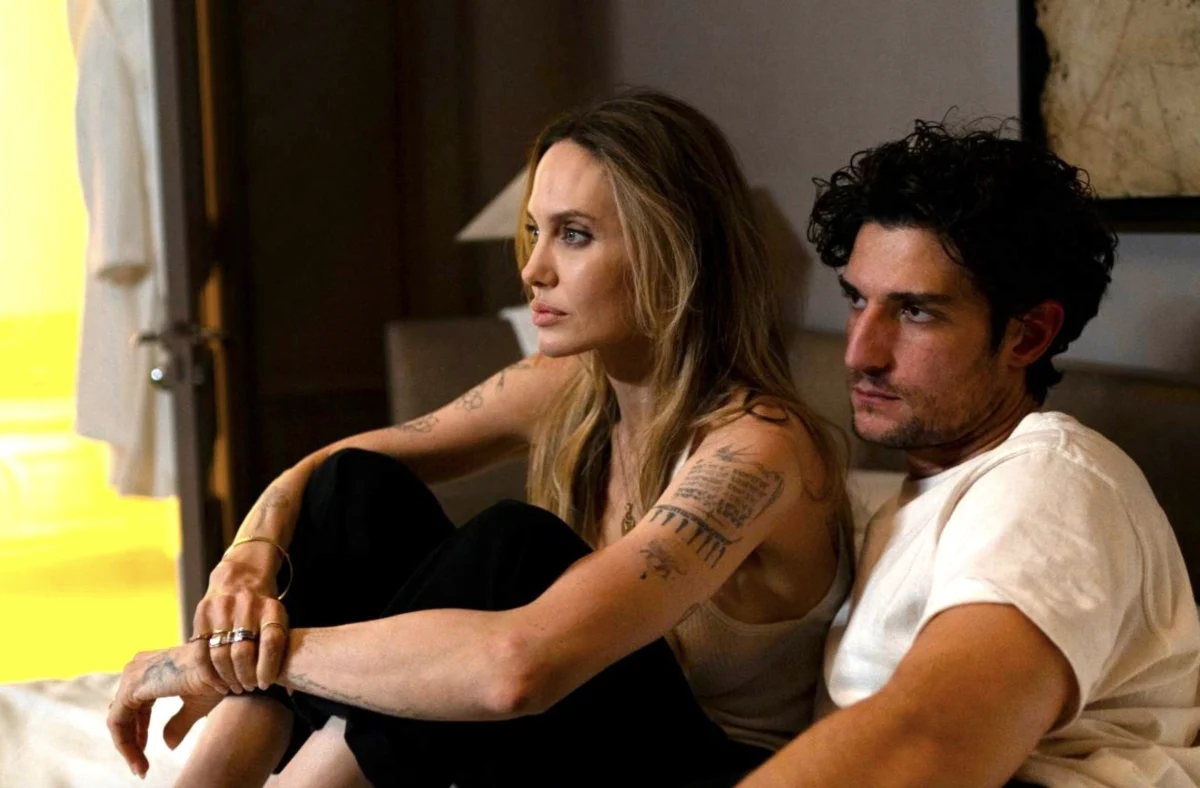
Editor’s note: This review was originally published on September 7, 2025, during the Toronto International Film Festival. Vertical will release the film in theaters nationwide on Friday, June 26, 2026.
Fashion is an industry of staggering economic power and profound cultural influence, generating billions annually while shaping our collective identity through both overt trend-setting and subtle, subconscious cues. Yet, when the camera lens is turned toward the “haute” world, it is almost invariably used to dissect or deride. From the biting, sophisticated satire of Robert Altman’s Prêt-à-Porter to the absurdist, slapstick brilliance of Zoolander, cinema has long treated the fashion world as a caricature.
It is a credit to French filmmaker Alice Winocour that she approaches her country’s most iconic industry with near-total earnestness. In her latest feature, Couture, Winocour pivots away from the genre’s traditional irony to offer a somber, mood-driven exploration of the people behind the runway. However, as the film prepares for its wide theatrical release, it becomes clear that while her intentions are noble, the execution suffers from a disconnect between its aesthetic ambition and its narrative substance.
The Fabric of the Narrative: An Intersecting Portrait
Much like Altman’s 1994 ensemble piece, Couture operates as a collection of intersecting storylines, all gravitating toward the frantic, high-pressure epicenter of Paris Fashion Week. The film attempts to capture the industry’s ecosystem by focusing on four distinct pillars:
- The Visionary: Angelina Jolie stars as Maxine, an indie-horror director imported from America to craft a short film that will accompany the runway show. She is a woman in transition, attempting to find artistic footing while grappling with a life-altering personal crisis.
- The Muse: Anyier Anei plays Ada, a wide-eyed newcomer from South Sudan by way of Kenya. Ada serves as the film’s entry point into the brutal, exclusionary hierarchy of the modeling world, where she is thrust into a maelstrom of haughty industry veterans and competitive peers.
- The Observer: Ella Rumpf portrays a makeup artist who moonlights as a novelist. She is the film’s quiet voice, observing the glamorous, exclusive milieu with a poetic, if somewhat distant, detachment.
- The Architect: Garance Marillier, known for her breakout role in Raw, plays a dedicated seamstress. Her narrative thread is perhaps the most grounded, focusing on the grueling, meticulous labor required to construct a single, flawless garment.
Through these characters, Winocour provides a glimpse into the various sectors of the industry—the creative, the commercial, the labor-intensive, and the aspirational. Theoretically, this structure should yield a thorough, enlightening portrait of the industry’s internal mechanics—the pride, the process, and the crushing pressure.
Chronology of a Creative Pivot
Alice Winocour’s career trajectory has been defined by a restless, genre-hopping curiosity. Having previously navigated the tension of the thriller in Disorder, the expansive sci-fi themes of Proxima, and the intimate, visceral trauma drama of Paris Memories, Winocour is a director who favors atmosphere over explicit exposition.
In Couture, this stylistic signature is both her greatest asset and her primary obstacle. As the threads of the film unspool, the audience is treated to a series of vignettes that lean heavily into a "broadly melancholic wonder." The film is not interested in explaining the fashion industry to the viewer; it is interested in forcing the viewer to feel the texture of it.

On rare occasions, this approach strikes a chord. The climactic runway sequence—a visually arresting moment where a sudden rainstorm forces an epiphany among the characters—is a masterclass in tone. Bolstered by an evocative, haunting score from Filip Leyman and Anna Von Hausswolff, these scenes elevate the film into a stirring, sensory experience. Winocour clearly possesses a deep, genuine empathy for her characters, particularly the women who labor in an industry that remains, despite its progressive facade, largely controlled by men.
Supporting Data: Where the Seams Unravel
Despite its visual grace, the construction of Couture is ultimately patchy and ill-fitting. The decision to employ multiple, intersecting narratives provides a platform for exploration, yet Winocour fails to maximize the potential of this structure.
The narrative arcs are frequently too faint to sustain interest. Ada’s journey, for instance, involves a series of predictable beats—phone calls with her family in Kenya, a foot injury that threatens her career, and nights spent partying with fellow models. These are tropes of the "model as victim/aspirant" archetype, and they are rarely elevated by the script.
Similarly, Angèle, the makeup artist, moves from one gig to the next, engaging in brief, ephemeral small talk. While this may be a realistic, "lo-fi" approximation of the job, it lacks the dramatic momentum required to be truly cinematic. The seamstress, too, spends much of the film in a loop of construction and finishing. There is a lack of narrative friction here; the film observes, but it does not interrogate.
Official Responses and Personal Stakes
The most significant misstep involves the character of Maxine. The decision to burden her with a heavy, "thudding" cancer arc creates a jarring tonal imbalance. The plot, which sees Maxine receiving a terminal diagnosis shortly after arriving in Paris, is woefully light on character-defining moments.
In interviews conducted during the press junket for the film, Angelina Jolie has noted that the diagnosis was partly inspired by health matters from her own past, suggesting a deep, personal connection to the material. However, this personal resonance does not translate to the screen. The script fails to provide shading or texture to Maxine’s journey, leaving the character feeling like a generic vessel for tragedy rather than a fully realized human being.
Jolie’s performance, however, is a testament to her star power. She manages to breathe life into the role, complicating her inherent "otherworldly" magnetism with a palpable sense of dread and sorrow. She is particularly effective—and surprisingly funny—in her scenes with Louis Garrel, who plays her cinematographer and potential love interest.

The chemistry between them provides the film’s only genuine source of tension. In their interactions, Jolie captures the desperation and loneliness of a woman facing her own mortality, using the film’s environment as a shield against the reality of her illness. It is a nuanced, intelligent performance that deserved a more sophisticated script to support it.
Implications: A Cocktail of Styles
The ultimate tragedy of Couture is that it feels like two different movies competing for the same screen time. One is a meditative, naturalistic study of the fashion industry’s invisible workforce, and the other is a melodramatic, high-stakes character study about a woman confronting death.
When these two worlds collide, the result is an underwhelming cocktail of "blasé Euro-sleekness" and standard TV-movie drama. The film is simultaneously too glancing to be a true exposé and too melodramatic to be a quiet, character-driven observation.
For audiences hoping for a definitive look at the couture world, the film will likely fall short. The industry remains a subject that is perhaps too vast, too superficial, and too guarded to be captured by a single, disconnected narrative. Winocour has succeeded in crafting a film that is visually stunning—the clothes are, as expected, magnificent—but she has failed to weave those visual threads into a cohesive, compelling tapestry.
Couture is a film that values the aesthetic above the narrative, a project that is, much like the industry it depicts, beautiful to behold but ultimately hollow at the core.
Grade: C


 Pevita Pearce
 Asep Darmawan




