Raul Delapena Setiawan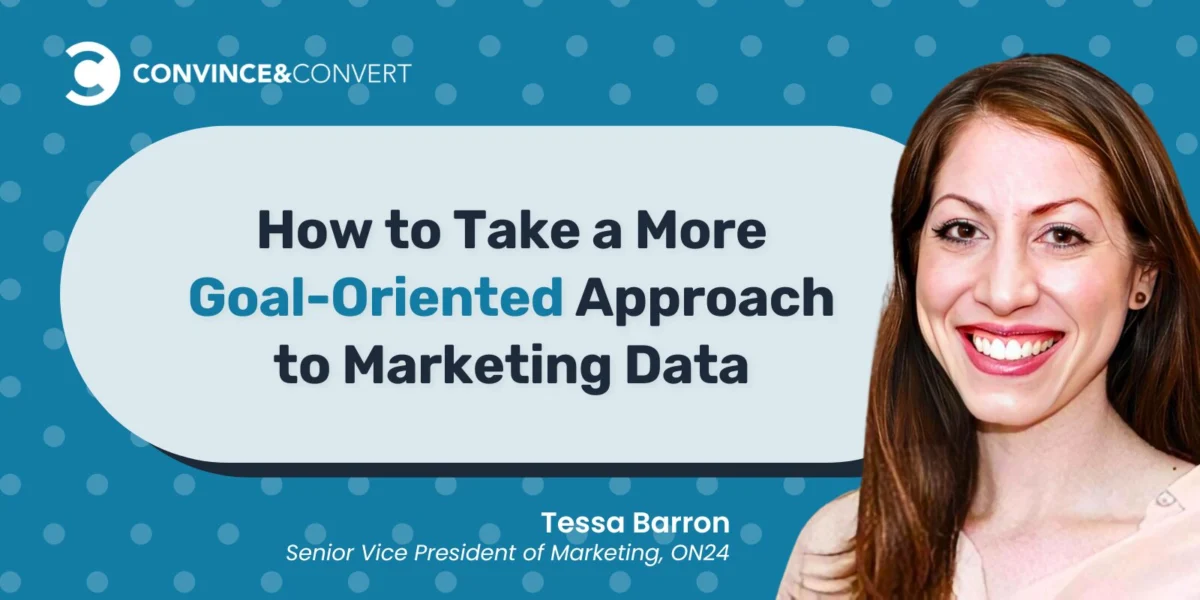
The perennial corporate mandate to "do more with less" is a phrase that often triggers a visceral reaction among marketing professionals. In an era where budgets are tightening and economic uncertainty looms, the pressure to deliver ambitious pipeline targets has never been higher. Yet, for many organizations, the knee-jerk reaction to this pressure is to simply ramp up output—churning out more content, launching more webinars, and increasing ad spend.
However, Tessa Barron, former Senior Vice President of Marketing at ON24 and a recent guest on the Data-Driven Decisions podcast, argues that this "more is more" mentality is a strategic trap. According to Barron, the solution isn’t to increase volume, but to fundamentally re-engineer how marketers perceive their role in driving pipeline, moving from a tactic-centric mindset to a goal-oriented, data-backed architecture.
The Core Problem: Tactic-First Marketing
The evolution of the modern digital landscape has fundamentally changed consumer behavior. Yet, many marketing departments remain anchored in the strategies of three to five years ago.
"We as marketers have to check in with ourselves and say, ‘Have we changed? Are we still doing what we were doing three years ago?’" Barron notes. "If the answer is yes, that is the first sign that we need to stop expecting that if we execute the same way and do more and more, we’re going to get more in return."
For seasoned marketers, the reliance on traditional "tried-and-tested" methods—whitepapers, blog posts, standard webinars, and podcasts—is a comfort zone. While these assets are not inherently flawed, the error lies in the sequence of operations. When teams start by planning their content calendar ("We need four webinars this quarter") rather than their business objectives ("We need to penetrate these specific accounts"), they lose sight of the conversion funnel.
Moving from Tactics to Objectives
Barron advocates for a reversal of the traditional planning process. Instead of asking, "What content should we produce?", marketers should begin by asking, "What is the specific business goal?"
For instance, if the quarterly objective is a 10% uplift in pipeline or reaching a set number of new high-value accounts, the tactical decisions should flow directly from that requirement. If the data suggests that target accounts require deeper educational insights to move toward a first meeting, then—and only then—does a webinar become the logical tactical output. The goal dictates the vehicle, not the other way around.
Decoding "Signal" vs. "Noise"
In the current marketing ecosystem, the barrier is rarely a lack of data; it is an excess of it. With dozens of metrics available—from email open rates to social media impressions—marketers are often drowning in "noise."
Barron distinguishes between noise and "signal." A signal is any piece of data that indicates a specific buyer is moving closer to a conversion point. Once these signals are identified, the marketer’s job shifts from "creating content" to "setting traps"—designing interactive moments that force these signals to the surface.
The Power of Interactive Data Capture
ON24, through its platform, provides a blueprint for how this works in practice. By embedding polls, surveys, and targeted Q&As within digital experiences, marketers can turn passive viewers into active data points.
Case Study 1: The Technology Sector
A technology firm aiming to regain market share identified that prospects using a specific cloud provider were 10 times more likely to convert. Rather than targeting prospects broadly, they utilized a webinar poll to explicitly ask: "Which cloud provider are you currently using?" This simple, intentional question acted as a high-fidelity filter, allowing the sales team to prioritize the prospects who signaled the highest propensity to buy.
Case Study 2: The Pharmaceutical Sector
In a similar vein, a pharmaceutical company looking to connect with physicians treating high-risk patients utilized a webinar on drug therapies to gauge patient base risk. By asking, "How would you rate the risk of your patient base?" the company identified "high-risk" responders, effectively segmenting their audience based on immediate clinical need rather than generic interest.
These examples illustrate that the most effective data capture is not about collecting more data; it is about collecting the right data that directly informs the sales process.
Bridging the Sales-Marketing Divide
Perhaps the most significant friction point in B2B organizations is the misalignment between marketing, which generates leads, and sales, which closes them. Barron argues that marketers often suffer from an "echo chamber" effect, asking questions that validate the quality of their own content rather than the quality of the prospect.
The Front-Line Insight
"Salespeople sit at the front lines of the prospect’s communication with a company," Barron observes. "They can tell you much more about their needs and wants, reasons for hesitation or doubt, and their expectations—insights you can use to inform your marketing."
By consulting with sales, marketers can pivot their messaging to address specific objections or "doubts" that frequently derail deals. Furthermore, there is a necessary distinction in ownership: while marketing is responsible for creating a "net" to catch potential leads, the ultimate creation of the pipeline is a function of the sales team. The marketer’s role is to provide the sales team with the clearest, most high-intent picture of the buyer before the first discovery call even begins.
Strategic Implications: A Framework for Messaging
To move prospects through the pipeline effectively, marketers must leverage the data they have to create personalized messaging at every touchpoint. This requires a systematic approach to the "in-between" stages of the funnel—the often-ignored gaps between a lead being captured and an opportunity being created.
Optimizing the "In-Between"
Barron highlights that small, incremental changes often yield the highest ROI. These include:
- Refining Lead Forms: Shortening forms to reduce friction while ensuring the questions asked are high-intent.
- Targeted Messaging: Moving away from broad, generic messaging to personalized content that speaks to the specific pain points identified by sales.
- Interactive Engagement: Providing consistent opportunities for prospects to signal their intent throughout the buyer’s journey.
By focusing on these micro-conversions, marketers can control their own performance and demonstrate a direct line of sight to pipeline growth.
Communicating Impact to Stakeholders
Finally, the transition to a goal-oriented, data-driven mindset requires a change in how performance is reported to the C-suite. Stakeholders are often disconnected from the daily mechanics of marketing, but they are acutely interested in growth, budget efficiency, and market share.
Barron suggests that the key to buy-in is simplicity. Instead of presenting complex dashboards, marketers should present data that mirrors the business’s financial goals. If a strategy is working, show how it moved the needle on conversion. If it isn’t, show the data that prompted the pivot. By stripping away the noise and presenting only the signals that matter to the business, marketers can earn the trust of stakeholders and secure the resources needed for future initiatives.
Conclusion
The era of "more for the sake of more" is over. The path forward for modern marketing lies in the intentional, surgical application of data to support tangible business objectives. By aligning with sales, focusing on high-intent signals, and prioritizing the goals of the buyer over the tactics of the marketer, organizations can transform their marketing departments from cost centers into precision-engineered engines of growth.
For those looking to refine their own data strategies, the lessons shared by Tessa Barron serve as a vital reminder: in a world of infinite noise, the winners are those who know exactly what they are listening for.
For more in-depth analysis on these strategies and further insights into the future of data-driven marketing, you can listen to the full episode of the Data-Driven Decisions podcast.

 Nana
Nana
 Asep Darmawan