

In the current technological landscape, artificial intelligence often feels like a digital veneer. We use smartphones that have been "upgraded" with AI features, earbuds that feature integrated transcription, and laptops that boast "Copilot" keys. While these additions provide utility, they are fundamentally traditional devices retrofitted to accommodate generative AI.
Microsoft, however, is looking to move past the era of the "AI-enhanced" gadget. Through its newly unveiled Project Solara, the tech giant is attempting to pioneer an "agent-first" hardware paradigm. By utilizing the Microsoft Device Ecosystem Platform (MDEP)—a framework built upon the robust foundations of Android—Microsoft hopes to create a new class of devices designed specifically for the autonomous, specialized AI agents of the future.
Main Facts: The Architecture of Solara
At its core, Project Solara is not a consumer device, but a platform-level vision. It represents a pivot away from the application-centric model that has dominated computing for the last two decades. Instead of opening an app to perform a task, a Solara-powered device is designed to interface with a constellation of specialized AI agents.
The Foundation: MDEP and Android
Microsoft has chosen to build this ecosystem on the Microsoft Device Ecosystem Platform (MDEP). By leveraging Android as its underlying kernel, Microsoft gains access to a massive library of drivers, security protocols, and hardware compatibility layers. This allows developers to focus on the "agent" experience rather than reinventing the hardware abstraction layer.
The Reference Designs
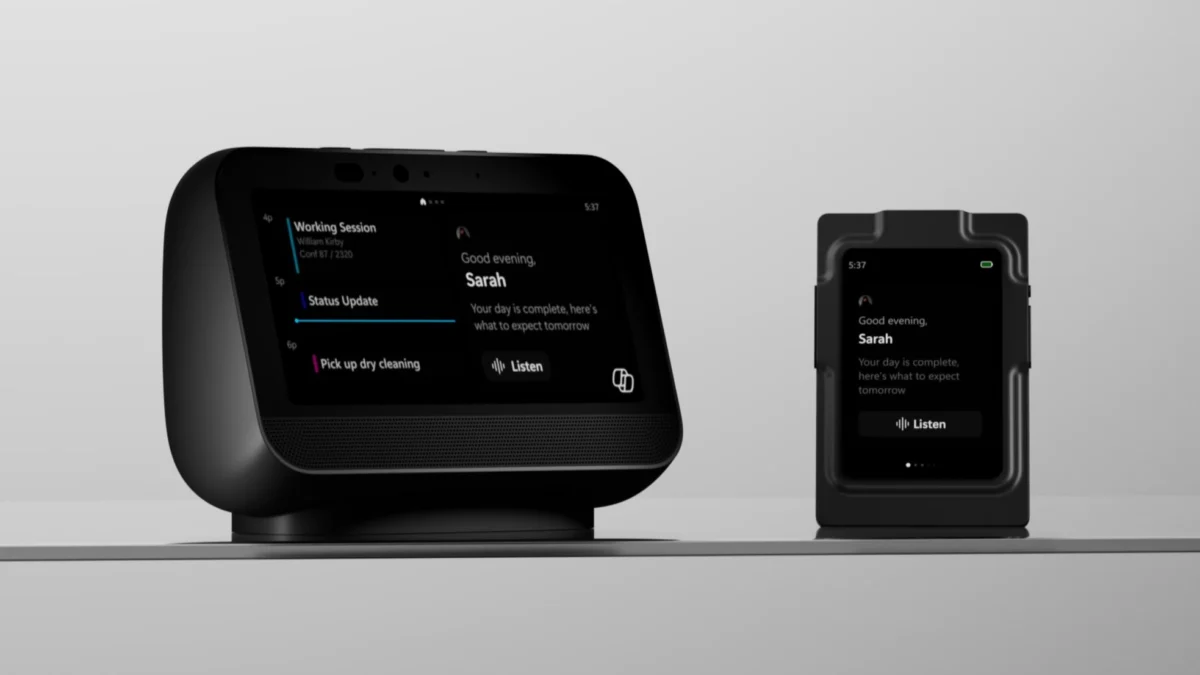
While Microsoft has stated it has no current intention to manufacture its own hardware, it has introduced two distinct reference designs to showcase the potential of the platform:
- The Desktop Hub: A stationary, screen-equipped device reminiscent of a smart display, optimized for collaborative office environments or retail kiosks.
- The Wearable Badge: A lightweight, screen-equipped ID badge capable of context-aware assistance, aimed at frontline workers in healthcare or logistics.
Just-in-Time UI
Perhaps the most radical departure in the Solara vision is the "Just-in-Time" user interface. In traditional computing, developers spend thousands of hours designing static menus and layouts. In the Solara model, the AI agent dynamically generates the interface as needed. If an agent is helping a nurse log patient vitals, the UI shifts to a data-entry format; if that same device is then used to consult a medical database, the UI morphs into a research-oriented dashboard.
Chronology: The Evolution of Microsoft’s AI Strategy
To understand the arrival of Project Solara, one must view it as the latest chapter in a multi-year pivot toward cloud-native, agent-driven computing.
- 2023: The Copilot Launch: Microsoft kicks off the era of "AI everywhere" by integrating Copilot into the Windows and Office suites. This established the "AI-as-an-assistant" model.
- 2024: Agentic Frameworks: The industry begins to shift from simple chatbots to "AI Agents"—autonomous systems capable of taking actions on behalf of the user. Microsoft pivots its research focus toward agent orchestration.
- 2025: MDEP Development: Microsoft quietly matures the Microsoft Device Ecosystem Platform, focusing on building a version of Android that is stripped of consumer-facing bloat and optimized for enterprise-grade, agent-centric tasks.
- June 2026: Project Solara Unveiled: At the Microsoft Build conference, the company officially pulls back the curtain on Project Solara, defining the "agent-first" hardware vision and announcing partnerships with silicon giants MediaTek and Qualcomm.
Supporting Data: The "Chip-to-Cloud" Synergy
The feasibility of Project Solara rests on the "chip-to-cloud" architecture. By partnering with industry titans like Qualcomm and MediaTek, Microsoft is ensuring that the hardware is capable of performing "on-device" inference.
Why is this necessary? Latency. If an AI agent in a hospital setting needs to respond to a voice command to retrieve a patient’s record, a round-trip to the cloud might be too slow. By utilizing advanced NPU (Neural Processing Unit) architectures provided by these chipmakers, Solara devices can handle sensitive data locally, ensuring privacy and sub-millisecond response times.
Furthermore, the enterprise market is the clear target. Recent data from the industry suggests that while consumer interest in AI hardware (like the Rabbit R1 or Humane Pin) has been volatile, enterprise demand for AI-driven workflow optimization has remained steady. By targeting healthcare and retail, Microsoft is playing to its traditional strength: the B2B sector.
Official Perspectives: What Microsoft and Partners Are Saying
Microsoft has been deliberate in its messaging regarding Solara. The company frames it as a "liberation from the app store model."
In recent documentation, Microsoft engineers noted: "We are moving away from the era where the user must navigate a labyrinth of applications to complete a single workflow. With Solara, the AI orchestrates the tools. The user provides the intent; the agent provides the capability."
Partners are equally optimistic. MediaTek executives have suggested that the "agent-first" design allows for a new tier of specialized processors that don’t require the overhead of a full mobile OS, potentially leading to cheaper, more energy-efficient devices that can run for days on a single charge—a massive advantage for frontline wearables.
Implications: The Risks and Potential Realities
Despite the optimism, the industry remains skeptical of the "vibe-coded" approach—a term used to describe software that relies on the AI to "figure out" the user’s intent rather than following strict, programmed logic.
The "Black Box" Problem
The primary implication of an agent-first UI is the loss of predictability. If an AI agent decides to change the interface on the fly, how can a user rely on the device for mission-critical tasks? In a medical setting, a "Just-in-Time" UI error could be catastrophic. Microsoft faces a significant hurdle in proving that these agents are not just "smart," but reliable.
The Death of the App?
If Project Solara succeeds, the concept of the "App Store" becomes obsolete for these devices. This would represent a tectonic shift in the software economy. Developers would stop writing "code" for specific UIs and instead focus on creating "skills" or "capabilities" that AI agents can consume. This creates a massive barrier to entry for smaller developers who might not have the resources to build agent-compatible services.
A Long Road to Deployment
It is important to manage expectations. We are currently in the reference design phase. There are no consumer products on the shelf, and no manufacturers have officially committed to a production timeline. The path from a Microsoft whitepaper to a functional, reliable, and affordable piece of hardware in a hospital or retail store is measured in years, not months.
Conclusion: A Vision, Not a Product
Project Solara is a bold experiment in the future of human-computer interaction. By placing the AI agent at the center of the hardware experience, Microsoft is challenging the smartphone-dominated status quo.
Whether Solara becomes the standard for enterprise computing or fades into the annals of "innovative but impractical" prototypes depends on two factors: the reliability of the agents themselves and the willingness of hardware manufacturers to move away from the safety of the traditional Android app model. For now, Microsoft has successfully set the stage. The question remains whether the rest of the industry—and the users who depend on these devices—is ready for a world where the interface disappears, and only the agent remains.












No comments yet. Be the first to join the conversation!