Iffa Jayyana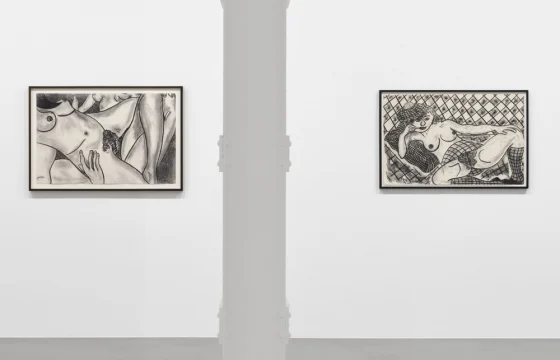
Galerie Max Hetzler in Berlin has unveiled a significant retrospective, X-Rated (1972–1974), a vibrant and provocative survey of paintings and works on paper by the singular American artist William N. Copley. Marking the gallery’s fourth presentation of Copley’s oeuvre, this exhibition offers a deep dive into one of the most daring chapters of 20th-century art. The show will remain on public view through April 22, 2026, providing a rare opportunity for audiences to engage with a body of work that challenged the moralistic boundaries of its time and continues to resonate with a subversive, playful energy in our own image-saturated digital age.
The Genesis of an Iconoclast: A Chronology of CPLY
To understand the audacity of the X-Rated series, one must first understand the idiosyncratic path Copley took toward the canvas. Born into a trajectory that initially favored the literary, Copley’s early life was defined by a profound immersion in the intellectual avant-garde of the mid-20th century.
In the late 1940s, Copley co-founded the Copley Galleries in Beverly Hills alongside his brother-in-law, the artist John Ployardt. This brief but seismic endeavor served as a catalyst for his artistic identity. By centering the gallery’s program on the Surrealists, Copley found himself in the immediate orbit of cultural titans: Man Ray, Max Ernst, and Marcel Duchamp. The legendary dealer Alexander Iolas, recognizing a latent creative fire in the young enthusiast, became a pivotal mentor, encouraging Copley to transition from curator and writer to practitioner.
By 1951, as the gallery shuttered its doors, Copley adopted the moniker "CPLY"—a signature that would become synonymous with a unique brand of figurative wit. Shortly after his debut at a Los Angeles bookstore, he relocated to France. While he was a generation younger than his Surrealist mentors, Copley’s work was fundamentally shaped by their principles. However, he diverged from the pack by blending the dark, subconscious explorations of Surrealism with a self-taught, graphic style that echoed the accessibility of American comics and the burgeoning aesthetics of Pop Art.
The ‘X-Rated’ Series: Transmuting Taboo into Joy
The heart of the current exhibition is the X-Rated series, a body of work produced between 1972 and 1975. When these works were first unveiled in 1974 at the New York Cultural Center, they arrived in a social climate where the sale of hardcore pornography was still largely illicit in the United States. Copley, acting as a cultural provocateur, famously sourced his imagery from "under-the-counter" adult magazines.
His stated ambition was profound: he sought to "break through the barrier of pornography into the area of joy." Rather than succumbing to the clinical or the exploitative, Copley transformed these ritualized motifs of adult entertainment into narrative, highly stylized paintings. The X-Rated works are a masterclass in tone, oscillating between the tender intimacy of The Seven Year Itch (1973) and the frenetic, exuberant energy of Viridiana (1973).
Copley’s approach to these subjects was rooted in a radical openness. "That’s what makes sex so much fun," he once remarked, "since nobody really understands it, the possibilities for originality are endless." This philosophical stance allowed him to treat the human body not as an object of shame, but as a vehicle for complex, humorous, and deeply human storytelling.
Structural Anatomy: The Process of Creation
The exhibition at Galerie Max Hetzler provides a rare behind-the-scenes look at Copley’s methodology. His creative process was rigorous, despite the "slapdash" aesthetic of the final canvases. Typically, Copley would engage in a two-stage preparatory process: first, a small-scale, intimate study, followed by a larger, more dynamic version.
By displaying these preparatory drawings alongside their final oil-on-canvas iterations—such as the pairing of Calcutta (1973) and its untitled counterpart—the gallery highlights how Copley refined his compositions. He focused on heightening the pictorial dynamism, treating figures with a loose, schematic freedom that avoided the pitfalls of academic realism. Critics have frequently compared his treatment of these entwined, attenuated figures to Henri Matisse, yet where Matisse might favor the decorative, Copley leans into the narrative shock of the sexual act, presenting it with an unflinching, cartoon-like directness.
Cultural Context and Critical Reception
The title of the series itself is a relic of film industry history, referring to the classification system that limited certain films to adult audiences in the United States. By adopting this nomenclature and borrowing titles from cinema classics like Les Quatre Cent Coups or The Exorcist, Copley created a layer of "Surrealist disjunction." The paintings rarely align literally with the titles, yet these cinematic references act as a springboard for the viewer’s imagination, grounding the erotic imagery in the broader language of popular culture.
When the series debuted in 1974, the reception was surprisingly favorable, largely due to the progressive vision of the New York Cultural Center’s director, Mario Amaya. Critics were forced to grapple with the juxtaposition of pornographic subject matter and high-art execution. Peter Schjeldahl, writing for Art in America, praised the show as "uniformly gorgeous," identifying it as a "highly satisfying development" in Copley’s career. The critical consensus was that Copley had successfully navigated the dangerous waters of sexual depiction, emerging with a body of work that was more playful than lascivious, more artful than base.
Implications: The Subversive Legacy of CPLY
The X-Rated series remains a singular, defiant chapter in the history of 20th-century art. In an era where "neutrality" was often the safest path for an artist, Copley opted for engagement—and often confrontation. He rejected the moralistic constraints that viewed sex as a private, shameful, or taboo subject, instead bringing it into the public light with a sense of humor that served to disarm and invite rather than offend.
Today, we live in a world that is arguably more image-saturated than the one Copley occupied in the 1970s. Yet, his canvases retain their "subversive charge." By merging the high-minded traditions of painting with the low-brow reality of pornography, Copley challenged the viewer to reconsider their own relationship with pleasure and morality.
This exhibition serves as a reminder that artistic innovation often happens at the fringes of acceptable behavior. As the art world continues to grapple with the politics of representation and the body, Copley’s work stands as a testament to the power of the individual voice. He did not merely document the erotic; he reclaimed it as a source of aesthetic and intellectual inquiry.
For those visiting Galerie Max Hetzler, the X-Rated exhibition is more than a historical retrospective; it is an invitation to engage with a legacy of liberation. Copley’s work forces us to ask: at what point does an image stop being a representation of a subject and start becoming a catalyst for a new way of seeing the world? In his pursuit of joy, William N. Copley succeeded in creating a visual language that remains as vital, funny, and provocative today as it was half a century ago.
Exhibition Details:
- X-Rated (1972–1974)
- Artist: William N. Copley (CPLY)
- Venue: Galerie Max Hetzler, Berlin
- Duration: On view through April 22, 2026


 Sagoh
Sagoh
 Lina Irawan