Muslim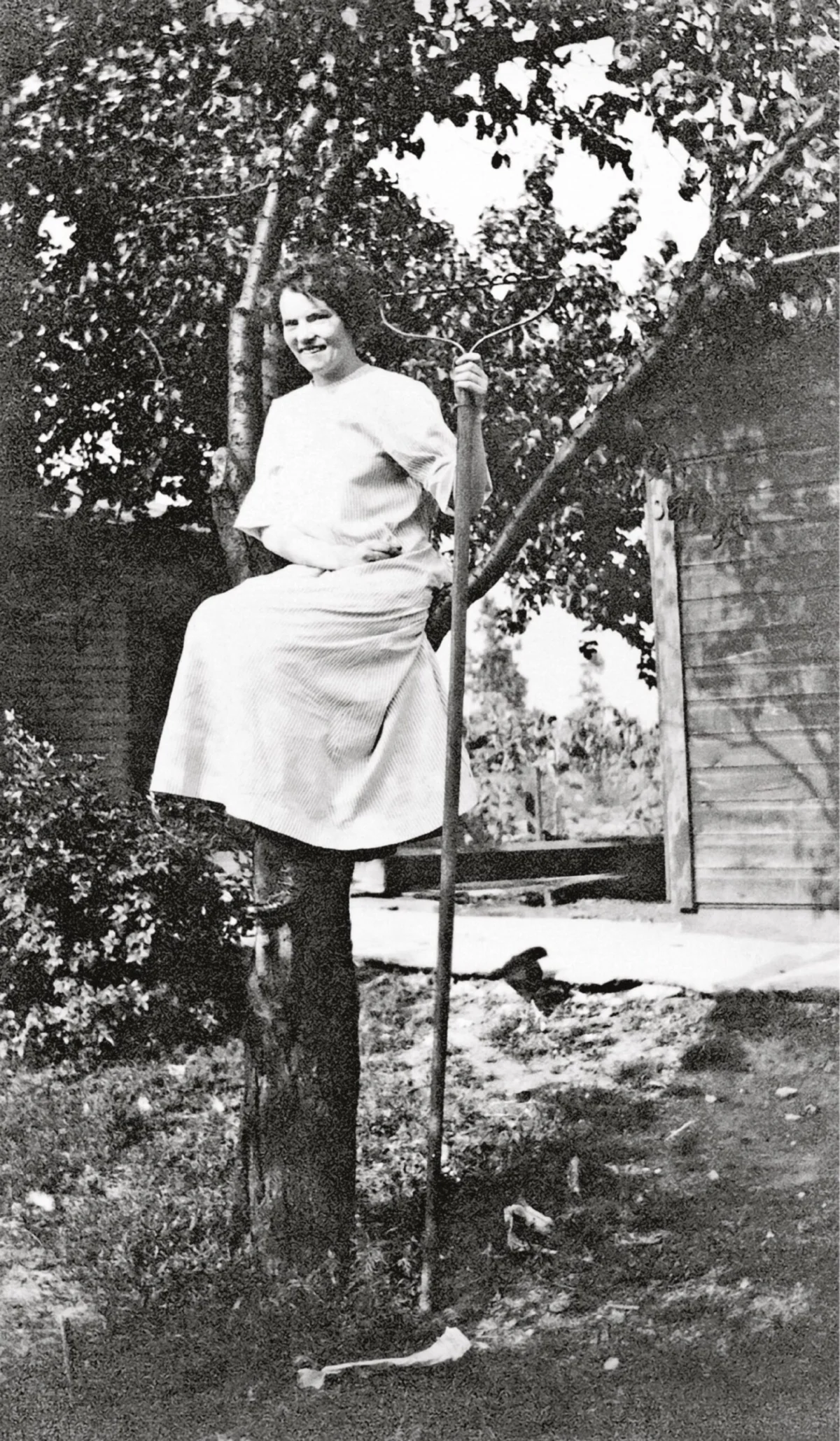
For nearly three decades, the late collector Jochen Raiß (1969–2022) dedicated his life to the pursuit of the ephemeral. Scouring flea markets, antique shops, and dusty estate sales across Germany and beyond, Raiß sought out the discarded visual debris of the 20th century—specifically, the vernacular snapshot. These were the unpretentious, private images taken by amateurs that, when viewed in isolation, seem entirely unremarkable. Yet, as Raiß’s collection grew into the thousands, a peculiar and persistent pattern emerged from the monochromatic fog of the past: an astonishingly high frequency of portraits featuring women posing, climbing, or lounging in the branches of trees.
The resulting collection, now immortalized in the definitive hardcover volume Women in Trees (published by Hatje Cantz), serves as a testament to a mid-century cultural quirk that remains both charming and deeply enigmatic. What began as a personal hobby for Raiß has evolved into a fascinating sociological study of leisure, gender, and the human desire to capture the extraordinary within the mundane.
The Genesis of a Collection: From Flea Markets to Fine Art
The story of Women in Trees begins not in a gallery, but in the serendipitous clutter of European markets. Jochen Raiß, an astute observer of photographic history, initially collected snapshots without a specific agenda. However, as the 1990s bled into the early 2000s, he noticed that he was frequently drawn to images of women elevated above the ground.

By the time of his passing in 2022, Raiß had curated a staggering archive of these images. The photographs, which date primarily from the early 1900s through the 1950s, captured women in various states of repose—some perched delicately on low-hanging boughs, others expertly maneuvering into the higher canopy with the confidence of seasoned climbers. These were not professional models; they were grandmothers, aunts, friends, and sisters, captured by husbands, fathers, or companions on Sunday afternoons or summer holidays.
Raiß’s curatorial eye allowed him to bridge the gap between "junk-bin discovery" and "cultural artifact." By collating these images, he elevated the status of the anonymous amateur photographer, transforming a scattered array of snapshots into a coherent, visual narrative of a bygone era.
Chronology of a Curatorial Endeavor
The journey of this project has been a multi-decade evolution:

- 1990s–2010s: Jochen Raiß systematically acquires thousands of amateur black-and-white snapshots, slowly identifying the "woman in a tree" motif as a recurrent trope in his collection.
- 2016: The first publication celebrating this specific theme is released, drawing immediate attention from photography critics and historians for its whimsical nature.
- 2017: A follow-up volume is published to meet the curiosity of readers intrigued by the first installment, further cementing the "Women in Trees" theme as a legitimate subject of cultural inquiry.
- 2022: The passing of Jochen Raiß leaves a void in the collecting community, but his archive remains intact, serving as the foundation for future exhibitions and publications.
- 2026: The definitive hardcover edition of Women in Trees is published by Hatje Cantz, featuring a curated selection of the best, most evocative images from the archive, available in both English and German.
Supporting Data: The Anatomy of the Snapshot
While the specific reasons for this trend remain open to interpretation, the data provided by the archive reveals several striking trends in the composition and content of the images:
1. The Era of the "Sunday Explorer"
The majority of the photographs date from the 1920s to the 1950s. During this period, the democratization of the camera meant that the average family could document their leisure time with unprecedented ease. Trees, as symbols of nature and escape from the burgeoning industrialization of European cities, became the perfect backdrop for these outdoor portraits.
2. Physicality and Agency
Unlike the static, formal portraiture of the 19th century, these images suggest a surprising level of physical agency for the subjects. Many women in the collection are shown climbing with ease, wearing practical clothing—dresses and skirts that were perhaps less restrictive than modern fashion would suggest, or simply adapted for the spirit of the moment. The "sporty" nature of these climbs challenged the gender norms of the era, which often emphasized grace and stillness over physical exertion.

3. Geographical Dispersion
Though the collection centers on German-speaking Europe, the phenomenon of the "tree portrait" has been noted by collectors globally. It suggests a shared cultural vernacular—a moment in time where climbing a tree was a universally understood signifier of joy, playfulness, or simply "a good place for a photo."
Official Responses and Public Fascination
The release of these books has triggered a wave of public curiosity, with major European media outlets attempting to decode the behavior of these long-gone subjects.
The Swiss newspaper Züricher Tagesanzeiger famously posed the question: “What are they all doing up there?” The query reflects the bewilderment of the modern viewer, who is accustomed to highly curated, professional photography. In an age of social media, the candid, slightly bizarre nature of someone sitting in a tree feels like a departure from the "polished" self-image we maintain today.

Similarly, the German publication Der Spiegel suggested that the trend might have been a "forgotten popular sport." This framing positions the act not as an outlier, but as a deliberate social activity—perhaps a precursor to the modern thrill-seeking culture or simply an expression of a more carefree attitude toward nature.
These responses highlight the "mystery" factor that makes the book so compelling. Raiß himself never claimed to have the definitive answer; rather, he viewed the mystery as part of the work’s enduring value. The lack of context for each photograph allows the viewer to project their own narratives onto the subjects.
Implications: The Preservation of the Anonymous
The publication of Women in Trees raises significant questions regarding the value of amateur photography in historical record-keeping.

The Death of the "Anonymous"
In the digital age, almost every photograph is tagged, geolocated, and attributed to an author. Raiß’s collection reminds us of a time when the photographer was often lost to history. By archiving these images, he effectively saved thousands of lives from total obscurity. The women in these trees have no names, yet they have been granted a second life in the pages of a high-quality art book.
The Sociology of Leisure
The collection also serves as a mirror to 20th-century social history. The way these women interact with trees—often as a place of refuge or a stage for performance—reflects the changing relationship between humanity and the environment. As urbanization pushed nature further away, the act of "being in a tree" became a poignant statement of connection to the natural world.
The Evolution of the "Snapshot"
Finally, the collection tracks the evolution of the camera itself. The shift from bulky, tripod-based equipment to the portable, hand-held cameras that allowed for such candid shots is evident in the spontaneity of the poses. The "Women in Trees" phenomenon is, in many ways, the history of the snapshot itself: a medium defined by its ability to capture a fleeting, unscripted moment of joy.

Conclusion: A Legacy in the Branches
The Women in Trees project, now expertly stewarded by Hatje Cantz, is more than a mere collection of curious photographs. It is a tribute to Jochen Raiß’s vision and a reminder that history is not just composed of grand events and famous figures. It is also made up of the small, strange, and beautiful moments captured by ordinary people on ordinary days.
Whether these women were climbing for the thrill of the view, the challenge of the ascent, or the simple vanity of a good photograph, they have left behind an enduring legacy. They invite us to look up, to step away from the rigidity of our daily routines, and perhaps, to find a tree of our own.
For those interested in exploring this whimsical and historical archive, the latest edition of Women in Trees is available for purchase through the Hatje Cantz website. It stands as a charming, essential addition to any library of photographic history, ensuring that the mystery of the women in the branches will continue to delight and intrigue for generations to come.


 Sagoh
Sagoh