

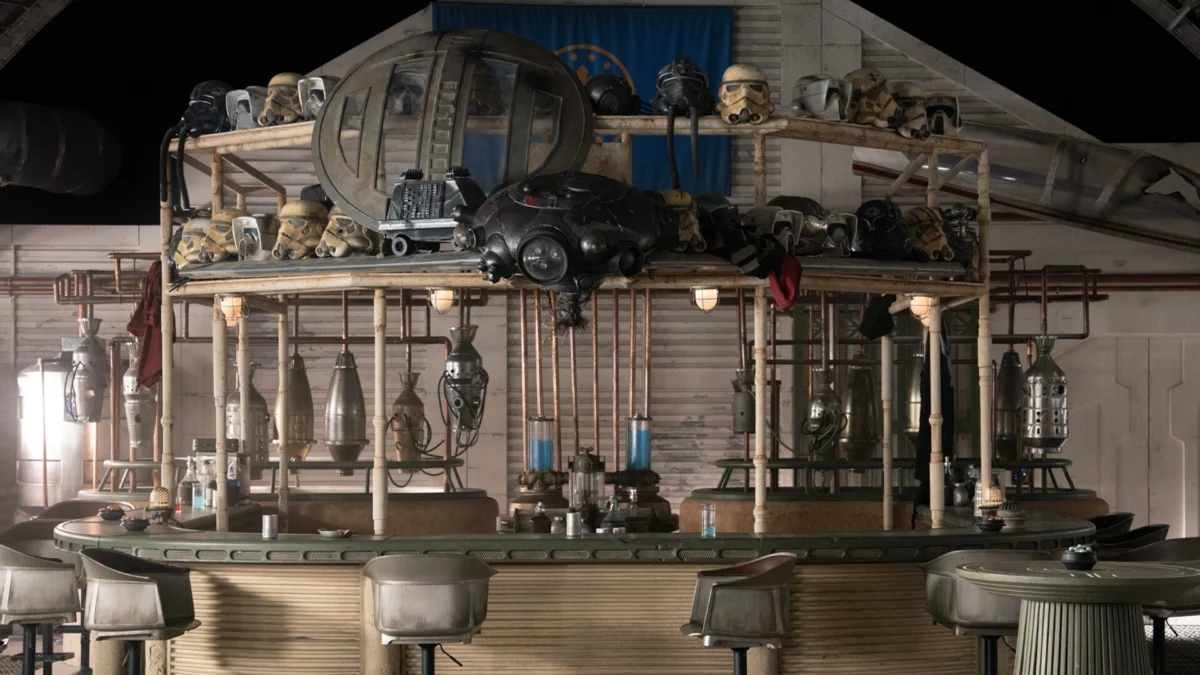
The release of The Mandalorian and Grogu has not only marked a triumphant return to the cinematic format for the Star Wars franchise but has also served as a massive, high-definition tapestry of interconnected lore. Directed by Jon Favreau and filmed specifically for IMAX, the film functions as a bridge between the serialized storytelling of the Disney+ era and the foundational mythos established in 1977.
Beneath the spectacle of Din Djarin’s latest mission lies a dense layer of “Easter eggs,” historical nods, and deep-cut references that reward the most dedicated fans of the galaxy far, far away. From the return of a notorious Huttlet to the meticulous recreation of vintage production techniques, here is an exhaustive look at how the film connects to the broader Star Wars legacy.
The Legacy of the Hutt Family: From Animation to the Silver Screen
At the center of the film’s narrative gravity is the live-action debut of an adult Rotta the Hutt. Nearly two decades ago, fans were introduced to this character as a helpless infant—nicknamed “Stinky” by Ahsoka Tano—in the 2008 Star Wars: The Clone Wars theatrical feature. Seeing him now as a powerful figure on Nal Hutta is a profound evolution for the character.
A Masterclass in Craftsmanship
The production team’s commitment to authenticity is exemplified by a small, personal detail: the live-action holo image of baby Rotta featured in the film was created using a model hand-painted by Jon Favreau himself, complete with his signature on the base. Furthermore, while David Acord originally provided the voice for the character in animation, the adult version is performed by Jeremy Allen White, with Acord returning to handle sound design. The visual design of the Hutt family lineage remains tethered to the legendary work of Phil Tippett, who headed the creature shop for Star Wars: Return of the Jedi. Tippett’s influence continues today through Tippett Studios, which brought the giant droids guarding the Twins’ palace to life, effectively bridging the gap between 1983 practical effects and modern digital integration.
Chronology and Cinematic Ancestry: A Galaxy of Connections
The film functions as a chronological anchor, pulling threads from across the Star Wars timeline.
The Y-Wing Connection
One of the most striking "deep-cuts" is the utilization of a Red Jammer Y-wing model. Borrowed directly from the Lucasfilm archives, this model was originally crafted for Star Wars: A New Hope. While it served as a reference for the full-sized ships seen in the 1977 film, it had never actually appeared on screen until now. This dedication to utilizing historical assets underscores the film’s reverence for its origins.
Gaming, Toys, and Pop Culture
The world-building extends into the realm of collectibles and classic media:
- The INT-4 Vehicle: The Imperial warlord’s escape vehicle is a direct nod to the 1982 Kenner Mini-Rig toy, a deep-cut favorite for vintage collectors.
- Dejarik Realities: The Star Wars: A New Hope holochess game, Dejarik, is confirmed to be more than just a game; the creatures seen in the holographic matches are revealed to be real, dangerous beasts currently rampaging through the Pit on the Moon of Shakari.
- The Mandalorian’s Arsenal: Din Djarin’s new Amban rifle is an ornate tribute to the weapon carried by Boba Fett in the animated short from the infamous 1978 Star Wars Holiday Special. Additionally, weapons found in the arena include a nod to the Blades of Chaos from the God of War video game franchise.
Supporting Data: The Craft Behind the Scenes
The production of The Mandalorian and Grogu was a collaborative effort involving many who have shaped the Star Wars universe behind the camera.
Technical and Creative Contributions
- The Anzellan Voices: Shirley Henderson, the voice behind Babu Frik in The Rise of Skywalker and the droidsmiths in The Mandalorian Season 3, returned to provide the voices for all four Anzellans (Minch, Bai, Keeto, and the newcomer, Clang).
- Cameo Appearances: The film is packed with "blink-and-you’ll-miss-them" appearances. Lucasfilm President Dave Filoni reprises his role as Trapper Wolf, joined by members of the art department, including Doug Chiang and Michelle Thieme, and directors Deborah Chow, Lee Isaac Chung, and Rick Famuyiwa.
- Culinary World-Building: Chef Roy Choi was brought on to create the “flat-meat” sandwich seen in the food pod. Furthermore, the snack Grogu consumes during the match is a direct reference to “Mantell Mix” and “Outpost Mix” from Galaxy’s Edge.
The "Weathers" Homage
In a touching tribute to the late Carl Weathers, who portrayed the beloved Greef Karga, the production team placed a sign reading "Weathers Apollo" above the doorway to the Dejarik arena. This honors both Weathers’ role in the Star Wars universe and his iconic portrayal of Apollo Creed in the Rocky franchise.
Official Perspectives: The Vision of the Filmmakers
In various behind-the-scenes insights, the creative team has emphasized that the goal of this film was to feel like a "lived-in" experience. Jon Favreau’s inspiration for the Moon of Shakari was drawn from his personal experiences in Prohibition-era Chicago, lending a gritty, noir-like atmosphere to the setting that distinguishes it from the pristine locales often seen in the prequel trilogy.
The film’s reliance on physical models—such as the two-foot and four-foot Razor Crest models used for motion control VFX—signals a return to the tactile filmmaking style of the original trilogy. By merging these physical foundations with modern IMAX technology, the production has managed to elevate the series to a theatrical scale while maintaining the "hand-made" charm that defined the franchise’s inception.
Implications: The Future of the Mando-Verse
The implications of The Mandalorian and Grogu are twofold: first, it establishes the Mandalorian storyline as a central pillar of the Star Wars cinematic future. By bringing in major stars like Sigourney Weaver, the film signals that these stories are no longer "side adventures" but are the main event.
Second, the film successfully integrates disparate corners of the canon. By including references to the 1995 Galaxy Guide 12 (explaining the Amani’s rolling movement), Captain EO (the creature Fuzzball), and The Clone Wars animated series, the film validates the "everything is canon" philosophy. It suggests that future films will continue to pull from the deep well of comics, novels, and animated shorts to enrich the live-action narrative.
A New Standard for Detail
The attention to detail regarding the AT-AT driver helmets—which are light gray, not white, despite decades of fan misconceptions caused by poor lighting in historical photography—shows that the current creative leadership is obsessed with getting the "small things" right. This sets a high bar for future projects, implying that the Star Wars universe is becoming more cohesive and meticulously curated than ever before.
As audiences continue to flock to theaters, the consensus is clear: The Mandalorian and Grogu is not just a film, but a celebration of 47 years of storytelling. It honors the past, expands the present, and sets a formidable foundation for the future. Whether it is the subtle nod to the Shadow Council or the inclusion of the Turtle Tanker from The Clone Wars, the film invites viewers to look closer, listen longer, and appreciate the immense craftsmanship that keeps the galaxy far, far away growing.
For those who have followed Din Djarin since his first bounty on Nevarro, this cinematic outing is the ultimate reward—a reminder that in the Star Wars galaxy, no detail is too small to matter.









No comments yet. Be the first to join the conversation!