

By Joe George | July 10, 2026
The Evil Dead franchise has long occupied a unique, bifurcated space in horror history. It is a series defined by its extremes—both in terms of its relentless, visceral gore and its signature, slapstick-infused absurdity. However, with the release of Evil Dead Burn, the latest entry in this long-running saga, a recurring question has returned to the forefront of the horror conversation: Has the series lost its sense of humor in favor of becoming a "dire gorefest"?
While modern entries have proven highly competent at delivering stomach-churning intensity, there is a growing sentiment that the franchise has drifted too far from the "puckish spirit" that made Sam Raimi’s original vision a genre-defining landmark.
The Evolution of Evil: From Low-Budget Nasty to Blockbuster Terror
To understand where the franchise is now, one must look at its humble, harrowing origins. The 1981 original, The Evil Dead, was not a comedy. It was a $90,000 exercise in pure, unadulterated dread. Raimi and producer Robert Tapert, drawing funds from Detroit-area businessmen, crafted a film that was relentlessly bleak. When Ash Williams (Bruce Campbell) and his friends unearthed the Necronomicon Ex-Mortis at a remote cabin, the resulting onslaught was devoid of irony.
In that first film, the torment was intimate and cruel. The sight of Ash’s sister, Cheryl, being assaulted by the woods or Ash himself being forced to dismember his possessed girlfriend, Linda, with a shovel, was played entirely straight. There were no winks to the camera, no quippy one-liners. Yet, even in that darkness, the kinetic energy of Raimi’s camera work—a frantic, subjective perspective that seemed to hunt the characters—hinted at the "puckish spirit" that would soon define the brand.
By the time Evil Dead II arrived in 1987, the tone had shifted. While it functioned partially as a remake of the first, it embraced a manic, vaudevillian absurdity. It was here that the franchise found its identity: the marriage of high-stakes, stomach-turning horror with the physical comedy of The Three Stooges. This progression culminated in the high-fantasy camp of Army of Darkness (1993) and the cult-favorite television series Ash vs. Evil Dead, which solidified Ash as the genre’s ultimate, bumbling, one-liner-spouting hero.
A Modern Shift: The Era of "The New Extremity"
The landscape shifted once more in 2013 with Fede Álvarez’s remake of The Evil Dead. Álvarez stripped away the camp, opting for a grounded, thematic approach that used the Deadite possession as a metaphor for addiction. It was a punishing experience—a film that dared the audience to look away as characters were subjected to horrific mutilation.
Lee Cronin’s 2023 follow-up, Evil Dead Rise, doubled down on this trajectory. By moving the action from the secluded woods to a claustrophobic metropolitan apartment, Cronin utilized the Deadite curse to explore familial trauma. These films are undeniably well-made, yet they lack the "smile" that once accompanied the blood.
Evil Dead Burn, the latest entry directed by Sébastien Vaniček, continues this trend of "New Extremity." Drawing inspiration from the visceral, often transgressive French horror movement of the early 2000s, Burn is a film of extreme physical discomfort. Whether it is a pen driven into an ear canal or the disturbing, grotesque nature of its central family conflict, the film is an endurance test.
The Disappearing Act: Where Did the Levity Go?
The scarcity of humor in Evil Dead Burn is perhaps most notable because of how much it teases its own history. The brief, silent cameo of a Bruce Campbell portrait on a wall serves as a reminder of the franchise’s lost soul. Even in Burn, however, there are flickers of the old ways.
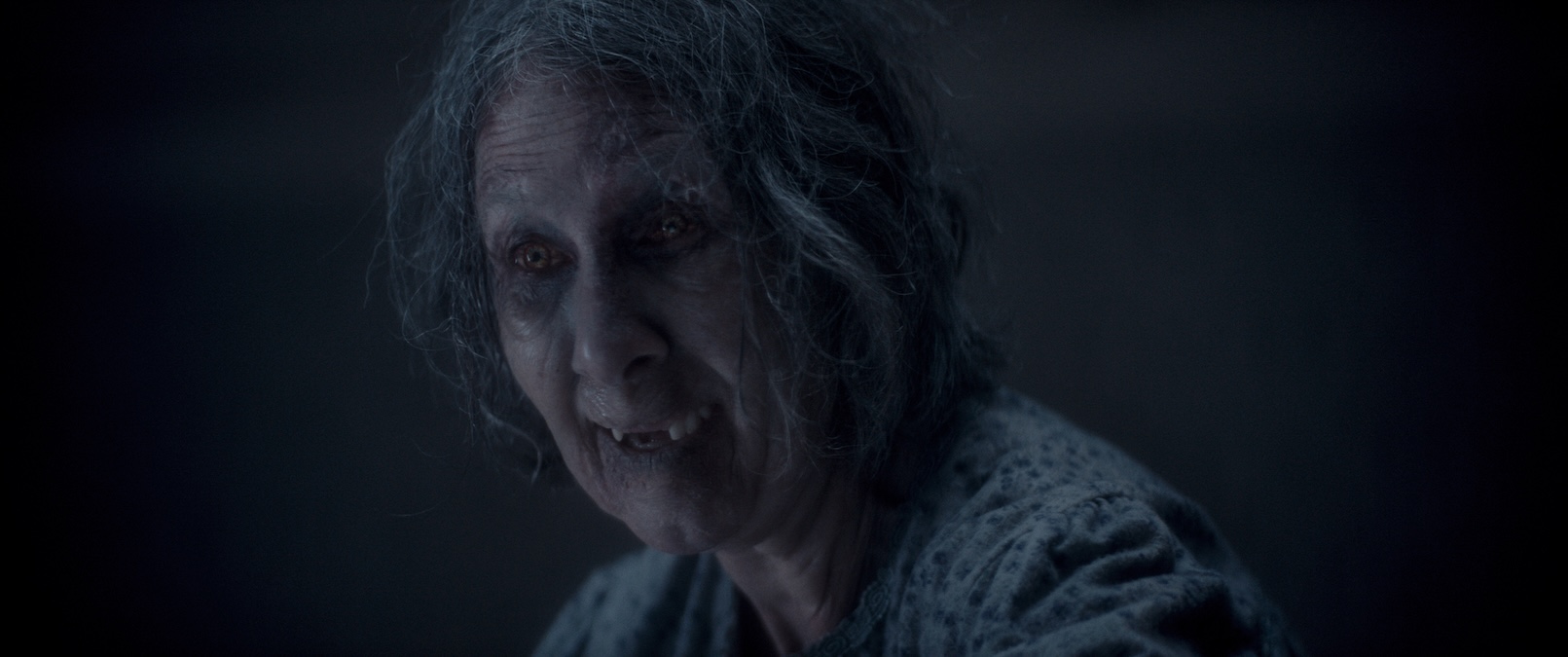
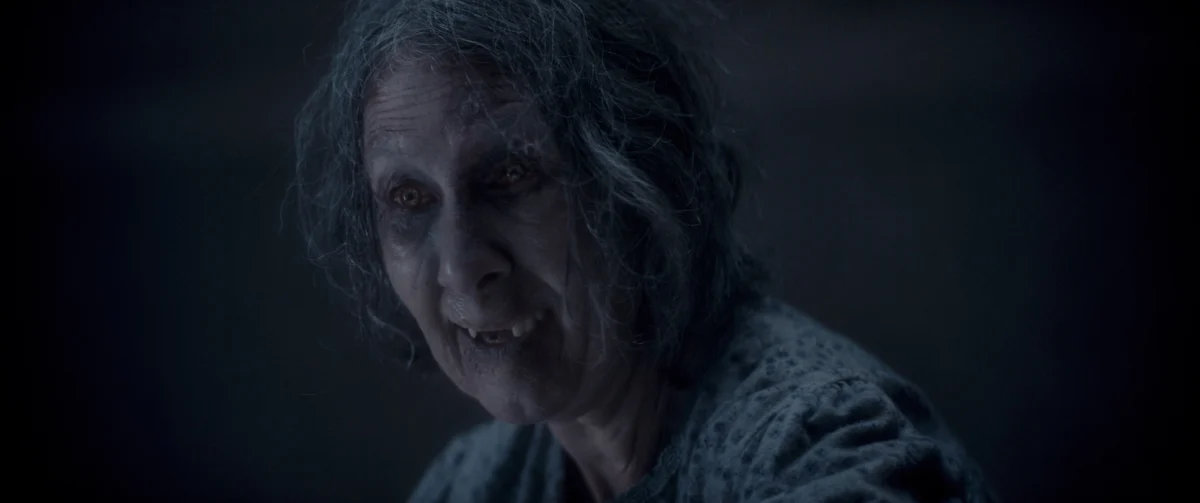
The most prominent example involves a scene where a Deadite pulls the false teeth out of the elderly Polly (Maude Davey), slurps on them, and shoves them back into her mouth. It is a moment of pure, uncomfortable absurdity—an "icky" beat that is as hilarious as it is revolting. It works because it forces the audience to laugh to break the tension of the scene’s horror.
This is the "Stooge-factor." In the classic Evil Dead films, when an eyeball popped out of the Deadite Henrietta and landed in the mouth of a character, the film was not asking us to be traumatized; it was asking us to be shocked and entertained simultaneously. This duality is what separates a true Evil Dead film from a generic "mean-spirited" horror movie.
Implications: The Dangers of "Gore for Gore’s Sake"
There is a significant difference between effective horror and mere nastiness. As the genre has evolved, many filmmakers have mistaken the ability to make an audience recoil with the ability to make an audience feel.
When a film relies solely on "the unthinkable" to provoke a reaction, it often misses the mark of cinematic artistry. If a viewer is forced to look away from the screen, they are no longer engaging with the film’s craft; they are simply experiencing a physiological reaction to an idea. The modern Evil Dead films, for all their technical brilliance, occasionally fall into this trap. They offer imagery that is difficult to process, but they rarely offer the "showmanship" that keeps a viewer locked in.
The lack of humor also creates a thematic vacuum. By treating the Deadites as purely horrific, existential threats, the films lose the chaotic, unpredictable energy that defined the series. Without the levity to balance the gore, the franchise risks becoming indistinguishable from the modern wave of "extreme" horror cinema, losing the unique voice that allowed it to stand out for over four decades.
Is the Franchise at a Crossroads?
As Evil Dead Burn reaches audiences globally, the critical discourse centers on whether the series can—or should—reclaim its comedic roots. The argument isn’t that these films should be parodies, but rather that the franchise’s DNA is built on the intersection of horror and humor.
When asked about the shift in tone, industry insiders have noted that the "New Extremity" style is currently in vogue, with studios prioritizing the "visceral experience" to market films to a younger, social-media-savvy audience. However, the legacy of the franchise proves that longevity is not built on gore alone. The endurance of Evil Dead is tied to the charisma of its characters and the bizarre, often hilarious ways they navigate the supernatural.
Conclusion: A Call for a Return to Form
The Evil Dead franchise is currently in a state of high-quality, high-tension production, but it is a series currently operating with one hand tied behind its back. By eschewing the humor that once acted as the series’ rhythmic pulse, modern entries feel disconnected from the franchise’s foundational spirit.
To ensure the series remains special, future installments must strike a balance. They must continue to push the boundaries of horror, but they must also invite the audience to laugh at the madness. As the franchise looks toward its next chapter, it should look back at the lessons learned by its pioneers. Horror, at its best, is an emotional rollercoaster—one that requires both the scream and the laugh to truly leave a lasting mark.
It is time to bring the "Grandpa Bruce" energy back. After all, what is the Evil Dead without a little bit of a smirk while the world burns?










