Lina Irawan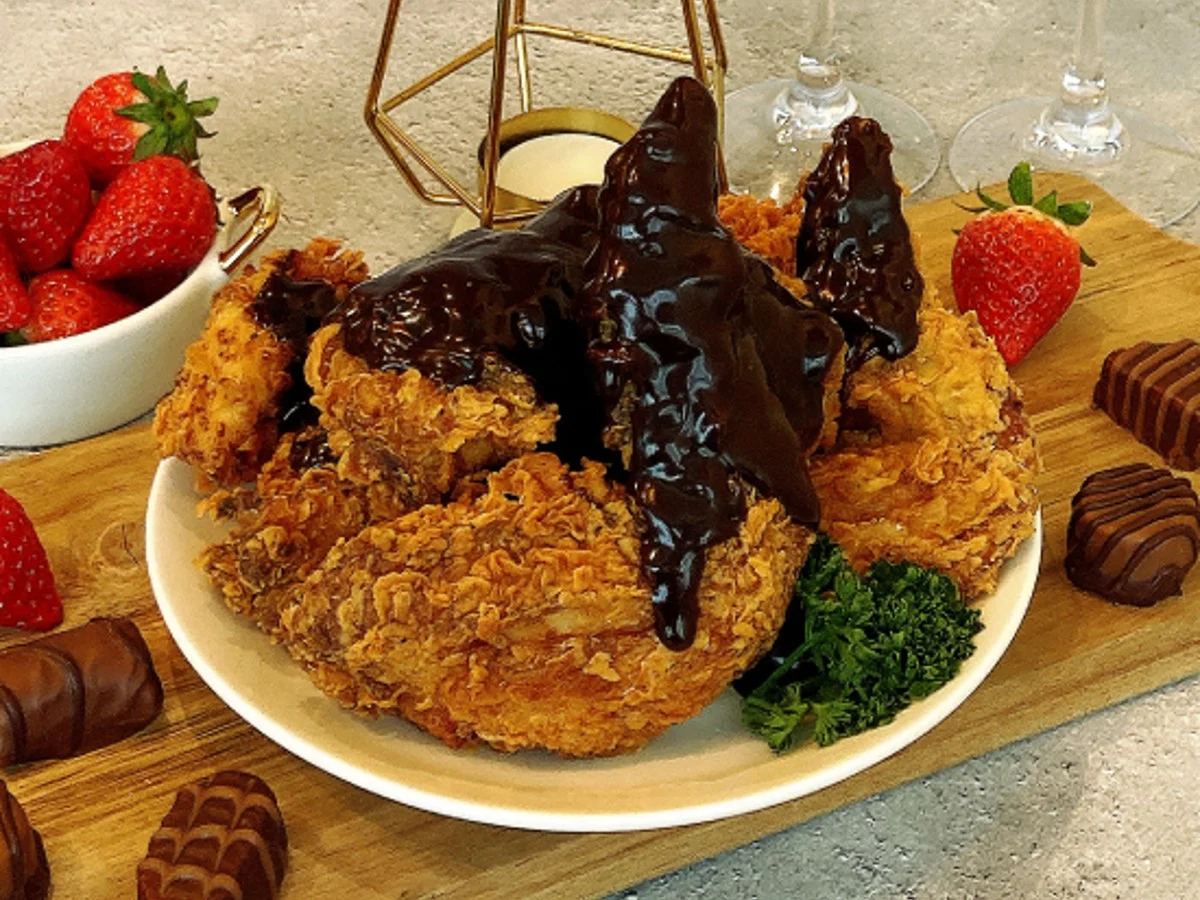
For decades, the standard Valentine’s Day experience in Japan has been dictated by the rigid, almost mandatory ritual of giri-choco (obligation chocolate). Traditionally, women have been expected to gift mass-produced chocolates to male colleagues and acquaintances to maintain social harmony. However, in recent years, a seismic shift has occurred in the Japanese culinary landscape. The holiday has transcended simple gifting, evolving into a playground for gastronomic innovation where "adventurous" is the baseline expectation.
From the thematic brilliance of Demon Slayer collaborative chocolate packages to the polarizing, avant-garde concept of chocolate-infused ramen, the Japanese market is proving that when it comes to Valentine’s Day, there are no rules—only experiments. The latest entrant into this daring arena is located in the heart of Tokyo’s most trend-conscious district: Shibuya. Chicken Street, a specialized Korean-style fried chicken chain, is challenging the status quo by introducing a dish that defies categorization: chocolate-covered fried chicken.
The Main Facts: A Savory-Sweet Collision
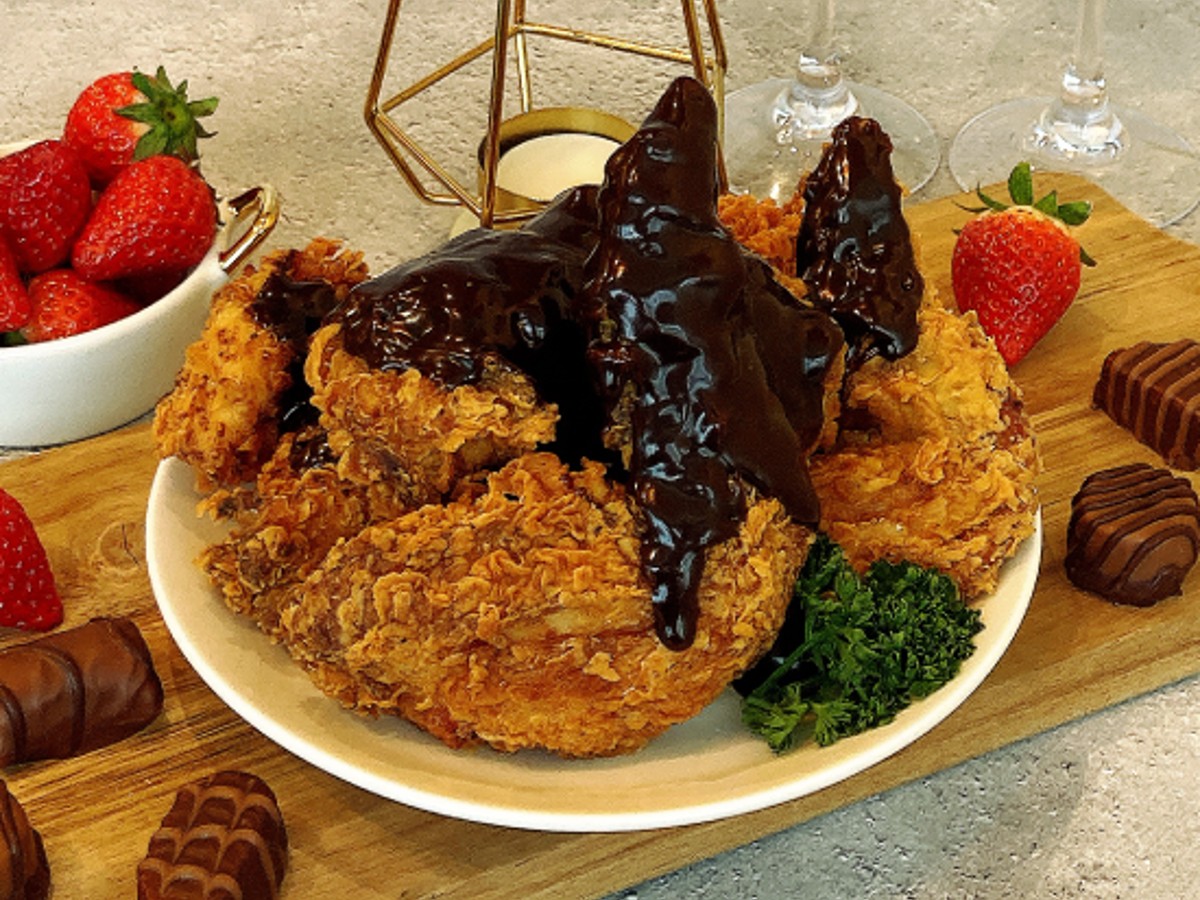
Beginning February 1st and running through February 14th, the Shibuya branch of Chicken Street is offering a limited-edition menu item that promises to bridge the gap between a hearty dinner and a decadent dessert. The product is simple in its execution but radical in its premise: the chain’s signature, ultra-crispy Korean fried chicken, generously drizzled with a rich, bittersweet chocolate sauce.
This offering is not merely a gimmick for social media engagement; it is a calculated attempt to capitalize on the growing consumer appetite for "sweet and savory" flavor profiles—a trend that has gained significant traction in the Tokyo food scene. By combining the high-protein, umami-heavy profile of deep-fried poultry with the complex notes of dark cocoa, Chicken Street is positioning itself as a destination for those who find the traditional box of truffles insufficient.
Chronology of the Valentine’s Transformation
To understand why a fried chicken chain is pivoting to chocolate, one must look at the evolution of Valentine’s Day in Japan over the last decade.
- 2010–2015: The "Giri-choco" era begins to face public fatigue. Discussions regarding the burden of mandatory gift-giving appear in major newspapers, leading to a decline in corporate-mandated chocolate sales.
- 2016–2019: The rise of Jibun-choco (self-chocolate). Consumers begin buying premium, expensive chocolates for themselves rather than for others. This opens the door for artisanal and experimental confectionery.
- 2020–2022: The "Experience" economy. With the COVID-19 pandemic limiting social gatherings, restaurants begin experimenting with "shock-value" foods that provide a sense of novelty and excitement to brighten an otherwise muted holiday.
- 2023–2024: The current era of fusion. High-profile collaborations (such as the Demon Slayer franchise) and "Extreme Fusion" foods (like chocolate ramen and, now, chocolate-fried chicken) become the new standard for Valentine’s Day marketing.
The announcement by Chicken Street on February 1st, 2024, is the culmination of this timeline—a shift from the "gift" to the "experience."
Supporting Data: Why "Sweet and Savory" Works
While the idea of putting chocolate on fried chicken may sound jarring to Western palates, there is a strong culinary logic behind the decision. Food scientists have long noted the synergy between salt and sugar. Salt acts as a flavor enhancer, stimulating the taste buds and making the sweetness of the chocolate appear more nuanced rather than cloying.
Furthermore, the "Korean fried chicken" style is defined by its double-frying technique, which creates an exceptionally thin, glass-like crust. This texture is the ideal canvas for a liquid topping. Unlike traditional American-style fried chicken, which relies on a thick, bready batter, the Korean style remains crisp even when coated in sauces—a phenomenon known in the industry as "sauce-adherence capability."
Market analysts observing the Tokyo restaurant sector have noted that the 18–35 demographic—the primary consumer base for the Shibuya district—shows a 22% higher affinity for fusion dishes compared to the previous decade. This demographic values "Instagrammable" content, but more importantly, they value "flavor-discovery" experiences.
Official Responses and Culinary Philosophy
In a statement provided to the press, representatives from Chicken Street emphasized that the dish was developed after extensive internal testing. The primary challenge was not the combination of ingredients, but the balance of the cocoa content.
"We did not want to create a dessert that was too sweet, nor a main course that felt like a joke," a company spokesperson noted. "The bittersweet chocolate sauce was formulated specifically to complement the salt-and-spice rub of our signature chicken. The reaction we have seen during our test phases suggests that the crunch of the chicken is actually amplified by the velvety texture of the chocolate. It creates a sensory contrast that is quite addictive."
The store, located just five minutes from the iconic Hachiko exit of Shibuya Station, has optimized its kitchen workflow to ensure that the chocolate is applied at the precise temperature required to maintain the integrity of the chicken’s crust. This attention to detail suggests that the company is treating the product as a serious culinary venture rather than a fleeting marketing stunt.
Implications for the Japanese Food Industry
The success—or failure—of this campaign will likely serve as a barometer for the future of seasonal marketing in Japan. If Chicken Street succeeds in making chocolate-fried chicken a staple of the Valentine’s season, we can expect a domino effect across the fast-casual dining industry.
The Shift Away from Confectionery
The most significant implication is the potential erosion of the traditional chocolate market share. If consumers begin to view "Savory Chocolate" as a legitimate Valentine’s meal, the retail confectionery giants may find themselves struggling to maintain the relevance of the traditional gift box.
The "Experience" Marketing Model
The move by Chicken Street highlights a broader shift toward "Experience Marketing." In an era where food delivery services have made it easier than ever to eat at home, physical restaurants must provide a "reason to visit." A chocolate-covered piece of chicken is not something easily replicated in a home kitchen; it is a spectacle that requires the consumer to travel, queue, and participate in a social ritual.
Sustainability and Waste
One potential criticism that the industry must address is the issue of food waste. Seasonal items that rely on shock value run the risk of being discarded if they are purchased for photos and not consumed. However, by selecting a protein as hearty as fried chicken, Chicken Street is banking on the "meal replacement" aspect of the dish. It is not a snack; it is lunch or dinner. By positioning the product as a meal, the chain is effectively positioning itself against the traditional fast-food competitors in the area.
A Cultural Reflection
The existence of chocolate-fried chicken in Shibuya is a microcosm of Japan’s unique relationship with global culinary trends. Japan has a history of "Japanizing" foreign concepts to create something entirely new. Just as the Japanese curry was adapted from British naval influence and evolved into a distinct national comfort food, these Valentine’s experiments are the early stages of a potential "Fusion-Valentine" culture.
For the international visitor or the local resident, the opportunity to try this dish is more than just a culinary curiosity—it is a window into the Japanese psyche. It reflects a society that is increasingly willing to break traditional, stifling social norms in favor of individual expression and playful experimentation.
Whether this dish becomes a permanent fixture or fades into the annals of "bizarre seasonal trends," one thing is certain: the era of the boring box of chocolates is coming to an end. As we move through the second week of February, the streets of Shibuya will be filled with the scent of deep-fried poultry and dark cocoa—a combination that, for better or worse, defines the modern, adventurous spirit of Tokyo.
Final Logistics for the Curious
For those brave enough to sample this creation, the limited-edition Chocolate Chicken is available exclusively at the Shibuya branch of Chicken Street. Patrons are advised to arrive early, as local demand is expected to spike during the peak of the Valentine’s weekend.
Location Details:
- Establishment: Chicken Street, Shibuya Branch
- Accessibility: Located 5 minutes from the Hachiko Exit, Shibuya Station.
- Duration: February 1st – February 14th.
- Availability: Lunch and Dinner hours until daily stock is exhausted.
As the editorial staff at grape Japan continues to monitor the changing landscape of Tokyo’s dining scene, we remain impressed by the ingenuity of local chains. Whether you prefer your Valentine’s Day traditional or completely transformed, the menu in Shibuya this year serves as a reminder that the only limit to a holiday celebration is the creativity of the chef.


 Neng Nana
 Asro
Asro