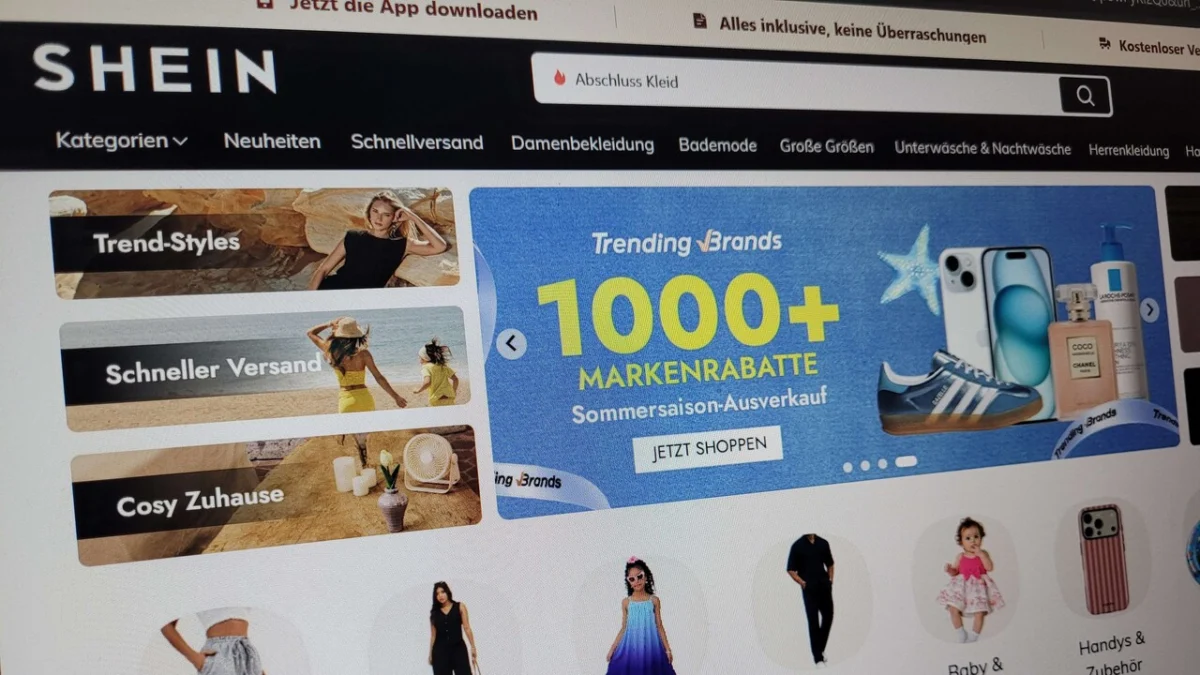
The global fashion landscape has been shaken by a damning new report from the German Environmental Aid (Deutsche Umwelthilfe, DUH), which has cast a harsh light on the practices of the Singapore-based e-commerce giant, Shein. Known for its "Ultra-Fast Fashion" business model, which relies on the rapid production of thousands of new styles daily, the company is now facing serious allegations regarding the safety of the products it ships to European consumers. Laboratory tests commissioned by the DUH have revealed that a significant portion of Shein’s inventory is contaminated with hazardous substances, some of which exceed EU safety limits by thousands of percentage points.
The Findings: A Toxic Inventory
The investigation, conducted by the Bremer Umweltinstitut between May and June 2026, focused on a cross-section of 18 items purchased from Shein’s online store. The selection included a variety of apparel and accessories, ranging from jackets and trousers to dresses, tops, and footwear, targeted at children, teenagers, and women.
The results of the analysis were stark. Out of the 18 products tested, 15 contained concerning levels of chemical residues. Most alarmingly, nearly 40 percent of the items analyzed were in direct violation of EU chemical regulations, meaning they are legally prohibited from being sold within the European market.
The substances detected are not merely trace impurities; they are highly regulated compounds known for their toxicity and environmental persistence. These include:
- PFAS (Per- and polyfluoroalkyl substances): Often referred to as "forever chemicals" due to their inability to break down in the environment or the human body.
- Phthalates: Plasticizers known for their reproductive toxicity.
- Heavy Metals: Including lead, chromium, and nickel, which are associated with organ damage and carcinogenicity.
- Formaldehyde: A known irritant and suspected carcinogen.
- Dimethylformamide (DMF): A liver-toxic solvent.
- Polycyclic Aromatic Hydrocarbons (PAH): Known environmental pollutants with toxic properties.
The most egregious violations were found in items intended for vulnerable demographics. A hoodie marketed to teenagers was found to contain PFAS levels more than 12,000 times higher than the legally permissible limit. Furthermore, a pair of women’s boots contained the plasticizer DEHP at a concentration 179 times higher than the maximum threshold allowed under EU law.
Chronology of Concern: From Greenpeace to DUH
The 2026 DUH study is the latest in a series of warnings regarding the environmental and health impacts of Ultra-Fast Fashion. The scrutiny of Shein’s supply chain began in earnest years ago, as the company’s explosive growth brought its manufacturing practices into the spotlight.
In November 2022, Greenpeace released a comprehensive report after testing 47 products purchased from Shein’s websites in Europe. That study found that 96 percent of the items contained hazardous chemicals in varying concentrations. The sheer scale of that discovery sent shockwaves through the industry, prompting calls for stricter oversight of non-EU e-commerce platforms.
Despite these early warnings, the current DUH study demonstrates that the issue remains systemic. The continuity of these findings suggests that Shein’s rapid production cycle—which prioritizes volume and speed over quality control—continues to bypass the stringent safety protocols expected of retailers operating within the European Union.
The Implications of "Ultra-Fast Fashion"
The term "Ultra-Fast Fashion" describes a business model characterized by incredibly short lead times, hyper-competitive pricing, and an astronomical volume of product turnover. By utilizing a vast network of decentralized factories in China, Shein manages to update its catalog with thousands of new items daily, often at prices that defy traditional cost-accounting logic.
However, the DUH argues that these low prices are subsidized by hidden costs: environmental degradation and the health of the consumer. The presence of heavy metals and "forever chemicals" in textiles is not just a regulatory breach; it represents a failure to ensure that the chemical lifecycle of a garment—from production in a factory to disposal in a landfill—does not endanger human health.
The environmental cost is equally staggering. PFAS, for instance, are notoriously difficult to remove from water supplies and ecosystems. When consumers wash these garments, these chemicals are released into the water cycle, creating a long-term pollution problem that extends far beyond the life of the clothing itself.
Regulatory and Legal Responses
In response to these findings, the DUH has taken immediate legal action. The organization has filed an injunction against Shein, demanding the immediate removal of the identified hazardous products from its online store.
Beyond this specific injunction, the DUH intends to submit its findings to the European Commission. The evidence will be incorporated into ongoing proceedings against Shein under the Digital Services Act (DSA). The DSA, which governs the responsibilities of large online platforms, includes provisions aimed at protecting consumers from illegal and unsafe products. Given that nearly 40 percent of the tested items are illegal under EU chemical laws, the DUH’s evidence provides a strong basis for the Commission to demand systemic changes to Shein’s marketplace monitoring.
A Call for Legislative Reform
Barbara Metz, the Federal Managing Director of the DUH, has been vocal in demanding a paradigm shift in how the German and European governments handle Ultra-Fast Fashion. She directly challenged the German Federal Minister for the Environment, Carsten Schneider, to move beyond rhetoric and implement concrete, binding legislation.
"The clothing from Shein is a toxic cocktail by design," Metz stated. "The company makes profits with more and more cheap fashion at shorter intervals at the expense of the environment, health, and resources. But the actual problem is not in the fabric—it is in the system."
Metz advocates for the following reforms:
- Stricter Anti-Fast-Fashion Regulations: Utilizing the upcoming German Textile Act to enforce rigorous chemical standards.
- Extended Producer Responsibility (EPR): Linking manufacturer contributions to environmental criteria. Under this proposal, companies that produce toxic, short-lived, or difficult-to-recycle items would be forced to pay significantly higher fees than those producing sustainable, durable, and non-toxic goods.
- End of the "Competitive Advantage" for Waste: The goal is to ensure that cheap, disposable clothing no longer enjoys a competitive advantage over ethical manufacturing.
Conclusion: The Future of the Fashion Industry
The findings of the DUH report present a difficult reality for the fashion industry and its regulators. While the allure of low-cost, trendy clothing is undeniable for many consumers, the cost of that affordability—measured in chemical contamination and environmental harm—is becoming impossible to ignore.
For Shein, the path forward is increasingly narrow. As EU regulators tighten the grip on digital marketplaces, the company will face mounting pressure to overhaul its quality assurance processes and prove that it can adhere to the safety standards that define the European market. For the broader fashion sector, the message is clear: the era of unchecked growth at the cost of public health is facing a reckoning. Whether through the DSA or new, specialized textile legislation, the days of "Ultra-Fast Fashion" operating without accountability appear to be numbered.