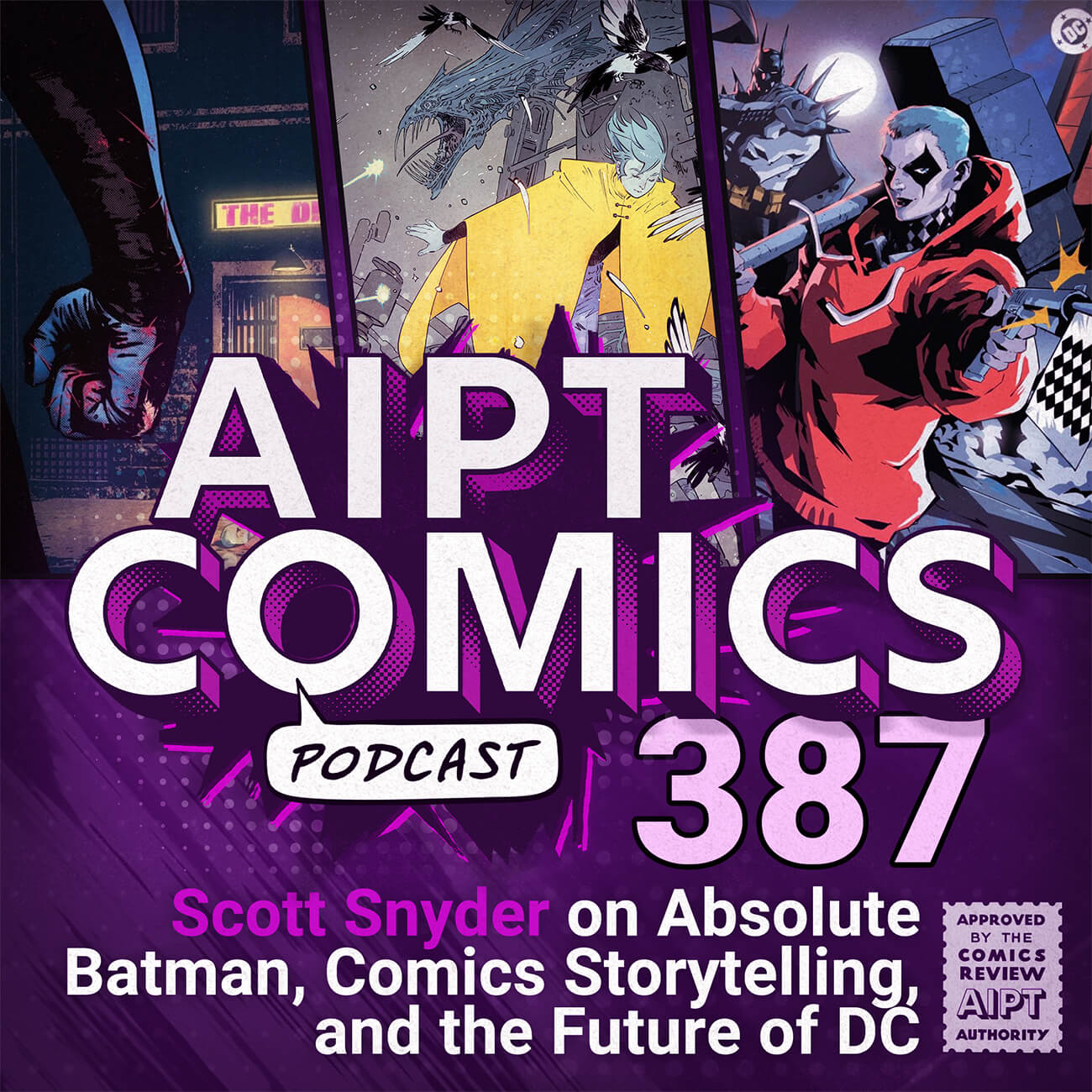
In the ever-evolving landscape of DC Comics, few creators possess the foresight and narrative audacity of Scott Snyder. As the industry stands at a crossroads between legacy preservation and the necessity for bold innovation, Snyder’s latest project, Absolute Batman, has emerged as the focal point of a massive creative shift. This week, on Episode 387 of the AIPT Comics Podcast, Snyder sat down for an expansive, career-defining conversation that peels back the curtain on the mechanics of modern storytelling, the philosophy of the "Absolute" universe, and why the current climate demands that creators take their biggest risks yet.
The Core Narrative: Redefining the Dark Knight
The central thrust of the conversation was, inevitably, Absolute Batman. For decades, the Batman mythos has been defined by a rigid set of pillars: wealth, tragedy, and the pursuit of justice through the lens of Gotham City’s high-society shadows. Snyder, however, is interested in deconstruction.
"When we look at the ‘Absolute’ line," Snyder explained during the podcast, "the question isn’t just ‘What if Bruce Wayne were different?’ It’s ‘What happens to the archetype when you strip away the safety net?’"
Snyder’s approach to Absolute Batman is not merely an aesthetic choice; it is a structural critique of how superhero comics are written in the 21st century. By removing the traditional trappings of the character—specifically the immense inherited wealth and the institutional support systems that usually surround the Caped Crusader—Snyder aims to bring the character back to a state of raw, visceral urgency. This is a Batman who must fight for every inch of territory in a world that is fundamentally less forgiving.

Chronology of an Evolution: From ‘New 52’ to ‘Absolute’
To understand the weight of Absolute Batman, one must look at the trajectory of Snyder’s tenure at DC. His work on the New 52 run with Greg Capullo in 2011 fundamentally reshaped the character for a modern audience, introducing concepts like the Court of Owls that remain staples of the Batman lore today.
- 2011–2016: The Snyder/Capullo Batman run. This period established a high-octane, cinematic style of storytelling that prioritized pacing and visual spectacle.
- 2017–2020: The Dark Nights: Metal era. Snyder began experimenting with multiversal stakes, testing the limits of what a DC event could accomplish.
- 2024–2025: The development of the "Absolute" imprint. A concerted effort by DC editorial to provide a clean slate for new readers while offering long-term fans a radical departure from established continuity.
- July 2026: The release of the Absolute Batman animated series announcement and the corresponding comic book launch. This marks the current "peak" of Snyder’s vision, bridging the gap between print media and high-end animation.
The transition from the traditional DC Universe to the Absolute Universe signifies a shift in editorial philosophy. Where previous multiversal stories often focused on "what if" scenarios, the Absolute line is designed to be a permanent, secondary pillar of the DC brand—a daring move that reflects a desire to court a generation of readers who may be intimidated by decades of deep-seated continuity.
Supporting Data: Why Monthly Comics Need a Pivot
During the podcast, Snyder articulated a compelling argument for the health of the monthly comic book market. He posits that the medium is suffering from a "stagnation of stakes." When a character is fundamentally unchangeable, the reader’s engagement inevitably wanes.
"Monthly comics have a unique superpower," Snyder noted. "They offer a persistent, evolving relationship between the reader and the character. But if that character never truly changes, you aren’t building a relationship—you’re just visiting a museum."
Data from the industry suggests that the most successful books of the last three years have been those that offer "high-concept, high-stakes" narratives—stories that feel like they have a beginning, middle, and end, even within an ongoing monthly format. Snyder’s Absolute Batman is, in many ways, the embodiment of this data. It provides the "event" feel of a mini-series but maintains the serialized rhythm that keeps local comic shops alive.
Official Responses and Creative Philosophy
The industry reception to Absolute Batman has been largely defined by the tension between tradition and novelty. While some purists have expressed hesitation regarding the radical changes to the Bat-family’s status quo, the broader editorial response from DC has been one of total support.
"We aren’t looking to replace the Batman people love," an internal DC representative hinted in earlier press briefings. "We are looking to expand the definition of what a Batman story can be."
Snyder’s own philosophy is deeply rooted in the concept of "the big swing." He argues that in an era dominated by streaming services and competing IP, the comic book medium cannot afford to be "safe." His approach involves:

- Iterative Design: Working closely with artists to ensure that every visual update—from the suit to the gadgets—informs the new, grittier reality of the character.
- Emotional Anchoring: Regardless of how far the premise shifts, the internal motivation of the character must remain recognizable. Bruce Wayne is still driven by trauma, even if the source and the manifestation of that trauma have evolved.
- Community Engagement: Snyder emphasizes the role of the creator as a participant in the conversation, citing his frequent podcast appearances and social media engagement as vital to understanding what the audience is looking for.
Implications: The Future of DC and the Superhero Genre
The implications of Absolute Batman and the surrounding initiatives are profound. If the "Absolute" experiment succeeds, it provides a roadmap for DC to bifurcate its publishing line: one side focused on the preservation of the classic canon, and the other focused on radical, auteur-driven reimaginings.
This strategy could potentially solve the "barrier to entry" problem that has plagued the industry for years. By creating a distinct, accessible entry point, DC can attract new readers without alienating the "legacy" base. Furthermore, the integration of the Absolute Batman animated series suggests that the company is aiming for a cross-media synergy that was previously reserved for Marvel.
The "big swing" philosophy is not just a creative choice for Scott Snyder; it is a survival strategy. As the podcast episode highlighted, the creators who are willing to break the toys are the ones who ultimately keep the sandbox relevant.
Final Thoughts: A Call to Action for Creators
As the episode drew to a close, the conversation pivoted to the broader comic book landscape. Snyder’s message to aspiring writers and artists was clear: the market is hungry for authenticity. Whether it is through the lens of an established character like Batman or an entirely new property, the ability to take risks—to fundamentally change the rules of the world—is the most valuable skill a creator can possess.

The AIPT Comics Podcast, through this interview, has highlighted that we are currently living in a "Golden Age" of creative experimentation. While the challenges of distribution and shifting reading habits remain, the quality of storytelling—and the willingness of publishers like DC to take risks on creators like Snyder—suggests that the future of the medium is as bright as it is unpredictable.
For those eager to dive deeper into the world of Absolute Batman, or to catch the latest discussions on industry-shifting titles like Operation: Iron Coffin or Did You Hear About Mimi Green?, the full audio of Episode 387 is available now on all major podcast platforms. As Snyder put it, "The cape is just the beginning. It’s what you do with the shadow that counts."