

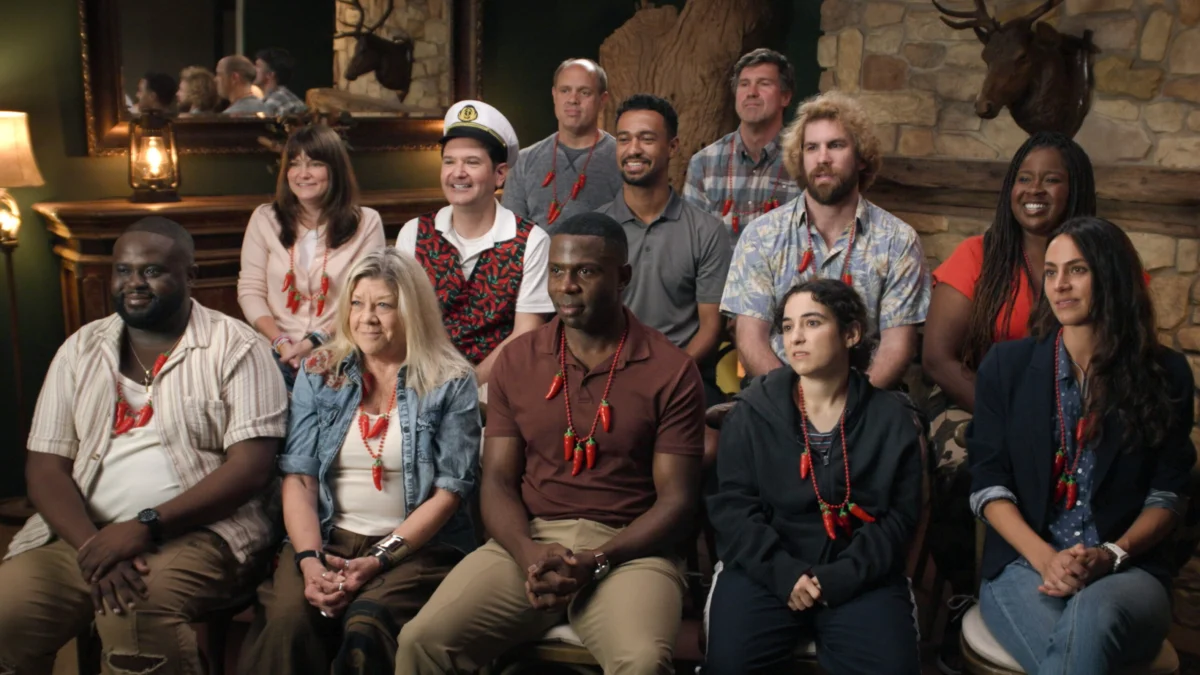
The runaway success of Amazon Freevee’s Jury Duty in 2023 was one of the most unexpected television phenomena in recent memory. By successfully executing a complex, long-form prank where a singular "hero"—the unsuspecting, endlessly patient Ron Gladden—was placed in a fabricated trial surrounded entirely by improvisational actors, the show redefined the boundaries of reality-based comedy. However, replicating that "lightning in a bottle" success for a second season presented a monumental creative hurdle. The producers were faced with a daunting question: How do you reinvent a premise that relies entirely on the genuine, unscripted reactions of a real human being?
The answer arrived in the form of Jury Duty Presents: Company Retreat. Shifting the setting from the claustrophobic halls of a courtroom to the eccentric, high-pressure environment of a corporate getaway, the series once again plunges a civilian into a carefully curated web of deception.
A New Setting, A New Conceit
The transition from a jury room to a "Company Retreat" marks a deliberate departure in tone and structure. While the legal setting of the first season provided a rigid, formal framework, the new season operates in the chaotic, often absurd world of family-owned businesses. The "hero" of this installment is Anthony Norman, a civilian who believes he has been hired for a temporary position at "Rockin’ Grandmas," a family-run hit sauce company.
As in the inaugural season, every other person in Norman’s orbit—from the eccentric CEO, Doug Womack (played by Jerry Hauck), to the mid-level employees and eccentric guests—is a hired performer. The challenge for the production team was to build a world that felt lived-in and authentic enough to withstand the scrutiny of an outsider who was specifically told he was there to work.
The Art of Casting: Finding the Improvisational Elite
Central to the success of this experiment is the casting process, spearheaded once again by veteran casting director Susie Farris. For Farris, the requirement for Company Retreat was far more specific than standard television casting. She wasn’t just looking for actors; she was looking for "improv athletes."
"We were looking for people who are smart, clever, funny, and grounded," Farris explains. "They needed to be quick on their feet, able to maintain a character for days on end without breaking, and capable of fostering believable, long-term working relationships with a complete stranger who is constantly observing them."
The Challenge of Dougie Jr.
Perhaps the most difficult role to fill was that of Dougie Jr., the son of the company’s CEO. The character required a delicate balance of comedic incompetence and grounded realism. "He was a tricky one to cast," Farris admits. "We were looking for a guy who was a bit of a stoner—someone who could be frustrating but ultimately endearing."
The role eventually went to Alex Bonifer, a seasoned Groundling and a veteran of the dark comedy *Kevin Can F*k Himself. Bonifer’s audition was, by all accounts, a masterclass in character work. However, the production faced a unique obstacle: Bonifer’s face is somewhat recognizable to comedy aficionados. To mitigate the risk of the "hero" identifying him as a performer, the production team utilized subtle prosthetics, makeup, and a significant beard. "Everybody felt like we could get away with it," Farris notes. "And he was so deserving of the part that we were willing to take the gamble."
The "Helen" Factor: Casting for Depth
If Bonifer provided the comic relief, the role of "Helen," the company accountant, provided the emotional anchor. Stephanie Hodge, a comedian whom Farris had kept on her radar for over seven years, proved to be the perfect fit.
According to showrunner Nick Hatton, Hodge’s performance was pivotal in grounding the reality of the show. "She has the ability to be so grounded and so believable," Hatton says. "But when the opportunity is there, she can snipe in with a joke and be hard funny. She has this big heart to her whilst playing a gruffness to it. She brings all sorts of different tones and shades."
During the production’s focus group phase—where actors were mixed with non-actors to test the viability of their character arcs—Hodge’s ability to build rapport with the participants confirmed that she was essential to the show’s success.
The Search for the Hero: Finding Anthony Norman
While the actors provide the texture, the heart of the series remains the "hero." For Nick Hatton, the process of finding Anthony Norman involved sifting through thousands of audition tapes and engaging in countless Zoom interviews.
"We weren’t looking for people who were willing to work on a jury or, in this case, a temp agency," Hatton explains. "We were looking for people who possessed a specific type of curiosity and decency."
What set Norman apart was his extraordinary level of self-possession. "He has, much like Ronald Gladden, a degree of self-possession that, especially for someone of his age, is remarkable," says Hatton. "That allows folks to approach him, and he engages with them in good faith. That is the engine that allows us to pull this thing off."
The Moment of Truth: The Unmasking
The most anxiety-inducing moment for the production team remains the "reveal"—the point at which the civilian is informed that their reality has been entirely manufactured. Hatton describes this as the "culmination of everything."
"It’s very nerve-racking," Hatton admits. "You hope that it goes well, and he receives it with the spirit that we intend. Without the hero’s appreciation, there would be no show."
In this season, the reveal was underscored by a touching moment: Norman’s admission that "Helen" was his favorite person on the retreat. For the producers, this was the ultimate validation. It signaled that the bonds formed on set were not merely products of a script, but were genuine human connections that resonated even after the veil of deception was lifted.
Implications for the Future of Reality TV
The success of Jury Duty Presents: Company Retreat raises significant questions about the future of the genre. As audiences become increasingly savvy about the "produced" nature of reality television, shows like this succeed by leaning into the meta-narrative. They are not pretending that the environment is real; they are creating a hyper-real environment where the human element is the only unpredictable variable.
The show demonstrates that high-concept social experiments can be both intellectually stimulating and deeply heartwarming. By focusing on kindness, empathy, and the way people interact under pressure, the creators have moved the needle away from the cynical, conflict-heavy reality television that dominated the early 2000s.
Furthermore, the show’s reliance on high-level improv training highlights a growing trend in the industry: the blending of traditional acting and unscripted comedy. Actors are increasingly expected to be able to "live" in a character for extended periods, improvising reactions to unpredictable human behavior.
Conclusion: A Triumph of Human Connection
Ultimately, Jury Duty Presents: Company Retreat is a testament to the idea that people, when placed in a position of trust, will often choose kindness. The "hero" may have been deceived, but he was also given a space to showcase his own integrity.
"Seeing the response of the cast, and seeing how Anthony loved them, makes it all worthwhile," says Hatton. By prioritizing the emotional journey of their subjects over the potential for cheap laughs or manufactured drama, the team behind the show has managed to turn a complex logistical challenge into a profound social experiment. Whether or not there will be a third iteration remains to be seen, but the blueprint established by this season suggests that as long as there are decent people in the world, the potential for this kind of "truthful deception" is limitless.











No comments yet. Be the first to join the conversation!