
 Neng Nana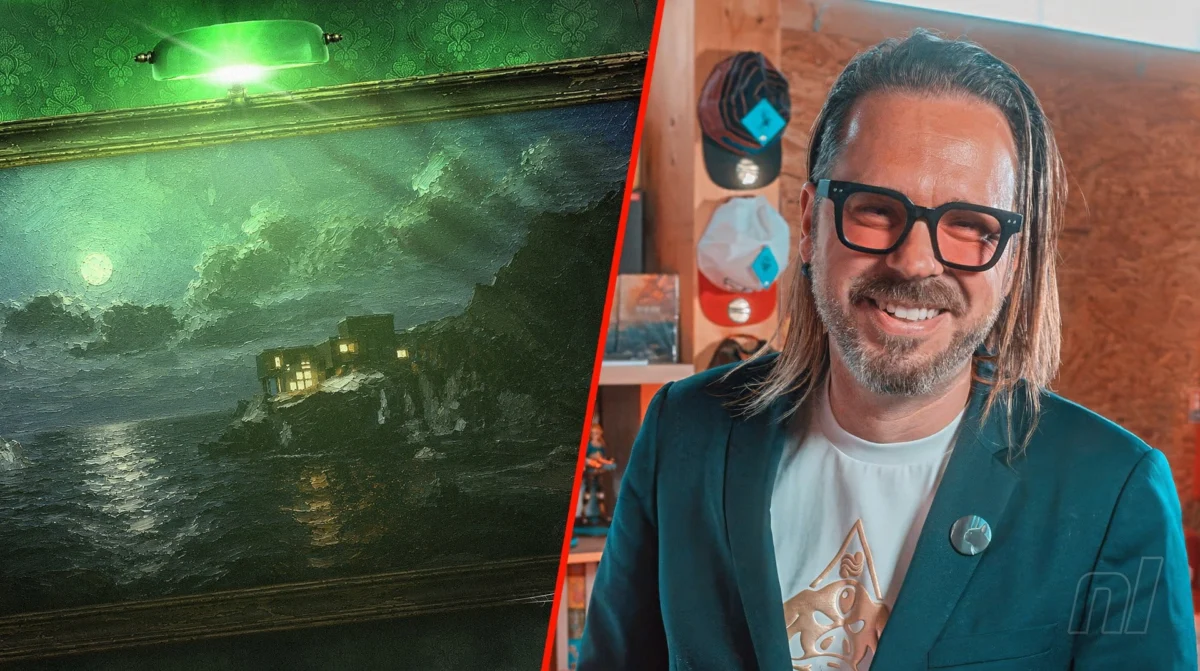
The realm of horror gaming has long been synonymous with isolation, the chilling dread of being utterly alone against unseen terrors. Yet, for the nascent development team Atlantis Studio and its creative director Nico Augusto, this fundamental tenet of the genre presents an intriguing paradox ripe for innovation. Their upcoming title, Beyond the Dark: Nightwatch, a Switch 2 exclusive, boldly ventures into the territory of cooperative horror, aiming to forge a unique experience where fear is not just shared, but fundamentally intertwined with collaboration.
This ambitious undertaking arrives as Atlantis Studio’s inaugural project, a fact that carries a particular weight given Augusto’s previous endeavor, Seasons of Heaven, which ultimately failed to materialize on the original Nintendo Switch. With Beyond the Dark: Nightwatch, the team is not only seeking to establish its identity but also to prove the viability of its vision for a new generation of Nintendo hardware.
The Genesis of Asymmetrical Terror: A Dual Perspective Experience
At its core, Beyond the Dark: Nightwatch is an asymmetrical two-player cooperative mystery game, meticulously crafted for the Nintendo Switch 2. This isn’t a typical co-op experience where players tread the same path, albeit side-by-side. Instead, it plunges two individuals into the same terrifying narrative, but through entirely disparate lenses.
"It’s not simply a cooperative game," explains Nico Augusto in an exclusive interview. "It’s an experience where two players are playing two completely different perspectives while sharing the same adventure."
One player assumes the role of the direct participant, the "Explorer," physically navigating a foreboding "House" in a first-person perspective. Their objective is to uncover clues, piece together a cryptic narrative, and crucially, to survive the malevolent presence of a mysterious creature lurking within its shadowed confines. This player will be immersed in the immediate dangers, the visceral scares, and the constant threat of being discovered.
The second player, the "Support," occupies a vastly different role. They become the eyes and ears of the Explorer from afar, operating the "WB-86," a portable surveillance device reminiscent of 1980s technology. This player will be glued to a dedicated screen, monitoring a network of security cameras, identifying potential threats before they materialize, offering guidance to their partner, and uncovering vital information that the Explorer, due to their limited perspective, could never perceive alone.

This division of labor creates a dynamic where each player possesses distinct gameplay mechanics, responsibilities, and access to information. The success of their shared journey hinges entirely on constant, clear communication. "Both players have different gameplay, different responsibilities and different information. Neither player can complete the adventure without constantly communicating with the other," Augusto emphasizes.
A standout feature poised to redefine accessibility and shared gaming is "GameShare." This innovative implementation means only one player needs to own the game. A second player can seamlessly join the experience using another compatible Switch or Switch 2 system, instantly becoming an integral part of the unfolding mystery with their own dedicated interface. This feature directly embodies Atlantis Studio’s core philosophy: creating cooperative experiences that are not only accessible and intuitive but inherently designed for communal engagement.
"For us, that’s what makes Beyond the Dark: Nightwatch special," Augusto states. "It’s not about playing side by side—it’s about experiencing the same story through two completely different perspectives."
A Platform Tailored for Innovation: The Switch 2 Exclusive Decision
The decision to develop Beyond the Dark: Nightwatch as a Switch 2 exclusive is deeply rooted in the game’s conceptual design. According to Augusto, the game, in its current form, simply would not exist elsewhere.
"From the very beginning, we wanted to design the gameplay around Nintendo Switch 2 instead of adapting an existing concept to new hardware," he reveals. The discovery of the "GameShare" feature proved to be a pivotal moment, aligning perfectly with Atlantis Studio’s mission to foster shared, intuitive cooperative experiences.
The development team has expressed sincere gratitude for Nintendo’s support throughout the creation process. The ability to build the game around the Switch 2’s unique capabilities from an early stage allowed Atlantis Studio to fully embrace and refine every aspect of the experience. "Nintendo has always encouraged developers to innovate through gameplay, and that’s exactly the philosophy we wanted to embrace with Beyond the Dark: Nightwatch," Augusto notes.

Navigating the Labyrinth of Development: Challenges and Triumphs
Embarking on a project for a new platform is inherently exciting, fostering an environment ripe for experimentation. However, for Atlantis Studio, the challenges extended beyond mere technical hurdles. A primary objective was ensuring that both players felt consistently vital and engaged, despite their divergent gameplay experiences.
"Designing an asymmetric game is incredibly rewarding, but also very demanding," Augusto explains. "Every mechanic has to create meaningful communication. Every puzzle has to make both players feel useful. Every decision has to reinforce the idea that neither player could succeed alone."
The implementation of GameShare’s "Individual" functionality within Unreal Engine 5 presented another significant challenge. With two distinct gameplay experiences running concurrently, achieving a seamless feel required extensive experimentation and optimization within the engine. "It required a lot of engineering, optimization and collaboration, but seeing two players instantly connected on separate Nintendo Switch systems made every challenge worthwhile," Augusto reflects.
Ultimately, finding the delicate equilibrium between gameplay mechanics, effective communication, and cutting-edge technology has been the studio’s most significant, and most rewarding, hurdle.
The Allure of Fear: Why Horror, and Why Together?
The choice to delve into the horror genre, particularly with a cooperative focus, stems from a deeply personal place for Nico Augusto. Ironically, he admits to not being particularly adept at playing horror games alone, finding them too stressful. His fascination lies more with mystery, supernatural narratives, and the thrill of exploring enigmatic locales.
The genesis of Beyond the Dark: Nightwatch can be traced back to a childhood memory: playing horror games with his sister. While only one of them held the controller, the shared experience was profound. His sister wasn’t a passive observer; she actively participated, warning him, solving puzzles, and reacting to dangers before he even perceived them. This feeling of being a unified team, despite the asymmetrical engagement, left an indelible mark.

"Years later, I started asking myself a simple question: what if a game was designed from the ground up around that exact feeling?" Augusto muses. This question birthed Beyond the Dark: Nightwatch. The goal isn’t to craft the most terrifying game possible, but rather to create an experience where fear is a shared obstacle to be overcome. "Communication, trust and collaboration are the real mechanics of the game," he asserts. The studio envisions couples, friends, siblings, and even families forging lasting memories and stories through their shared ordeal.
A Tapestry of Influences: Beyond the Genre’s Boundaries
The creative wellspring for Beyond the Dark: Nightwatch draws from a diverse array of media, extending far beyond the confines of horror games. Augusto cites inspirations ranging from the evocative narratives of Haruki Murakami and the fantastical worlds of Hayao Miyazaki to the cosmic dread of H.P. Lovecraft and the visceral intensity of French horror filmmakers like Pascal Laugier, known for his film Martyrs.
The team also admires the environmental storytelling found in games like Resident Evil 7 and the pervasive atmosphere of classic supernatural cinema. However, their influences are equally rooted in the collaborative problem-solving of escape rooms, the intricate plotting of mystery novels, and the inherent player interaction found in cooperative board games.
The "House" itself has become a significant source of inspiration. Atlantis Studio aims to imbue it with a palpable sense of life, almost as if it were another character. Each room is designed to unravel a piece of a mystery spanning centuries, with every object serving as a catalyst for further inquiry. Ultimately, the developers hope players will remember Beyond the Dark: Nightwatch not for a single jump scare, but for the profound conversations and shared experiences they had while unraveling the enigma within the House.
Lessons from the Past: The Crucible of "Seasons of Heaven"
Nico Augusto’s previous project, Seasons of Heaven, serves as a pivotal point in his career, a formative experience that has directly shaped the ethos of Atlantis Studio. The game’s unfortunate fate, never reaching fruition on the original Switch, provided invaluable lessons.
"Seasons of Heaven was probably the greatest lesson of my career," Augusto states candidly. "When you’re young, you believe that passion and good ideas are enough to build a game. They aren’t." This experience instilled in him the critical importance of discipline, robust production pipelines, effective communication, and the necessity of surrounding oneself with the right team.

He learned that a brilliant idea is only as valuable as its execution. "A great idea only matters if you’re able to finish it," he emphasizes. Atlantis Studio was meticulously built upon these hard-won principles. The studio deliberately maintains focused production cycles, agile team structures, and realistic ambitions, all while steadfastly refusing to compromise its creative vision. Looking back, Augusto no longer views Seasons of Heaven as a failure but rather as the crucible that forged the foundation of Atlantis Studio.
For those who have followed his journey, Augusto hints at subtle nods and Easter eggs within the game’s environments, a personal thank you to his enduring supporters.
The Road Ahead: Development Timeline and Future Aspirations
Development for Beyond the Dark: Nightwatch is reportedly progressing very well, with the team currently concentrating on refining the gameplay mechanics, honing the asymmetrical cooperative elements, and further enriching the mystery surrounding the "House."
While a specific release date remains under wraps, Augusto assures that players will not have to wait excessively long to step into the ominous dwelling. The team anticipates revealing more about the game in the coming months.
As Atlantis Studio’s inaugural title, Beyond the Dark: Nightwatch represents the first step in a larger vision. "Our dream is to continue creating original cooperative experiences for Nintendo players for many years to come," Augusto concludes. The ultimate measure of success, for him and his team, will be if players remember the game not for its individual challenges, but for the shared experience and the bonds forged with those they cared about while playing.

 Lina Irawan
 Sagoh
Sagoh





