Pevita Pearce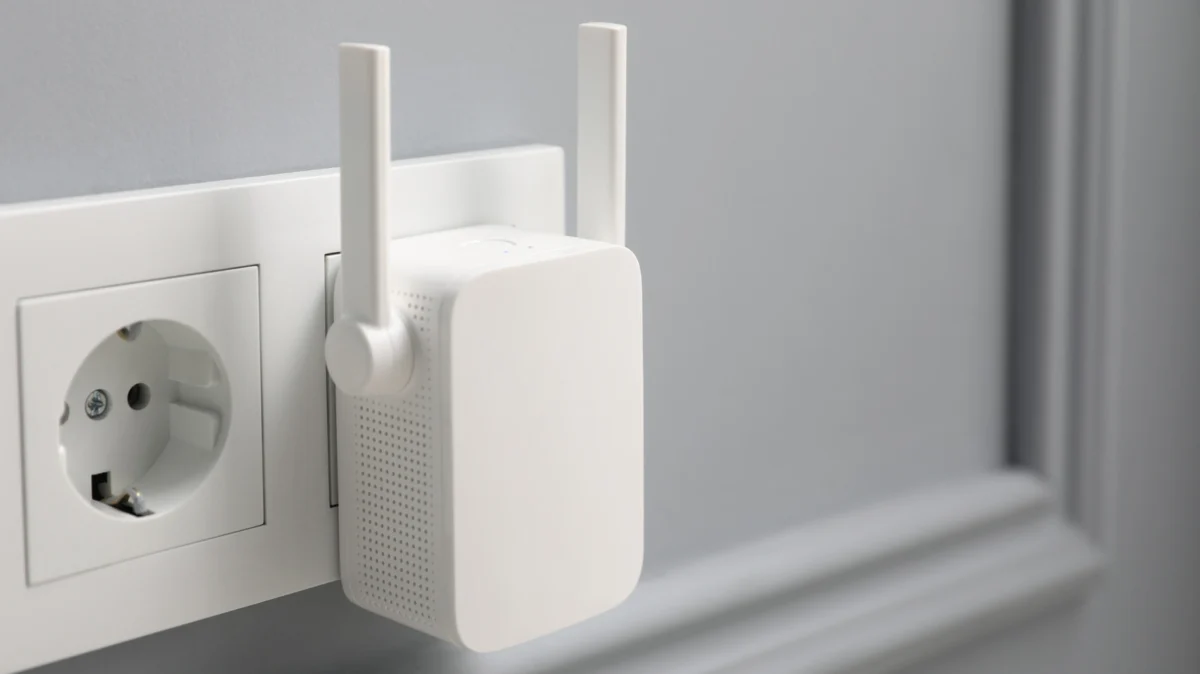
In the modern smart home, where everything from lightbulbs to high-definition security cameras relies on a constant, robust internet connection, the "dead zone" has become a modern domestic crisis. For years, the Wi-Fi range extender has been the go-to, budget-friendly solution for homeowners struggling to reach the far corners of their living spaces. However, as we move deeper into 2026, industry experts and network engineers are increasingly labeling these devices as antiquated stopgaps that fail to meet the demands of contemporary data traffic.
While a single extender might temporarily fix a connectivity hole, it fundamentally fails to address the complexities of modern network architecture. In an era of multi-gigabit speeds and latency-sensitive streaming, the limitations of extenders are no longer just an annoyance—they are a bottleneck.
Main Facts: The Illusion of "Extended" Coverage
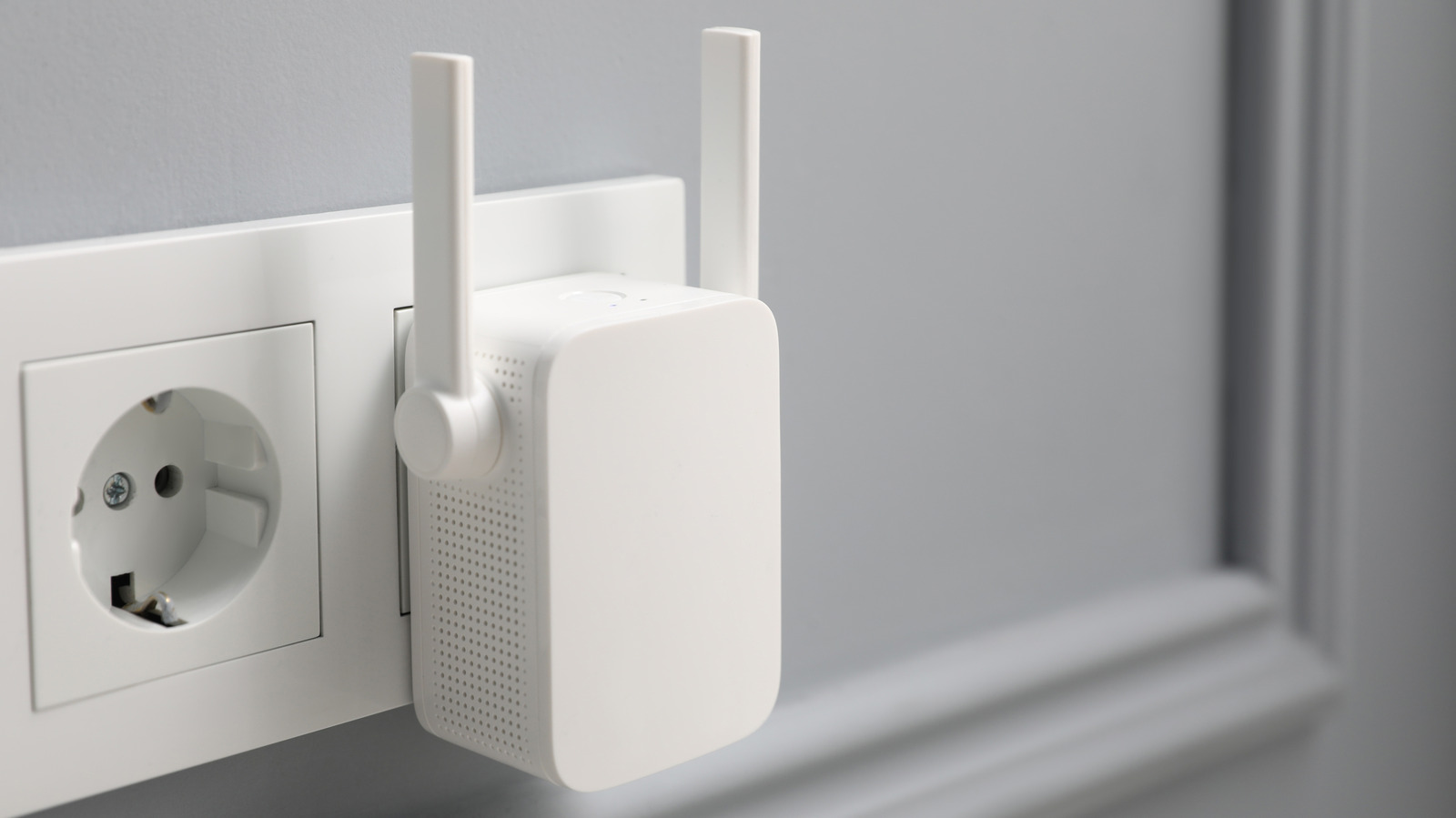
The primary appeal of the Wi-Fi extender is its simplicity: plug it into a wall outlet, sync it with your router, and—in theory—your coverage expands. However, the physics of wireless networking dictates that an extender cannot manufacture signal strength out of thin air. It is merely a repeater, and it suffers from a significant "repeater penalty."
Most budget-tier extenders operate on a half-duplex system. This means that to receive data from your router and transmit it to your laptop or phone, the device must toggle back and forth between these two tasks. Because it cannot send and receive simultaneously on the same band, your effective bandwidth is immediately cut in half. Even in models that utilize separate bands for backhaul and broadcast, the signal loss caused by the physical distance and environmental interference remains a hurdle that hardware-level "extending" cannot overcome.
A Chronological Shift: From Repeaters to Mesh
To understand why extenders are falling out of favor, one must look at the evolution of home networking over the last decade.
- 2015–2018 (The Extender Era): As smart home devices began to proliferate, the standalone router became the primary target for upgrades. Extenders were the standard "add-on" for those who didn’t want to replace their ISP-provided gateway.
- 2019–2022 (The Rise of Mesh): Manufacturers began introducing consumer-grade Mesh Wi-Fi systems. These moved away from the "hub-and-spoke" model, creating a decentralized network where nodes communicate with one another to form a unified, intelligent blanket of coverage.
- 2023–2025 (The Infrastructure Upgrade): As Wi-Fi 7 standards became commonplace, the massive data throughput requirements of high-fidelity VR, 8K streaming, and multi-user gaming rendered the simple, single-band extender fundamentally incompatible with high-speed service plans.
- 2026 (The Current Landscape): Today, the industry has largely pivoted toward integrated mesh systems and backhauled Ethernet configurations, relegating the traditional plug-in extender to a legacy category.
Supporting Data: The Throughput Gap
Testing metrics from 2026 show a stark contrast between extender-based setups and modern mesh or hardwired networks. In a standardized 2,500-square-foot home with moderate drywall construction, a mid-range Wi-Fi extender placed at the recommended midpoint often delivers less than 40% of the router’s maximum theoretical throughput at the edge of the coverage zone.
Conversely, a tri-band mesh system—utilizing a dedicated wireless backhaul channel—maintains upwards of 80% of the router’s speed. When Ethernet backhaul is employed, the loss is negligible, often limited only by the client device’s own antenna capabilities. Furthermore, latency—the true killer of real-time applications—increases by an average of 60–100ms when using a standard extender, compared to a nominal 5–10ms increase in a professional-grade mesh environment.
Official Industry Perspectives
Networking hardware manufacturers have largely stopped emphasizing range extenders in their flagship lineups. "The industry has moved toward ‘whole-home intelligence’ rather than ‘signal amplification,’" says an engineer at a leading connectivity firm. "When we speak to consumers today, we don’t ask if they need more signal; we ask if they need a more cohesive network. An extender is a blunt instrument; a mesh system is a scalpel. They aren’t in the same category."
ISPs, too, have shifted their stance. In 2026, many major internet service providers now bundle mesh-capable pods with their high-speed tiers rather than recommending the purchase of third-party extenders. This shift is driven by a reduction in customer support tickets: when users employ mesh systems, they report fewer dropped connections and lower levels of network-related frustration compared to the "SSID-switching" nightmare caused by old-school extenders.
Strategic Alternatives: Mesh and Ethernet
Before purchasing an extender, homeowners are encouraged to re-evaluate their current infrastructure. The most effective step is often the simplest: optimal router placement. A router tucked behind a television or inside a metal-heavy media cabinet is already fighting a losing battle.
The Case for Mesh
Unlike extenders, which often require users to manually switch between the router’s SSID and the extender’s SSID as they move through the home, mesh systems operate under a single network name. Your device seamlessly "hands off" its connection from one node to the next. This is not just a convenience; it prevents the "sticky client" phenomenon, where a device stubbornly clings to a weak signal from a distant router instead of connecting to a strong, nearby node.
The "Gold Standard": Wired Backhaul
If you have the ability to run Cat6 or Cat7 Ethernet cables to satellite nodes, you have achieved the peak of residential networking. Wired backhaul removes the wireless overhead entirely, allowing your satellite nodes to broadcast at full, unadulterated speed. For outdoor offices or detached structures, this remains the only reliable method for achieving true, high-speed connectivity.
Implications for the Future
The decline of the Wi-Fi extender signals a broader shift in how we view the internet. We have moved past the point where the internet is an "extra" service in the home; it is now the backbone of the domestic environment.
The primary implication for consumers is that "cheap" solutions are becoming increasingly expensive in terms of time and performance. Attempting to force an extender to work in a home with modern, high-bandwidth demands is a recipe for frustration. As we look ahead to the next few years, the focus will continue to be on seamless, automated connectivity.
If you are currently relying on an extender to cover a dead zone, the data suggests it is time to retire it. Whether through upgrading to a dedicated mesh system or investing in a structured cabling project, the move toward professional-grade networking is no longer a luxury—it is a necessity for the modern, connected life. The "dead zone" isn’t a problem with your house; it’s a problem with your gear. It is time to treat it with a solution that actually works.

 Nana
Nana
 Layla Zulfa