

In the long and storied history of political satire, artists have utilized every tool at their disposal to skewer the powerful. From the biting caricatures of James Gillray during the Napoleonic Wars to the pointed editorial cartoons of David Low in the mid-20th century, the goal has always been the same: to reduce the untouchable to the ridiculous. In the modern era, South Park creators Trey Parker and Matt Stone have cemented their own place in this tradition, consistently pushing the boundaries of what television satire can achieve.
However, their most talked-about "effect" from recent years—a surreal, visceral depiction of Donald Trump in the South Park episode "The Sermon on the ‘Mount"—was not the product of a multimillion-dollar CGI studio or a sophisticated generative AI suite. Instead, it was a triumph of the low-tech, the absurd, and the remarkably simple.
The Anatomy of a Scandal: How the "Deepfake" Was Actually Made
For those who missed the Season 27 premiere, the scene in question was jarring. It featured a live-action, stark-naked Donald Trump wandering through a desolate, sun-scorched desert. The visual was uncanny, unsettling, and undeniably provocative. While the broader visual of the President’s likeness was indeed constructed using AI-assisted deepfake technology, the most specific, detailed, and controversial element of the shot—the anatomical "prop"—was entirely analog.
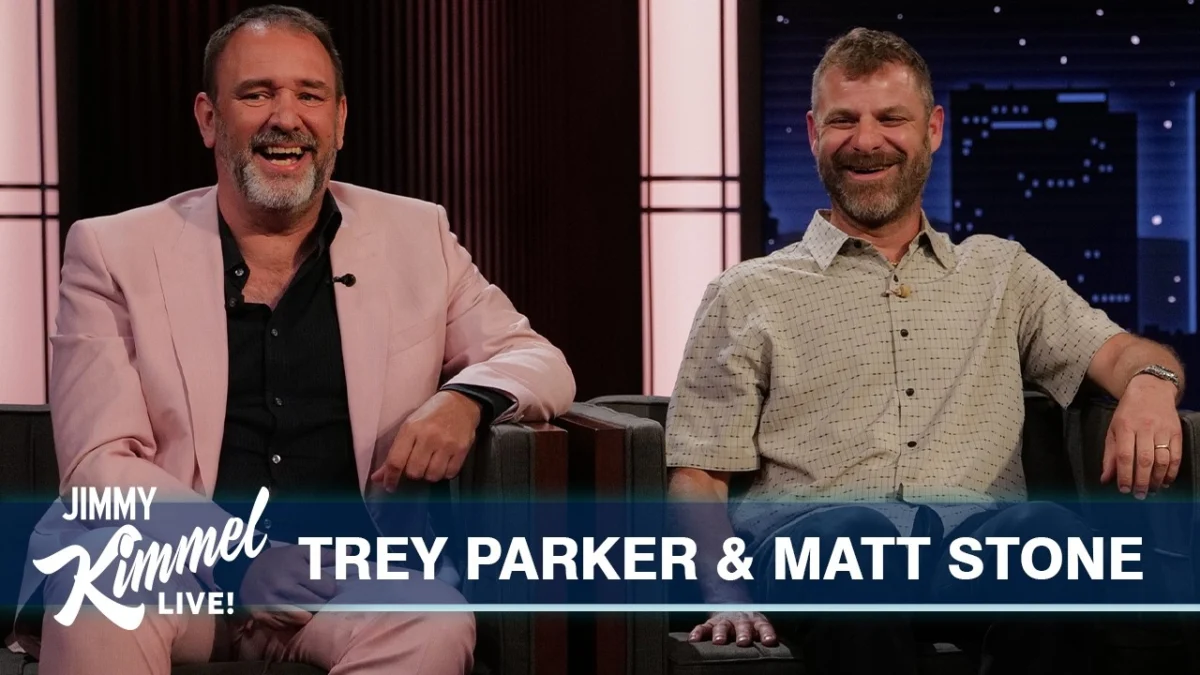
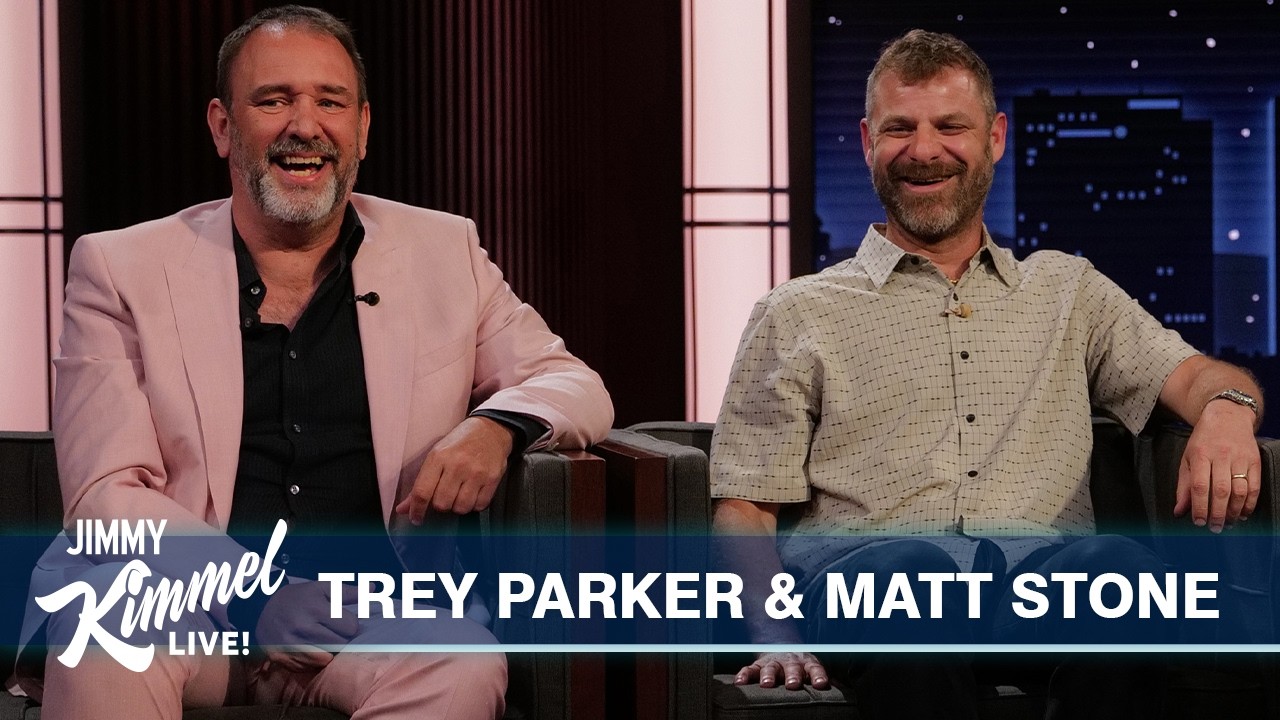
During a recent appearance on Jimmy Kimmel Live!, Parker and Stone finally pulled back the curtain on their "deepfake AI rig." To the delight and amusement of the audience, the duo revealed that the tiny, specific detail that dominated social media discourse for weeks was, in reality, a finger. Specifically, it was a digit adorned with a small, flesh-colored ring designed to mimic a foreskin.
"We did a deepfake of the president, and it kind of got famous," Parker explained to Kimmel, gesturing to the prop they had brought along. "This was actually it—this is how we did Donald Trump’s weener. For the show, we put it [on a finger]." The creators jokingly referred to this crude but effective contraption as their primary "AI rig," highlighting the show’s penchant for contrasting high-concept digital artifice with the most childish, physical humor imaginable.
A Chronology of Subversion
The journey to this moment of absurdity began years ago when South Park first pivoted to incorporate more complex visual effects. Historically, the show was defined by its rigid, cut-out construction-paper aesthetic. It was a style born of necessity—a limitation that became its most recognizable visual signature.
As technology advanced, so did the show’s production capabilities. However, Parker and Stone have always maintained a cynical distance from the industry’s obsession with "progress."
- Early Development: The South Park team began experimenting with deepfake technology as a tool for political satire, realizing that the speed of the technology matched their own legendary production schedule.
- The "Sermon on the ‘Mount" Episode: During the production of Season 27, the writers felt they needed a visual that would capture the surreal, dreamlike nature of a post-political reality. The desert scene was born.
- The Practical Effect: While the face was mapped using synthetic media, the team hit a wall regarding the specific anatomical joke they wanted to land. They found that purely digital versions looked "too fake" or lacked the tactile, off-putting quality of a practical effect.
- The "Foreskin" Reveal: The team settled on the finger-ring prop, filming it against the digital background. The result was a seamless blend of the high-tech (the AI face) and the low-tech (the prosthetic finger).
- The Public Reaction: Upon airing, the clip went viral instantly. The "AI" nature of the segment was debated across tech forums and news outlets, with many assuming the entire sequence was a product of advanced machine learning.
- The Jimmy Kimmel Confession: The May 2026 interview finally clarified the process, subverting the audience’s expectations of how "synthetic media" is actually produced in a modern comedy writers’ room.
The Intersection of AI and Artistry
The revelation that a significant portion of a viral, AI-branded sequence was actually a human finger highlights a broader truth about the current state of animation and production. As AI tools become more accessible, the industry is seeing a polarization between high-fidelity digital art (like the work of Studio Laika or Pixar) and the "DIY" approach championed by South Park.
In an era where "synthetic media" is often viewed with fear—as a tool for misinformation or the displacement of creative labor—Parker and Stone’s approach serves as a reminder that the human element is often what provides the most lasting impact. The "tiny win" here is not just for animation, but for the principle of bricolage—the act of creating something using whatever materials are at hand.
The use of a physical prop inside a deepfake scene serves as a meta-commentary on the medium itself. It suggests that while we can simulate almost anything with algorithms, the most effective satire still requires a human touch, even if that touch is, quite literally, a finger.
Official Responses and Industry Implications
Industry professionals have reacted to the reveal with a mixture of amusement and professional respect. Animation historians note that this is a classic South Park maneuver: taking a cutting-edge technological trend, using it to build a massive expectation, and then puncturing that expectation with a punchline that is as crude as it is clever.
"It’s a perfect microcosm of what they do," says one industry analyst. "They aren’t just using AI to make the show better; they’re using the concept of AI to trick the viewer into thinking they’re seeing something more advanced than they are. It’s a trickster god approach to television production."
Furthermore, the "deepfake" controversy surrounding the show has sparked a conversation about the ethics of synthetic media in comedy. By being transparent about their methods—and highlighting the absurdity of their "rig"—the South Park team has managed to navigate the legal and ethical minefields of using a politician’s likeness in a way that feels distinctly satirical rather than defamatory.
The Road to Season 29: What Lies Ahead
The revelation of this "rig" serves as a warning shot for political figures as the show gears up for its 29th season. South Park remains one of the few shows on television capable of "turning on a dime." Because their production timeline is famously compressed—often finishing episodes mere hours before they hit the airwaves—they are uniquely positioned to respond to the news cycle as it happens.
With the 2026 political landscape shifting and new figures rising to prominence, the fact that Parker and Stone are doubling down on their satirical tactics suggests that the upcoming season will be anything but quiet. The creators have indicated that they have no intention of pulling punches, and the "AI" controversy has clearly not dissuaded them from using the technology to its fullest, most ridiculous potential.
As the premiere date of September 16 approaches, fans and critics alike are waiting to see what new "high-tech" solutions the team will implement. Will we see more live-action integrations? Will the deepfakes become more sophisticated? Or will the team continue to hide low-tech, practical, and intentionally silly solutions within their digital framework?
One thing is certain: in the world of South Park, the most powerful weapon against the absurdity of modern politics is not necessarily the most expensive one. Sometimes, all it takes is a bit of creativity, a sense of timing, and a finger in a ring.
For more on the intersection of animation, design, and satire, stay tuned to our latest coverage. You can access the full breadth of our reporting through our mobile app, now optimized for a streamlined reading experience on both iOS and Android.









No comments yet. Be the first to join the conversation!