

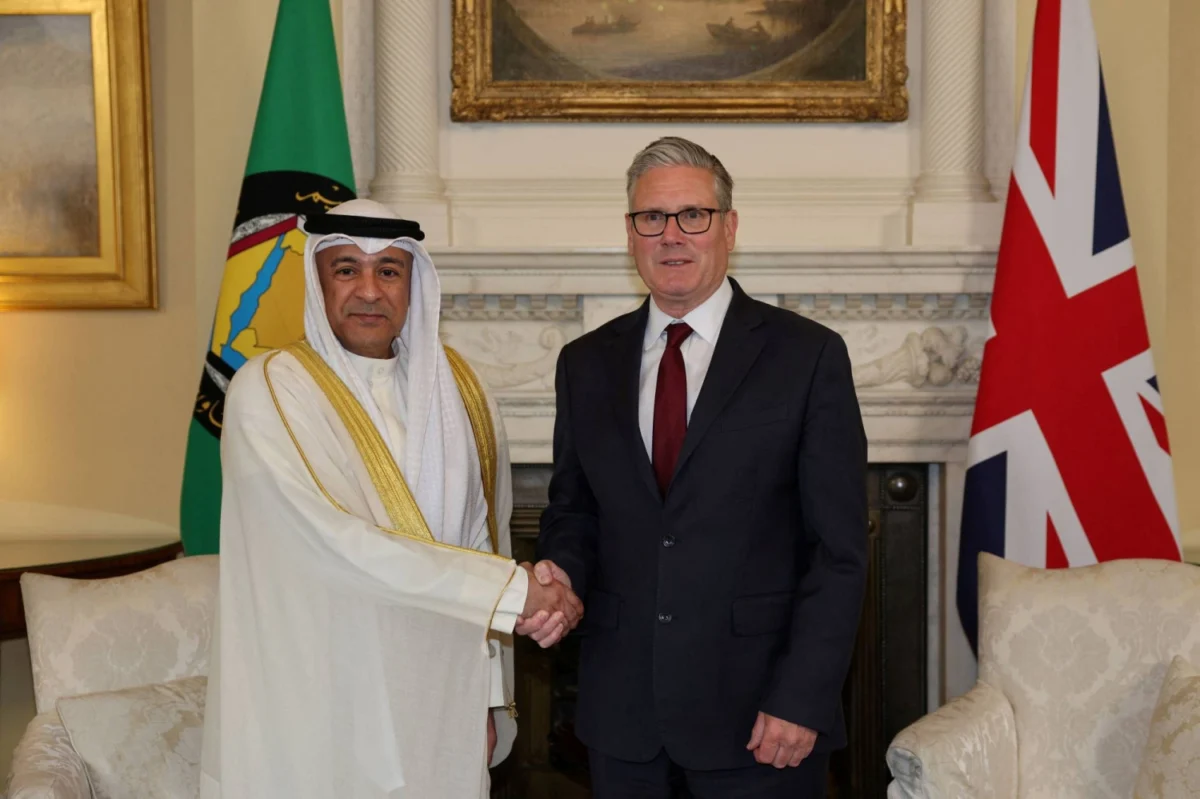
LONDON – In a significant diplomatic and economic maneuver, the United Kingdom has finalized a comprehensive trade agreement with the Gulf Cooperation Council (GCC), a deal projected to inject approximately $5 billion annually into the British economy over the long term. The agreement, confirmed on Wednesday following a high-level meeting at Downing Street between Prime Minister Keir Starmer and GCC Secretary General Jasem Mohamed AlBudaiwi, marks a pivotal shift in Britain’s post-Brexit trade strategy, positioning the Gulf bloc as a cornerstone of the nation’s international economic framework.
The deal arrives during a period of heightened geopolitical fragility across the Middle East. With the region still grappling with the cascading effects of the conflict involving Iran and its neighbors, the agreement serves as both a commercial lifeline and a strategic statement of mutual commitment to stability.
Main Facts: The Scope of the Agreement
The trade agreement encompasses the six member states of the Gulf Cooperation Council: Bahrain, Kuwait, Oman, Qatar, Saudi Arabia, and the United Arab Emirates. By formalizing this partnership, the UK is effectively streamlining trade barriers and enhancing market access for British businesses in sectors ranging from renewable energy and technology to financial services and professional consultancy.
The projected $5 billion annual boost is not merely a theoretical figure; it is based on aggressive projections regarding the reduction of tariffs and the harmonization of regulatory standards between the UK and the GCC. For British exporters, the agreement provides a framework of legal certainty, essential for long-term capital investment in a region that has historically been complex to navigate.
A Chronology of Diplomatic Engagement
The road to this agreement has been paved by months of intensive "quiet diplomacy" and technical negotiations.
- Late 2024: Following the change in government, the Starmer administration identified the GCC as a "priority tier" for trade negotiations, aiming to pivot away from reliance on singular markets.
- February 2026: The regional security landscape shifted dramatically following U.S.-Israeli strikes against Iranian military targets. The resulting retaliatory strikes by Iranian proxies across the Gulf created immediate supply chain anxieties, particularly regarding energy and food security.
- March–April 2026: UK trade envoys conducted a series of rapid-fire summits in Riyadh and Dubai, emphasizing that economic integration could act as a buffer against regional volatility.
- Wednesday, May 20, 2026: Prime Minister Keir Starmer hosted Secretary General Jasem Mohamed AlBudaiwi at Downing Street. The finalization of the deal was signed in the early afternoon, followed by a joint statement confirming the commitment to a "deepened strategic partnership."
Supporting Data: Economic Interdependence
To understand the significance of this deal, one must look at the current economic landscape. The GCC is already one of the UK’s largest investment partners. According to recent data from the Department for Business and Trade, bilateral trade in goods and services between the UK and the GCC was already trending upward prior to this deal, exceeding £60 billion annually.
The new agreement specifically targets:
- Digital Trade: Removing obstacles to the flow of data, which is critical for the burgeoning FinTech sectors in London and the financial hubs of Riyadh and Abu Dhabi.
- Renewable Energy Transition: The GCC, traditionally reliant on fossil fuels, is undergoing a massive pivot toward hydrogen and solar power. British engineering firms are uniquely positioned to provide the technical expertise required for this infrastructure overhaul.
- Regulatory Harmonization: By aligning standards, the UK expects to reduce the "red tape" costs for Small and Medium Enterprises (SMEs) that have previously been discouraged from entering the Gulf market.
Official Responses and Strategic Rationale
The atmosphere at Downing Street was one of calculated optimism. Prime Minister Keir Starmer noted that the deal reflects a "modern approach to global Britain," where economic security and national security are inextricably linked.
Trade Minister Peter Kyle was more explicit regarding the timing of the deal. "At a time of increased instability, today’s announcement sends a clear signal of confidence," Kyle stated. "It gives U.K. exporters the certainty they need to plan ahead despite the turbulence we see in the wider region."
The GCC Secretary General, Jasem Mohamed AlBudaiwi, echoed these sentiments, highlighting that the agreement serves as a "bridge" between the UK’s sophisticated service economy and the Gulf’s capital-rich industrial sector. "We are not just trading goods; we are aligning our economic futures," AlBudaiwi remarked during the press conference.

Implications: A Region in Transition
The implications of this agreement extend far beyond balance sheets.
Geopolitical Stability
The agreement functions as an economic anchor. By deepening ties with the UK, the GCC states are signaling their preference for stable, long-term Western partnerships as they navigate the fallout from the Iran war. For Britain, the deal ensures that it maintains a seat at the table in the Middle East, even as the United States shifts its focus toward the Indo-Pacific.
The Energy Security Factor
The conflict in the region has caused significant fluctuations in global energy prices. By strengthening economic ties with the primary energy producers of the world, the UK aims to secure more stable energy supply chains. This is a crucial hedge against future energy crises that could be triggered by further escalation in the Strait of Hormuz.
Future-Proofing the UK Economy
Critics have pointed out that the GCC’s human rights record remains a point of contention. However, the government’s stance—as evidenced by this deal—is that "pragmatic engagement" is the most effective way to foster reform. The UK argues that by embedding British firms into the Gulf’s modernization plans, they can exert a greater influence on labor and environmental standards than by pursuing a policy of isolation.
Challenges and Future Outlook
Despite the positive rhetoric, the agreement is not without its hurdles. The volatility of the Middle East remains the primary risk factor. Should the conflict between Iran and its neighbors intensify further, the physical infrastructure of trade—shipping lanes and regional logistics hubs—could face renewed pressure.
Furthermore, the UK must balance its new obligations to the GCC with its existing commitments to other international partners, including the European Union and the Comprehensive and Progressive Agreement for Trans-Pacific Partnership (CPTPP).
However, for the Starmer administration, the message is clear: Britain is determined to capitalize on its agility as a non-EU power to forge bilateral deals that prioritize economic growth. The $5 billion figure serves as the headline, but the underlying narrative is one of a UK desperate to reclaim its status as a global trade hub in a multipolar world.
As the implementation phase begins, the Department for Business and Trade is expected to launch a series of roadshows across the UK to encourage businesses to take advantage of the new provisions. For now, the agreement stands as a testament to the belief that even in the shadow of war, the machinery of global commerce must continue to move forward, seeking stability through prosperity.
The success of this deal will ultimately be measured not just in pounds and dollars, but in the ability of the UK and its Gulf partners to insulate their shared economic interests from the volatile winds of regional conflict.












No comments yet. Be the first to join the conversation!