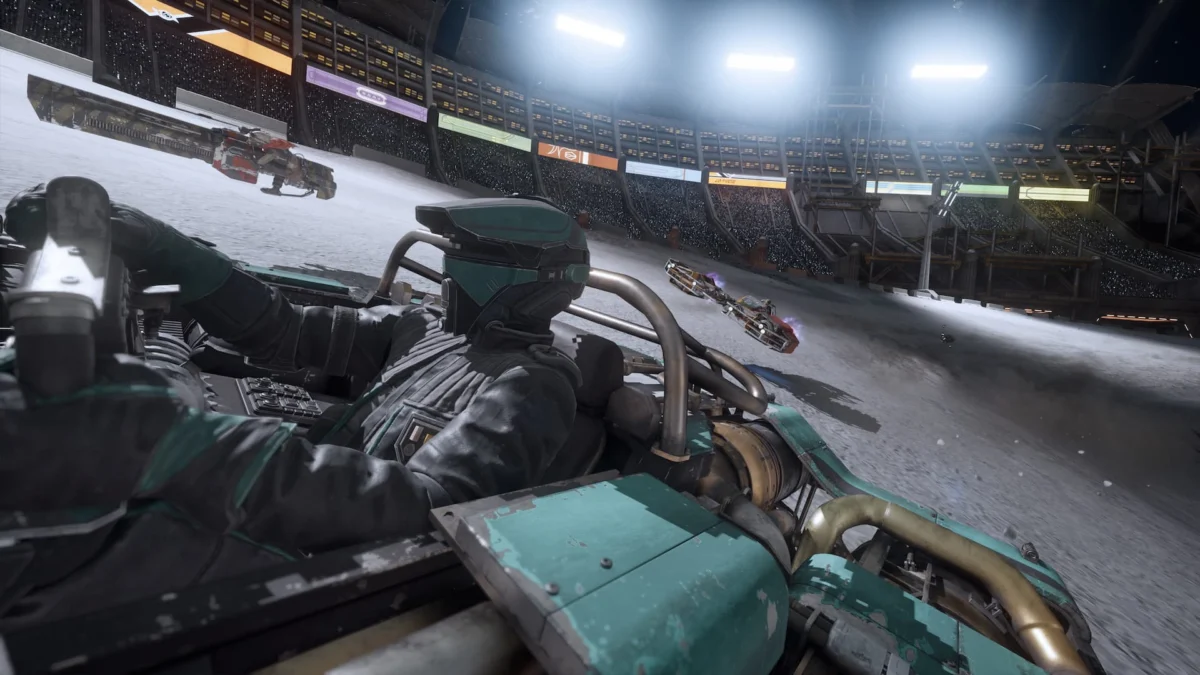
For decades, the Star Wars universe has been synonymous with epic space battles, lightsaber duels, and the Force. Yet, one of the most exhilarating elements of the galaxy far, far away—high-speed, death-defying racing—has remained largely dormant since the era of the N64. That is set to change with Star Wars Galactic Racer, a title developed by Fuse Games that aims to capture the kinetic energy of the franchise while pushing the boundaries of the racing genre.
Following an intensive hands-on session at Summer Game Fest (SGF), it is clear that the team at Fuse Games, bolstered by veteran talent from the Need for Speed and Burnout franchises, is not merely delivering a nostalgia trip. They are building a complex, systems-driven experience that demands as much tactical preparation as it does raw reflex.
The Resurrection of an Iconic Sub-Genre
When asked why the Star Wars racing sub-genre has been left to gather dust, Kieran Crimmins, Creative Director at Fuse Games, is candid. "I don’t know why," he admits, before pivoting to the technical reality of the task. "I’d say that it’s a very difficult type of game to do from a development skill point of view. We were ready to make a new game, and that was one of the most obvious ones."
The difficulty lies in the scale. A Star Wars racing game cannot simply be a collection of closed circuits; it must feel like an extension of the massive, lived-in world seen on screen. By leveraging the expertise of senior developers who cut their teeth on the Criterion engine—famed for its visceral sense of speed and destruction—Fuse Games has successfully bridged the gap between arcade accessibility and high-fidelity simulation.
The Visual and Structural Scale of the Galaxy
The most immediate impression left by Star Wars Galactic Racer is its environmental storytelling. The developers have employed a "wide-world" philosophy to track design. While the game technically operates within defined boundaries to ensure fair competition, these tracks are woven into the fabric of recognizable Star Wars environments so cleverly that the player feels as though they are racing through an infinite expanse.
During the hands-on preview, the sensation of scale was staggering. On tracks set in the deserts of Jakku, massive Star Destroyer wrecks loom on the horizon, casting long, foreboding shadows across the course. These are not merely background textures; they are part of a world that feels colossal.

"One of the classic kinds of cinematic things is that everything is big; it literally doesn’t fit on the screen," Crimmins explains. "So we just tried to replicate that, really. All the tracks are absolutely massive mega-structures." This commitment to visual fidelity ensures that players are constantly reminded of the sheer magnitude of the Star Wars aesthetic.
Chronology of Development: From Concept to Competitive Play
The development of Galactic Racer began with a focus on core mechanics: the "feel" of the speeder. Unlike traditional racing titles where a single upgrade path leads to victory, Fuse Games wanted to replicate the modular, scavenged nature of speeder culture.
- Phase One (Conceptualization): The team identified the need for a "pick-up-and-play" foundation that allowed for deep, complex mastery.
- Phase Two (System Integration): Developers introduced the "pre-race preparation" quick-time events, allowing players to prime their boosters or calibrate engines, adding a layer of strategy before the countdown even begins.
- Phase Three (Combat Mechanics): Influenced by the DNA of Burnout, the team implemented an aggressive combat system. The "takedown" mechanic, accompanied by iconic, authentic Star Wars audio cues, rewards players for being tactical aggressors rather than passive drivers.
- Phase Four (Campaign Architecture): The integration of a roguelike-esque structure, where players manage parts and upgrades through hub-world exploration, was finalized to encourage continuous experimentation.
Technical Depth: The Trillions of Combinations
Perhaps the most surprising aspect of Galactic Racer is its departure from the "linear progression" model. In most racing games, the player builds a car, upgrades it to its maximum potential, and rides that singular powerhouse to the end of the game. Fuse Games has intentionally rejected this.
The game features an intricate, modular upgrade system. Players can swap out engines, chassis, and propulsion systems, all of which alter the speeder’s handling, durability, and boost efficiency. Because the game features a narrative-driven, roguelike-esque campaign, the conditions of the race—and the available parts—change constantly.
"The combinations are in the trillions for different builds," Crimmins notes. This is a design choice intended to prevent stagnation. If a player finds themselves stuck on a track with tight, technical corners, they must pivot their build to focus on agility and chassis durability rather than raw top speed. It is a level of tactical depth rarely seen in the genre, forcing players to think like mechanics, not just drivers.
Podracing: The Pinned Pinnacle
The inclusion of Podracing was non-negotiable for the studio. For many, the high-speed, volatile nature of podracing represents the pinnacle of Star Wars spectacle. Fuse Games has taken this seriously, ensuring that the handling model for pods is distinct from standard speeders.

"You cannot have a Star Wars racing game without pod racing in it," says Crimmins. "Pod racing has got to embody the fantasy that’s displayed in those movies. It’s the pinnacle of racing in Star Wars."
In practice, the podracing sections are significantly faster and more dangerous than other event types. The game emphasizes the "tether" physics of the podracers, making the experience feel frantic and unstable—a perfect reflection of the source material. It remains to be seen how deeply this mode will be integrated into the broader story, but based on the preview, it is clear that Fuse Games intends for it to be the game’s centerpiece.
Implications for the Racing Genre
Star Wars Galactic Racer is poised to disrupt the racing market by proving that the genre can support deep, narrative-driven, and systems-heavy gameplay without sacrificing the thrill of the chase. By moving away from the traditional "grind-to-win" loop and toward an experimental, build-focused structure, Fuse Games is inviting a new audience to the genre—those who value the "easy to learn, hard to master" philosophy.
Moreover, the game highlights a shift in how licensed titles are handled. Rather than relying on the Star Wars brand to carry the weight of a mediocre product, the developers have focused on creating a superior driving engine first, then wrapped it in the rich, immersive lore of the franchise.
If the final release maintains the frenetic energy and the structural depth observed at SGF, Star Wars Galactic Racer will not only be the best Star Wars racing game ever made—it may well be the blueprint for the next generation of arcade-sim hybrids. Players looking for a simple, mindless driving experience may find themselves challenged, but those looking for a deep, tactical, and visually breathtaking racing experience will find exactly what they’ve been waiting for.