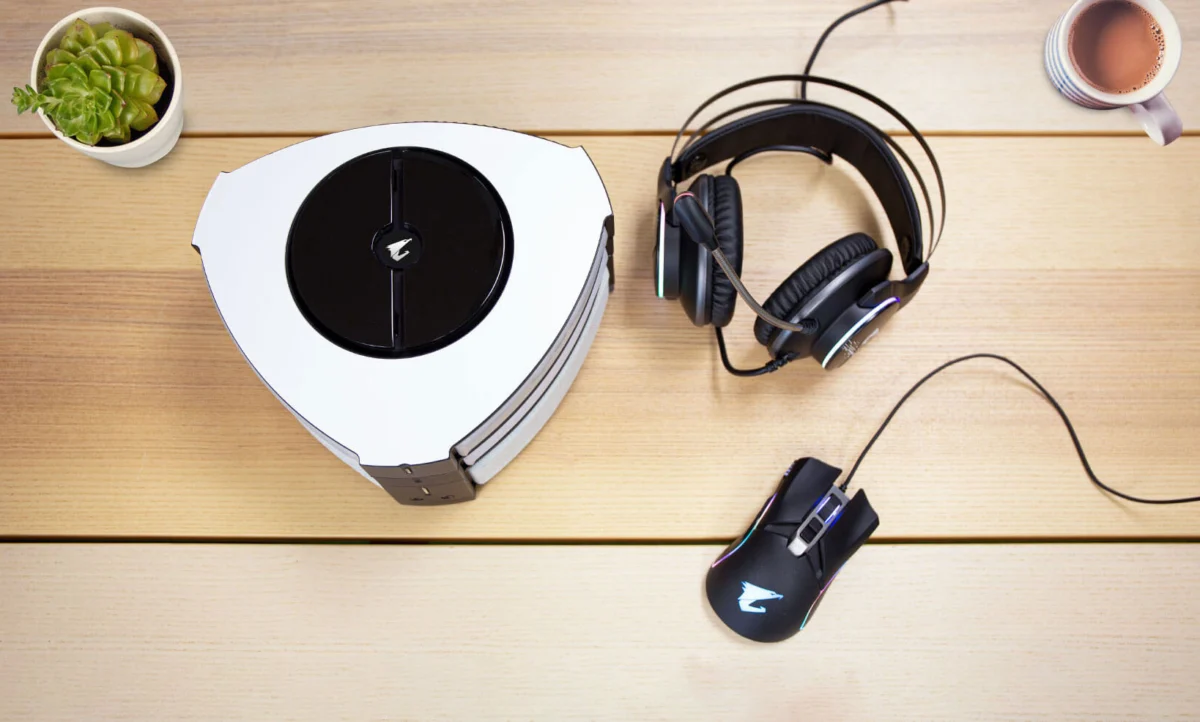
In the fast-evolving ecosystem of high-performance computing, Aorus—the gaming-centric sub-brand of Gigabyte—has historically positioned itself as a purveyor of uncompromising hardware. From liquid-cooled GPUs to overclockable motherboards, the brand has built its reputation on raw power. However, with its latest reveal, "Project Cielo," Aorus has pivoted sharply away from traditional desktop paradigms, offering a vision of the future that is as enigmatic as it is polarizing.
Project Cielo is a modular, triangular, stackable PC concept that prioritizes mobility and connectivity over the traditional "more cores, more power" philosophy. While it has certainly turned heads for its avant-garde aesthetics, it has also invited intense scrutiny from industry analysts and enthusiasts alike regarding its utility and long-term viability in a market dominated by increasingly powerful handheld consoles and thin-and-light laptops.
Main Facts: What is Project Cielo?
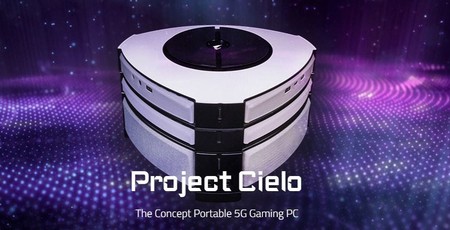
Project Cielo is not a product you can buy today, nor is it a prototype with a finalized spec sheet. It is a design concept—a vision of modular computing designed to challenge the static nature of the traditional desktop tower.
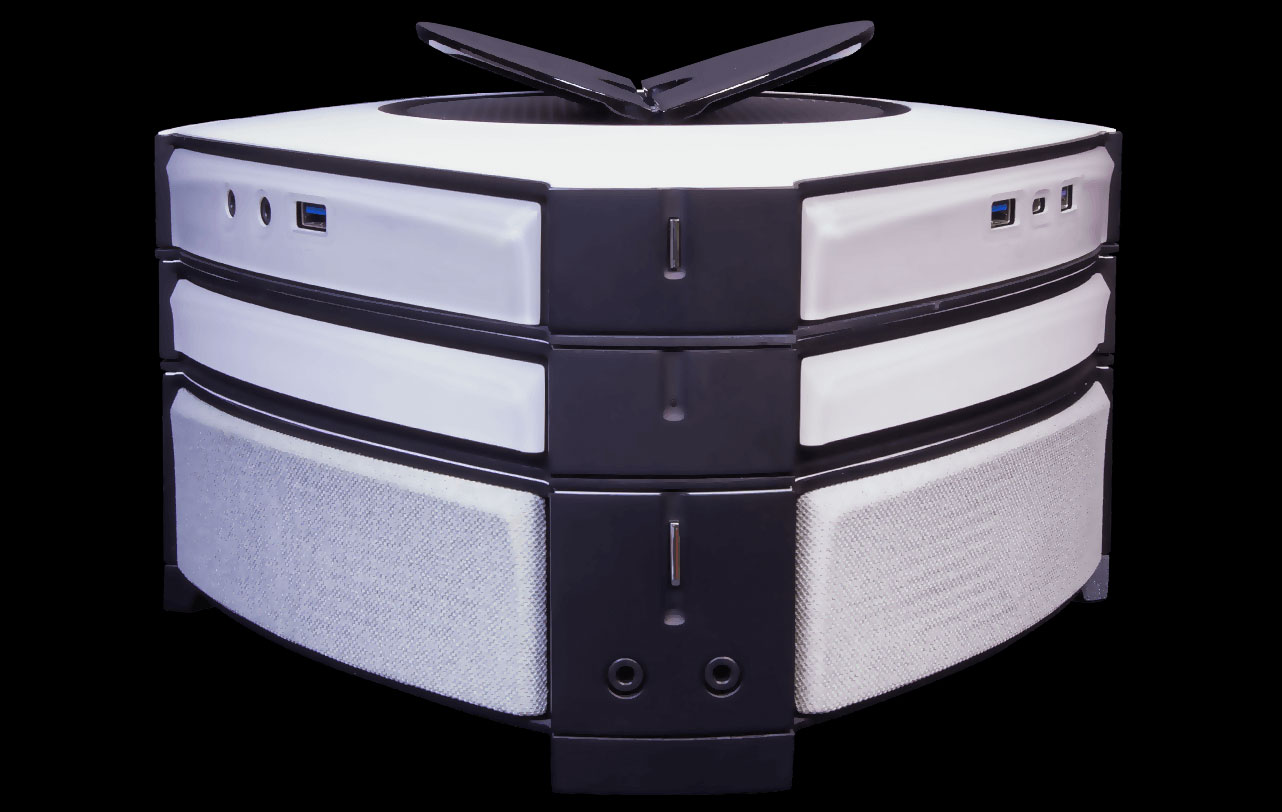
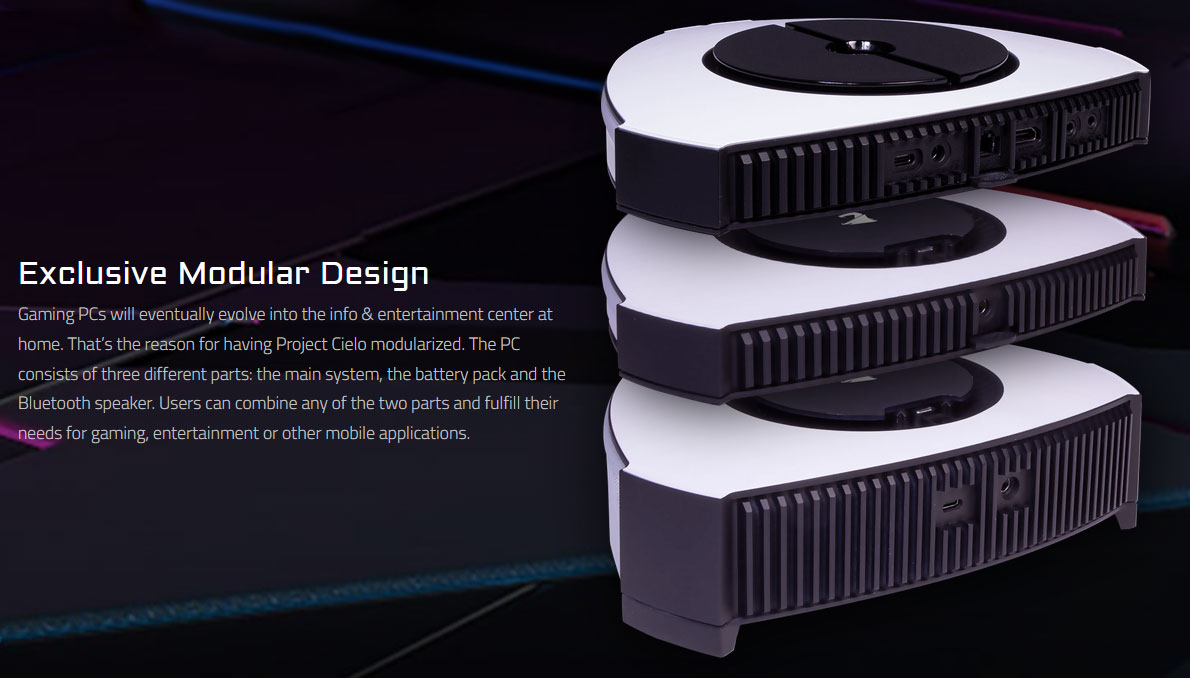
The system is composed of three distinct, vertically stackable modules:
- The Main System Unit: The "brain" of the operation, presumably containing the processor and graphics architecture.
- The Battery Module: A dedicated power unit intended to liberate the PC from the confines of a wall outlet.
- The Bluetooth Speaker: A dedicated audio module that attaches to the base, rounding out the entertainment-focused design.
Perhaps the most striking feature of the top module is its set of "angel cake" wings—a pair of retractable antennas designed for 5G connectivity. Aorus posits that by leveraging 5G, the user can achieve ultra-low latency and high bandwidth, effectively offloading the burden of heavy computation to the cloud.
Chronology: The Evolution of a Concept
The emergence of Project Cielo occurred in October 2021, arriving with little fanfare during a period of global supply chain turbulence.
- October 2021: Aorus officially unveiled the concept via a press release, accompanied by sleek, studio-lit renders that showcased the triangular design. The focus was immediately placed on the concept’s modularity and the integration of 5G technology.
- Post-Announcement Phase: Industry reaction was swift. Technology journalists began to pick apart the practicality of the design, noting the absence of a display and the peculiar decision to prioritize a Bluetooth speaker module over more traditional PC hardware components like storage arrays or dedicated cooling blocks.
- The "Silent" Period: Since its initial reveal, Aorus has kept the project in the shadows. Unlike products destined for rapid retail rollout, Cielo has remained an academic exercise in industrial design, with no significant updates or hardware refinements announced for subsequent tech summits like CES 2022 or Computex.
Supporting Data: Connectivity vs. Raw Compute
The central pillar of Aorus’ argument for Project Cielo is the shift from "local compute" to "connected experience." Aorus claims that 5G connectivity makes high-end PC gaming possible on the go, bypassing the thermal and physical constraints of traditional hardware.
The Connectivity Argument
The technical justification provided by Aorus centers on three pillars:
- Bandwidth: 5G provides the throughput necessary to stream high-fidelity assets in real-time.
- Ultra-Low Latency: A prerequisite for competitive gaming, where even a 20ms delay can determine the outcome of a match.
- Cloud Gaming Access: By offloading the rendering process to a remote server, the physical hardware only needs to be powerful enough to decode a video stream and handle inputs.
The Modular Logic
The modularity of the system suggests a "pick and choose" approach to hardware. Aorus claims that users can combine any two of the three parts to suit their needs. For example, one could use the main system and the battery for mobile gaming, or the system and the speaker for a stationary media experience. However, this flexibility raises questions about the interconnects. Proprietary modular connections have been the death of many hardware concepts, as they often create bottlenecks in data transfer speeds between the stackable units.
Official Responses and Strategic Intent
In their official communications, Aorus representatives framed Project Cielo as a "preview of future gaming." The company stated, "Compared to the traditional wired or 4G wireless networks, 5G makes PC gaming on the go possible."
This rhetoric suggests a strategic pivot. Gigabyte is essentially hedging its bets on the maturation of cloud gaming services like NVIDIA GeForce Now, Xbox Cloud Gaming, and Amazon Luna. If the industry moves toward a "Netflix-style" model for gaming, the need for a bulky, power-hungry desktop tower diminishes. Aorus is attempting to position itself as the hardware provider for this hypothetical future, where the "PC" is merely a thin-client gateway to the cloud.
Implications: A Solution in Search of a Problem?
The reception of Project Cielo has been, at best, skeptical. When analyzing the project, several critical implications arise that suggest a disconnect between Aorus’ vision and the actual needs of the gaming community.
1. The "Why" Problem
The most glaring issue is the lack of a screen. If the device is designed for mobility, why require a separate, modular, stackable system that must be carried around, when a high-end gaming laptop or a tablet like the iPad Pro or a high-refresh-rate 5G smartphone already offers a superior, all-in-one experience? Aorus’ concept requires the user to carry the "main system," the "battery," and then connect it to a separate display. It creates a logistical nightmare for the user that is less convenient than existing solutions.
2. The Modular Myth
Modular computing has been a "holy grail" for designers for decades, yet it has failed to gain traction in the consumer market. Projects like the Razer "Christine" or various modular smartphones (Project Ara) were abandoned because they failed to solve the fundamental problem of cost versus compatibility. In a system as specialized as a gaming PC, where components require precise thermal management and specific power delivery, forcing a modular interface often results in compromised performance.
3. The 5G Fallacy
While 5G is undoubtedly faster than 4G, it is not a panacea. Gaming, particularly at high refresh rates, requires consistent, rock-solid connectivity. Public 5G infrastructure remains inconsistent, and the latency spikes inherent in wireless networking are currently a massive hurdle for competitive gaming. By tying the future of the product to the future of the cellular network, Aorus is ceding control of the user experience to telecommunications providers.
4. Market Positioning
Aorus is a brand associated with the "enthusiast." Enthusiasts are typically those who demand maximum local performance, physical control over their hardware, and the ability to upgrade individual components like GPUs or RAM. Project Cielo is the antithesis of this. By removing the need for local processing power in favor of cloud-based solutions, Aorus risks alienating its core demographic without offering a compelling enough alternative to capture the casual market.
Conclusion: The Verdict on Project Cielo
Project Cielo serves as a fascinating case study in corporate futurism. It is a product that embodies the "tech for tech’s sake" mentality—where the pursuit of a novel form factor or a cutting-edge buzzword (5G) takes precedence over the user experience.
If Project Cielo were to reach the retail market, it would likely be categorized as a niche, luxury curiosity rather than a standard-bearer for the next generation of gaming. The reality is that the future of portable gaming is already here, and it is found in the form of ultra-efficient handhelds like the Steam Deck or the ASUS ROG Ally—devices that don’t require a cloud connection to function and that include the display, battery, and controller in a single, cohesive chassis.
Aorus has successfully designed a device that looks like the future from a 1980s sci-fi film. However, in the practical, iterative, and highly competitive world of modern PC gaming, style cannot substitute for substance. Unless the company can demonstrate a definitive advantage to this modular, cloud-reliant architecture, Project Cielo is destined to remain what it is today: a concept that is better left on the drawing board.
As we look toward the next era of computing, the industry would be better served focusing on miniaturization and thermal efficiency rather than artificial modularity. For Aorus, the lesson is clear: sometimes, the "future of gaming" isn’t about how many pieces you can stack together, but how much power you can fit into a device that the user actually wants to carry.