For decades, the "marketing funnel" has been the North Star of business strategy. The premise was simple: capture a massive audience at the top (awareness), nudge them through a series of tactical touchpoints (consideration), and usher them toward a final purchase (conversion). It was a linear, predictable, and—by today’s standards—woefully outdated model.
In the modern digital ecosystem, the customer journey is no longer a straight line; it is a chaotic, multi-channel loop. A consumer might discover a product via a TikTok creator, research it on Reddit, verify the pricing through an AI assistant, and finally complete the purchase weeks later after a recommendation in a private WhatsApp group. As the traditional funnel leaks, brands are finding that their polished, corporate-sanctioned messaging is being filtered out by a cynical audience that favors human authenticity over algorithmic perfection.
Enter the "Proof of Reality" Flywheel, a transformative framework that treats social media not as a lead-generation pipe, but as a self-sustaining engine of trust, authority, and compounding visibility.

The Death of Linearity: Why the Old Funnel Is Leaking
The traditional marketing funnel was built for a world where brands controlled the narrative. Today, that control has evaporated. The fragmentation of the digital journey means that "Discovery" no longer happens on a single channel. According to Sprout Social’s Q2 2026 Pulse Survey, while traditional search engines remain a common starting point, 21% of all consumer searches now begin on social media. Among younger demographics, this gap is shrinking rapidly.
The Trust Deficit and the AI Factor
Compounding this fragmentation is the rise of Generative AI. As feeds become saturated with synthetic, mass-produced content, consumers have developed a refined "authenticity filter." Data shows that 56% of consumers encounter AI-generated content on social media frequently, and 83% see it at least occasionally. When a consumer can’t distinguish between a human recommendation and an automated brand post, trust evaporates.
In this environment, polished, high-budget ads often fail to convert because they lack the social proof necessary to bridge the gap between "interest" and "action." Modern buyers look for signals that real people are engaging with a product—not just in the comments section, but in the places where the brand has no direct control, such as private DMs or niche community forums.
Anatomy of the Proof of Reality Flywheel
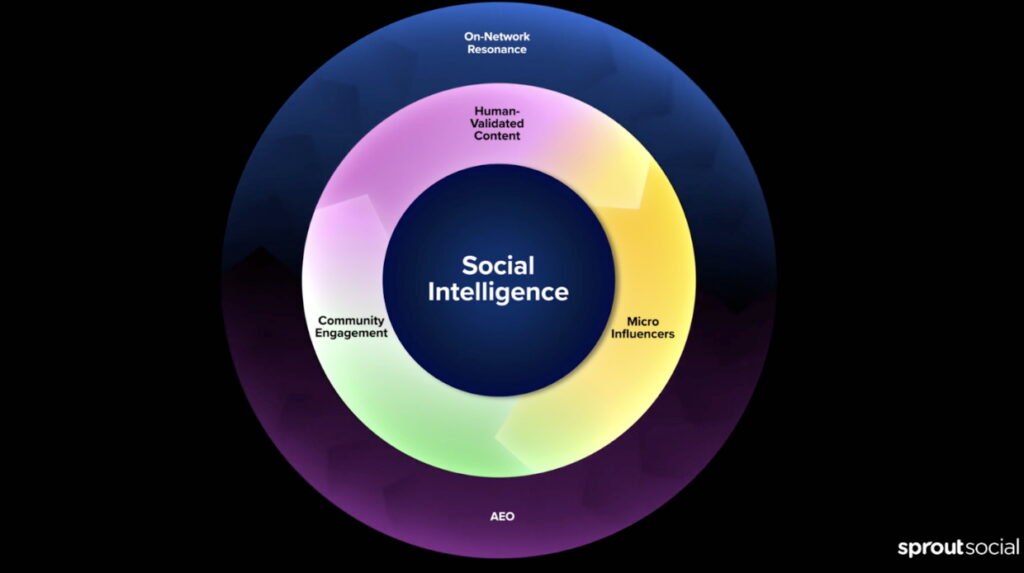
Unlike the stagnant structure of a funnel, the Proof of Reality Flywheel is designed for motion. It is a continuous loop where authority, engagement, and visibility feed into one another.
1. Social Intelligence: The Foundation
In a traditional model, content strategy begins with the brand’s internal goals. The Flywheel reverses this, starting with Social Intelligence. By analyzing real-time conversations, audience sentiment, and competitive activity, brands can identify the specific questions and debates occurring within their communities.
When a content strategy is rooted in social intelligence, it ceases to be a guess and becomes a response to actual market demand. This intelligence serves as the fuel that initiates every rotation of the flywheel.

2. Human-Validated Content
Once the insights are gathered, the next stage is the creation of "Human-Validated Content." This is not about production value; it is about credibility. Content that earns attention today is that which provides utility, answers specific questions, or offers a relatable behind-the-scenes look.
Because AI answer engines (like those powering ChatGPT or Google’s AI Overviews) pull data from social posts and community discussions, content that earns genuine human engagement is naturally prioritized by these systems. Thus, human validation becomes a form of "Answer Engine Optimization" (AEO).
3. Influence Networks
The final piece of the puzzle is the activation of Influence Networks. These include micro-influencers, niche community moderators, and peer-to-peer spaces like Reddit. In the traditional funnel, brands rely on paid ads to push users through the middle of the funnel. The Flywheel replaces this with trusted paths—creators who speak with authority and forums where potential buyers can vet a product against their peers.
Chronology of a Shifting Strategy
The transition from funnel to flywheel represents a fundamental shift in corporate philosophy:
- Pre-2020 (The Era of Control): Brands dictated the narrative. The focus was on "Reach" and "Impressions." The funnel was the primary tool for measuring success.
- 2020–2024 (The Rise of Social Search): Brands began to realize that social platforms were doubling as search engines. Marketing departments started scrambling to optimize for platforms like TikTok and Instagram as primary discovery sources.
- 2025–2026 (The AI-Driven Reset): The proliferation of AI-generated content led to a "trust crisis." Brands realized that volume was no longer the metric of success; resonance was.
- The Future (The Flywheel Era): Organizations are now shifting toward "Proof of Reality"—where social data, community engagement, and search engine discovery are unified into one continuous, self-improving system.
Supporting Data: The Case for Change
The data supports the necessity of this shift. According to the 2026 Social Intelligence Report, while 98% of professionals agree that social data helps achieve cross-functional business outcomes, only 36% are actually using social intelligence to inform decisions outside of the marketing department.
This disconnect is where the biggest opportunities lie. When social intelligence is shared with product teams, it identifies feature gaps. When shared with customer service teams, it flags recurring service issues before they become PR crises. When shared with leadership, it provides a pulse on market sentiment that is far more accurate than annual consumer surveys.

| Metric | Traditional Funnel | Proof of Reality Flywheel |
|---|---|---|
| Structure | Linear / Stage-by-stage | Circular / Self-sustaining |
| Primary Driver | Ad Spend | Social Intelligence |
| Goal | Single-touch conversion | Compounding Authority |
| Search Strategy | SEO Keyword Targeting | AEO & Social Search Integration |
Implications for Modern Marketers
Transitioning to a flywheel approach requires a top-down overhaul of how teams operate.
Cross-Functional Collaboration
Social teams can no longer exist in a silo. To make the flywheel work, the data gathered by the social media team must inform the product roadmap, the customer support response scripts, and the sales team’s outreach.
Rethinking "Reach"
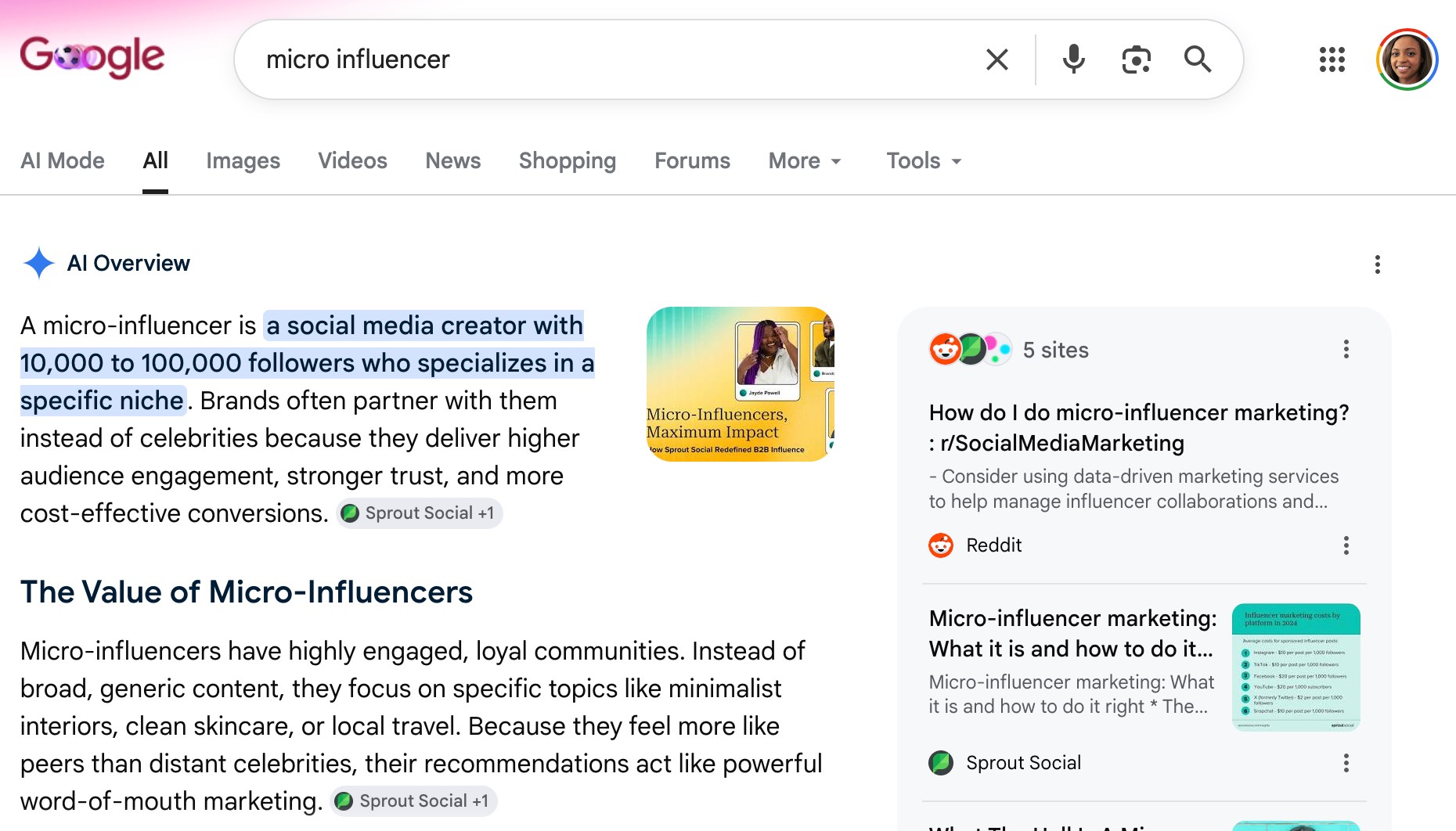
Brands must stop obsessing over broad reach and start prioritizing "topical relevance." A partnership with a creator who has 10,000 highly engaged followers in a specific niche is now objectively more valuable than a generic influencer with 1,000,000 followers who has no category authority.

Investing in AI Discovery
To win in the age of AI search, brands must optimize for the way humans speak. This means creating content that answers questions in a conversational tone. If your brand is not appearing in the AI-generated summaries that users see at the top of their search results, you are effectively invisible to a large segment of the modern buying population.
Official Perspective: The "Proof of Reality" Mandate
Industry leaders are noting that the "Proof of Reality" is the only way to combat the dilution of brand voice in an AI-heavy world. As noted by Sprout Social, the flywheel does not simply push for a transaction; it builds a repository of social trust.
"The goal is not to force the customer through a door," the report suggests. "The goal is to build an ecosystem where the customer finds the information they need to convince themselves."
By prioritizing the human element, businesses create a competitive moat that AI simply cannot replicate. Algorithms can generate millions of posts, but they cannot generate the real-world community trust that comes from a genuine customer conversation on Reddit or an authentic testimonial from a trusted niche creator.
Conclusion: Rebuilding the System
The traditional marketing funnel is not just broken; it is an artifact of a bygone era. In today’s complex, high-noise digital environment, brands that rely on linear tactics will find themselves increasingly ignored.
The Proof of Reality Flywheel offers a path forward. By integrating social intelligence, creating human-validated content, and fostering influence networks, brands can turn every customer interaction into fuel for the next. This is no longer just about marketing—it is about building an enduring, self-sustaining presence that thrives on the very complexity that once threatened to destroy it. The brands that win will be those that realize their customers are not just targets to be funneled, but participants in an ongoing, multi-channel conversation.