Asro
Asro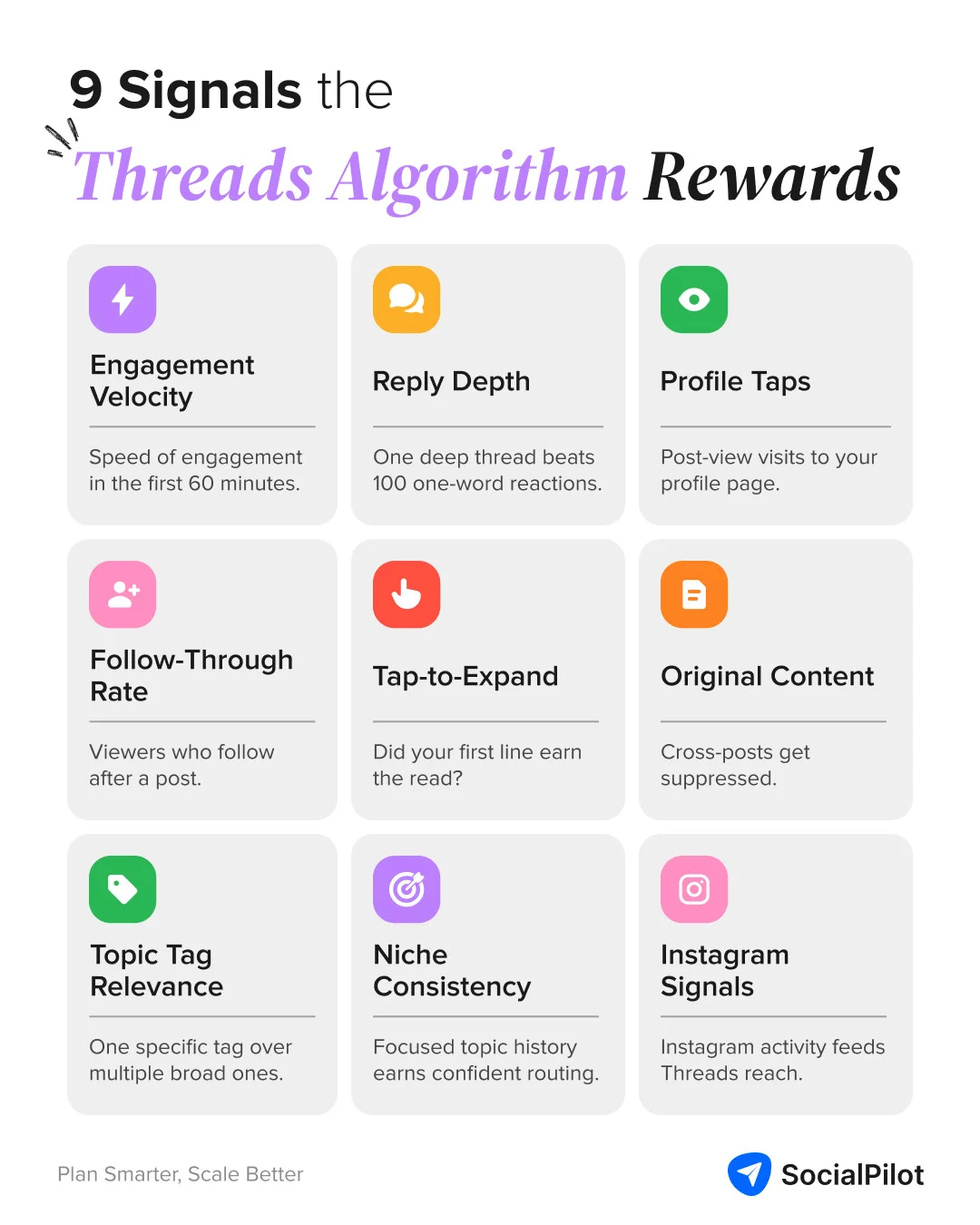
Everything you think you know about social media algorithms is currently working against you on Threads. You have spent years mastering the art of the scroll-stopping hook, the strategic cross-post, and the perfectly timed publication schedule. You treat your brand account with the precision of a Swiss watch. And yet, the results are baffling: one post hits 1,200 views, while the next—posted by the same account, on the same topic, with identical effort—stagnates at 11.
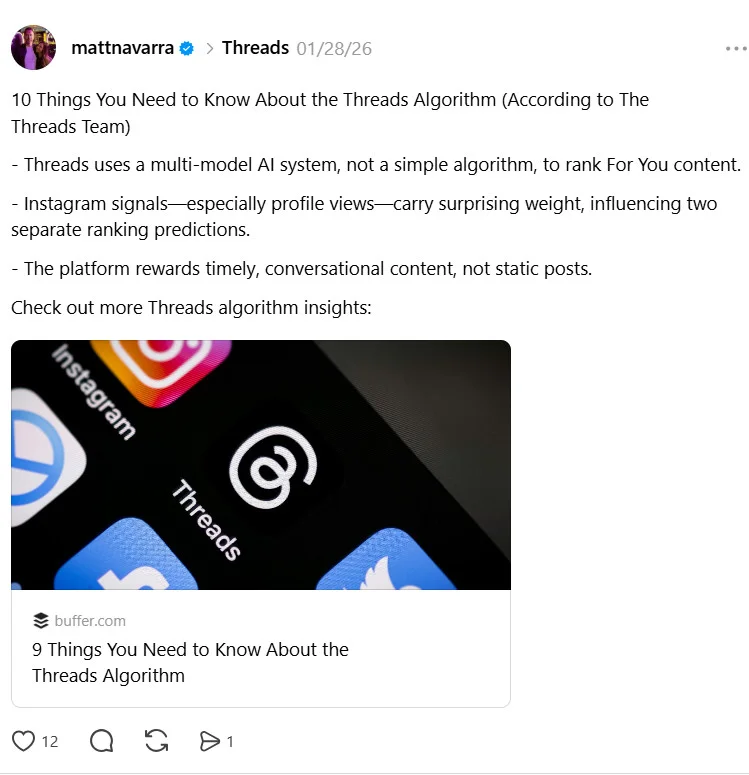
This isn’t a glitch. It is a fundamental shift in how Meta’s AI evaluates value. The Threads algorithm rewards a specific set of behaviors that every other platform has trained you to avoid. The signals that built your authority on LinkedIn or your engagement on X (formerly Twitter) are precisely the wrong signals for the Threads "For You" feed.
The Evolution of the "For You" Feed: A Chronology
To understand why your current strategy is failing, we must look at the evolution of the platform. Since its launch, Threads has matured into a beast of a social network, boasting 450 million monthly active users by early 2026. With 141.5 million daily active users, it has officially eclipsed X, creating a hyper-competitive environment where "For You" placement is the most valuable real estate in social media.

The algorithm functions through a three-step triage process:
- Sampling: Upon posting, the content is shown to a small, select group of users.
- Signal Analysis: The AI monitors the interaction metrics within the first 30 to 60 minutes.
- Distribution: If the engagement velocity is high enough, the system expands the reach; if not, the post is effectively buried.
Crucially, the "Following" feed remains chronological, but the "For You" feed—the engine of your growth—is governed entirely by this rapid-fire, AI-driven testing window. If you aren’t present to nurture your post during that first hour, you have already lost the game.
Decoding the 9 Signals the Algorithm Rewards
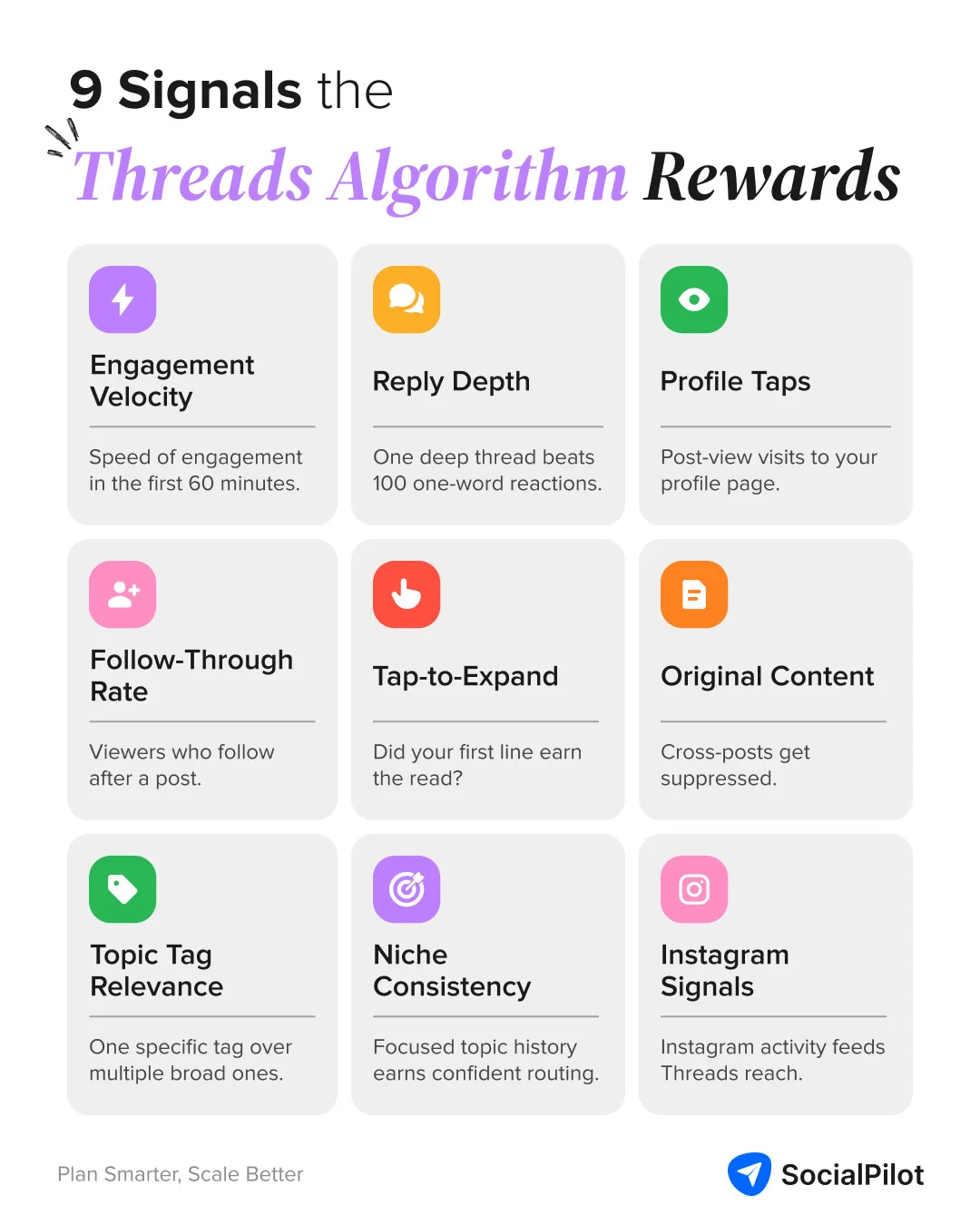
The Threads algorithm is a meritocracy of conversation. Based on internal data and user behavior patterns observed in 2026, here are the nine signals that dictate whether your brand sinks or swims.
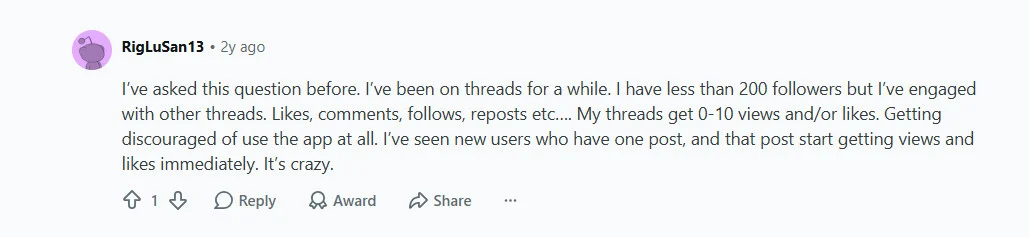
1. Engagement Velocity
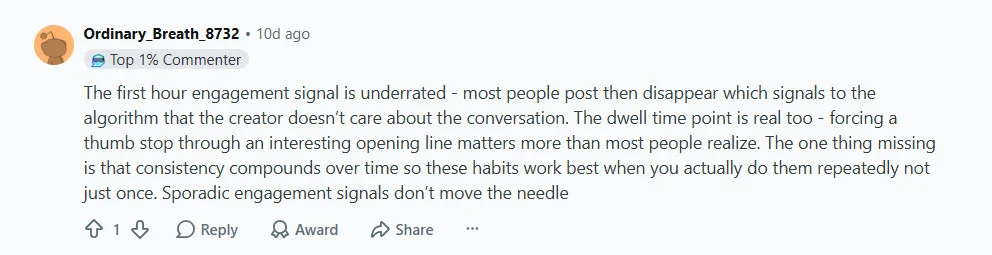
This is the heartbeat of your reach. The speed at which you gain engagement in the first hour determines the long-term life of your post. The algorithm does not revisit old posts; if they don’t catch fire immediately, they are forgotten.
2. Reply Depth
Threads is not about the "like" button. The algorithm prioritizes conversation threads that extend multiple layers deep. If your post generates 20 one-word reactions, it is considered low quality. If it generates five long-form replies that spark a sub-discussion, the algorithm identifies it as "high-value" and pushes it to broader audiences.
3. Profile Taps
When a user clicks your avatar, the AI interprets this as a signal of high intent. It indicates that your content was not just a fleeting distraction, but a bridge to your brand identity.
4. Follow-Through Rate
This is the percentage of viewers who transition from "viewer" to "follower" after interacting with a post. A high follow-through rate tells Meta’s AI that your account is a reliable, high-quality source for your specific niche.
5. Time Spent and Tap-to-Expand
Because Threads truncates long posts, the act of a user tapping "more" to expand your text is a critical engagement metric. It proves your first line is compelling enough to warrant a deeper commitment of time.
6. Originality vs. Cross-Posting
The algorithm uses pattern recognition to penalize recycled content. If you are simply cross-posting your Instagram captions or your X threads, the AI recognizes the broadcast-style tone and limits your reach. Native content—written specifically for the conversational, text-first environment of Threads—consistently outperforms repurposed content.
7. Topic Tag Relevance
Forget "tag stuffing." Threads favors one highly relevant, specific tag per post. Multiple broad tags dilute the routing signal, making it harder for the AI to categorize your content and serve it to the right audience.
8. Niche Consistency
Accounts that oscillate between vastly different topics confuse the algorithm. By maintaining a laser-focused niche for 30+ days, you allow the AI to build a "model" of your content, making it easier to predict exactly who will enjoy your next post.
9. Instagram Cross-Platform Signals
Meta’s ecosystem is interconnected. If a user has engaged with your brand on Instagram, they are significantly more likely to see your Threads content in their "For You" feed. This is your "warm audience" advantage.
Official Responses and the "Dear Algo" Feature
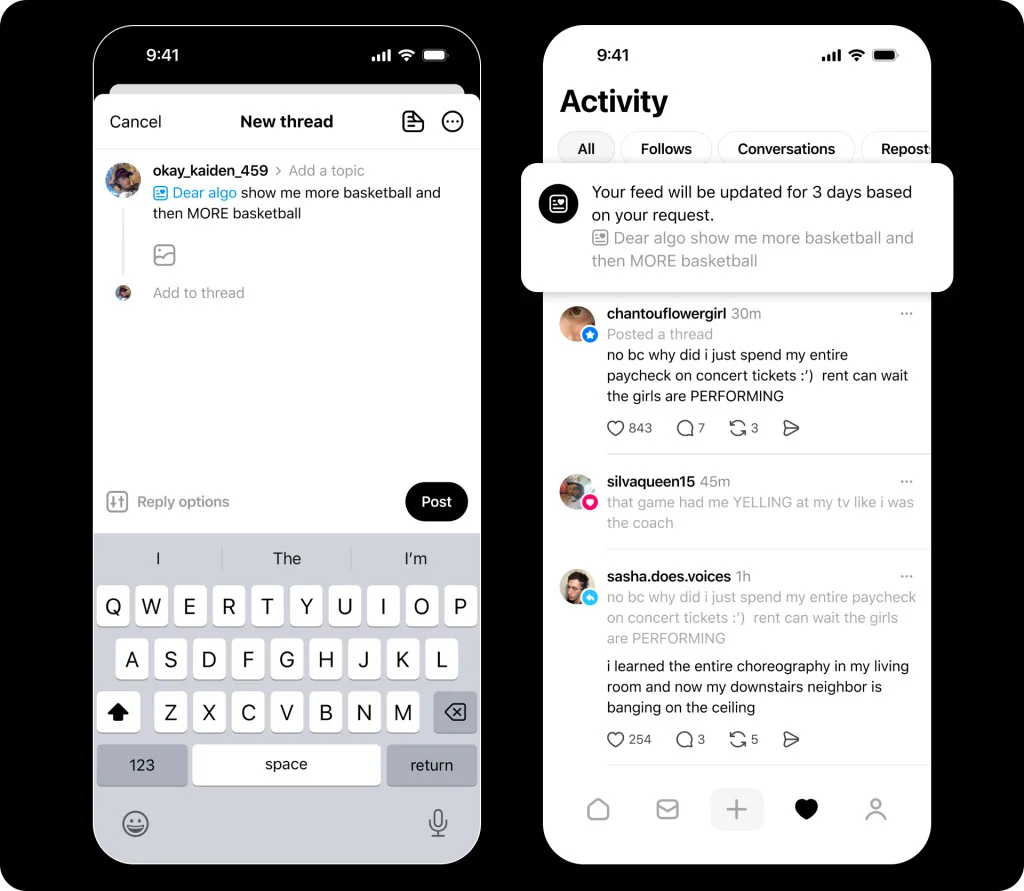
In February 2026, Meta introduced "Dear Algo," a feature that allows users to explicitly dictate what they want to see by posting: “Dear Algo, show me more about [topic].”
While marketed as a user tool, for brands, this is a goldmine. It functions as a crowdsourced content brief. By monitoring the "Dear Algo" requests within your industry, you can create content that answers those specific demands, effectively feeding the algorithm exactly what it is looking for.
Why Brand Accounts Structurally Underperform
Many agencies struggle with the "brand gap." Data shows that while 75% of Threads users follow at least one brand, those brands often see lower engagement than individual creators.
The issue is not platform hostility; it is a mismatch of tone. The algorithm favors the "human voice"—opinionated, conversational, and raw—over the "brand voice," which is often perceived as sterile or promotional. To win, brands must pivot from "information delivery" to "conversation starters." Instead of posting five tips, post a controversial opinion that invites debate.
The Agency Workflow Problem: A Call for Agility
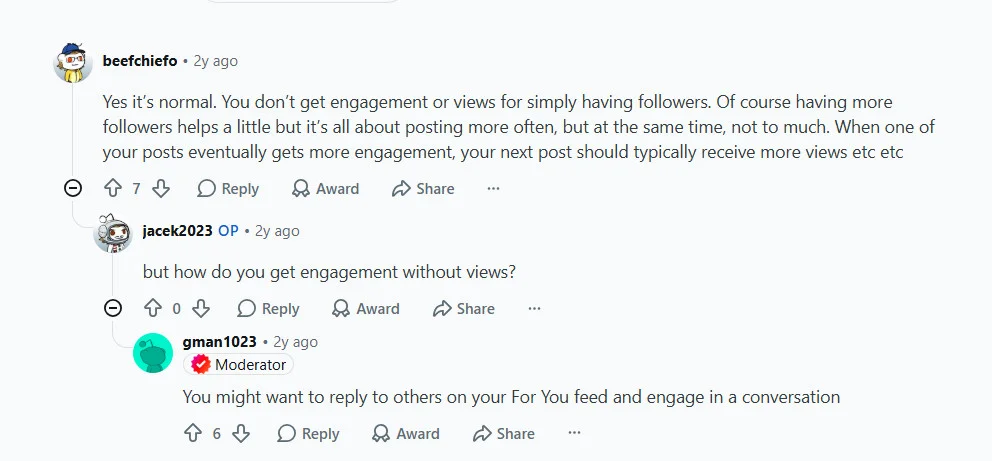
The greatest barrier for agencies is the 60-minute engagement window. Most agencies follow a "set it and forget it" scheduling model. By the time a social media manager logs in to reply to comments, the algorithm has already decided that the post failed to gain momentum.
The Fix:
- Real-Time Presence: Schedule your posts for times when your team is available to jump into the comments immediately.
- Responsive Threads: If a post gains traction, do not just like the replies—reply back. Deepening the thread is the single best way to ensure the post continues to grow.
- White-Label Reporting: Use data-driven tools to show clients that engagement is not just about likes, but about the specific signals (reply depth, profile taps) that are driving long-term brand authority.
Implications for Future Strategy
The era of "broadcast social media" is coming to a close. Threads has proven that the algorithm does not pick favorites—it picks conversations.
If you want to survive on Threads, you must stop treating it as a megaphone and start treating it as a dinner party. The brands that win will be those that have the courage to take a stand, the agility to engage in real-time, and the discipline to maintain a consistent, human-centric voice.
The gap between those who adapt to this new conversational reality and those who continue to rely on legacy cross-platform tactics will continue to widen. The algorithm has already made its choice. The question is: are you ready to change your strategy to meet it?

 Nana Wu
 Neng Nana