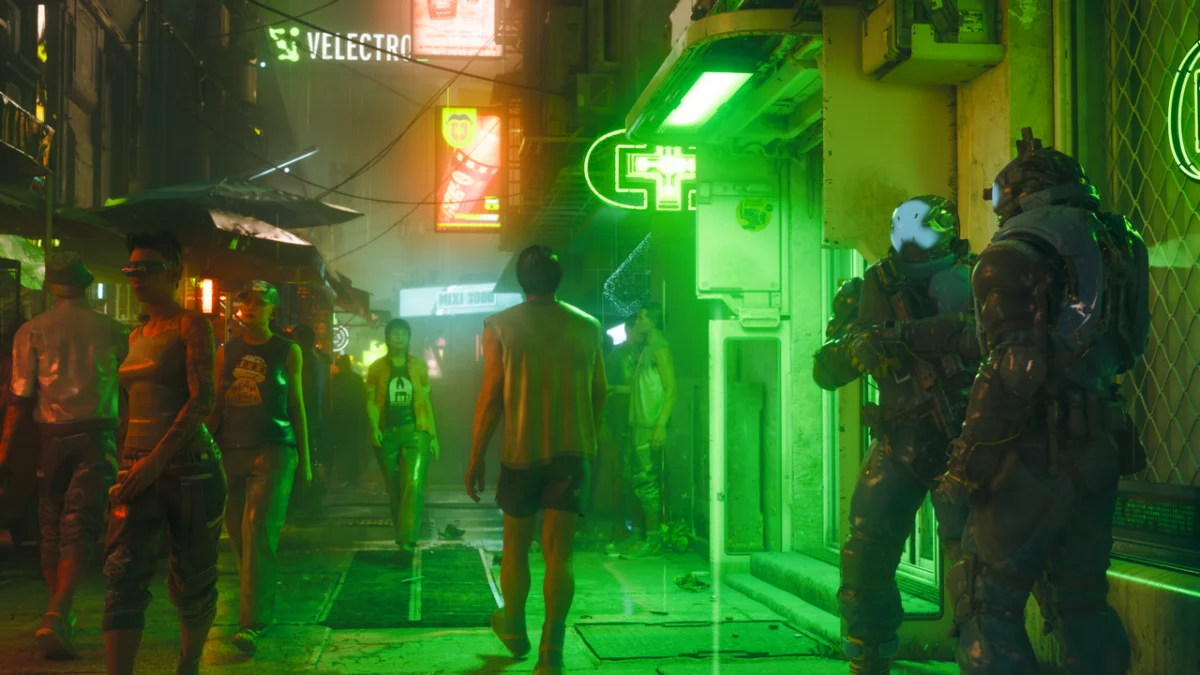
In the ever-evolving landscape of AAA game development, the industry has spent the better part of a decade chasing the horizon. From the sprawling, often sparse deserts of Assassin’s Creed to the vast, procedurally generated galaxies of No Man’s Sky, the mantra of the late 2010s was simple: bigger is better. However, a new philosophy is emerging from the studios pushing the boundaries of Unreal Engine 5. Leading this charge is Neon Giant, the development powerhouse that first turned heads with the claustrophobic, neon-drenched mastery of The Ascent. Their upcoming project, No Law, is not just another sci-fi shooter—it is a manifesto against the "empty open world," promising a shift toward extreme environmental density.
The Genesis of Port Desire: A New Vision for Cyber-Noir
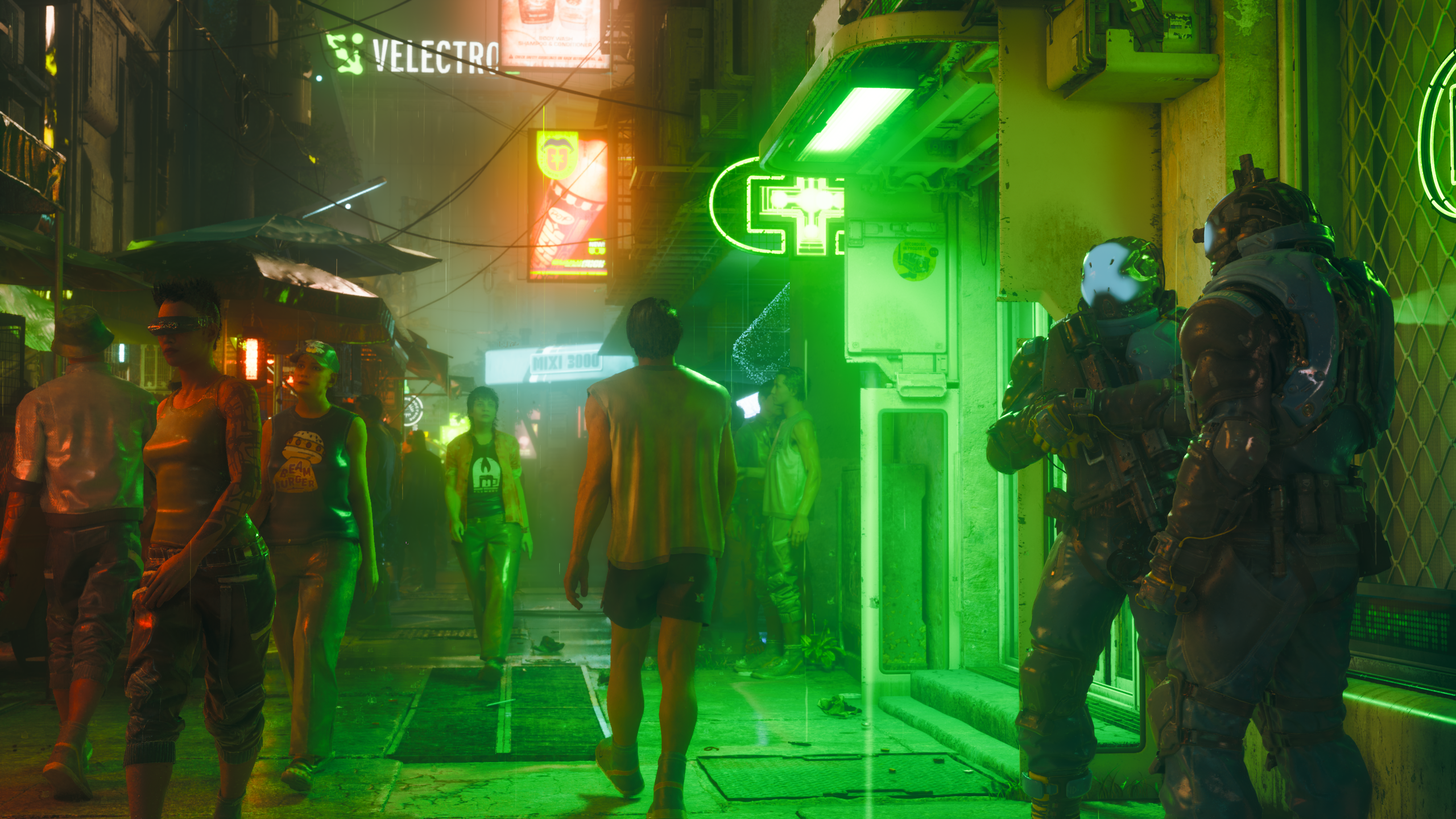
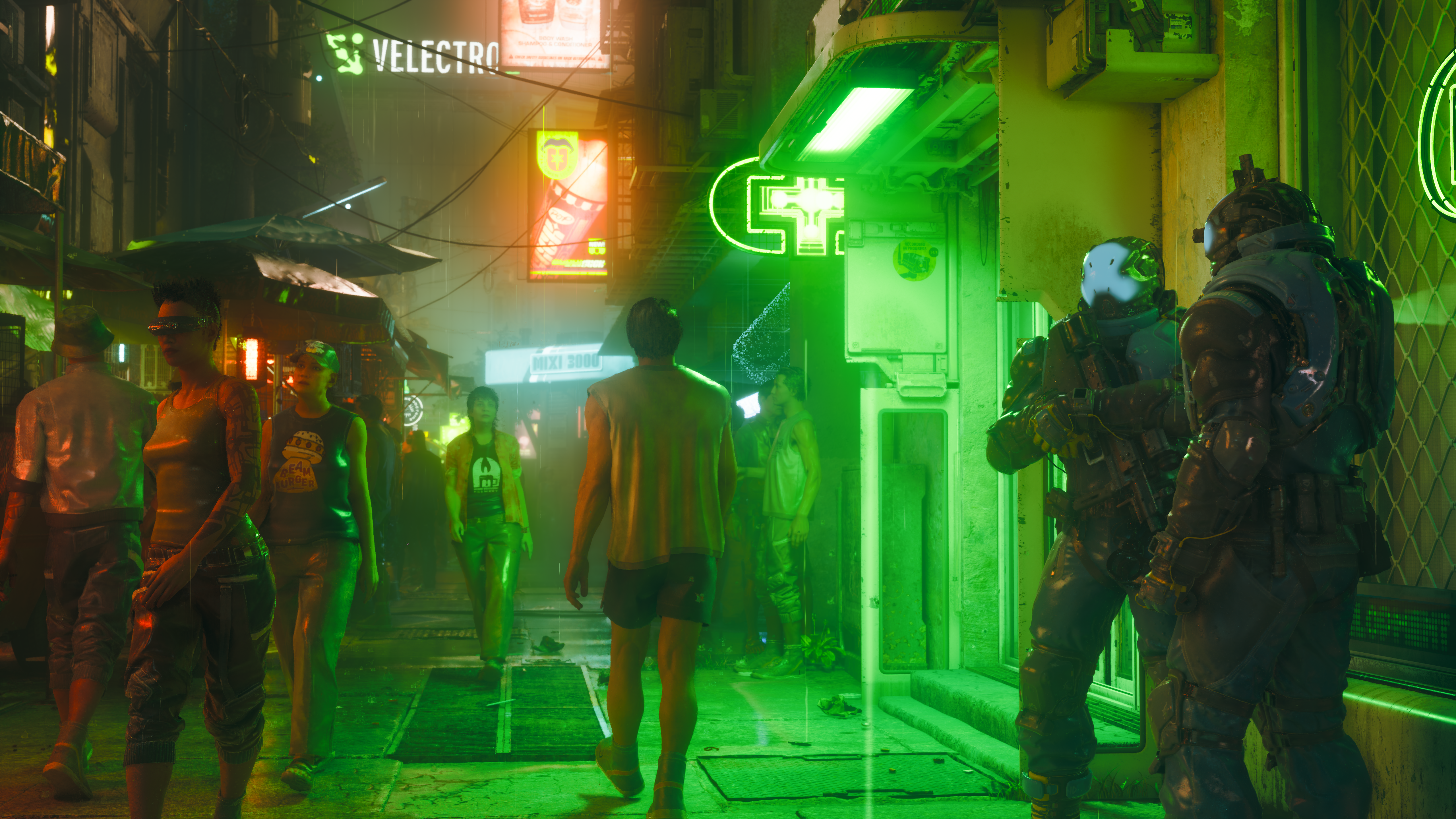
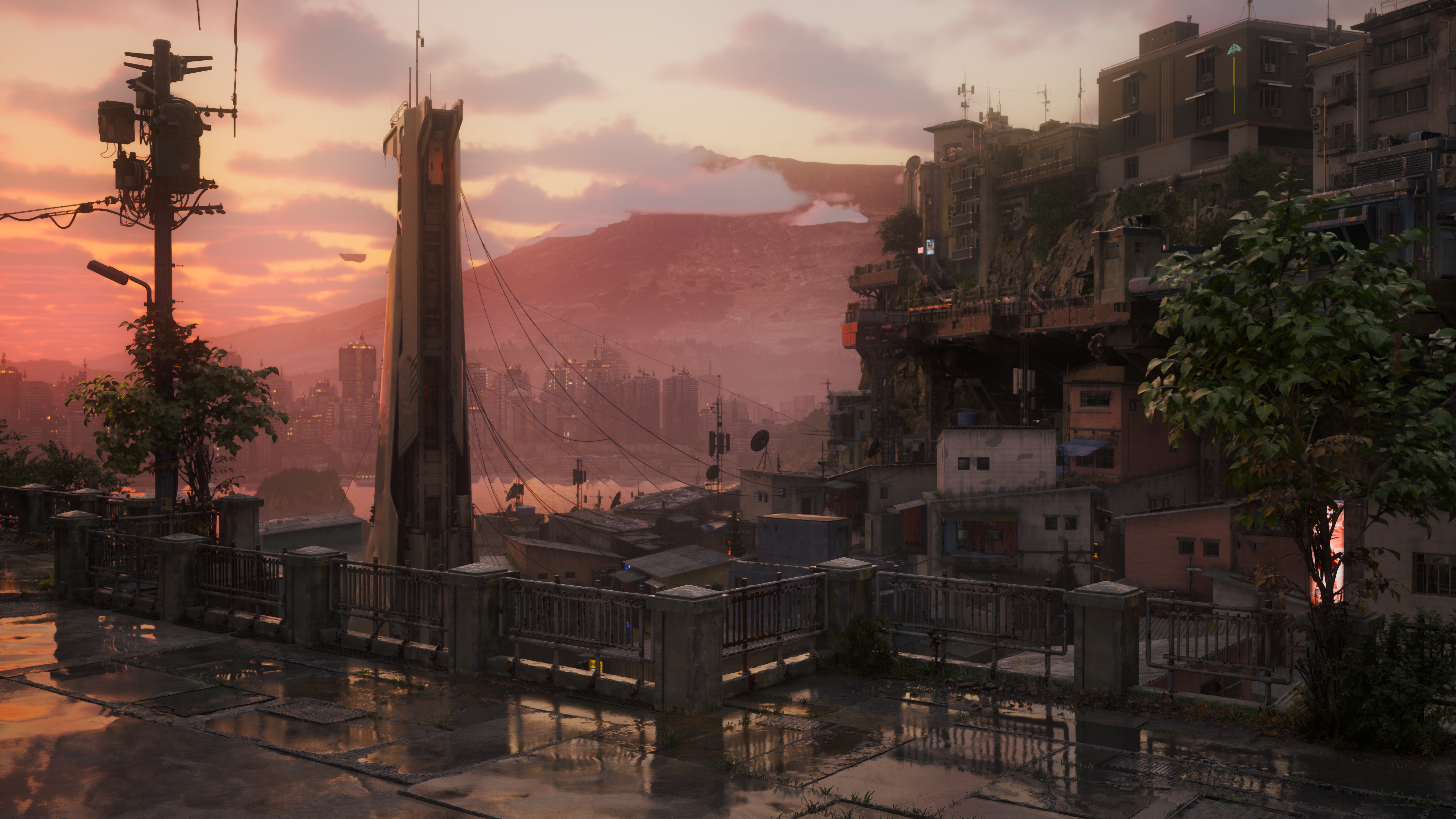
Following its high-profile reveal at the State of Unreal 2026, No Law has captivated the gaming community, primarily for its setting: Port Desire. Perched precariously on jagged sea cliffs, this industrial "cybergrunge" metropolis is a masterclass in environmental storytelling. Unlike traditional cyberpunk settings that rely on the standard aesthetic shorthand of rain-slicked alleys and predictable neon signs, Port Desire offers a jarring, evocative contrast. Concrete monoliths and rusting industrial machinery sit in direct dialogue with lush, encroaching greenery—a visual marriage of decay and rebirth that feels uniquely lived-in.
The design philosophy behind Port Desire is rooted in the concept of "Density Over Scale." Neon Giant has clearly internalized the lessons learned from their breakout title, The Ascent, where the player’s joy was found in the sheer granularity of the environment. In No Law, this approach is being scaled up to a first-person perspective, moving away from the top-down isometric view to a fully immersive, vertical urban experience.
Chronology: From Concept to the 2027 Horizon
To understand the significance of No Law, one must look at the trajectory of Neon Giant as a studio.
- 2021: The release of The Ascent set a new benchmark for isometric visual fidelity, proving that a small, focused map could contain more atmosphere than a 50-square-mile open plain.
- 2024: Development on No Law accelerates, with the team transitioning fully to the latest iterations of Unreal Engine 5.
- April 2026: The official announcement at the State of Unreal conference confirms the shift to a first-person, large-scale, open-world format.
- Late 2026: A new gameplay trailer drops, showcasing the intricate verticality of Port Desire, sparking debates about the next generation of level design.
- 2027 (Projected): Global release scheduled for PC, PlayStation 5, and Xbox Series X/S.
This timeline reflects a deliberate maturation. The studio isn’t just building a game; they are refining a proprietary "visual language" that prioritizes player curiosity over map size.
The Mechanics of Density: Why More Doesn’t Mean Better
The fundamental flaw in many modern open-world titles is the "travel time" problem—vast distances filled with filler content. No Law attempts to solve this by treating every square meter of Port Desire as a narrative asset. The city is built in layers, with rooftops, subterranean alleyways, and industrial platforms stacking upon one another.
From an architectural standpoint, the team at Neon Giant is utilizing Unreal Engine 5’s Nanite and Lumen technologies to create a space that is "designed to be looked at from different angles." By ensuring that the player is constantly surrounded by detail, the studio avoids the "backdrop effect," where a city feels like a static stage set. In No Law, the environment acts as a character in its own right, responding to the player’s presence with lights, shifting shadows, and persistent environmental changes.
Narrative Stakes: The Return of Grey Harker
While the environment is the star, the narrative serves as the anchor. Players step into the shoes of Grey Harker, a retired veteran whose attempt at a peaceful life—tending to plants in a quiet corner of the port—is shattered by an unwanted visitor.
This premise serves as a narrative vehicle for exploration and combat. The game’s design emphasizes "emergent gameplay," allowing players to leverage Harker’s tactical background to tackle objectives in multiple ways. Whether you choose to lean into the shadows for a stealth-focused approach or utilize high-tech sci-fi weaponry for a more kinetic, aggressive playstyle, the city of Port Desire adapts to your choices. This sense of agency is not just mechanical; it’s structural. The developers have promised that player decisions will ripple outward, leading to branching paths and varied conclusions, ensuring that the density of the world is matched by the depth of the story.
Industry Implications: A Shift in AAA Priorities
The announcement of No Law signals a potential turning point for the industry at large. For years, the promise of Unreal Engine 5 was that it would allow for larger maps. While that remains true, the industry is beginning to realize that "large" is not the same as "interesting."
If No Law succeeds, it will likely influence a shift in design budgets. Rather than spending millions of dollars on generating procedural landscapes, studios may follow Neon Giant’s lead, opting for "curated density." This approach requires a different kind of labor—more environmental artists, more architectural research, and a more deliberate approach to level pacing.
Furthermore, the competition in the cyberpunk genre is fiercer than ever. Cyberpunk 2077 set a high bar for visual ambition, but No Law is positioning itself as the "next" logical step. By focusing on the texture of the city rather than the size of the map, Neon Giant is challenging the industry to stop looking at the horizon and start looking at the details.
Expert Analysis: The Future of Environment Design
Industry experts have noted that No Law represents a return to "meaningful space." When designing epic environments, the primary challenge is not just technical prowess but logical consistency. A city must feel like it was built for a purpose—trade, living, industry—before it was built for a player to shoot in.
Neon Giant’s focus on verticality is particularly notable. In many games, vertical movement is a gimmick. In No Law, it is a necessity for navigation. The city’s complex layout forces the player to constantly reorient themselves, creating a sense of scale that is achieved through depth rather than width. As the game moves toward its 2027 release date, the question remains: will players embrace a tighter, more dense experience, or will they miss the sprawling emptiness of traditional open-world titles?
Conclusion: The City is the Star
As we look toward the 2027 release, the anticipation for No Law continues to build. The game stands as a testament to the idea that video games are, first and foremost, digital spaces that we inhabit. If the trailer is any indication, Port Desire will be one of the most memorable locations in recent gaming history—a place where the gunfire is merely an excuse to spend more time wandering its rain-slicked, moss-covered, and impossibly complex streets.
Neon Giant has taken the lessons of their past and applied them to a grander, more ambitious future. They have recognized that in a world where we can build anything, the most important thing to build is a place that feels real. Whether No Law will truly surpass its contemporaries remains to be seen, but one thing is certain: it is a bold, beautiful, and necessary pivot for the medium.