Basiran
In a move that underscores the longevity of the AMD AM5 ecosystem, leading motherboard manufacturers Asus and MSI have begun rolling out significant BIOS updates that bring the cutting-edge "AMD EXPO Ultra Low Latency" (ULL) feature to older 600-series motherboards. Previously restricted to newer chipsets and the latest high-end board releases, this firmware expansion marks a pivotal moment for existing Ryzen users, allowing them to extract additional performance from their memory kits without the necessity of a platform migration.
The Core Developments: BIOS Updates and AGESA 1.3.0.1b
The backbone of this performance injection is the latest AGESA ComboAM5 1.3.0.1b firmware update. AGESA (AMD Generic Encapsulation System Architecture) serves as the fundamental communication layer between the processor, the memory, and the motherboard chipset. By updating to this latest iteration, manufacturers are enabling a suite of granular memory timing controls that were previously inaccessible on earlier X670E and B650 platforms.
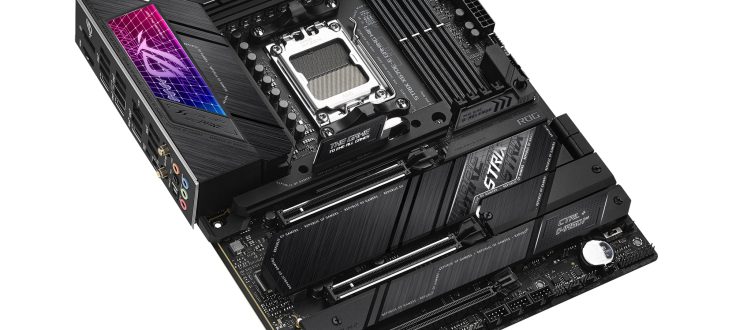
Asus has taken the lead in the deployment, releasing BIOS version 3803 for a wide array of its ROG Crosshair, ROG Strix, and ProArt series boards. Early adopters can already access these files for flagship models such as the ROG Crosshair X670E Hero, Gene, and Extreme. Furthermore, support has extended to the broader Strix ecosystem, including the X670E-A, E, and F variants, alongside the professional-grade ProArt X670E Creator WiFi. While some models, such as the TUF Gaming X670E-Plus and the compact ROG Strix X670E-I Gaming WiFi, currently display placeholder "38XX" nomenclature on support pages, their imminent arrival suggests a comprehensive rollout strategy is underway.
Simultaneously, MSI has begun integrating similar optimizations into their BIOS distribution channels. The manufacturer has explicitly tagged these updates with the label: "Optimized with AMD EXPO Technology: Featuring Ultra Low Latency," signaling to users that the feature is officially supported and vetted for their specific hardware configurations.
Technical Deep-Dive: What is EXPO Ultra Low Latency?
At its core, AMD EXPO (Extended Profiles for Overclocking) technology is designed to simplify the process of running DDR5 memory at its rated speeds, beyond the standard JEDEC specifications. While standard EXPO profiles focus on frequency and primary timings (such as CL latency), the new "Ultra Low Latency" (ULL) tier introduces a sophisticated recalibration of secondary and tertiary sub-timings.
Specifically, the BIOS updates introduce three critical new DRAM timing controls into the BIOS "Ai Tweaker" and "DRAM Timing Control" menus:
- TccdL
- TccdL_WR
- TccdL_WR2
These specific timings govern the command delay between memory transactions. By tightening these parameters, the memory controller and the RAM modules can communicate with significantly reduced latency overhead. In real-world computing, particularly in gaming and memory-sensitive applications, this results in a more responsive system. By reducing the time the CPU waits for data to be fetched from the DIMMs, the entire pipeline experiences fewer stalls, allowing for smoother frame delivery and increased minimum frame rates.
Chronology of the AM5 Memory Evolution
The journey to bring EXPO ULL to the masses has been a gradual process of refinement since the inception of the AM5 platform.
- Initial Launch (Q3 2022): The AM5 platform debuts alongside the Ryzen 7000 series processors. Memory support is standardized through initial EXPO profiles, offering plug-and-play overclocking for DDR5 memory.
- Refinement Phase (2023–2024): AMD releases iterative AGESA updates to improve memory compatibility, stability, and compatibility with higher-frequency DDR5 kits (e.g., reaching 6000MT/s and beyond).
- Introduction of ULL (Mid-2024): AMD introduces the "Ultra Low Latency" feature as a value-add for the latest generation of chipsets and processors. Initially, it is marketed as a premium feature for the latest board revisions.
- The Democratization Phase (Current): Recognizing the modular and long-term support nature of the AM5 socket, AMD and its partners initiate the back-porting process. By mid-2025 (and continuing into the present), firmware updates begin hitting the 600-series boards, effectively bridging the performance gap between "legacy" AM5 hardware and current-gen motherboards.
Performance Gains: Beyond the Marketing Claims
AMD’s internal testing provides a compelling justification for why users should prioritize these BIOS updates. According to the company’s whitepapers, the EXPO ULL feature is not merely a marginal improvement; it offers measurable gains in gaming scenarios.
When tested on a system powered by the Ryzen 7 9700X, AMD reported an average FPS increase of up to 4% compared to standard EXPO configurations. Even more striking is the comparison against the standard JEDEC DDR5 specifications—which often run at lower frequencies and looser timings by default—where the performance jump is cited at up to 13%.
While these figures represent peak laboratory results, they highlight the importance of sub-timing optimization. In competitive gaming titles like Valorant, Counter-Strike 2, or Escape from Tarkov, where 1% low frame rates are the gold standard for perceived fluidity, a reduction in latency can be the difference between a stutter-free experience and a micro-hitch during an intense firefight.
Implications for the PC Building Community
The decision to bring these features to older motherboards has significant implications for the DIY PC market.
1. Extending the Lifecycle of the Motherboard
The AM5 platform is committed to longevity, and this update serves as a tangible demonstration of that commitment. By allowing users to keep their existing X670E or B650 motherboard while benefiting from new memory performance standards, manufacturers are reducing the "e-waste" factor often associated with rapid platform turnover. Users do not feel pressured to purchase an 800-series board simply to access memory-latency tuning.
2. The Beta Caveat
It is crucial to note that these releases, particularly the Asus BIOS version 3803, are currently classified as beta or "early release" builds. Beta BIOS files can occasionally introduce stability issues, such as increased boot times (Memory Context Restore issues), or erratic behavior with XMP/EXPO profiles that were previously rock-solid. Users who rely on their machines for professional mission-critical work should exercise caution and wait for a "final" or "stable" release from their manufacturer before flashing their BIOS.
3. A Call for User Diligence
While the updates are exciting, they place a burden of responsibility on the user. Updating the BIOS is an operation that carries a non-zero risk of failure. Users are encouraged to:
- Ensure they have a stable power supply during the update process.
- Back up their current BIOS profile and settings.
- Check their specific motherboard revision (e.g., ensuring they are downloading the file for the Wi-Fi vs. non-Wi-Fi version of a board).
The Path Forward: What’s Next?
As we look toward the future of the AM5 platform, the integration of features like EXPO ULL suggests that AMD and its motherboard partners are moving toward a "software-defined" performance model. Rather than forcing hardware upgrades, the industry is increasingly leveraging firmware to unlock hidden performance potential in existing silicon.
For the end user, this is a "win-win." The hardware purchased two years ago remains competitive in 2025. For the manufacturers, it fosters brand loyalty; a user who sees consistent updates and performance improvements for their current motherboard is significantly more likely to choose the same brand for their next upgrade.
In conclusion, the rollout of AMD EXPO Ultra Low Latency to 600-series motherboards is more than just a minor firmware tweak. It is a strategic move that reinforces the value of the AM5 ecosystem, provides a tangible performance boost to gamers, and honors the promise of long-term support for the PC enthusiast community. Whether you are a competitive gamer looking for every frame or a tech enthusiast who enjoys fine-tuning their system, checking for the latest AGESA 1.3.0.1b update on your motherboard support page should be at the top of your to-do list this week.

 Nana Wu
 Ammar Sabilarrohman