

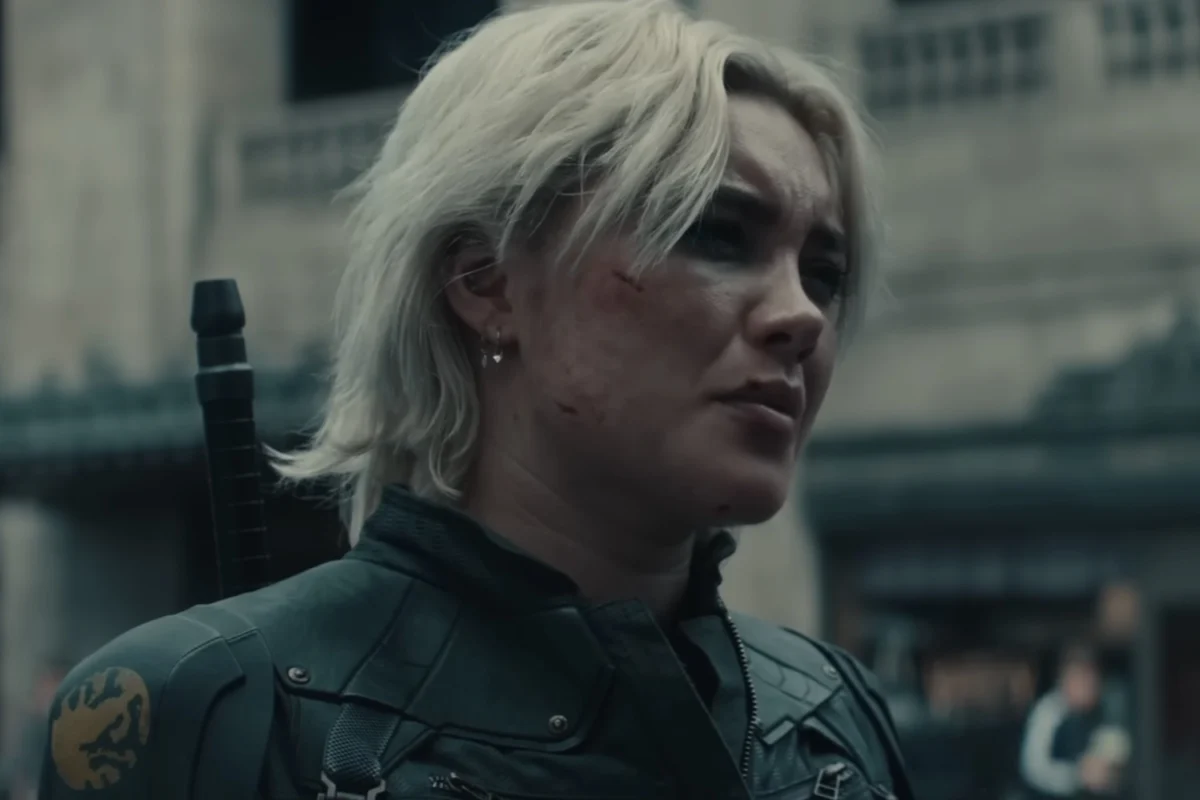
In an industry defined by the relentless pursuit of the next major franchise, few stars possess the gravitas and the schedule of Florence Pugh. Currently balancing the high-octane demands of the Marvel Cinematic Universe—where she continues to anchor the ensemble of Thunderbolts—Pugh has officially committed to a project that leans heavily into the philosophical and the intimate. She is set to headline the screen adaptation of Matt Haig’s global literary phenomenon, The Midnight Library.
The project, which has been in a state of development since it was first optioned in 2020, represents a significant leap forward for Studiocanal. With the attachment of director Garth Davis—a filmmaker known for his ability to weave emotional complexity into expansive narratives—the adaptation is positioning itself as a centerpiece for the coming years of prestige cinema.
Main Facts: A New Chapter for Nora Seed
The Midnight Library follows the journey of Nora Seed, a woman overwhelmed by the crushing weight of regret and the perceived failures of her life. Upon finding herself in a liminal space between life and death—a library containing infinite books, each representing an alternate reality she could have lived had she made different choices—Nora must navigate these paths to determine what truly constitutes a life worth living.
The screenplay is being penned by the collaborative duo of Laura Wade, known for her work on the sharp-witted Rivals, and Nick Payne, the playwright and screenwriter behind the emotionally resonant We Live in Time. Together, they are tasked with translating Haig’s metaphysical exploration into a cohesive, cinematic narrative that retains the “enchanting” quality that propelled the novel to the top of the New York Times bestseller list.
Production is slated to begin next year, with the industry closely watching how Davis will visualize the library itself—a space that, according to the source material, exists “beyond the edge of the universe.”
Chronology: From Page to Screen
The path to the big screen for The Midnight Library has been a multi-year odyssey of strategic development:
- August 2020: Matt Haig publishes The Midnight Library via Viking. It immediately gains traction as a Good Morning America book club pick and becomes a critical and commercial darling.
- December 2020: Following a competitive bidding war, the film rights are optioned, signaling the start of a long development cycle.
- 2021–2023: The project undergoes several rounds of scripting. During this time, the novel cements its status in pop culture, with high-profile endorsements from figures like Millie Bobby Brown and Jameela Jamil, who champion the book’s exploration of mental health and existential choice.
- Early 2024: The search for a director concludes with the hiring of Garth Davis, whose previous work—including Lion and Mary Magdalene—showcases a penchant for character-driven drama.
- Late 2024: The announcement of Florence Pugh as the lead character, Nora Seed, confirms the project’s transition from “in development” to “active production.”
- 2025 (Projected): Principal photography is scheduled to commence, bringing the project to life.
Supporting Data: Why This Story Resonates
The cultural footprint of The Midnight Library is vast. The novel’s success is not merely anecdotal; it is backed by significant readership statistics and critical acclaim. It spent months atop various bestseller lists and became a touchstone for readers interested in the intersection of mental health and speculative fiction.
Critics have frequently compared Haig’s ability to distill complex, heavy subjects into accessible prose to that of Mitch Albom. The Independent noted that Haig’s work offers “wisdom in the same deceptively simple way” as modern classics. This accessibility is likely why the project has attracted high-tier talent like Pugh; it is a story that requires a performer capable of portraying profound vulnerability while simultaneously acting as an anchor for a high-concept, science-fiction premise.
Furthermore, the character of Nora Seed has become a subject of intense reader analysis. While some fans are drawn to the emotional arcs, others have found amusement in the linguistic details of the novel—such as the observation that “Nora Seed” is an anagram of “Reasoned.” This level of engagement suggests a built-in, highly dedicated audience that is eager to see how the visual language of the film will translate the written word.
Official Responses: A Creative Alignment
The announcement of the adaptation has been met with enthusiasm from the original author, Matt Haig. In a rare, direct statement following the casting news, Haig expressed his confidence in the creative team:
“I am so happy that Nora’s story is in such great hands, and that her myriad possibilities will be vividly reawakened by the absolute perfect team. And I can’t wait for people to see my book reimagined for the big screen.”
For a director like Garth Davis, the challenge lies in balancing the ethereal, "infinite" nature of the library with the grounded, gritty reality of Nora’s life in the real world. His resume, though varied—ranging from the acclaimed Lion to the more divisive Foe—suggests a director who is unafraid of bold, risky choices. The collaboration with screenwriters Wade and Payne, both of whom have extensive experience in nuanced, human-centric storytelling, suggests that the production is prioritizing the psychological integrity of the characters above the spectacle of the library.
Implications: The “Pugh Effect” in Modern Cinema
The decision to cast Florence Pugh as Nora Seed is perhaps the most significant indicator of the film’s potential for success. Pugh has become a bellwether for quality; her filmography is a tapestry of high-concept independent cinema (Midsommar, Lady Macbeth) and blockbuster tentpoles (Dune: Part Two, Black Widow).
A Shift Toward Philosophical Blockbusters
The inclusion of The Midnight Library in Pugh’s upcoming slate—alongside the TV adaptation of East of Eden and her continued presence in the Dune franchise—suggests a deliberate move toward stories that grapple with the human condition. While studios have historically kept “prestige” dramas and “blockbuster” sci-fi in separate silos, the current market is shifting. Audiences are increasingly showing a preference for films that offer a hybrid of spectacle and introspection.
The Challenge of Adaptation
The primary implication for the film industry is the heightened scrutiny on the adaptation process. The Midnight Library is a book about internal states, which are notoriously difficult to capture on screen without resorting to heavy exposition. The choice of director and writer indicates that the production team is aware of these pitfalls. If they succeed, they could provide a new blueprint for adapting philosophical fiction. If they falter, it serves as a reminder of the inherent difficulty of translating literature that relies on the "infinite" to a medium constrained by a two-hour runtime.
Economic and Cultural Impact
For Studiocanal, this project is a high-stakes gamble on the longevity of the intellectual property. By aligning the project with a star of Pugh’s caliber, they are ensuring that the film will have immediate global recognition upon release. The film is not just an adaptation of a book; it is a brand expansion. Given the massive success of the book’s exploration of mental health, the film is positioned to be a significant cultural touchstone upon its release, potentially triggering renewed discourse on how we view our own “alternate lives.”
Conclusion
As the project moves into the pre-production phase, the film industry will be watching closely to see how the team navigates the complexities of Matt Haig’s work. The combination of Florence Pugh’s acting prowess, Garth Davis’s directorial vision, and a screenplay that bridges the gap between literary fiction and cinematic storytelling makes The Midnight Library one of the most anticipated projects currently in the pipeline.
While the release date remains a distant point on the horizon, the foundation has been laid. For now, audiences are left to contemplate their own “Midnight Libraries”—the infinite, unchosen paths that exist just beyond the edge of their own reality—while they wait for Nora Seed to finally make her way to the screen.










No comments yet. Be the first to join the conversation!