

By Crystal Bell
April 6, 2026
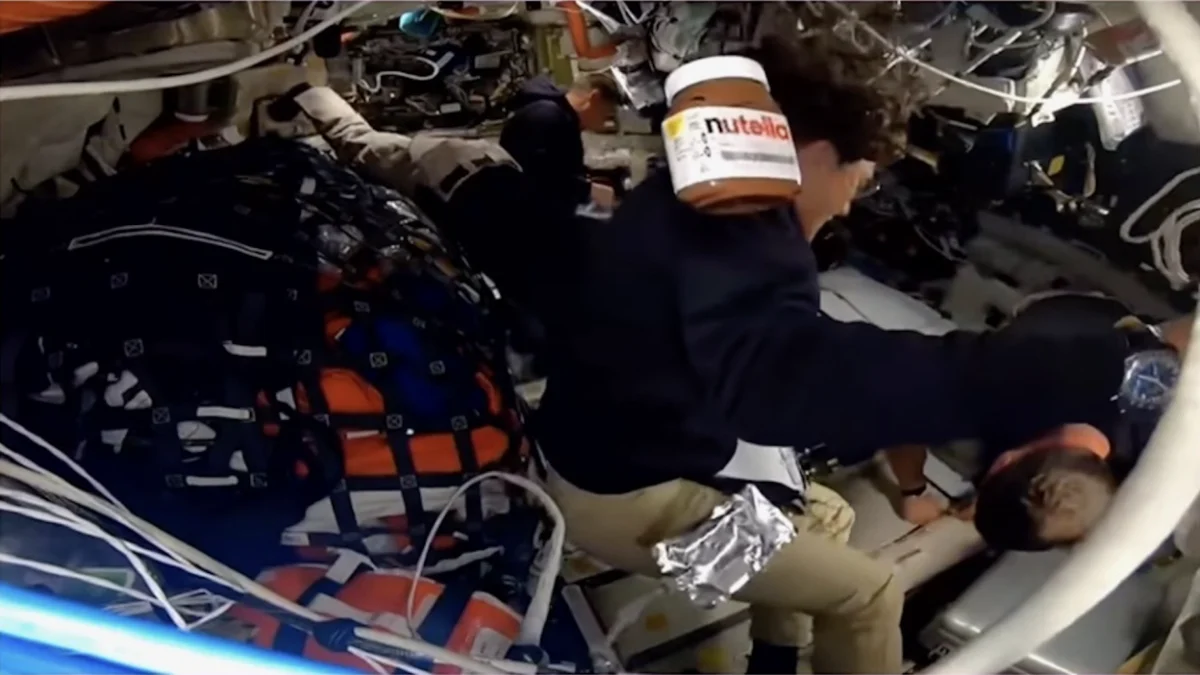
In the history of space exploration, the names of pioneers are etched in stone: Yuri Gagarin, Neil Armstrong, Sally Ride. But on April 6, 2026, a new, unlikely protagonist captured the world’s imagination. As NASA’s Artemis II mission pushed the boundaries of human endurance, venturing farther from Earth than any crew in history, the most viral moment of the journey didn’t involve a complex scientific maneuver or a groundbreaking discovery. Instead, it was a simple, 13-ounce jar of hazelnut spread drifting lazily through the zero-gravity environment of the Orion spacecraft.
The sight of the iconic Nutella jar floating against the backdrop of the lunar orbit provided a moment of levity and relatability in an otherwise high-stakes, multi-billion-dollar mission. As the internet erupted with memes and wild speculation, the incident sparked a broader conversation about the humanization of space travel and the intersection of corporate branding and cosmic exploration.
The Chronology of a Cosmic Snack
The Artemis II mission, which marks the first crewed flight to the moon since the Apollo era, was already a high-intensity affair. Commander Reid Wiseman, Pilot Victor Glover, and Mission Specialists Christina Koch and Jeremy Hansen were tasked with a complex lunar flyby.
The moment occurred during a routine live feed broadcast by NASA. As the crew prepared for the maneuvers that would break the distance record previously held by the Apollo 13 mission in 1970, the camera panned across the interior of the Orion spacecraft. There, hovering in mid-air—defying the constraints of Earthly gravity—was the unmistakable white cap and red-lettered label of a Nutella jar.
Within seconds, the image had been clipped and disseminated across X (formerly Twitter), TikTok, and Instagram. The internet, as it is prone to do, immediately latched onto the absurdity of the situation. By the time the crew successfully eclipsed the Apollo 13 record, the "Space Nutella" had arguably become more famous than the mission’s official scientific objectives.
The Viral Aftermath and Digital Discourse
The viral nature of the incident was instantaneous. Social media users quickly turned the floating jar into a symbol of terrestrial comfort in the vast, cold vacuum of space. Jokes proliferated, with many users noting that the hazelnut spread had technically traveled farther from Earth than 99.99% of the human population.

"One small step for man, one giant leap for hazelnut spread," one user quipped, echoing the legendary words of Neil Armstrong. The humor served as a release valve for the millions of people watching the livestream, grounding the intimidating technological marvel of the Artemis mission in a familiar, domestic reality.
However, the viral moment also triggered a cynical reaction from some observers. In an era where product placement is ubiquitous—appearing in everything from prestige television to influencer content—many immediately speculated that this was a masterstroke of marketing by Ferrero, the parent company of Nutella. Comparisons were drawn to other brands visible during the broadcast, including the ubiquitous Apple iPhone 17 Pro Max, which has been utilized by the crew for documentation throughout the flight.
Official Responses and the Reality of Astronaut Nutrition
In response to the growing speculation, NASA felt compelled to address the "Nutella-gate" phenomenon directly. In a formal statement provided to Futurism, NASA press secretary Bethany Stevens clarified the agency’s stance on brand associations.
"NASA does not select crew meals or food in association with brand partnerships," Stevens stated. "The appearance of the item was not a product placement, nor was it a result of a commercial deal with the manufacturer."
This clarification highlights the complex reality of managing astronaut nutrition. The process of curating a menu for a mission of this duration is a grueling logistical challenge. Nutritionists and food scientists at NASA must account for caloric intake, nutrient density, preservation, and, perhaps most importantly, psychological well-being.
The Artemis II menu is, by all accounts, extensive. It features a curated selection of meals designed to provide comfort in an environment that is anything but. Items on the manifest include:
- Barbecue beef brisket
- Cauliflower and broccoli au gratin
- Macaroni and cheese
- Tortillas (a staple of space flight due to their lack of crumbs)
- Hot sauce (to combat the muted sense of taste astronauts experience in microgravity)
- Coffee and, evidently, various spreads to supplement caloric intake.
The Nutella, according to insiders, was likely a requested "comfort item." Astronauts are permitted to include a limited number of personal items and preferred food choices to help mitigate the stresses of long-duration space flight. In the isolation of the Orion capsule, a familiar taste from home is not merely a snack; it is a critical tool for mental health.

The Implications: Why We Care
The fascination with the Nutella jar is indicative of a shift in how the public consumes space travel. During the 1960s, space missions were viewed through a lens of cold, sterile patriotism and scientific competition. Today, thanks to constant connectivity and social media, we expect our astronauts to be accessible. We want to see them eat, sleep, and even struggle with the mundane.
The "Space Nutella" incident also underscores the power of modern optics. While NASA remains a government agency with strict policies against commercial advertising, the mere presence of recognizable consumer goods creates a "parasocial" bridge between the public and the astronauts. When we see a familiar brand in space, the distance between the Moon and our living rooms feels slightly smaller.
Furthermore, the incident highlights the ongoing debate regarding the commercialization of space. As private companies like SpaceX, Blue Origin, and Axiom Space become more deeply involved in orbital and deep-space missions, the lines between scientific exploration and corporate promotion will only become more blurred. While NASA has successfully distanced itself from this specific instance, the precedent is clear: every item brought aboard a spacecraft is now a potential cultural icon.
Conclusion: A Lesson in Human Nature
As the Artemis II mission continues to push the boundaries of what is possible, the image of the floating Nutella jar serves as a poignant reminder of our humanity. Behind the cutting-edge technology, the complex orbital mechanics, and the daring records being broken, there are four individuals who—much like the rest of us—crave a bit of sweetness in their day.
The jar of Nutella may have been an accidental star, but its journey to the lunar vicinity represents a broader truth about space exploration: it is, at its core, a human endeavor. We do not just go to space to gather rocks or map the stars; we go to bring our habits, our comforts, and our culture with us.
Whether it was a calculated piece of product placement or simply a well-loved snack that escaped its container, the "Nutella in Space" incident has secured its place in the annals of internet culture. And for a brief, gravity-defying moment, the entire world was united not by the complexities of rocket science, but by the universal, simple joy of a favorite treat. As the crew continues their journey back to Earth, they do so having achieved a historic feat—and having perhaps enjoyed one of the most expensive, exclusive, and high-altitude snacks in human history.












No comments yet. Be the first to join the conversation!