

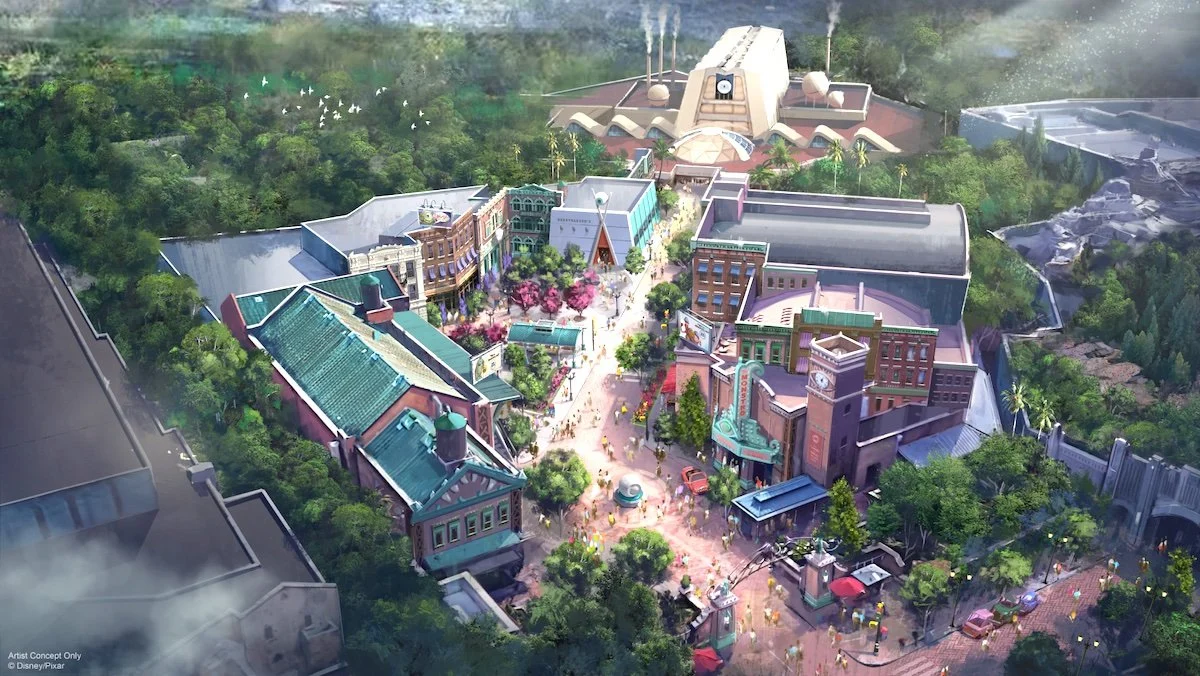
Walt Disney World’s Hollywood Studios is currently undergoing its most significant transformation since the dawn of Star Wars: Galaxy’s Edge. While guests have long been able to shrink down to the size of a toy in Andy’s backyard or traverse the eerie dimensions of the Twilight Zone, a new, massive frontier is rising from the foundations of the park’s former Muppets Courtyard. Disney Imagineers, in a high-stakes collaboration with Pixar Animation Studios, are currently constructing "Monstropolis"—an immersive, sprawling land dedicated to the beloved world of Monsters, Inc.
For the first time, visitors will not just watch the story of Mike Wazowski and James P. “Sulley” Sullivan; they will inhabit it. This expansion represents a shift toward highly interactive storytelling, designed to blur the lines between theme park architecture and narrative world-building.
Main Facts: A New World for Humans and Monsters
The core premise of the upcoming land is rooted in the pivotal realization from the 2001 film: that human laughter is ten times more powerful than human screams. This discovery has fundamentally altered the society of Monstropolis. No longer content to hide behind closet doors, the monsters have established the "Department of Human Relations," a bureaucratic entity dedicated to bridging the gap between the two species.

The land’s central event is the celebration of "H.U.M.A.N. Day," an acronym standing for "Humans Understand Monsters Are Nice." This cultural exchange event serves as the thematic framework for the guest experience. According to Disney, the goal is to introduce humans to the daily rhythm of monster life while simultaneously helping the monsters overcome their irrational fear of human children.
Key features of the new land include:
- The World’s First Suspended Roller Coaster: This headline attraction will simulate the high-speed, disorienting thrill of the "door vault" sequence from the Monsters, Inc. film. Utilizing a unique vertical/suspended lift system, it promises to be the crown jewel of the park’s thrill ride offerings.
- Harryhausen’s Restaurant: Guests will finally be able to dine at the upscale sushi establishment seen in the movie, bringing the high-end monster culinary experience to life.
- The Glob Theater: Replacing the former MuppetVision 3D* space, this venue will host an interactive show designed to pull the audience directly into the narrative.
- Industrial Infrastructure: The land will feature functional-looking "door factories" and "canister-making facilities," grounding the fantasy in the blue-collar, industrial aesthetic of the city.
Chronology of Development
The journey toward Monstropolis has been a long, calculated evolution of the park’s layout. For decades, the Muppets Courtyard served as a nostalgic staple of Hollywood Studios. However, as Disney pivoted toward more expansive, IP-driven immersive lands, the space was identified as the ideal footprint for a high-capacity expansion.

- Initial Planning (2023–2024): Disney Imagineering and Pixar began the collaborative process of mapping out the geography of a city that was only ever partially glimpsed in the original films. This involved creating a "lived-in" history for the city, deciding which parts of the old, scream-based infrastructure would be preserved and which would be retrofitted for the new, laughter-based economy.
- Site Preparation (2025): The area was cleared, and initial structural work began. Fans and analysts began tracking the progress via aerial photography, noting the massive scope of the site as it surpassed the size of several existing Hollywood Studios lands.
- The Reveal (Mid-2026): Disney released the official branding, including the Department of Human Relations logo—a green monster hand shaking a blue human hand—and confirmed the existence of the vertical roller coaster.
- Current Status (Late 2026): Construction remains in an active, early-to-mid phase. While the vertical structures are beginning to take shape, the area remains a landscape of scaffolding and heavy machinery.
Supporting Data: Architectural Storytelling
One of the most compelling aspects of the Monstropolis project is the "storytelling via architecture" approach. Unlike standard theme park design, where structures are built to house rides, the buildings in Monstropolis are designed as characters themselves.
Imagineers have revealed that the city’s skyline will be a deliberate mix of human-adjacent geometry and bizarre, monster-centric features. Decorative elements such as teeth, fangs, and bulging eyes will be integrated into the facade of buildings. This is a direct response to the challenge of building a city for creatures of varying sizes—from the towering Sulley to the diminutive Mike Wazowski.
The integration of "real history" into the design is a sophisticated touch. The older, grittier sections of the city—reminiscent of the original scream-based era—will sit alongside the newer, brighter, laughter-focused developments. This provides a visual shorthand for the societal shift occurring within the movie’s timeline, allowing guests to feel the progression of the story just by walking down the street.

Official Responses and Creative Vision
During a recent behind-the-scenes visit to the construction site, Disney executives emphasized that the goal for Monstropolis is to "out-do" the success of Zootopia at Shanghai Disney Resort. When Zootopia opened in 2023, it set a new bar for immersive city design, focusing on scale and animal-based ergonomics.
"We aren’t just building a ride; we are building a diplomatic mission," one lead Imagineer noted during the press walkthrough. By placing the guest in the role of an official visitor on H.U.M.A.N. Day, the designers are attempting to solve the classic theme park problem of passive observation. Instead of watching a story unfold, the guest’s presence is required to complete the narrative cycle.
The feedback from those who have viewed the private concept art suggests a level of detail that borders on the obsessive. Every storefront, every street sign, and every trash receptacle is being designed to look as if it were manufactured by a monster for a monster. This commitment to world-building is expected to extend into the food and beverage offerings, where unique cuisine—potentially featuring monster-sized portions or unusual color palettes—will be served to further cement the "cultural exchange" theme.
Implications for Hollywood Studios and Beyond
The addition of Monstropolis has significant implications for the future of Walt Disney World. Firstly, it signals the final sunsetting of the MuppetVision 3D* era, a move that, while nostalgic, highlights Disney’s current strategy of prioritizing high-grossing, contemporary Pixar intellectual property.
Secondly, the introduction of a vertical/suspended roller coaster is a direct response to the market demand for "thrill-heavy" attractions that offer unique ride dynamics. By utilizing the vertical space, Disney is effectively maximizing the density of the experience in a relatively confined area, a necessity for a park that is increasingly land-locked by its own success.
Finally, the success of this land will likely set the blueprint for future "interactive neighborhoods." If the H.U.M.A.N. Day concept succeeds, we can expect to see more theme park lands that prioritize "cultural exchange" events over traditional "meet and greets." This model allows for higher repeat-visitation potential, as the interactive elements can be swapped out or updated to keep the land feeling fresh without the need for massive capital investment in new ride hardware.

As construction continues, the anticipation is palpable. While an official opening date remains elusive—with most industry experts suggesting a minimum of two years of remaining work—the progress visible at the site suggests that the vision is already becoming a reality. When the doors to the door factory finally swing open for the public, the residents of Monstropolis will be ready to welcome their first human guests, proving once and for all that, perhaps, we aren’t so different after all.










No comments yet. Be the first to join the conversation!