

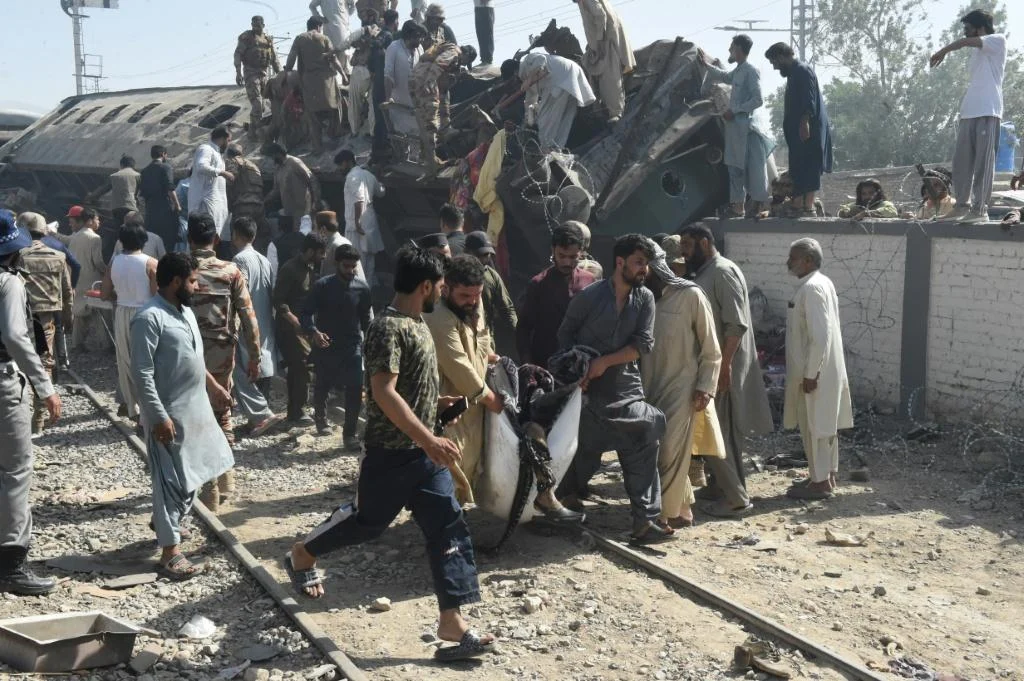
QUETTA, Balochistan — A catastrophic explosion ripped through a passenger train carrying military personnel and their families in Pakistan’s southwestern province of Balochistan on Sunday, leaving at least 24 people dead and more than 50 injured. The attack, which struck as the nation prepared for the sacred Eid al-Fitr festivities, has once again plunged the volatile region into a state of mourning and high alert.
The blast occurred in the provincial capital of Quetta, turning a routine transit into a scene of utter devastation. As investigations continue, the incident highlights the fragile security landscape in a province long plagued by separatist insurgency and sectarian violence.
The Anatomy of the Attack: Main Facts
The explosion took place at the Chaman Pattak crossing in Quetta as the train was departing for Peshawar, a major city in Pakistan’s northwest. According to senior security officials, the train was carrying a significant number of army servicemen who were traveling home to celebrate the upcoming Eid holiday, which marks the end of the holy month of Ramadan.
Witnesses described a deafening roar as an explosive-laden vehicle, positioned near the tracks, detonated at the exact moment the train passed by. The force of the blast was immense; it derailed at least one carriage, causing it to tip onto its side. The shockwave shattered windows in the vicinity and obliterated several nearby vehicles, leaving a path of twisted metal and debris.
Rescue operations were initiated immediately, with local residents, emergency services, and armed security forces working under harrowing conditions. Images from the site depicted a grim reality: blood-soaked victims being carried on stretchers, survivors scrambling over mangled steel, and security cordons being established as the threat of secondary devices loomed.
Chronology of the Tragedy
- Early Sunday: The train departs from Quetta station, carrying hundreds of passengers, including soldiers on leave and their families.
- The Moment of Impact: As the train navigates the Chaman Pattak area, an improvised explosive device (IED) hidden within a parked vehicle is triggered.
- Immediate Aftermath: The blast derails a carriage. Within minutes, the sound of the explosion draws locals to the scene, who begin pulling survivors from the wreckage before formal rescue teams arrive.
- Emergency Response: Quetta’s hospitals declare a state of emergency. Ambulances begin the frantic process of ferrying the wounded—many in critical condition—to the Civil Hospital and Combined Military Hospital (CMH).
- Late Sunday: Government officials confirm the death toll has reached 24, with the number of injured exceeding 50. Security agencies launch a sweeping search operation in the surrounding areas.
The Context: Balochistan’s Persistent Turmoil
To understand the gravity of Sunday’s attack, one must look at the historical and socio-economic context of Balochistan. As Pakistan’s largest province by landmass but its least populated and poorest, Balochistan has been the theater of a low-intensity, multi-decade insurgency.
The Grievances of the Insurgents
Baloch separatists have long accused the federal government in Islamabad of systematic exploitation. The province is rich in natural gas, copper, and gold, yet the local population remains among the most impoverished in the country. Separatist factions argue that the wealth generated from these resources is funneled into the development of other provinces, such as Punjab, while Balochistan remains neglected in terms of infrastructure, education, and healthcare.
A History of Violence
The region has witnessed countless attacks against state infrastructure, security forces, and Chinese-funded projects associated with the China-Pakistan Economic Corridor (CPEC). The insurgents view the military’s presence not as a protective force, but as an occupying power tasked with suppressing legitimate local dissent and protecting federal interests.
Official Responses and Security Implications
The attack has drawn swift condemnation from the highest levels of the Pakistani government. Prime Minister and provincial officials issued statements expressing "deep sorrow and grief" over the loss of life, vowing that the perpetrators would be brought to justice.
The Government’s Stance
"This is a cowardly act of terrorism designed to target those who protect our nation," said a spokesperson for the provincial government. "The state remains committed to dismantling the networks responsible for this carnage." Security agencies have been granted expanded powers to conduct intelligence-based operations throughout the Quetta division, signaling a likely surge in military presence in the coming weeks.
Challenges for the Military
For the Pakistan Army, the attack represents a significant security failure. Protecting rail infrastructure in remote or rugged terrain is a logistical nightmare. The use of a vehicle-borne IED suggests a level of planning and coordination that indicates the insurgents are evolving their tactics to circumvent established security perimeters.
Socio-Economic Data: A Province in Decline
The volatility of Balochistan is intrinsically linked to its developmental stagnation. According to data from the Pakistan Bureau of Statistics and international development agencies:
- Poverty Levels: Balochistan consistently reports the highest poverty rates in the country, with nearly 70% of the population living below the poverty line in certain districts.
- Literacy Gap: The province’s literacy rate lags significantly behind the national average, with rural areas facing acute shortages of teachers and schools.
- Economic Exclusion: Despite holding the majority of Pakistan’s mineral wealth, the province’s contribution to the national GDP remains disproportionately low, a point of constant contention for local political leaders.
These socio-economic failures create a fertile ground for radicalization and recruitment by insurgent groups. When a population feels it has no stake in the national project, the allure of separatist rhetoric becomes significantly stronger.
Implications: The Path Forward
The bombing on Sunday is not merely a localized act of violence; it is a manifestation of a deeper, systemic crisis that has eluded political solutions for decades.
The Eid Shadow
The timing of the attack—just days before the Eid al-Fitr celebrations—was clearly calculated to maximize psychological impact. It serves as a grim reminder that for many in Balochistan, the promise of peace and development remains a distant hope. The families of the deceased will now spend the holiday period in mourning, a reality that will undoubtedly fuel public anger and demands for accountability.
Security vs. Dialogue
The government faces a binary choice: a hardline security crackdown or a renewed attempt at political reconciliation. Previous attempts at dialogue have largely failed, hampered by a lack of trust on both sides. While the state argues that it cannot negotiate with "terrorists," analysts suggest that without addressing the fundamental grievances regarding resource distribution and political autonomy, the cycle of violence will continue.
Regional Stability
The attack also has regional implications. Balochistan shares long, porous borders with Iran and Afghanistan. Instability here affects the entire region, potentially drawing in external actors or creating safe havens for militant groups. International observers are closely watching the aftermath, concerned that a failure to stabilize the province could impede broader regional trade and security cooperation.
Conclusion: A Nation in Mourning
As the sun sets over the rugged hills surrounding Quetta, the wreckage of the train remains as a silent, somber monument to the tragedy. The 24 lives lost represent 24 families whose lives have been irrevocably shattered.
The attack on the military train is a stark indictment of the security challenges facing Pakistan. It forces a difficult conversation about the future of Balochistan—a future that cannot be built on the back of explosions and retaliatory operations alone. For now, the people of Pakistan look toward their leaders, waiting to see if this latest tragedy will be the catalyst for a genuine change in strategy, or if it will simply be another chapter in a long, painful history of conflict.
As the country prepares for the upcoming holiday, the mood is somber. The blast has served as a chilling reminder that in the face of deep-seated ethnic and political divides, the road to a peaceful and prosperous Pakistan remains obstructed by the shadows of violence.
Copyright © 2026 AFP. All rights reserved. This report was compiled using on-the-ground intelligence and official statements.












No comments yet. Be the first to join the conversation!