


In the current cinematic landscape, few films have captured the collective imagination quite like the 2026 adaptation of Andy Weir’s Project Hail Mary. Directed by the visionary duo Phil Lord and Christopher Miller and anchored by the powerhouse performances of Ryan Gosling and Sandra Hüller, the film has cemented itself as a definitive high-water mark for modern science fiction.
For those who have already navigated the vacuum of space alongside Ryland Grace and his extraterrestrial companion, Rocky, the hunger for similar narratives—tales of survival, scientific ingenuity, and profound human connection—is palpable. Whether you are seeking the "hard" scientific rigor that defined Weir’s work or the emotional resonance that elevates a space opera, these five literary selections serve as the perfect follow-up to your cinematic journey.
The Legacy of Andy Weir and the Appeal of "Project Hail Mary"
Main Facts and Context
Released in 2021, Project Hail Mary arrived as a successor to Weir’s 2011 breakout hit, The Martian. Both novels established a specific sub-genre of "competence porn"—stories where the protagonist’s survival depends not on luck, but on physics, chemistry, and rigorous problem-solving. In Project Hail Mary, Dr. Ryland Grace is awakened on a spacecraft with no memory, only to discover that he is humanity’s last hope against the "astrophage," a solar-dimming organism threatening extinction.

The 2026 film adaptation brought this narrative to new audiences, utilizing advanced puppetry and voice acting by James Ortiz to bring the character of Rocky to life. The film’s success highlights a growing appetite for stories that marry the vast, terrifying scale of the cosmos with the intimate, often humorous, and deeply human experiences of those who explore it.
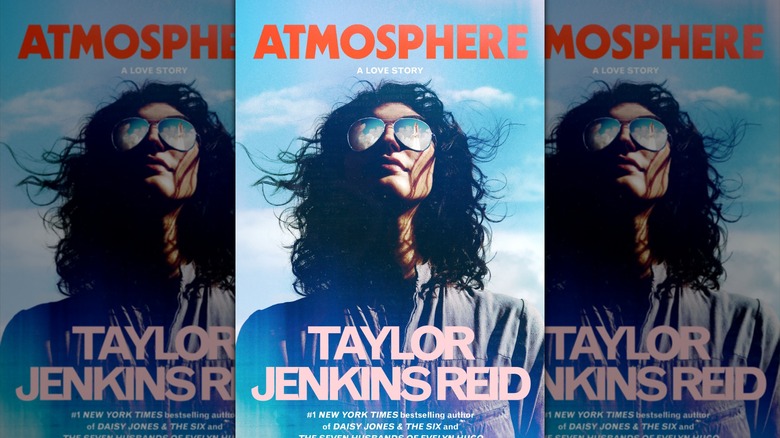
1. Atmosphere by Taylor Jenkins Reid: A Grounded Cosmic Romance
While not strictly categorized as science fiction, Taylor Jenkins Reid’s 2025 release Atmosphere has earned the personal endorsement of Andy Weir himself. Weir notes that the book’s intersection of 1980s NASA history, space missions, and emotional stakes makes it a "collection of all the things I love."
The Narrative Arc
Set in the 1980s, the story follows Joan Goodwin, a brilliant physics and astronomy professor who discovers her true calling when NASA initiates a search for female astronauts. Her journey is not merely one of technical achievement but one of profound personal transformation. Upon joining the program, she meets Vanessa Ford, an aeronautical engineer, and the two embark on a clandestine romance against the backdrop of the burgeoning space race.

Why It Resonates
Much like Project Hail Mary, Atmosphere understands that the most daring missions are defined by the people left behind—or the ones who travel with us. It explores the intersection of professional ambition and personal sacrifice, providing a poignant, character-driven narrative that complements the high-stakes science of Weir’s universe.
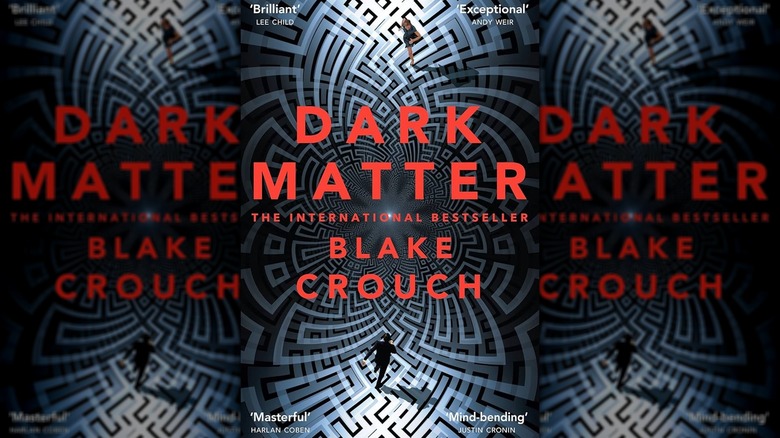
2. Dark Matter by Blake Crouch: The Science of Choice
If you were drawn to the existential dread and the "what if" scenarios presented in Project Hail Mary, Blake Crouch’s Dark Matter (2016) is an essential addition to your bookshelf. While Weir has previously championed Crouch’s Recursion, Dark Matter serves as a more visceral and immediate entry point into the author’s exploration of quantum mechanics and human identity.
Supporting Data and Plot
The protagonist, Jason Dessen, is a physics professor whose life is upended when he is kidnapped and thrust into an alternate version of his own life—a timeline that exists because of a different choice made years prior. The narrative follows his frantic, dimension-hopping quest to return to his original family.
Implications for the Reader
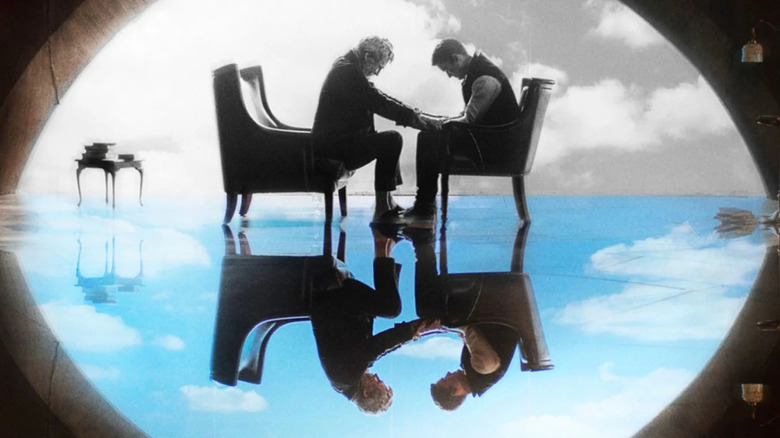
The recent Apple TV+ adaptation, which premiered in 2024 and continues into 2026, has brought renewed attention to the novel. Crouch excels at taking complex, theoretical science and distilling it into a high-octane thriller. It challenges the reader to consider the fragility of reality and the weight of every decision, mirroring the high-pressure environment of Ryland Grace’s mission.
3. The Giver by Lois Lowry: The Philosophical Dystopia
Moving away from the technical "hard" science fiction of space travel, we turn to the foundational work of Lois Lowry. The Giver, published in 1993, is often relegated to school reading lists, but its status as one of the most significant dystopian novels of the 20th century is earned.
Chronology of the Dystopia
Set in a society where "Sameness" has eradicated conflict, pain, and emotional depth, the story focuses on 12-year-old Jonas. Upon being named the Receiver of Memory, he begins to uncover the suppressed history of the world, realizing that a life without pain is also a life without humanity.
Why It Fits the "Hail Mary" Fan
While Project Hail Mary relies on the tools of science to save humanity, The Giver examines what exactly makes humanity worth saving. Both stories feature a protagonist thrust into a role of immense, solitary responsibility, forced to confront the harsh truths that the rest of their society is shielded from. It is a masterclass in world-building that rewards mature reflection.
4. Jurassic Park by Michael Crichton: The Scientific Warning
For those who view Project Hail Mary as a triumph of scientific optimism, Michael Crichton’s Jurassic Park (1990) offers the necessary, darker counterpoint. While the 1993 film is a cultural monolith, the original novel provides a deeper, more cynical exploration of the hubris of man.
The Source Material vs. The Adaptation
Crichton’s novel is a terrifying, scientifically grounded critique of bioengineering. The "groundbreaking technique" for cloning dinosaurs serves as a catalyst for a narrative that feels significantly more dangerous and unpredictable than its cinematic counterpart.
Implications
Just as Project Hail Mary explores the consequences of scientific discovery on a global scale, Jurassic Park examines the catastrophic potential of playing god. For fans who appreciate the technical jargon and the "real-world" feeling of Weir’s writing, Crichton remains the gold standard. Going back to the source material allows for a discovery of a "literary treasure" that stands independently of the films it inspired, offering a sobering look at the limits of human control.
5. Star Wars: Lost Stars by Claudia Gray: The Romantic Epic
The inclusion of a Star Wars novel might raise eyebrows, but Claudia Gray’s Lost Stars (2015) is widely regarded as one of the finest entries in the expansive Star Wars publishing catalog. It is a testament to the fact that great science fiction transcends franchise branding.
A Unique Perspective
Lost Stars follows two childhood friends, Ciena Ree and Thane Kyrell, who find themselves on opposite sides of the Galactic Civil War as they mature into an Imperial officer and a Rebel pilot, respectively. Spanning the timeline of the original trilogy, it provides a grounded, human-scale look at the cosmic conflict.

Official Responses and Reception
Critically acclaimed for its emotional intelligence and narrative focus, Lost Stars has been cited by readers as a "magnificent human tale" that requires no prior knowledge of the Star Wars universe. Its inclusion here is based on its thematic resonance with Project Hail Mary: the idea that even in the midst of galaxy-spanning wars or extinction-level events, the most vital, lasting impacts are found in the connections between two people.
Conclusion: Expanding the Horizon
The literary landscape offers a vast array of narratives that mirror the brilliance of Project Hail Mary. Whether you are looking for the quantum-physics thrills of Blake Crouch, the historical intimacy of Taylor Jenkins Reid, or the foundational dystopian warnings of Lois Lowry and Michael Crichton, these books ensure that the wonder you felt while watching Ryland and Rocky doesn’t have to end when the credits roll.
Science fiction, at its best, acts as a mirror to our own existence. By exploring the stars, alternate dimensions, or the dark secrets of our own history, these authors invite us to consider our place in the universe. For the fan of Project Hail Mary, these five books are not just recommendations—they are the next steps in an ongoing exploration of the human spirit.











No comments yet. Be the first to join the conversation!