

In the current golden age of publishing, the sheer volume of new queer literature hitting the shelves every week is both a triumph for representation and a logistical nightmare for the avid reader. As LGBTQ+ voices continue to flourish across every genre—from high-concept sci-fi and gothic horror to contemporary romance and poignant memoir—the task of tracking these releases has evolved from a hobby into a specialized, time-consuming research project.
For many readers, the joy of discovering a new queer title is often dampened by the labor required to find it. Standard publishing metadata is frequently incomplete, and blurbs often obscure the very identity markers that potential readers are searching for. To address this, Book Riot has unveiled a sophisticated solution: the New Release Index (NRI), a powerful, curator-led database designed to streamline the discovery process for the modern bibliophile.
The Chronology of a Discovery Crisis
The problem of “queer book invisibility” is not new, but it has intensified alongside the industry’s growth. For years, curators of queer-focused newsletters and blogs, such as Our Queerest Shelves, have spent hours sifting through advance reader copies (ARCs), publisher catalogs, and early review databases.
The process typically involves "queer book investigating"—a manual vetting of author statements, sensitivity reader notes, and subtle cues within book descriptions that often fail to explicitly mention queer themes. For the average reader with a full-time job and a social life, this level of scrutiny is impossible to maintain.
Recognizing this gap, Book Riot began development on the New Release Index. The platform was built not just as a static list, but as a dynamic, filterable database. Throughout 2025 and into 2026, the tool underwent rigorous testing and curation, ensuring that it could handle the massive influx of upcoming titles while maintaining a high standard of metadata accuracy. By early 2026, the index reached a critical mass, allowing users to move beyond the traditional "scroll and hope" method of browsing bookstore websites.
Technical Architecture: How the Index Works
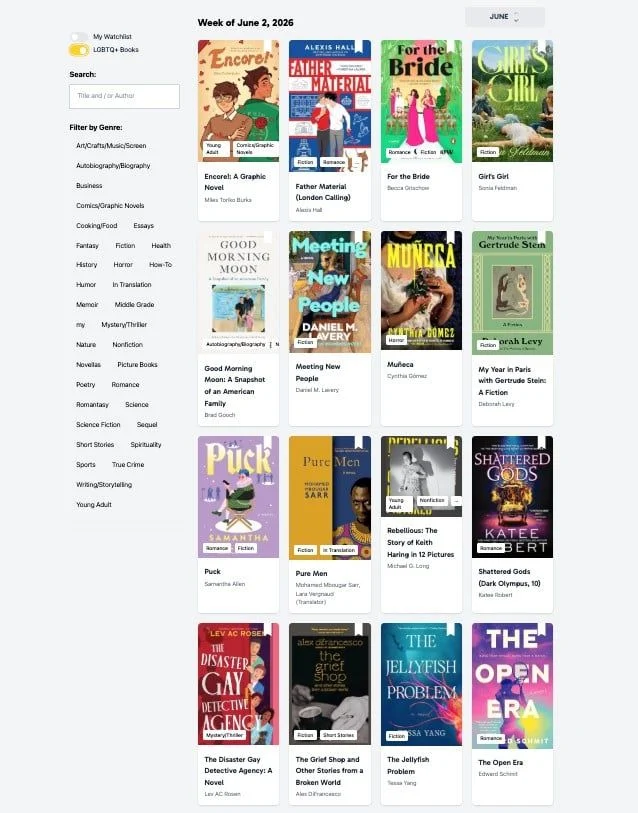
The New Release Index functions as a centralized repository for the publishing industry’s upcoming output. Its utility lies in its granular filtering capabilities. Unlike generic retail search engines that rely on broad keywords, the NRI allows for highly specific cross-referencing.
The Power of Multi-Layered Filtering
The primary innovation of the NRI is the ability to combine traditional genre categories with the "LGBTQ+ Books" toggle. A user is no longer limited to browsing a monolithic "queer" category. Instead, they can isolate upcoming releases by:
- Genre Precision: Isolating queer horror, queer space opera, or queer historical fiction.
- Release Window: Sorting by specific upcoming dates to manage monthly reading budgets.
- Visual Discovery: The interface prioritizes cover art, allowing for a tactile, "browsing-the-stacks" experience that digital databases often lack.
Once a reader finds a title that resonates, they can save it to a personalized "Watchlist," effectively automating their TBR (To Be Read) management.
Supporting Data: The Case for Curated Discovery
Data suggests that discoverability is the primary barrier to market growth for diverse literature. According to recent industry surveys, nearly 60% of readers interested in LGBTQ+ fiction report that they "often miss" books they would have purchased because they simply didn’t know the titles existed until months after their release.
The New Release Index addresses this through human-led curation. Unlike algorithmic recommendations—which often reinforce popular tropes or "best-seller" biases—the NRI is populated by curators who are deeply embedded in the queer literary community. These curators proactively add titles that might otherwise be overlooked by mainstream marketing departments. By injecting human intelligence into the discovery process, the index ensures that marginalized voices receive the same visibility as high-profile, big-publisher titles.
Official Responses: The Strategic Shift
The introduction of the New Release Index as a core feature of Book Riot’s All Access subscription marks a strategic shift in how literary content platforms are monetizing discovery.

"We realized that our readers were spending more time hunting for books than actually reading them," says a spokesperson for the editorial team. "The New Release Index isn’t just a list; it’s a time-saving utility. By integrating it into All Access, we are providing a comprehensive ecosystem where readers can find their next favorite book, track it, and engage with the critical analysis surrounding it—all in one place."
The $6-per-month price point for All Access positions the tool as a cost-effective alternative to expensive industry trade subscriptions. For the price of a single fancy latte, readers gain access to a curated pipeline of queer literature, effectively turning a passive consumer into an informed literary scout.
Implications for the Future of Queer Literature
The broader implications of such a tool are significant for both authors and publishers.
For Authors
Visibility is a currency. For queer authors, particularly those from smaller independent presses, getting their work in front of the right audience is often the difference between a successful launch and a quiet debut. The New Release Index serves as a direct pipeline to the most dedicated readers, bypassing some of the noise inherent in major retail platforms.
For Publishers
The tool provides invaluable feedback on what readers are looking for. By tracking which books are added to "Watchlists," publishers can gain a clearer understanding of reader interest levels, helping them refine their marketing strategies for future queer-themed releases.
For the Reader
The most profound impact, however, is on the reader’s experience. The "part-time job" of finding queer books is effectively outsourced to the database. This allows the reader to reclaim their time and focus on the act of reading itself. It fosters a more robust literary community, as readers can reliably find and support books that reflect their identities and experiences.
Conclusion: Navigating the Future
As we look toward the remainder of 2026 and beyond, the role of discovery platforms like the New Release Index will only grow in importance. The publishing industry is producing more content than ever before, and the ability to curate, filter, and organize this information is a vital skill.
For those interested in exploring the database, the process is straightforward. By signing up for All Access, users gain immediate entry to the Index. Whether you are a fan of queer horror, historical romance, or experimental poetry, the ability to filter by niche interests ensures that your TBR pile will be as diverse and vibrant as the community itself.
The era of struggling to find queer stories is coming to an end. Through the marriage of human curation and intuitive digital design, the New Release Index is setting a new standard for how we discover, track, and ultimately celebrate the best in upcoming queer literature.
To get started with the New Release Index, visit the Book Riot All Access portal. For a deeper dive into the technical usage of the tool, check out their official guide.











No comments yet. Be the first to join the conversation!