Raul Delapena Setiawan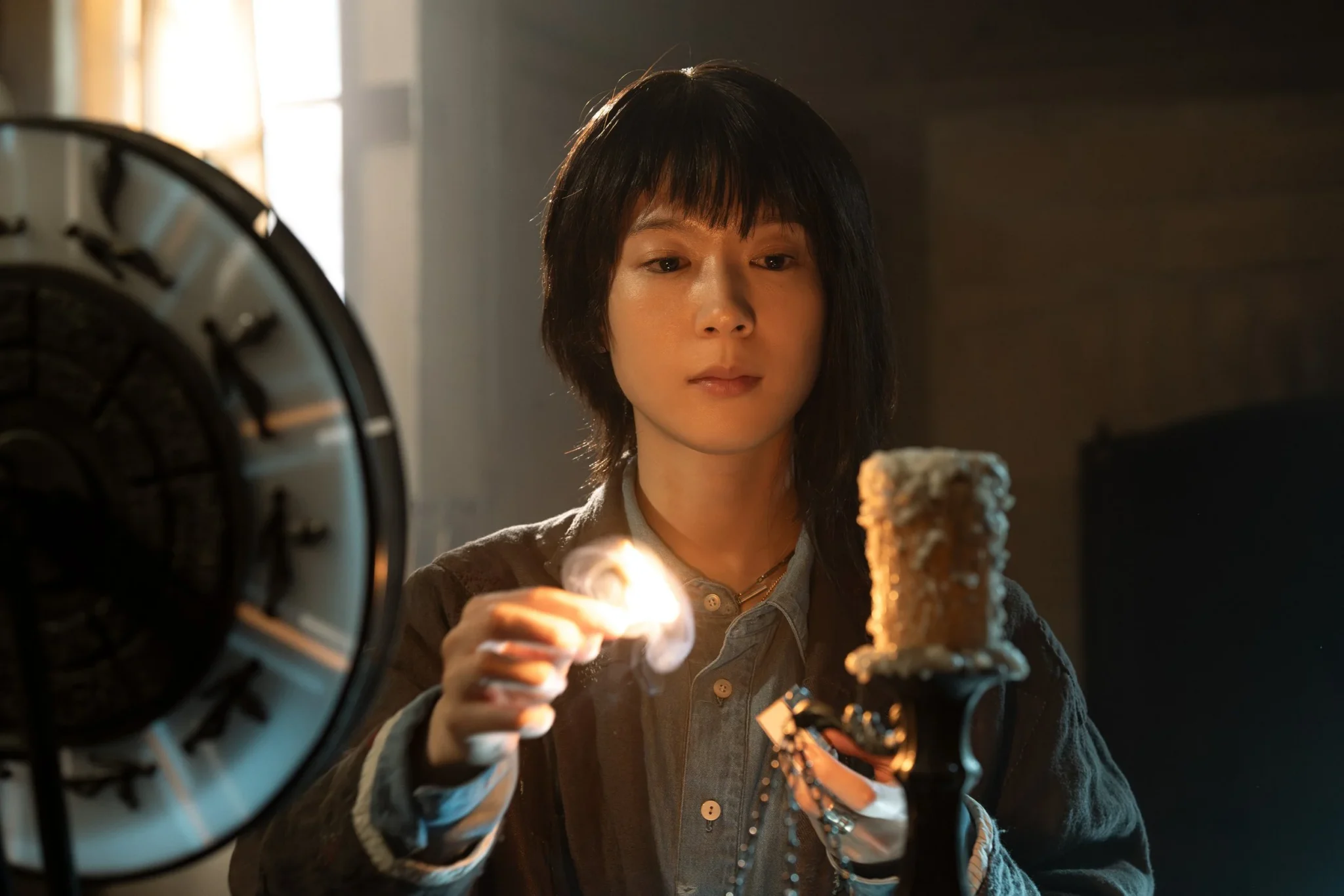
In the landscape of modern horror, where jump scares and gore often take center stage, director Dave Boyle’s latest feature, Never After Dark, arrives as a refreshing, chilling anomaly. A masterclass in atmosphere and character-driven narrative, the film transcends the conventional "haunted house" trope to offer a deeply human meditation on grief, trauma, and the blurred lines between the living and the dead. Having made its mark at Film at Lincoln Center’s Scary Movies XIII festival, the film is already being hailed as a seminal work in the genre, inviting comparisons to classic gothic cinema while carving out a uniquely Japanese identity.
The Premise: A Professional’s Burden
The film centers on Airi, played with understated brilliance by Moeka Hoshi. Airi is a freelance exorcist, but she is far from the typical "demon hunter" archetype. Her profession is not one of violence or banishment, but rather of gentle stewardship. In the world of Never After Dark, the spirits of the deceased are not necessarily malevolent; they are often simply lost, anchored to the physical world by unresolved business or lingering attachment.
Airi’s philosophy is rooted in compassion. She views her work as a form of spiritual healing, guiding the restless into their next chapter with specific rites and tools. However, this work is governed by a strict, eponymous rule: Never After Dark. As the sun sets, the spiritual landscape shifts; the entities that were once manageable become volatile, and the risk of confrontation escalates exponentially.
Accompanying Airi on her odyssey is the spectral presence of her older sister, Miku (Kurumi Inagaki). Frozen in her teenage years, Miku acts as a grounded, often teasing conscience for Airi. Their relationship provides the film with its emotional anchor, a "lived-in" dynamic that keeps the supernatural elements tethered to the mundane reality of sisterly bonds.
Chronology of a Haunting: The Setup
The narrative arc begins when Airi is commissioned to cleanse an old, expansive hotel that has been repurposed into a private residence. The client, Teiko (Tae Kimura), is a recent widow. Though she presents a bubbly, fashion-forward exterior, her demeanor masks a profound, raw ache. Teiko’s desire for an exorcism is not born of fear, but of a desperate, cosmic hope: she seeks proof that her husband’s consciousness survives in some form.
The tension in the household is compounded by Teiko’s son, Gunji (Kento Kako). An avowed skeptic, Gunji dismisses Airi’s profession as a parasitic scam. His friction with Airi is palpable, shifting from defensive hostility to a grudging, complex attraction. As the family is forced to vacate the premises during the ritual, the domestic space becomes a pressure cooker where grief and skepticism collide.
What follows is not a standard jump-scare marathon, but a slow-burn descent into a haunting that refuses to follow established rules. While Airi enters the hotel with a toolkit of tried-and-true methods, she soon discovers that the entity residing within the walls is entirely outside her previous experience. The film, which begins as a grounded drama, pivots sharply into a terrifying exploration of the unknown, forcing Airi to face the limits of her own expertise.
Supporting Data and Production Excellence
Never After Dark marks the debut feature from director Dave Boyle, an American filmmaker who has spent years immersing himself in the Japanese film industry. His previous work, House of Ninjas (Netflix), already showcased his ability to balance high-stakes genre elements with intimate character arcs. With Never After Dark, he collaborates once again with actors Tae Kimura and Kento Kako, solidifying a creative synergy that is further bolstered by their newly formed production company, Signal181, Inc.
The film’s aesthetic is a triumph of production design. Yuji Hayashida’s work on the house—with its cavernous rooms, sheet-draped furniture, and oppressive shadows—serves as a character in its own right. Boyle has explicitly cited the 1980 classic The Changeling as an inspiration, and that influence is clear: the film uses space, silence, and architectural detail to generate dread.

Equally critical is the practical effects work of Tomo Hyakutake. In an age of heavy CGI, the film’s reliance on physical effects gives the supernatural encounters a visceral, tactile quality. When the horror manifests, it feels grounded in the physical reality of the house, making the scares feel more intimate and, consequently, more invasive.
The Intersection of Trauma and Reality
A critical component of Never After Dark is how it treats the history of its protagonist. Airi is not a blank slate; she carries deep-rooted trauma from her own past. However, the film avoids the "shocking twist" trope often used in horror to justify character behavior. Instead, her trauma is treated as a foundational element of her personality—a weight she carries that informs her empathy for the dead.
The film posits that personal tragedy often crashes into the "meatgrinder" of everyday life, regardless of one’s profession or spiritual understanding. When the haunting at the hotel begins to escalate, it does not discriminate based on the characters’ histories or emotional states. This is where the film finds its true terror: the realization that the supernatural does not care about the human drama it intersects with. It is an indifferent, powerful force, and Airi’s attempt to apply logic and ritual to such an entity is what drives the movie into its final, terrifying act.
Implications for the Genre
Never After Dark is a rare breed of horror film that prioritizes thematic depth without sacrificing the visceral pleasure of a ghost story. By blending Western Gothic sensibilities with the dread-filled precision of J-Horror, Boyle has created a film that is both accessible and deeply cerebral.
The inclusion of the musical score, featuring the evocative work of Jonathan Snipes, further elevates the film. The scenes in which Airi must wait for nightfall—drinking beer, dancing to music, and arguing about German electronic pioneers Kraftwerk—serve as necessary breathers that make the subsequent horror even more jarring. It is in these moments that we see Airi not as a stoic hero, but as a person trying to navigate a life that is inextricably linked to the end of all things.
Conclusion: A New Standard
In a year saturated with horror content, Never After Dark stands out as a thoughtful, unsettling, and ultimately beautiful film. It avoids the clichés of "grief-horror" by focusing on the mechanics of the haunting itself, while simultaneously elevating the human element to a level rarely seen in the genre.
For those who appreciate the subtleties of Japanese horror, the elegance of a well-crafted gothic tale, or the mechanics of a truly unique exorcism story, Never After Dark is essential viewing. It is a film that lingers in the mind, much like the ghosts it depicts, long after the credits roll. Dave Boyle has not only successfully made the jump to feature-length horror; he has set a new, high standard for what the genre can achieve when it treats its audience—and its ghosts—with genuine respect.
As the film continues to circulate through festival circuits and prepares for wider release, its legacy is already being written. It is a testament to the fact that, even when everything feels like it has been done before, a singular vision and a focus on character can still make us lean forward, clench our fists, and feel the cold, sharp prick of fear in the dark.


 Laily UPN
 Nana Muazin