Sagoh
Sagoh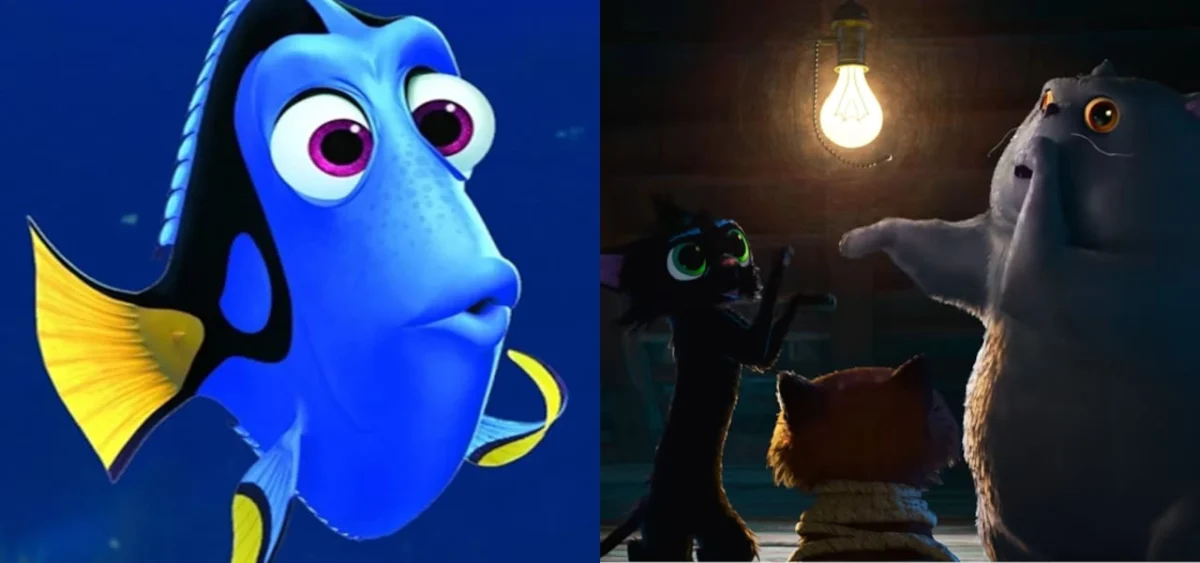
The animation world turned its eyes toward the French Alps this week as the Annecy International Animation Film Festival served as the stage for Pixar Animation Studios’ latest creative update. Building on the momentum established by Walt Disney Animation Studios earlier in the week, Pixar’s presentation was a masterclass in contrasting traditional artistry with cutting-edge, real-time technological innovation.
The studio’s showcase was anchored by a major "Work in Progress" deep dive into the upcoming feature Gatto, alongside a surprise unveiling of a new short film, Loving Dory, which revisits the iconic Finding Nemo universe. As Pixar navigates a period of creative evolution, these projects signal a concerted push toward both stylistic experimentation and workflow efficiency.
The Venetian Heist: Unveiling ‘Gatto’
Twelve months after its initial announcement, director Enrico Casarosa returned to the Annecy stage to provide a comprehensive look at Gatto. Following the critical success of his 2021 feature Luca, Casarosa is once again turning his gaze toward Italy—this time, the labyrinthine, water-logged streets of Venice.
A Painterly Aesthetic
The most striking takeaway from the presentation was the visual direction of the film. Casarosa described the aesthetic as "immersive" and "painterly," explicitly citing the works of Van Gogh as a primary influence. The stills showcased at the Bonlieu auditorium revealed a departure from the high-fidelity realism often associated with modern CG animation.
Instead, Gatto employs a tactile, hand-crafted aesthetic. Buildings appear to have a damp, weathered quality; character models utilize extreme squash-and-stretch principles that push the boundaries of traditional 3D rigs; and the frame rate is occasionally modulated to mimic the jittery, intentional cadence of 2D animation.
"We have a lot of control over the line work, and we love creating multiples—going back to 2D animation techniques," Casarosa explained to the audience. "We create extra arms when the characters’ arms are waving and extra feet when they’re running. We want the audience to feel like they are literally walking into a painting."
Narrative Complexity: The Mob Boss Cat
The story, which carries the grit of a Scorsese-style mob drama but filtered through the whimsical lens of a feline protagonist, follows Nero. A street cat living a life of organized crime, Nero operates under the thumb of Rocco, a formidable mob boss who holds dominion over the city’s animal population.
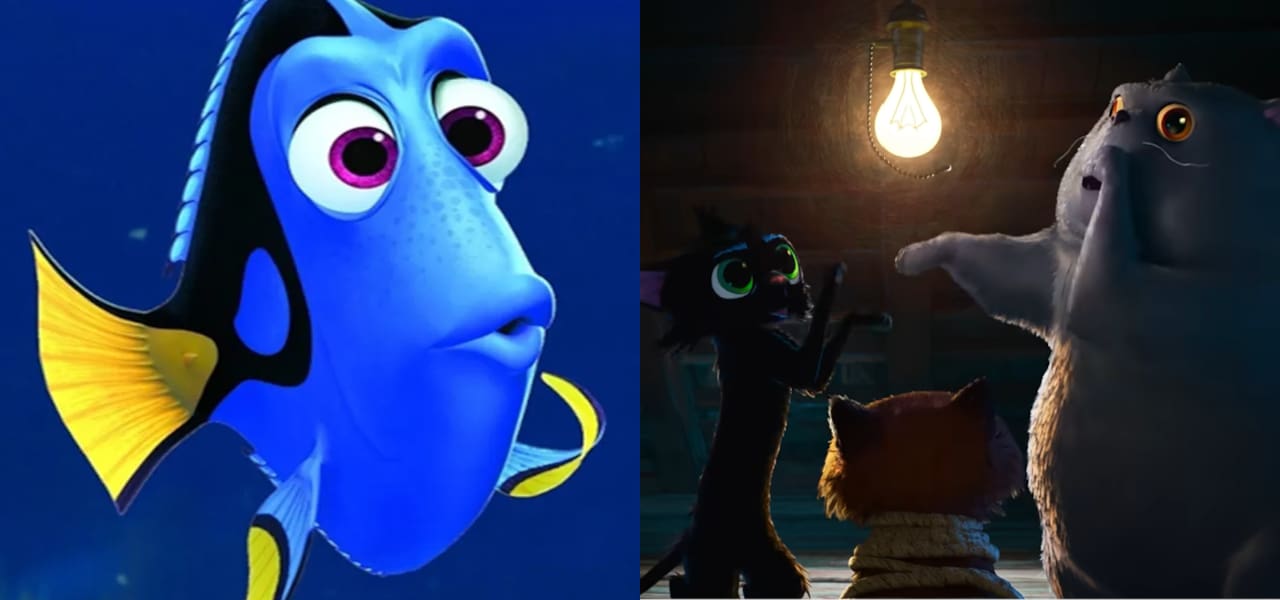
The narrative hook revolves around Nero’s unique ability to leverage local superstitions. Because Venice’s human and animal residents assign specific meanings to the color of a cat’s fur, Nero is a master of manipulation. His trajectory changes when he is tasked with stealing a cat-themed violin from a human street performer named Maya, forcing him to choose between his criminal loyalty and a newfound connection to the human world.
Technical Innovations in Water and Light
Given that the film is set in Venice, the team faced the daunting task of rendering the city’s ubiquitous water reflections. In a move that highlights the studio’s commitment to stylization, the team eschewed traditional ray-traced mirroring. Instead, they developed a system that generates a simplified, brushstroke-based version of the background, which is then mapped onto the water’s surface. The result is a reflection that functions as a watercolor impression rather than a literal copy, reinforcing the film’s "painted" atmosphere.
‘Loving Dory’: A Technological Paradigm Shift
Following the deep dive into Gatto, the presentation took an unexpected turn with the surprise announcement of Loving Dory. Produced by Mary Alice Drumm and directed by Lou Hamou-Lhadj, the short film functions as both a comedic return to the Finding Nemo universe and a vehicle for a new internal technology.
The Plot: Romance in the Trash
The short follows Dory as she encounters a plastic bag drifting through the ocean. In a classic case of mistaken identity, the famously forgetful blue tang believes the bag to be a jellyfish—and, more surprisingly, a potential romantic partner. While the premise provides a comedic framework for exploring the absurdity of human waste in marine ecosystems, it leans heavily into the rom-com genre.
In one sequence, Dory’s fin becomes snagged in the bag’s handles, inadvertently allowing the plastic to "pick" coral for her as they drift through the current. It is a classic Pixar endeavor: finding profound emotional stakes and humor in an inanimate object.
The Real-Time Puppetry Revolution
The most significant revelation regarding Loving Dory was not the narrative, but the production pipeline. Hamou-Lhadj introduced a real-time puppetry technique—a first for the studio—that allows animators to manipulate characters using a cursor-based system that feeds into procedurally generated animation.
"The most important part of this whole thing is that the system is designed to consider the performance as the camera sees it," Hamou-Lhadj explained. "We’re always operating with the final shot in mind, solving backward from that. It feels like you’re directing a live performer, telling them where their mark is and embracing improvisation."
.png)
Unlike traditional animation, where "translate" and "rotate" widgets require frame-by-frame adjustment, this system allows for immediate restaging. While the studio clarified that this technology is currently used for the previs (pre-visualization) stage, it is designed to integrate seamlessly with the final animation pipeline. The ultimate goal is to maintain the "Pixar standard" of quality while drastically increasing the speed at which directors can iterate on performance.
Implications for the Future of Pixar
The dual-pronged approach showcased at Annecy suggests that Pixar is undergoing a significant strategic pivot. By embracing stylized, painterly aesthetics in Gatto and experimental, real-time workflows in Loving Dory, the studio is signaling a move away from the "standardized" look of modern 3D animation.
Bridging the Gap Between 2D and 3D
The success of films like Spider-Man: Into the Spider-Verse and Puss in Boots: The Last Wish has shifted audience expectations. Pixar’s commitment to "multiples" and "line work" in Gatto suggests they are no longer content to simply pursue photorealism. They are actively seeking to bridge the gap between the expressive potential of hand-drawn animation and the technical capabilities of a massive studio pipeline.
The Efficiency Mandate
The introduction of real-time puppetry in Loving Dory is perhaps the most crucial development. As animation production costs soar, studios are under increasing pressure to find ways to shorten the "feedback loop." If Pixar can prove that this puppetry system allows for higher-quality performances without increasing the time spent in the rigging or cleanup stages, it could become the new standard for the entire industry.
Looking Ahead: A Roadmap for 2027
As of late June 2026, both projects are roughly at the 50% completion mark. Gatto is currently slated for a March 2027 theatrical release. The fate of Loving Dory remains slightly more mysterious. Hamou-Lhadj noted that the short will likely be completed well ahead of the feature, suggesting that it may have a life outside of the traditional "short preceding a feature" release model, or potentially be released as a standalone streaming project.
For now, the industry remains in a state of high anticipation. The presentation at Annecy has effectively silenced any doubts about Pixar’s ability to innovate. With Gatto, they are refining the "painterly" movement; with Loving Dory, they are redefining the "animator’s toolset."
As Enrico Casarosa noted during his closing remarks, the studio is betting on stories that contain "a lot of heart, a lot of humor, and a lot of cats." If the work-in-progress footage is any indication, Pixar’s next chapter promises to be one of its most visually and technically daring to date. The fusion of old-school art sensibilities with the digital precision of the future appears to be the path forward, ensuring that even after decades at the top of the medium, the studio continues to evolve at the speed of light.


 Siti Muinah
 Nana Wu