WASHINGTON/OTTAWA – A thick, toxic shroud of smoke, originating from the vast, incinerated forests of Northern Ontario, has descended upon the United States, stretching from the industrial heartlands of the Midwest to the densely populated corridors of the Northeast. As millions of Americans are urged to remain indoors to avoid the hazardous air quality, the environmental crisis has sparked an aggressive diplomatic confrontation between the White House and Ottawa.
President Donald Trump, responding to the atmospheric crisis on Friday, leveled a harsh rebuke at the Canadian government, threatening to impose steep new tariffs on Canadian goods to offset what he characterized as the "incalculable cost" of the pollution. The president’s rhetoric signals a significant escalation in an already strained relationship between his administration and Canadian Prime Minister Mark Carney.
The Diplomatic Flashpoint
In a statement issued via his Truth Social platform, President Trump framed the wildfire crisis not as a natural disaster, but as a failure of governance.
"We are holding Canada responsible for the fact that they are not properly maintaining their forests," the President wrote. "The United States is being unnecessarily invaded by filthy, polluted, and unhealthy air. This is willful negligence, and it is becoming a yearly occurrence, costing the United States billions of dollars. This cost must, of necessity, be added to the tariffs Canada is currently paying."
The president’s ultimatum comes at a time of heightened trade friction. Shortly after assuming office in 2025, the Trump administration moved to implement a series of aggressive tariffs on key Canadian imports, a move that drew widespread condemnation from North American business leaders. The threat to expand these levies in response to forest management practices represents a novel—and highly controversial—use of trade policy as a tool for environmental dispute resolution.
A Chronology of the 2026 Fire Season
The current crisis follows a period of record-breaking warmth and prolonged drought conditions across the North American continent.
- Early 2026: Meteorological data indicated that the winter snowpack in northwestern Ontario was historically low, setting the stage for an explosive start to the fire season.
- May 2026: Fire activity began to accelerate in remote, inaccessible regions of Ontario. Unlike fires in more populated zones, these blazes were fueled by vast stretches of untouched, dry timber.
- Thursday, June 18: Atmospheric patterns shifted, pushing a massive plume of particulate-heavy smoke south across the border. Major U.S. cities, including Chicago, Detroit, and New York, saw air quality indices plummet to "hazardous" levels.
- Friday, June 19: As the smoke intensified, President Trump signaled his intent to confront Prime Minister Carney, describing the situation as "totally unacceptable."
- Sunday, June 21 (Anticipated): The two leaders are expected to cross paths at the FIFA World Cup final in New Jersey, a meeting that political observers expect to be marked by palpable tension.
The Human and Ecological Cost
While the political discourse centers on tariffs and responsibility, the reality on the ground in Northern Ontario is one of profound human suffering. The Namaygoosisagagun First Nation—also known as the Collins First Nation—has been effectively erased by the inferno.
"There was nothing remaining," said Matthew Hoppe, the community’s incident commander. "The membership is totally distraught, upset, overwhelmed, lost." Residents were forced to flee by boat, leaving behind their homes and livelihoods.
In the city of Thunder Bay, which serves as a regional hub on the northern shore of Lake Superior, local infrastructure is being pushed to the breaking point. Mayor Ken Boshcoff confirmed that the city, home to 110,000 residents, is at full capacity, struggling to provide shelter and essential services to thousands of evacuees arriving from the scorched northwestern regions of the province.
"We are dealing with a logistical nightmare," Boshcoff noted. "Every resource we have is currently committed to ensuring the safety of those who have lost everything."
Official Responses: A Clash of Perspectives
The Canadian government has pushed back against the narrative of negligence, emphasizing that the crisis is a product of shifting global climate patterns rather than a lack of forest management.
Eleanor Olszewski, Canada’s minister of emergency management and community resilience, defended the government’s record, noting that Canada has invested C$12 billion ($8.56 billion) in forest sustainability and fire prevention since 2020.
"At this time, our first priority is protecting Canadians and keeping communities safe," Olszewski said in a formal statement. She also highlighted the long-standing history of cross-border cooperation, reminding the White House that Canadian and American firefighters have historically operated as a unified force when one nation faces catastrophic fire seasons.
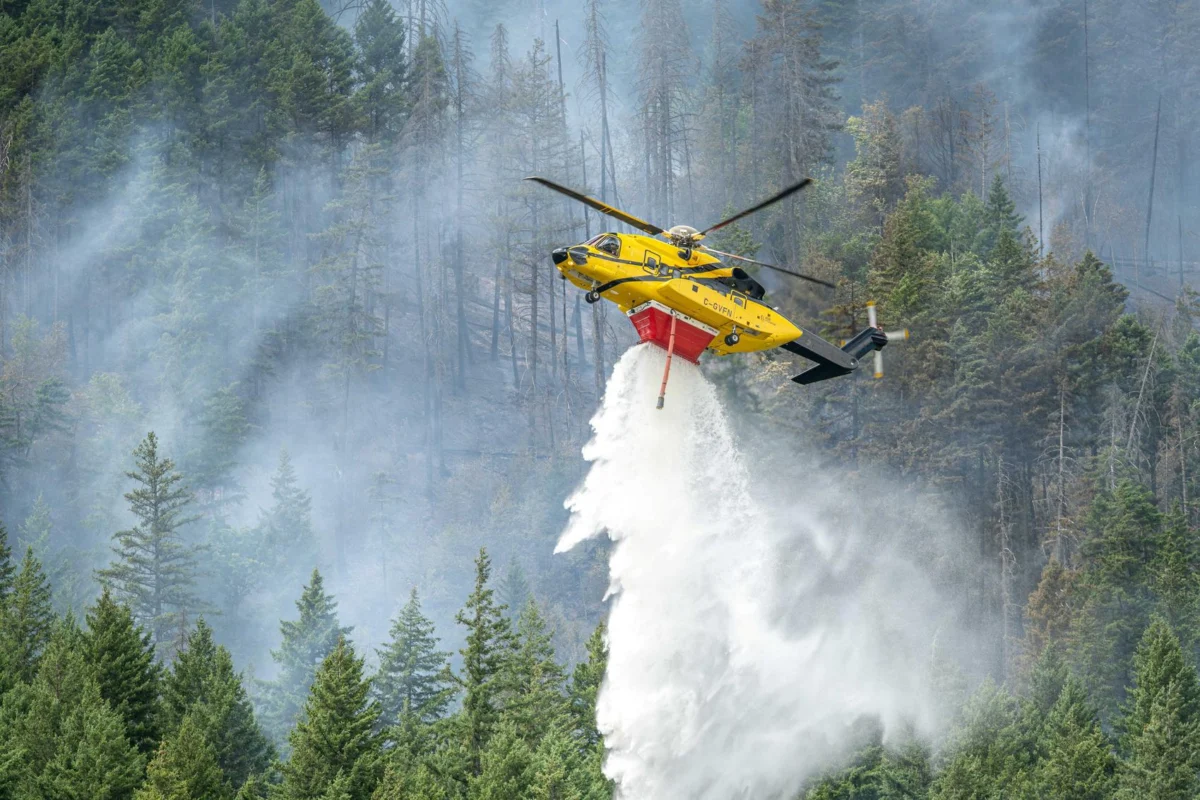
Ontario Premier Doug Ford echoed these sentiments, announcing on Friday that the province would move to procure 11 new specialized firefighting aircraft. Ford offered a sharp rebuttal to American politicians, including the President, who have questioned the efficacy of Canada’s firefighting efforts. "We are fighting an enemy that is increasingly unpredictable," Ford stated. "To suggest this is a matter of simple management ignores the reality of the climate we are living in."
Prime Minister Mark Carney’s office has remained largely silent regarding the President’s specific threat of tariffs, though the Prime Minister remarked on Thursday that the United States has an equal responsibility to address the climate change drivers—such as rising global temperatures—that have exacerbated drought conditions across the continent.
Scientific Consensus: The New Normal
Climate experts caution that the rhetoric from the White House fails to acknowledge the systemic environmental shifts occurring in the boreal forests.
"As our climate warms, we are seeing drier timber and more extreme weather," explained Mike Flannigan, a professor of wildland fire at Thompson Rivers University in British Columbia. "We are going to see more fire. This isn’t just about ‘maintaining’ a forest; it is about the fundamental way the planet is responding to a changing climate."
Data provided by the National Interagency Fire Center (NIFC) highlights that the problem is not isolated to Canada. The United States is also experiencing an exceptionally severe fire season, with 3.7 million acres burned to date in 2026, significantly higher than the 10-year average of 2.7 million acres. This data suggests that the North American continent is facing a shared ecological crisis that transcends international borders.
Implications for North American Relations
The attempt to link wildfire management to trade tariffs introduces a dangerous precedent in U.S.-Canada relations. Historically, the two nations have relied on a partnership based on resource sharing and mutual defense. By framing environmental disasters as a "willful negligence" issue worthy of economic retaliation, the Trump administration is effectively dismantling the cooperative framework that has governed the border for decades.
Economic analysts warn that expanding tariffs could have a "boomerang effect." Many U.S. industries rely on Canadian lumber, energy, and raw materials. Raising costs on these goods would likely result in increased prices for American consumers already grappling with inflation.
Furthermore, the diplomatic fallout could hinder future collaborative efforts on environmental policy. If Canada perceives that its firefighting efforts will be met with punitive economic measures rather than support, the tradition of cross-border emergency assistance may be irrevocably damaged.
As the smoke begins to settle over the Midwest, the political haze shows no sign of lifting. With the FIFA World Cup final on the horizon, all eyes will be on the interaction between Trump and Carney. Whether the encounter leads to a cooling of tensions or a further hardening of positions remains to be seen, but one thing is certain: the environmental and economic stakes of this dispute are higher than ever before.