

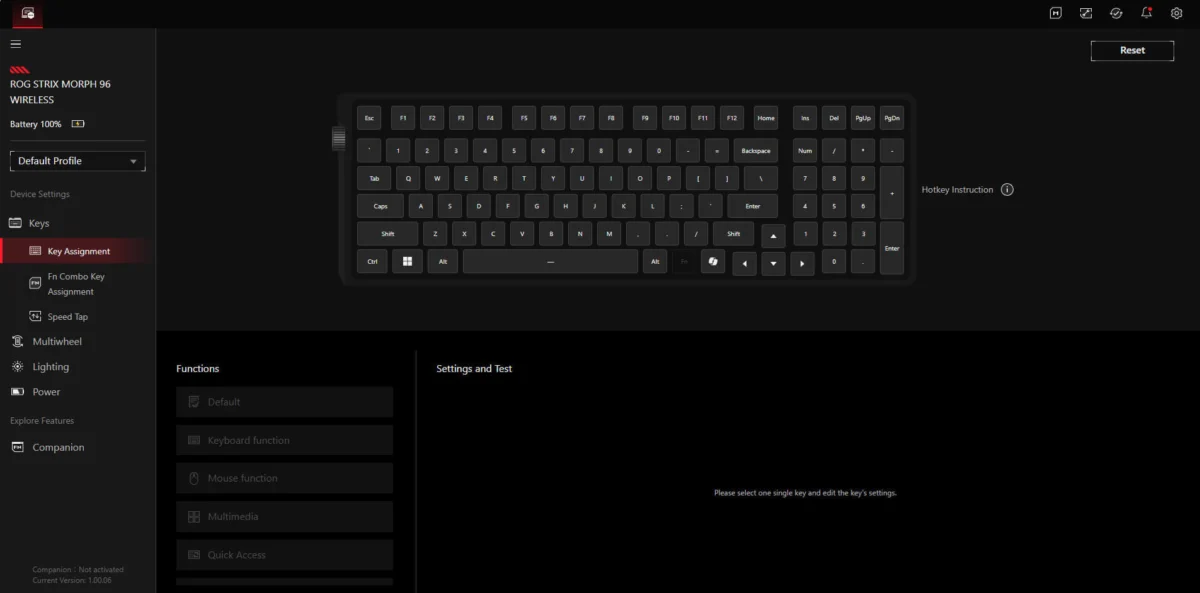
Asus has officially expanded its prestigious Republic of Gamers (ROG) keyboard lineup with the introduction of the ROG Strix Morph 96 Wireless. Positioned as a versatile hybrid device, this mechanical keyboard seeks to bridge the chasm between mainstream gaming peripherals and the high-end custom "enthusiast" mechanical keyboard scene. With a 96-percent layout, hot-swappable switches, and a suite of advanced wireless connectivity options, the Morph 96 is marketed as a definitive "all-rounder" for those who demand performance in gaming but require productivity for their professional workflows.
The Core Concept: Efficiency in a Compact Footprint
The defining characteristic of the ROG Strix Morph 96 Wireless is its 96-percent layout. For years, the keyboard market has been bifurcated: users either opted for bulky, full-sized boards that occupied massive amounts of desk real estate or compromised with Tenkeyless (TKL) or 60-percent layouts that stripped away the numerical keypad—a dealbreaker for many spreadsheet users and data analysts.
By shrinking the chassis while retaining the full functionality of a 104-key board, Asus has created a device that occupies a footprint nearly identical to a compact keyboard while sacrificing nothing in utility. Measuring 398 x 134 x 39 mm, the keyboard is designed to maximize mouse movement space for low-DPI gamers while providing the tactile reliability of a full-sized layout.
Chronology of Development: From Gaming Peripheral to Custom DIY
Asus’s trajectory in the keyboard market has been marked by a transition from standard "gaming-grade" peripherals to increasingly modular, user-serviceable designs. The Morph 96 represents the current peak of this evolution.
- Early Phase: Initial ROG keyboards were fixed-switch units, prioritizing RGB and aggressive aesthetics.
- The Transition: The introduction of hot-swappable sockets in previous models signaled a shift toward long-term maintenance.
- The Modern Era: The Strix Morph 96 represents a conscious design decision to make customization accessible. By allowing users to access all internal components from the top side of the board without requiring disassembly of the case, Asus is effectively inviting the user into the DIY hobbyist space.
Technical Specifications and Supporting Data
The technical foundation of the Morph 96 is built for durability and precision. The keyboard is anchored by ROG’s proprietary NX V2 mechanical switches, which have been refined to offer a smoother keystroke and improved acoustic profile compared to their predecessors.
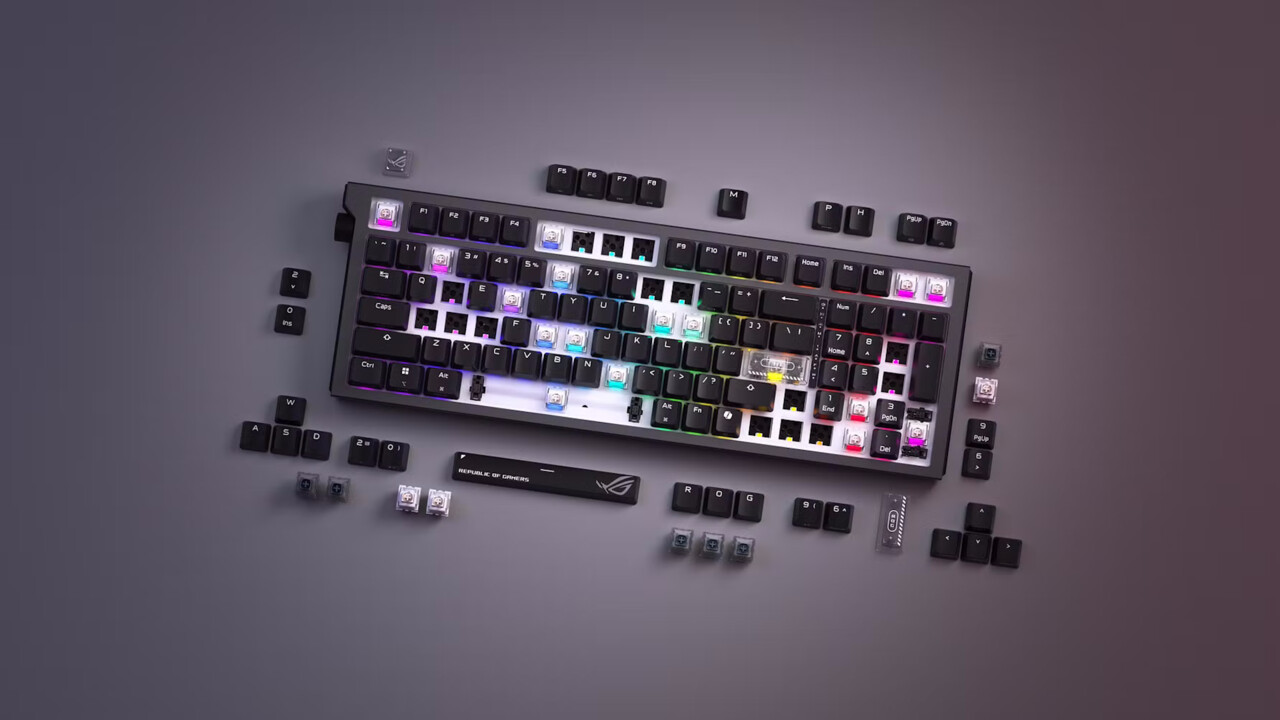
Hot-Swap Architecture
The PCB features high-quality hot-swap sockets, allowing users to remove and replace switches without soldering. This is a critical feature for users who may want to experiment with different tactile, linear, or clicky switch types over the lifespan of the device. Asus includes a comprehensive toolkit in the box, featuring a switch puller, a keycap puller, and a Torx key, signaling that this is a product designed to be opened and maintained.
Wireless Performance and Battery Life
Perhaps the most impressive technical feat is the power efficiency. Leveraging Asus’s SpeedNova wireless technology, the keyboard achieves an exceptional battery life. According to official data provided by Asus, the unit can sustain over 500 hours of usage on a single charge when the RGB lighting is disabled and the device is connected via the 2.4GHz proprietary USB dongle.
Connectivity is handled through a tri-mode approach:
- 2.4GHz SpeedNova: Low-latency performance for competitive gaming.
- Bluetooth: Multipoint connectivity supporting up to three simultaneous devices, ideal for users switching between a workstation, a laptop, and a tablet.
- Wired USB: For zero-latency requirements and battery charging.
The inclusion of the ROG Omni Receiver is a standout feature, allowing a single USB dongle to manage both the keyboard and a compatible ROG mouse, thereby saving precious USB ports.
Software Ecosystem: Enter "Gear Link"
One of the most significant shifts in this release is the move away from heavy, localized software suites. Asus is introducing Gear Link, a web-based configuration tool. This move is significant as it reduces system overhead, eliminates the need for persistent background software, and allows for quick adjustments on any machine without the need for a full driver installation. Through this portal, users can remap keys, define custom lighting profiles, and manage firmware updates with ease.
Official Stance and Market Positioning
Asus has positioned the Strix Morph 96 at an MSRP of 149.90 Euro, though initial street pricing has already dipped closer to the 138 Euro mark. This aggressive pricing strategy is a direct challenge to "boutique" keyboard brands.
When asked about the design philosophy behind the Morph 96, an Asus representative noted:
"Our goal was to remove the barriers to entry for the custom keyboard experience. Many users are intimidated by the complexity of building a custom board from scratch. With the Morph 96, we provide the stability, build quality, and software support of a major brand, while granting the user the freedom to customize the sound and feel of their typing experience."
Implications for the Keyboard Industry
The release of the Strix Morph 96 carries several implications for the broader peripheral market:
1. The Death of Proprietary "Gaming" Switches
By adopting a fully hot-swappable design, Asus acknowledges that the "best" switch is subjective. By supporting third-party MX-style switches, they are effectively pivoting from being a hardware provider to a platform provider.
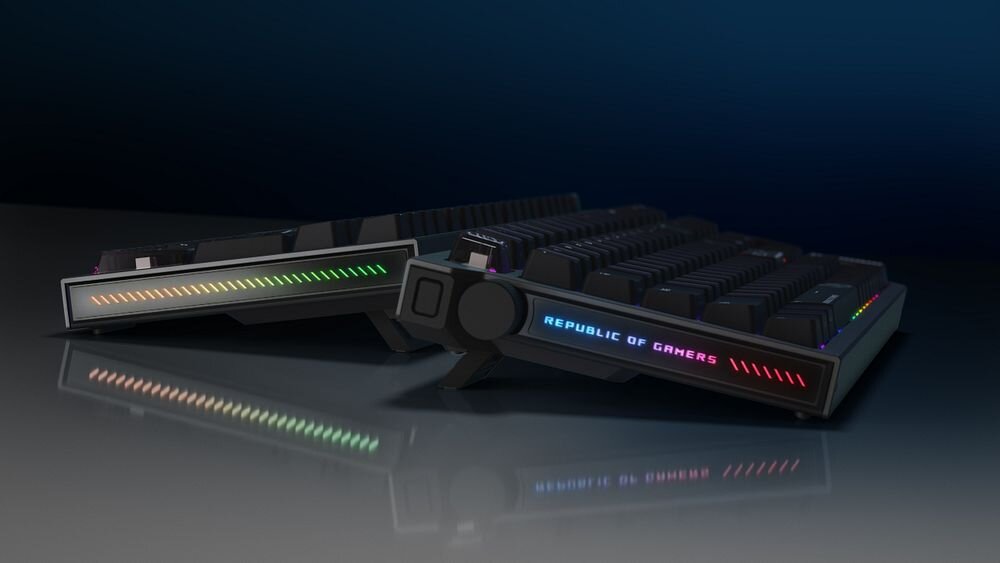
2. Ergonomics and Desk Aesthetics
The shift toward 96-percent layouts is likely to accelerate. As desk setups become more integrated—often involving multiple devices and limited space—the need for efficient, high-utility footprints is becoming the standard rather than the exception.
3. The Move Toward Web-Based Configuration
If "Gear Link" proves successful, we may see a wider industry trend of moving away from bloated proprietary software (like Armoury Crate or Razer Synapse) toward browser-based, lightweight configuration tools. This is a massive win for users who prioritize privacy and system performance.
Build Quality: A Heavyweight Contender
Despite its compact footprint, the keyboard weighs in at 1,125 grams. This is a deliberate design choice. In the world of mechanical keyboards, weight is often equated with quality; a heavier, sturdier chassis prevents "deck flex" (the bending of the keyboard surface during heavy typing) and keeps the device firmly planted on the desk during intense gaming sessions. The use of ABS-Doubleshot keycaps further ensures that the legends will not fade over time, addressing one of the most common points of failure in cheaper peripherals.
Final Verdict: Is it Worth the Investment?
The ROG Strix Morph 96 Wireless sits in a "Goldilocks" zone. It is too sophisticated to be considered a standard gaming peripheral, yet it is accessible enough to avoid the prohibitive costs and technical headaches of high-end custom kits.
For the gamer who wants to transition into the mechanical keyboard hobby without sacrificing the low-latency performance required for competitive play, this device is a compelling purchase. Its combination of 1,000 Hz polling, universal OS support (Windows and macOS), and the modularity of the hot-swap PCB ensures that it will remain relevant long after its initial purchase.
As the lines between productivity tools and gaming gear continue to blur, the ROG Strix Morph 96 serves as a blueprint for the future of the industry: modular, wireless, and software-agnostic. Whether you are a professional typist looking for a better tactile experience or a gamer seeking a more efficient desk setup, the Morph 96 provides a robust, future-proof solution that justifies its price tag through sheer versatility.










No comments yet. Be the first to join the conversation!